Azin Asro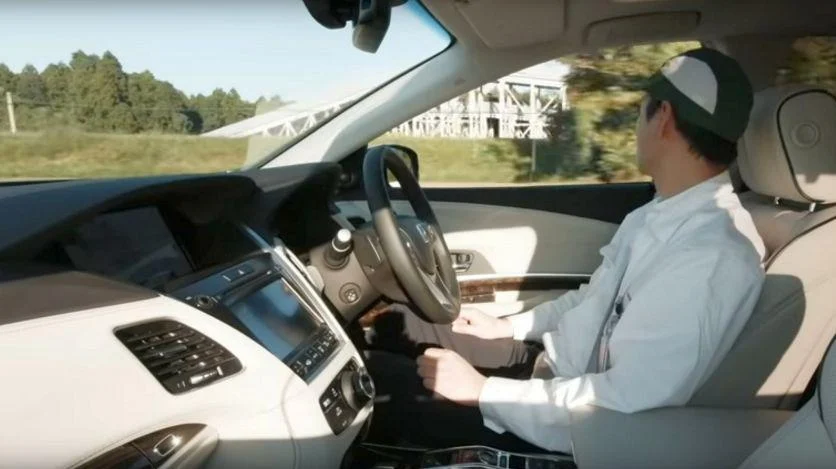
The global semiconductor landscape is on the precipice of a monumental shift as the automotive industry transitions from driver-assist technologies to fully autonomous systems. While the recent surge in demand for high-performance memory has been largely attributed to the explosion of artificial intelligence (AI) within massive data centers, industry experts are now identifying the next major frontier: the autonomous vehicle. According to recent projections from Micron Technology, a leading global producer of computer memory and data storage, the next generation of Level 4 autonomous vehicles and advanced robotics will require a staggering increase in Random Access Memory (RAM) capacity, with some configurations expected to demand as much as 300GB per unit.
This forecast was highlighted by Micron CEO Sanjay Mehrotra during the company’s recent earnings call, where he detailed the evolving hardware requirements of the automotive sector. Mehrotra noted that while current modern vehicles equipped with Level 2 Advanced Driver Assistance Systems (ADAS)—such as adaptive cruise control, lane-keeping assist, and automated emergency braking—typically consume approximately 16GB of RAM, the leap to higher levels of autonomy will necessitate a massive expansion of memory bandwidth and capacity. This transition marks a fundamental change in how vehicles are engineered, moving away from simple mechanical transport toward becoming what industry analysts describe as "data centers on wheels."
The Technical Evolution: From Level 2 to Level 4 Autonomy
To understand the necessity of a 300GB RAM configuration, it is essential to distinguish between the current state of automotive technology and the goals of full autonomy. The Society of Automotive Engineers (SAE) defines various levels of driving automation, ranging from Level 0 (no automation) to Level 5 (full automation in all conditions).
Most high-end consumer vehicles today operate at Level 2. At this stage, the vehicle can control both steering and acceleration/deceleration, but the human driver must remain fully engaged and monitor the environment at all times. The 16GB of RAM currently utilized in these systems is sufficient to handle the data streams from a limited array of cameras and radar sensors, processing basic environmental cues to maintain lane position or distance from other vehicles.
In contrast, Level 4 autonomy represents "High Automation," where the vehicle can perform all driving tasks and monitor the environment in specific circumstances or geofenced areas without human intervention. Reaching this milestone requires a radical overhaul of the vehicle’s onboard computing architecture. Unlike Level 2 systems, which act as a secondary "eye" for the driver, a Level 4 system must act as the primary brain. It must simultaneously ingest, process, and act upon massive amounts of data from a diverse sensor suite, including high-resolution cameras, LiDAR (Light Detection and Ranging), radar, and ultrasonic sensors.
Why Level 4 Vehicles Require Massive Memory Capacity
The leap to 300GB of RAM is driven by the sheer complexity of real-time environmental perception and decision-making. In a Level 4 autonomous vehicle, the computer system must create a continuous, 360-degree high-definition 3D map of its surroundings. This process, known as sensor fusion, involves merging data from multiple sources to eliminate the blind spots or weaknesses of any single sensor type. For instance, while cameras provide visual detail and color recognition (essential for reading traffic signs), LiDAR provides precise distance measurements regardless of lighting conditions.

Processing these inputs in real-time creates a significant computational load. Every millisecond is critical; a delay in processing—known as latency—could result in a failure to detect a pedestrian or an oncoming obstacle, leading to catastrophic consequences. RAM serves as the high-speed workspace for the vehicle’s AI models. When the capacity is insufficient, the system faces a "bottleneck," where data cannot be moved into the processor quickly enough. By equipping a vehicle with 300GB of RAM, manufacturers ensure that the AI has enough "breathing room" to maintain stability, handle complex edge cases (such as sudden weather changes or erratic human behavior from other drivers), and run redundant safety protocols simultaneously.
Furthermore, the integration of Generative AI within the vehicle cabin is adding to these memory requirements. Modern automakers are looking beyond just driving; they are implementing AI-driven digital cockpits that offer natural language voice assistants, personalized infotainment, and real-time navigation updates. These secondary systems also compete for memory resources, further pushing the total requirement toward the 300GB mark.
Chronology of the Memory Surge and Market Context
The trajectory of memory requirements in the automotive sector has followed a steep upward curve over the last decade. In the early 2010s, automotive memory was largely confined to simple infotainment systems and basic engine control units, often requiring less than 1GB of DRAM. By 2018, as Level 2 ADAS became a standard feature in premium models, the requirement jumped to the 4GB to 8GB range.
The current shift toward 16GB as a baseline for modern ADAS-equipped cars was accelerated by the introduction of more sophisticated Tesla Autopilot iterations and similar systems from competitors like GM (Super Cruise) and Ford (BlueCruise). However, the real catalyst for the predicted 300GB jump is the commercialization of robotaxis and autonomous trucking. Companies such as Waymo, Cruise, and various startups in the logistics sector are already deploying Level 4-capable vehicles that utilize industrial-grade computing stacks.
Micron’s financial data reflects this trend. The company recently reported a significant increase in revenue driven by the demand for High Bandwidth Memory (HBM) and DRAM used in AI applications. While data centers currently account for the lion’s share of this growth, the automotive segment is emerging as a high-growth pillar. Micron has positioned itself as a key supplier for the "Software-Defined Vehicle" (SDV) era, where hardware is built to support decades of software updates and increasingly complex AI features.
Statements from Industry Leaders and Strategic Responses
Sanjay Mehrotra’s remarks during the earnings call underscore a broader consensus among semiconductor executives. "The AI revolution is not just happening in the cloud; it is happening at the edge," Mehrotra stated. He emphasized that as AI models become more sophisticated, the "edge" devices—including cars, robots, and even high-end PCs—will require memory specifications that were once reserved for enterprise-grade servers.
In response to these projections, other major players in the memory market, such as Samsung Electronics and SK Hynix, have also begun pivoting their automotive divisions. These companies are developing specialized automotive-grade DRAM that can operate reliably in extreme temperatures and withstand the constant vibrations of a moving vehicle—standards much more stringent than those for consumer electronics.

Automotive manufacturers (OEMs) are also reacting to this reality. Companies like NVIDIA and Qualcomm have launched powerful automotive "System on a Chip" (SoC) platforms, such as the NVIDIA DRIVE Thor and Qualcomm Snapdragon Ride. These chips are designed to interface with massive amounts of RAM to facilitate the trillions of operations per second (TOPS) required for autonomous flight and road navigation. The shift toward 300GB of RAM is seen as a necessary step to future-proof these vehicles, ensuring they can receive over-the-air (OTA) updates that improve their driving algorithms over a 10-to-15-year lifespan.
Broader Implications for Safety and the Global Economy
The transition to high-capacity memory in vehicles has profound implications for road safety. The primary argument for autonomous driving is the reduction of human error, which accounts for over 90% of traffic accidents. However, for a machine to be safer than a human, it must possess superior "reflexes." Massive RAM capacity allows for higher-frequency sampling of the environment, meaning the car can "think" and "react" thousands of times per second.
From an economic perspective, the automotive industry’s hunger for memory will likely lead to a sustained tightening of the global semiconductor supply chain. As cars begin to compete with data centers for the same high-end DRAM and HBM components, price volatility in the memory market may become more common. This could potentially increase the manufacturing cost of autonomous vehicles, initially positioning Level 4 technology as a luxury feature or a specialized tool for commercial fleets before it trickles down to the mass market.
There is also a significant environmental and infrastructure consideration. Processing 300GB of data-intensive tasks locally in a vehicle consumes substantial power. For electric vehicles (EVs), this creates a trade-off between the vehicle’s computing power and its driving range. Engineers are currently working on optimizing AI algorithms to be more "memory-efficient," but the consensus remains that physical hardware capacity cannot be bypassed if safety is the priority.
Conclusion: The Road Ahead
The prediction that a single car could eventually house 300GB of RAM highlights the incredible technological convergence currently taking place. The automotive industry is no longer just about mechanical engineering and aerodynamics; it is now a cornerstone of the global computing and AI ecosystem.
As Level 4 vehicles move from testing phases to widespread public deployment, the demand for high-performance memory will likely remain a critical bottleneck or a primary enabler of progress. Micron’s forecast serves as a wake-up call for the entire supply chain, signaling that the "data center on wheels" is not a distant vision but an imminent reality. The success of the autonomous revolution will depend not just on the software that drives the car, but on the invisible, high-speed memory modules that allow that software to make life-saving decisions in the blink of an eye. For the semiconductor industry, the road to the future is paved with silicon, and the demand shows no signs of slowing down.