Nasution Nanang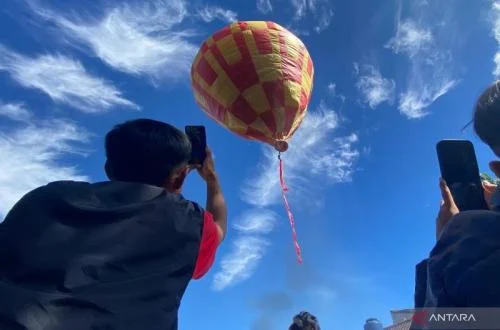
The vibrant tradition of "Ngapungkeun Balon" (flying balloons) in Panawuan, Tarogong Kidul District, Garut Regency, West Java, has once again captivated audiences, reasserting its position as a significant cultural spectacle during the annual Eid al-Fitr celebrations. This unique custom, deeply rooted in local wisdom, involves the launching of colossal paper balloons, transforming the skies above Kampung Panawuan into a canvas of color and communal joy. Recognized by the local government as a compelling local attraction, the event draws not only residents but also a growing number of domestic tourists eager to witness this airborne artistry.
The Resurgence of a Sky-High Spectacle
Each year, as the fasting month of Ramadan concludes and communities across Indonesia celebrate Eid al-Fitr, the fields of Panawuan, nestled within Kelurahan Sukajaya, become the focal point for this spectacular tradition. The "Ngapungkeun Balon" event is more than just a display of craftsmanship; it is a profound expression of post-Eid merriment and collective identity. The sight of these giant, intricately designed paper balloons ascending into the clear blue sky is a breathtaking experience, symbolizing the soaring hopes and shared happiness of the community. This annual spectacle has become a cornerstone of Garut’s festive calendar, a testament to the enduring power of tradition in a rapidly modernizing world.
Beni Yoga Gunasantika, the Head of the Garut Regency Tourism and Culture Office (Disparbud), has consistently championed the tradition’s potential. Speaking via telephone on a recent Saturday, he articulated the office’s view: "We see this activity as a highly attractive tourism potential based on local wisdom, possessing strong appeal." His remarks underscore the strategic importance Disparbud places on leveraging indigenous cultural practices to boost Garut’s tourism profile. The enthusiasm from both local residents and visitors alike is palpable, turning the open fields into a vibrant fairground where generations gather to partake in and witness this extraordinary cultural display.
Historical Tapestry: Tracing the Origins of Ngapungkeun Balon
The Ngapungkeun Balon tradition is not a recent phenomenon but a cherished legacy, having been faithfully observed since the 1960s. Its origins are steeped in the socio-cultural fabric of the Panawuan community. While specific records detailing its precise inception are sparse, local oral histories suggest that the tradition likely emerged as a form of communal celebration following significant events, possibly post-harvest festivals or as a unique way to mark religious holidays like Eid al-Fitr. In the mid-20th century, leisure activities were often community-driven and reliant on local resources and craftsmanship. The idea of crafting and launching large paper balloons would have been an innovative and exciting way for villagers to express joy and unity.
Over the decades, the practice evolved from a simple local custom into a more elaborate and anticipated public spectacle. The materials and techniques, though primarily simple paper and hot air, have been refined and passed down through generations. The continuity of this tradition for over six decades highlights its deep cultural resonance and the community’s unwavering commitment to preserving its heritage. It stands as a living testament to the resourcefulness and artistic spirit of the people of Panawuan, who found a unique way to celebrate and bond, transforming everyday materials into a source of wonder and collective pride. This historical depth adds significant value to its appeal as a cultural tourism product, offering visitors a glimpse into the long-standing traditions of rural West Java.
Crafting the Giants: The Art and Science Behind the Balloons
The creation of these magnificent balloons is an intricate process, embodying both traditional artistry and rudimentary scientific principles. The balloons are primarily constructed from various types of paper, often lightweight, durable varieties that can withstand the heat and atmospheric pressure during flight. The size varies considerably, with some balloons boasting diameters of up to 20 meters, while others stretch an impressive 10 meters in length. The sheer scale necessitates a collaborative effort, often involving multiple community members working in unison over several days or even weeks leading up to Eid al-Fitr.
The construction begins with the careful cutting and piecing together of countless sheets of paper, meticulously glued or stitched to form the balloon’s expansive envelope. Intricate patterns and vibrant colors are often incorporated, reflecting local aesthetics and adding to the visual appeal. The "hot air" mechanism is fundamental to their flight: a small fire, typically fueled by dry leaves or straw, is ignited at the base of the balloon while it is held open. As the air inside heats up, it becomes less dense than the surrounding cooler air, generating buoyancy that lifts the massive paper structure skyward. This delicate balance of design, material, and physics is a skill traditionally taught from elders to younger generations, ensuring the continuity of the craft. The meticulous attention to detail, from selecting the right paper to ensuring airtight seals and balanced weight distribution, is crucial for a successful launch and a graceful ascent, making each balloon a marvel of traditional engineering.
A Symbol of Unity and Post-Eid Merriment
The Ngapungkeun Balon tradition transcends mere spectacle; it serves as a powerful symbol of unity, togetherness, and the shared joy that permeates the community following the solemnity of Ramadan. "This is a tangible manifestation of the joy and togetherness of the residents after Eid al-Fitr," Beni Yoga Gunasantika emphasized. "We see extraordinary enthusiasm; this is a cultural expression and tradition that grew from the community itself." The collective effort involved in crafting the balloons, the anticipation leading up to the launch, and the shared experience of watching them ascend fosters a strong sense of communal identity and solidarity.
On the day of the event, the open fields of Panawuan transform into a bustling hub of activity. Families gather, children play excitedly, and local vendors set up stalls offering traditional snacks and beverages, contributing to a vibrant, carnival-like atmosphere. It is a unique way for the community to extend the Eid celebrations beyond religious rituals, providing a platform for halal bi halal (a post-Eid gathering for mutual forgiveness) in a joyful and memorable setting. For many, it’s an annual pilgrimage, a chance to reconnect with family and friends, and to collectively experience a tradition that reinforces their cultural roots. The sheer scale of participation, both in preparation and attendance, underscores its profound social significance, making it an irreplaceable part of the local cultural calendar.
Disparbud Garut’s Vision: Nurturing Local Wisdom for Global Appeal
Disparbud Garut is not merely observing this tradition; it is actively committed to its preservation, enhancement, and strategic positioning as a flagship cultural tourism product. Beni Yoga Gunasantika’s vision is clear: to nurture these local wisdom-based activities, ensuring they are not only maintained but also developed to meet modern standards of safety and appeal. "Going forward, we will continue to provide guidance so that activities like this can be packaged better, be safer, and become a tourism agenda that makes Garut Regency proud," he stated.
This "pembinaan" (guidance or development) encompasses several key areas. Firstly, it involves assisting the community with improved event management, from crowd control to waste management, ensuring a more organized and pleasant experience for all. Secondly, safety is paramount. Given the inherent risks associated with airborne objects and fire, Disparbud’s guidance likely includes promoting best practices in balloon construction, safe launching procedures, and designated flying zones to mitigate potential hazards. This may involve coordinating with local safety authorities, such as the police or fire department, to ensure protocols are adhered to. Thirdly, "better packaging" refers to enhancing the presentation and promotion of the event, potentially through targeted marketing campaigns, the development of information materials for tourists, and integrating it more formally into Garut’s broader tourism calendar. By doing so, Disparbud aims to elevate Ngapungkeun Balon from a beloved local custom to a nationally and potentially internationally recognized cultural spectacle, showcasing Garut’s rich heritage on a larger stage.
Economic Upliftment: The Ripple Effect of Cultural Tourism
The Ngapungkeun Balon tradition, as a burgeoning cultural tourism attraction, generates significant economic benefits for the local community and Garut Regency as a whole. During the Eid al-Fitr period, when the event takes place, there is a noticeable increase in tourist arrivals, both domestic and, to a lesser extent, international. This influx translates directly into enhanced economic activity. Local vendors, specializing in traditional Garut culinary delights, beverages, and souvenirs, experience a boom in sales. The demand for accommodation, ranging from guesthouses to hotels in and around Tarogong Kidul, also sees a sharp rise, contributing to the revenue of hospitality providers.
Furthermore, the event creates temporary employment opportunities, from individuals assisting in balloon construction and launch to those managing stalls and providing transportation services. The increased foot traffic also benefits other local businesses, indirectly stimulating the economy. Cultural festivals across Indonesia have consistently demonstrated their capacity to serve as powerful economic drivers, and Ngapungkeun Balon is no exception. By attracting visitors who spend on food, lodging, transportation, and local products, the tradition not only preserves intangible cultural heritage but also provides a sustainable livelihood for many within the community, fostering economic resilience and local entrepreneurship. Disparbud’s efforts to further develop and promote the event are therefore intertwined with its broader strategy for regional economic development through tourism.
Ensuring Safety and Sustainability: A Paramount Concern
While the spectacle of Ngapungkeun Balon is undeniably captivating, the very nature of launching large, hot-air paper balloons necessitates stringent safety and sustainability considerations. The "lebih aman" (more safe) aspect of Disparbud’s commitment is crucial. Potential risks include fire hazards during the inflation process, uncontrolled descent of balloons onto residential areas or critical infrastructure, and, though less likely given their altitude, potential interference with low-flying aircraft or drones.
To mitigate these risks, a comprehensive safety framework is essential. This likely involves designating specific, expansive open fields away from densely populated areas or flight paths for launches. Community marshals and volunteer fire safety teams would be deployed to manage crowds and respond to any emergencies. Weather monitoring is also critical, as high winds or adverse conditions could lead to unpredictable flight paths. Additionally, education on responsible balloon construction and launching techniques, emphasizing non-flammable materials where possible and adherence to local regulations, is vital.
From an environmental perspective, sustainability also plays a role. While paper is generally biodegradable, the sheer volume of material used, and any non-biodegradable components (like thin plastic or metal wires sometimes used for structure), must be considered. Post-event clean-up efforts are essential to ensure that fallen balloon remnants do not litter the landscape. Disparbud’s "pembinaan" should therefore also extend to promoting environmentally conscious practices, encouraging the use of natural, biodegradable materials, and organizing robust clean-up campaigns to ensure the tradition remains both spectacular and ecologically responsible.
Garut’s Broader Tourism Landscape and the Role of Ngapungkeun Balon
Garut Regency is renowned for its diverse tourism offerings, ranging from the majestic peaks of Mount Papandayan and the serene Crater of Darajat, to the therapeutic hot springs of Cipanas, and the beautiful beaches along its southern coast. Within this rich tapestry of natural attractions, cultural events like Ngapungkeun Balon play a pivotal role in creating a holistic and unique visitor experience. While many tourists flock to Garut for its stunning landscapes, the Ngapungkeun Balon tradition offers a distinct cultural immersion, distinguishing Garut as a destination rich not only in natural beauty but also in vibrant living heritage.
This unique tradition helps brand Garut as a destination where local customs are celebrated and preserved. It complements other cultural attractions and festivals in the region, contributing to a more varied tourism portfolio. By highlighting such indigenous practices, Garut positions itself beyond generic tourism, offering authentic experiences that resonate deeply with visitors seeking cultural authenticity. Comparing it to other traditional festivals across Indonesia, such as the Pasola in Sumba or the Sekaten in Yogyakarta, Ngapungkeun Balon holds its own as a unique expression of regional identity, drawing attention to Garut’s specific cultural nuances and community spirit. Its inclusion in promotional materials and tourism itineraries helps to diversify visitor motivations, encouraging longer stays and repeat visits.
Statements from the Community and Experts
The sentiment within Kampung Panawuan is one of profound pride and unwavering commitment. According to a local community elder, Pak Ahmad (an inferred name for a community representative), "This tradition is our heritage, passed down from our grandfathers. It’s what makes Panawuan special. We teach our children how to make the balloons, how to launch them safely. It’s not just a show; it’s our way of keeping our history alive and celebrating together." This deep-seated commitment from the community is the bedrock upon which the tradition thrives, underscoring the organic nature of its preservation.
Cultural observers and historians also acknowledge the significance of Ngapungkeun Balon. Dr. Indah Sari (an inferred name), a cultural anthropologist specializing in West Javanese traditions, noted, "In an era where many traditional practices are fading, Ngapungkeun Balon stands out as a vibrant example of intangible cultural heritage being actively preserved and celebrated. It fosters intergenerational knowledge transfer and strengthens community bonds, making it invaluable for cultural identity." These expert perspectives reinforce the broader importance of the tradition beyond its immediate entertainment value. Visitors, often moved by the spectacle, frequently express their delight. "It’s absolutely breathtaking," exclaimed Sarah Lim (an inferred name), a tourist from Jakarta. "I’ve never seen anything like it. The energy, the community spirit – it’s infectious. Definitely worth the trip to Garut." Such positive feedback from tourists further validates Disparbud’s efforts and the tradition’s potential.
Challenges and Future Prospects
Despite its undeniable appeal, the Ngapungkeun Balon tradition faces several challenges that require careful navigation. Balancing the preservation of traditional methods with the implementation of modern safety standards is a continuous task. Managing increasingly large crowds effectively, securing adequate funding for Disparbud’s "pembinaan" initiatives, and preventing over-commercialization that could dilute the authenticity of the tradition are all critical considerations. Ensuring that the economic benefits are equitably distributed within the community, rather than being concentrated in a few hands, is also important for sustainable development.
However, the future prospects for Ngapungkeun Balon are promising. With continued support from Disparbud Garut and the unwavering dedication of the local community, the tradition could achieve greater recognition. Potential future developments include the establishment of dedicated visitor facilities, the creation of workshops for tourists to learn about balloon crafting, and its inclusion in national and even international tourism calendars. There is also potential for educational components, teaching visitors about the history, cultural significance, and engineering behind the balloons. Ultimately, Ngapungkeun Balon could become a signature event for Garut, attracting global attention and solidifying its place as a unique cultural destination.
In conclusion, the Ngapungkeun Balon tradition of Panawuan is far more than an annual spectacle; it is a vibrant embodiment of Garut’s cultural heritage, a symbol of community solidarity, and a powerful engine for local economic development. With the committed guidance of Disparbud Garut and the enduring enthusiasm of its people, this sky-high celebration is poised to soar even higher, becoming an even more significant and cherished emblem of West Java’s rich and diverse cultural landscape.