Bambang Pamungkas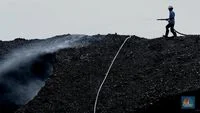
Coal prices have experienced a significant resurgence, breaking a three-day period of stagnation as global energy security concerns, exacerbated by escalating geopolitical conflicts, compel nations to pivot back to fossil fuels. On Tuesday, April 7, 2026, the price of coal closed at US$141 per ton, marking a notable 1.2% increase, according to data from Refinitiv. This upward movement signals a critical shift in global energy strategies, as countries prioritize stable and affordable power generation in the face of disrupted supply chains and heightened international tensions.
The Catalyst: Geopolitical Instability and Supply Chain Disruptions
The primary catalyst for this sudden reversal in coal’s market fortunes can be traced directly to a rapidly deteriorating security situation in the Middle East. On February 28, 2026, a series of targeted strikes by the United States and Israel against various installations within Iran, including key strategic sites in Tehran, resulted in significant damage and civilian casualties. This aggressive action swiftly triggered a retaliatory response from Iran, which launched its own strikes against Israeli territories and U.S. military facilities across West Asia. The ensuing escalation plunged the region into deeper turmoil, with immediate and profound consequences for global energy markets.
Crucially, this conflict effectively halted maritime traffic through the Strait of Hormuz, one of the world’s most vital chokepoints for oil and liquefied natural gas (LNG) shipments. Approximately one-fifth of the world’s total petroleum liquids consumption, and a substantial portion of global LNG, transits this narrow waterway daily. The disruption immediately sent shockwaves through energy markets, causing fuel prices to surge across most nations heavily reliant on imported hydrocarbons. The strategic vulnerability of global energy supply chains, long a theoretical concern, became a stark reality, forcing governments worldwide to re-evaluate their energy policies with an unprecedented emphasis on resilience and self-sufficiency.
National Responses: A Pragmatic Return to Coal
In response to these acute energy security challenges, several nations, from industrialized economies to rapidly developing states, have announced or initiated plans to increase their reliance on coal-fired power generation. This represents a significant, albeit often reluctant, pragmatic shift away from previously stated commitments to accelerate decarbonization and phase out fossil fuels.
Japan’s Strategic Energy Re-evaluation
Japan, a nation heavily dependent on imported energy and acutely aware of its supply vulnerabilities, has emerged as a leading example of this strategic pivot. Minister of Economy, Trade, and Industry, Ryosei Akazawa, articulated the government’s stance, stating, "To ensure a stable energy supply, we are reducing the use of LNG and implementing measures to maximize electricity production at coal-fired power plants." Japan’s energy mix has historically relied heavily on LNG imports, making it particularly susceptible to disruptions in major shipping lanes like the Strait of Hormuz.
As an emergency measure, the Japanese government has decided not to impose restrictions on inefficient coal-fired power plants in 2026, a policy previously slated to encourage their retirement. This decision is expected to significantly boost their operational capacity and contribution to the national grid. Minister Akazawa further emphasized the critical role of coal, noting that "coal-fired power plants, despite generating higher carbon dioxide emissions compared to other fuels, remain essential for energy security as they do not depend on supplies from West Asia." This highlights the delicate balance Japan, and indeed many other nations, must strike between long-term environmental goals and immediate energy stability. Japan’s 2021 energy plan aimed for coal to account for 19% of its power generation by 2030, a figure that now appears likely to be surpassed in the short to medium term given the current crisis. The country’s commitment to achieving carbon neutrality by 2050 faces substantial headwinds in this geopolitical climate.
Taiwan’s Drive for Resilience
Taiwan, another island economy with significant energy import dependency and unique geopolitical pressures, is also moving to bolster its energy resilience through increased coal usage. The Ministry of Economic Affairs confirmed that the state-owned Taiwan Power Company, the nation’s primary electricity supplier, will begin purchasing power from the Mailiao coal plant starting in May 2026. This follows significant upgrades to Units 1 and 3 of the facility, enhancing their capacity to provide a stable baseload supply.
Taiwan’s energy strategy has been increasingly focused on diversifying its sources and reducing its reliance on LNG, particularly in light of regional tensions and the broader disruption to gas supplies caused by the Middle East conflict. With gas accounting for nearly 50% of its electricity generation and coal around 40%, any disruption to LNG imports poses an immediate threat to the island’s economic stability and national security. The decision to enhance coal-fired capacity underscores a pragmatic acceptance that, in times of crisis, readily available and secure domestic energy sources take precedence over emissions reduction targets.
Germany’s Reconsideration of Idled Plants
Even in Europe, where the push for decarbonization has been particularly strong, the escalating energy crisis is forcing a reconsideration of past policies. Germany, a nation committed to phasing out coal by 2030, is reportedly evaluating the possibility of reactivating previously idled coal-fired power plants. This development follows similar emergency measures taken in response to the 2022 energy crisis triggered by the conflict in Ukraine, which saw Germany temporarily bring back some coal capacity to compensate for reduced Russian gas supplies. The current Middle East conflict, by further tightening global LNG markets and driving up prices, adds another layer of urgency to Germany’s energy calculus, demonstrating the fragility of ambitious energy transition timelines when faced with successive geopolitical shocks.
Emerging Economies: Sustaining Growth with Coal
For rapidly developing economies such as South Korea and Bangladesh, the reliance on coal is less about a pivot and more about sustaining their existing energy strategies. Both nations have been increasing their coal dependency to meet burgeoning electricity demand, support industrial growth, and ensure energy affordability for their populations. The current global energy landscape, characterized by volatile gas prices and supply uncertainties, only reinforces their strategic rationale for utilizing more readily available and often cheaper coal. Bangladesh, for instance, has a growing pipeline of coal-fired power projects aimed at lifting its energy generation capacity, despite international pressure to divest from fossil fuels.
Kazakhstan’s Ambitious Coal Expansion
Kazakhstan, a country with vast coal reserves, is embarking on an ambitious expansion of its coal-fired power generation capacity. The government has unveiled plans to construct eight new coal power plants and modernize eleven existing facilities within the next five years, adding approximately 8 GW of new capacity. This significant expansion is explicitly aimed at supporting the launch of new energy-intensive modern industries and providing a robust power source for digital platforms, reflecting a national strategy to diversify its economy beyond oil and gas extraction.
Kazakhstan’s domestic coal production is projected to reach approximately 130 million tons annually, leveraging its estimated coal reserves of over 33 billion tons—among the largest globally. A recent government meeting underscored the strategic importance of these developments, focusing on the comprehensive implementation of national projects related to coal energy. This commitment positions Kazakhstan not only as a major domestic consumer but also potentially as an increasingly important regional supplier of coal, further integrating it into the global energy landscape as other nations seek alternative sources.
Broader Implications and The Dilemma of Energy Transition
The global resurgence of coal demand, driven by geopolitical instability and energy security imperatives, carries significant implications across economic, environmental, and geopolitical spheres.
Environmental Setbacks:
From an environmental perspective, this pivot back to coal represents a considerable setback for global climate action. Coal is the most carbon-intensive fossil fuel, and increased consumption will inevitably lead to higher greenhouse gas emissions. This directly contravenes the goals of the Paris Agreement and numerous national and international commitments to achieve net-zero emissions. The Intergovernmental Panel on Climate Change (IPCC) has repeatedly stressed the urgent need to phase out coal power to limit global warming to 1.5°C. The current geopolitical reality forces a painful trade-off between immediate energy security and long-term climate resilience, challenging the feasibility of ambitious decarbonization timelines. Environmental advocacy groups have already voiced strong concerns, warning that these emergency measures, if prolonged, could lock in high-emission infrastructure for decades.
Economic Ramifications:
Economically, the surge in coal prices contributes to broader energy inflation, impacting industrial costs, consumer prices, and overall economic stability. While it offers a relatively stable and often cheaper alternative to volatile gas markets in the short term, the long-term economic costs associated with climate change, such as extreme weather events and resource scarcity, remain a significant concern. Conversely, coal-exporting nations stand to benefit from increased demand and higher prices, potentially shifting global trade balances and fostering new energy partnerships.
Geopolitical Dynamics:
The increased reliance on coal could also reshape geopolitical dynamics. Nations with abundant domestic coal reserves, like Kazakhstan, India, and Australia, gain enhanced energy independence and strategic leverage. Countries heavily reliant on imported energy, particularly those in Europe and Asia, will continue to face vulnerabilities, albeit with a diversified risk profile if they reduce their dependency on a single fuel source or region. The current crisis highlights the intricate link between energy policy, national security, and international relations.
The Future of Energy Transition:
The current situation forces a critical re-evaluation of the global energy transition pathway. While the long-term imperative to transition to renewable energy sources remains undisputed, the immediate challenges underscore the need for a more robust and resilient energy infrastructure that can withstand geopolitical shocks. This may involve greater investments in diversified renewable energy sources, energy storage solutions, and perhaps, a more pragmatic, phased approach to fossil fuel phase-out that accounts for geopolitical contingencies. The current resurgence of coal could be a temporary emergency measure, or it could signal a more fundamental shift in the pace and priorities of the global energy transition, with energy security and affordability taking precedence over aggressive decarbonization targets in times of crisis. The coming months will be crucial in determining whether this is a fleeting blip or a more enduring recalibration of global energy policy.