Tyo Susilo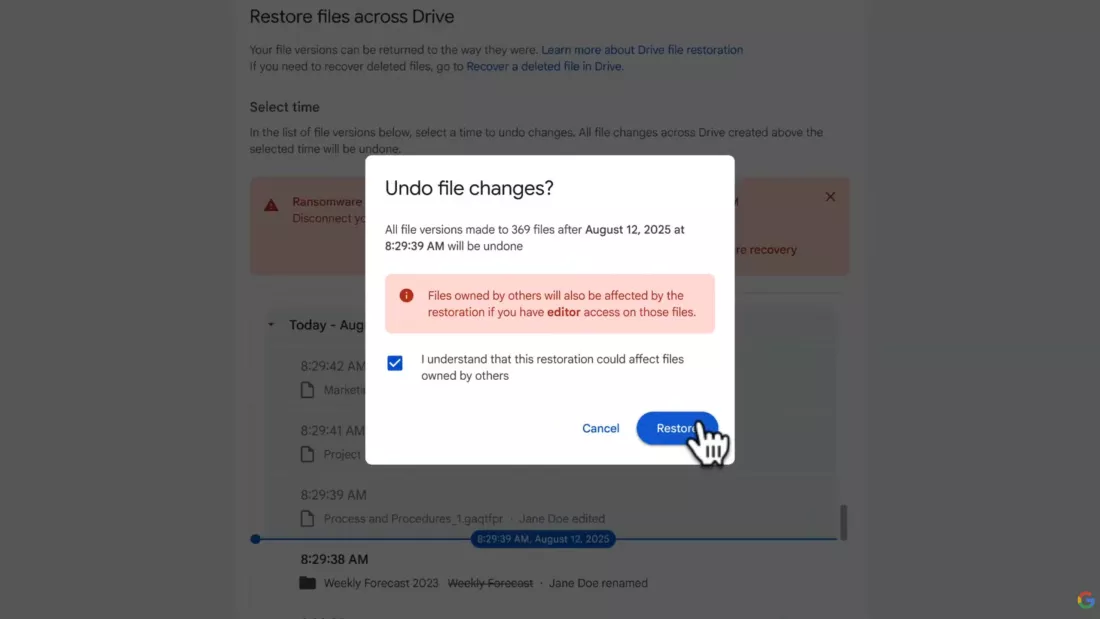
Google has unveiled a significant enhancement to its cloud security infrastructure with the introduction of an advanced AI-powered ransomware shield for Google Workspace users, specifically targeting data protection within the Drive for Desktop application. This new feature represents a proactive and robust defense mechanism against the escalating sophistication of ransomware attacks that increasingly target cloud-based storage solutions.
The new security suite leverages a substantially refined AI model, which has undergone continuous development since late 2025. Google asserts that this latest iteration of their artificial intelligence boasts an astonishing 14-fold increase in detection capabilities compared to its predecessors. This dramatic improvement is not merely an incremental upgrade; it is a critical advancement in the ongoing battle against ransomware, a type of malware notorious for its insidious nature, often operating stealthily to encrypt vast quantities of sensitive data stored on internet servers.
The Evolving Threat Landscape of Ransomware
Ransomware attacks have evolved from relatively simple encryption schemes to highly sophisticated operations, often involving double or even triple extortion tactics. Attackers not only encrypt data but also exfiltrate it, threatening to leak sensitive information if the ransom is not paid. This dual threat amplifies the pressure on organizations, making data recovery and security paramount. The global cost of ransomware attacks has been staggering, with estimates suggesting hundreds of billions of dollars in damages annually, encompassing ransom payments, recovery costs, and business downtime. According to Cybersecurity Ventures, ransomware damage costs are predicted to reach $265 billion annually by 2031, up from $20 billion in 2021. This escalating threat underscores the urgent need for advanced protective measures like the one Google is now deploying.
The targeting of cloud storage is a natural progression for ransomware operators. As more businesses and individuals migrate their data to cloud services for convenience and scalability, these platforms become attractive, high-value targets. A successful breach into a cloud storage system could compromise a vast amount of data belonging to numerous users, maximizing the attackers’ potential payout. Google’s initiative directly addresses this growing vulnerability within its own ecosystem.
How Google Drive’s Anti-Ransomware Feature Operates
The core of this new security layer lies in its real-time monitoring of user PC behavior. The AI system is meticulously trained to identify anomalous patterns indicative of a ransomware attack. When the AI detects activities that align with known ransomware methodologies – such as rapid, widespread file modification or encryption attempts – Google Drive for Desktop is engineered to take immediate and decisive action. The system automatically halts all ongoing file synchronization processes.
This abrupt cessation of synchronization is a crucial containment strategy. By severing the link between the infected local device and the cloud, the feature aims to prevent any compromised or encrypted files from being uploaded to Google Drive. This ensures that the integrity of the cloud-based backup remains intact, preserving a clean and accessible version of the data.
Upon detecting a potential threat and initiating the synchronization halt, users are presented with an instant notification directly on their desktop. This immediate alert allows users to understand that a security event has occurred and that their data is being protected. Simultaneously, for enterprise clients utilizing Google Workspace, the IT department receives a high-priority, emergency warning. This alert is dispatched via email and is also flagged within the company’s security console, enabling IT administrators to swiftly investigate the incident and implement further response protocols. This tiered notification system ensures that both individual users and dedicated security teams are promptly informed, facilitating a coordinated and rapid defense.
A Robust Restoration System: Eliminating the Need for Ransom Payments
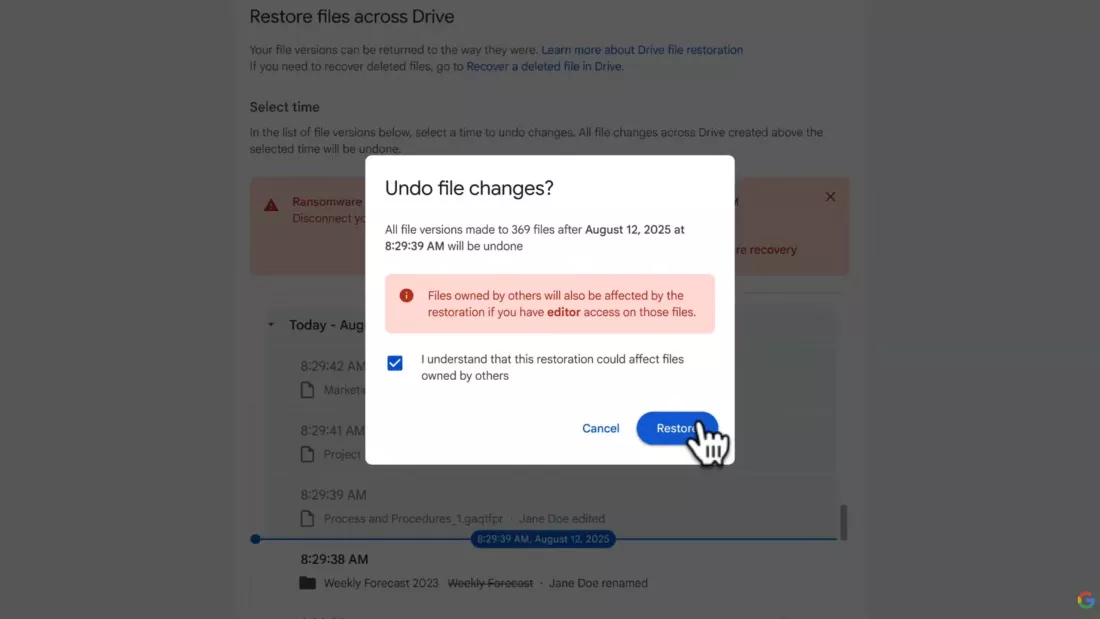
Beyond its formidable detection and containment capabilities, Google Drive’s new security feature introduces a vital restoration mechanism. This addresses the critical challenge of dealing with files that may have already been compromised on the local device before the AI could fully intervene or if the initial detection was not instantaneous. Users are now empowered with the ability to perform mass restorations of their data. This functionality allows them to retrieve uncorrupted versions of their files from Google Drive’s secure cloud storage, effectively overwriting the encrypted or damaged files on their local machines.
This self-service recovery option is a significant departure from the traditional ransomware dilemma, where organizations often feel cornered into paying exorbitant ransoms to regain access to their critical data. By providing a reliable and accessible means of restoring data from backups, Google is effectively removing the primary leverage that ransomware actors hold over their victims. This not only saves organizations potentially millions of dollars in ransom payments but also prevents them from inadvertently funding future criminal enterprises.
The implications of this restoration capability are profound for business continuity. Organizations can significantly reduce the downtime associated with ransomware attacks. Instead of facing prolonged periods of operational paralysis while negotiating with attackers or attempting complex, manual data recovery, they can leverage Google Drive’s built-in restoration tools to return to normal operations much more rapidly.
Default Activation and Granular Control
In a move designed to maximize immediate protection, Google has enabled this new anti-ransomware feature by default for all Google Workspace users. This "out-of-the-box" security ensures that the vast majority of users benefit from this enhanced protection without requiring any manual configuration. This approach aligns with Google’s broader strategy of making advanced security accessible and integrated into its core services.
However, recognizing that large organizations often have complex and specific internal security policies, Google has also provided IT administrators with the flexibility to manage this feature. Through the Google Admin console, IT professionals can choose to disable the anti-ransomware protection if it conflicts with their existing security protocols or if they have implemented alternative, comprehensive ransomware defense solutions. This balance between default security and administrative control offers a pragmatic approach to enterprise-level cybersecurity.
System Requirements and Availability
For the AI-powered ransomware detection and restoration system to function optimally, users must ensure that their Drive for Desktop application has been updated to version 114 or a higher release. This requirement is essential for the underlying AI models and detection algorithms to operate effectively. Google regularly pushes updates to its software, and users are strongly encouraged to maintain their applications in the latest versions to benefit from the most current security enhancements and performance improvements.
The rollout of this feature signifies Google’s ongoing commitment to safeguarding its users’ data in an increasingly hostile digital environment. As cyber threats continue to evolve, continuous innovation in security technologies, particularly those leveraging artificial intelligence, will be crucial in staying ahead of malicious actors.
Broader Implications for Cloud Security and User Trust
The introduction of this advanced ransomware protection has several broader implications. Firstly, it sets a new benchmark for cloud storage providers in terms of built-in security features. As competitors assess Google’s move, it is likely that other major cloud platforms will be pressured to enhance their own ransomware defenses, potentially leading to a more secure cloud ecosystem overall.
Secondly, this feature can significantly bolster user trust in cloud storage. The persistent threat of ransomware has created a degree of apprehension among individuals and businesses about the security of storing sensitive data online. By demonstrating a strong commitment to proactive protection and providing robust recovery options, Google is working to alleviate these concerns and reinforce the reliability of its cloud services.
Thirdly, the AI-driven approach highlights the growing importance of machine learning in cybersecurity. The ability of AI to analyze vast datasets, identify subtle patterns, and adapt to new threats in real-time is proving invaluable in combating sophisticated cyberattacks that often elude traditional signature-based detection methods. This development underscores the trend towards AI-powered security solutions across the industry.
The timeline of this development, with the AI model undergoing refinement since late 2025, suggests a deliberate and thorough development process. This is crucial for a feature designed to protect critical data, as false positives or unreliable detection could lead to significant disruption. The phased rollout, ensuring the latest version of Drive for Desktop is required, is also a standard practice for deploying complex software updates, allowing for controlled implementation and monitoring.
While official statements from Google have focused on the technical capabilities and user benefits, industry analysts are likely to view this as a significant win for Google Workspace users. The potential cost savings from avoiding ransom payments, coupled with reduced business disruption, represent tangible economic benefits. Furthermore, the proactive nature of the defense, shifting from a reactive "clean-up" mode to a preventative "shield" approach, marks a maturing phase in cloud security strategy.
In conclusion, Google’s latest security enhancement for Drive for Desktop is a timely and impactful development in the ongoing fight against ransomware. By integrating advanced AI detection with a powerful restoration system, Google is providing its Workspace users with a formidable defense against one of the most persistent and damaging cyber threats of our time, reinforcing its position as a leader in cloud security innovation.