Tata Titiana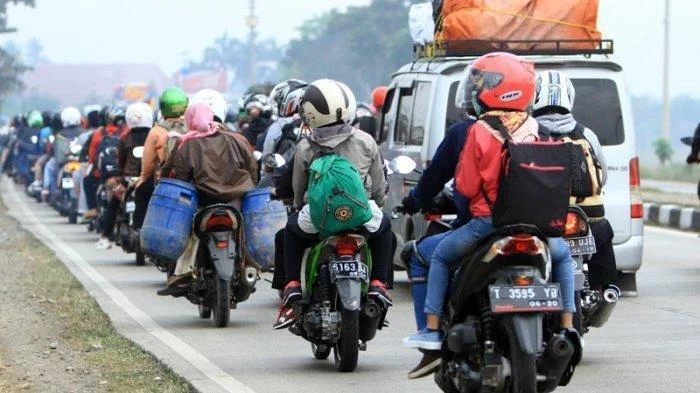
Jakarta, Indonesia – In a significant shift from the previous year, the Indonesian government has announced that citizens will be permitted to undertake the traditional Eid al-Fitr homecoming, or mudik, to their hometowns for the upcoming Idul Fitri 1442 H celebration. This decision, confirmed by Minister of Transportation Budi Karya Sumadi during a working meeting with Commission V of the House of Representatives on Tuesday, March 16, 2021, marks a departure from the outright ban imposed in 2020 due to the escalating COVID-19 pandemic.
However, the Ministry of Transportation emphasized that this is not an unconditional endorsement for mass travel. The ministry explicitly stated it does not possess the authority to mandate or encourage mudik. Instead, the allowance is contingent upon strict adherence to a comprehensive set of regulations and protocols designed to mitigate the risk of COVID-19 transmission, particularly to rural areas which may have less robust healthcare infrastructure.
Navigating the Path Home: New Regulations for 2021 Mudik
The Ministry of Transportation is collaborating closely with the COVID-19 Handling Task Force to meticulously craft the operational mechanisms for the 2021 mudik season. The primary objective is to ensure that the traditional exodus does not inadvertently become a catalyst for widespread community transmission. This collaborative effort aims to develop a framework that balances the cultural and emotional significance of mudik with the imperative of public health.
According to information shared by Minister Budi Karya Sumadi on his official Instagram account, @budikaryas, extensive consultations are underway with various stakeholders. These discussions are crucial for maintaining a conducive travel environment. Key among the proposed measures is the stringent enforcement of travel requirements and enhanced contact tracing protocols.
Minister Sumadi outlined several key stipulations for individuals intending to participate in the 2021 mudik:
- Rigorous Health Protocols: The enforcement of health protocols will be paramount, spanning from the point of departure, throughout the journey, and upon arrival at the destination. This includes mandatory mask-wearing, maintaining physical distancing, regular disinfection of transportation facilities and infrastructure, limiting passenger capacity in vehicles, and carefully scheduling travel services.
- Anticipating Passenger Surges: To manage potential surges in passenger numbers, particularly at major transportation hubs, intensified tracing efforts will be implemented. This aims to quickly identify and isolate any potential cases.
- Shortened Validity of Screening Tests: The validity period for COVID-19 screening test results, such as rapid antigen tests, is expected to be shortened. This measure is intended to ensure that travelers present the most up-to-date health status, minimizing the risk of asymptomatic individuals traveling.
The government’s commitment to public safety is underscored by the plan to further tighten existing health protocols. This includes, but is not limited to, ensuring consistent mask usage, maintaining social distancing, frequent sanitization of all public transport vehicles and terminals, and implementing capacity limits to prevent overcrowding. Passengers are urged to exercise personal responsibility and adhere strictly to these guidelines for the collective well-being of the community. The exact details of the mudik mechanism are still being finalized by the Ministry of Transportation in conjunction with relevant parties.
Expert Reservations and the Lingering Shadow of the Pandemic
Despite the government’s decision to permit mudik for Eid al-Fitr 2021, the announcement has been met with cautious pessimism by some public health experts. Concerns remain about the potential for increased transmission, especially as the pandemic is not yet fully under control.
Dr. Riris Andono Ahmad, an epidemiologist from Universitas Gadjah Mada (UGM), suggested that the government’s decision might be based on an assumption that the current vaccination coverage is sufficient to manage the situation. However, he cautioned that the primary challenge lies not solely in the protection offered by immunization but in the travelers’ adherence to health protocols.
"The issue is not just protection through immunization, but if travelers do not implement health protocols, COVID-19 transmission will still occur, similar to before vaccination," Dr. Ahmad stated, as reported by merdeka.com. He further highlighted the critical role of transportation choices. The government’s initiative to provide COVID-19 screening facilities, such as GeNose, at terminals, stations, and airports, is seen as an effort to facilitate safer travel.
Dr. Ahmad posits that public transportation, when managed with strict protocols, may be a safer option. The greater concern arises when individuals travel using private vehicles. Without stringent oversight, private vehicle journeys present a significant risk of virus transmission to destination areas. Therefore, a strong recommendation is being made for the public to utilize public transportation for their mudik journeys this year, as this mode of transport allows for easier monitoring by authorities in case of any unforeseen issues.
Vaccination is Not a Free Pass: The Enduring Importance of Protocols
A crucial point reiterated by health experts is that receiving the COVID-19 vaccine does not grant a complete exemption from transmission risks in public spaces. Even after vaccination, maintaining strict adherence to health protocols remains essential. The presence of vaccines is a vital tool in the fight against the pandemic, but it is not a substitute for ongoing preventative measures.
Dr. Ahmad expressed his hope that, on a macro level, the mudik for Eid al-Fitr would ideally be postponed. He projected that by the time of Eid al-Fitr 2021, the pandemic would likely not have concluded, and vaccination coverage might still be insufficient. Consequently, the risk of COVID-19 transmission could remain a significant concern.
Background and Context: The Evolution of Mudik Policies
The mudik tradition is deeply ingrained in Indonesian culture, particularly during Eid al-Fitr. It represents a time for families to reunite, often traveling long distances to their ancestral villages. In 2020, the unprecedented nature of the COVID-19 pandemic led to a nationwide ban on mudik to curb the spread of the virus. This decision, while necessary for public health, was met with considerable disappointment and economic hardship for many who rely on the mudik season.
The prohibition in 2020 aimed to prevent the virus from reaching less-equipped rural areas and overwhelming local health systems. Historical precedents, such as the temporary ban on mudik in 1946 due to public health concerns following World War II, underscore that restrictions on this tradition are not entirely unprecedented. However, the scale and nature of the COVID-19 pandemic presented a unique and formidable challenge.
The shift in policy for 2021 reflects a complex balancing act. On one hand, the government acknowledges the socio-cultural importance of mudik and the economic implications for transportation sectors. On the other hand, the persistent threat of the virus necessitates a cautious and regulated approach. The development and rollout of vaccines have provided a glimmer of hope, but their distribution and impact are still evolving.
Data and Projections: The Epidemiological Landscape
As of March 2021, Indonesia was still grappling with significant numbers of COVID-19 cases. While vaccination efforts were underway, the pace of inoculation and the equitable distribution of vaccines across the vast archipelago remained key challenges. The emergence of new variants of the virus also added a layer of uncertainty to the epidemiological outlook.
The decision to permit mudik comes at a time when the country’s healthcare capacity, particularly in remote areas, is a significant concern. The potential for a surge in cases following the mudik period could place immense pressure on these resources. Public health models and projections at the time indicated that widespread travel without stringent controls could lead to renewed outbreaks, potentially undoing months of progress in controlling the pandemic.
The Indonesian government’s strategy appears to be one of calculated risk management. By implementing strict protocols and screening measures, they aim to facilitate a controlled form of mudik, rather than an outright ban. This approach acknowledges the deep-seated desire of many Indonesians to observe Eid al-Fitr with their families while attempting to contain the epidemiological risks.
Broader Implications and Future Outlook
The decision to allow mudik in 2021 has far-reaching implications. Economically, it provides a much-needed boost to the transportation sector, including airlines, bus companies, train operators, and related services. Culturally, it allows for the continuation of a cherished tradition, albeit under altered circumstances.
However, the success of this policy hinges entirely on public compliance and the effectiveness of the implemented control measures. A failure to adhere to health protocols could lead to a resurgence of cases, necessitating stricter measures in the future and potentially impacting the government’s credibility in managing the pandemic.
The experience of the 2021 mudik season will likely serve as a critical case study for future public health policies during the ongoing pandemic. It highlights the intricate challenges of balancing public health imperatives with socio-cultural needs and economic realities in a country as diverse and populous as Indonesia. The ongoing dialogue between the government, public health experts, and the public will be crucial in navigating the path forward and ensuring a safer future for all. The ultimate outcome will depend on a collective effort, emphasizing shared responsibility and unwavering commitment to health and safety.