Paryono Ramadhan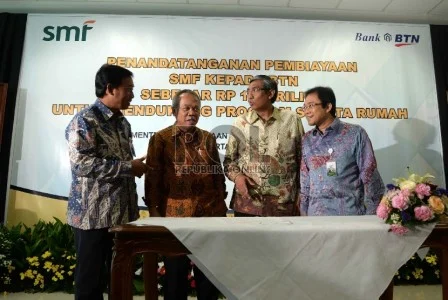
The Indonesian government is committing to a comprehensive mobilization of all available resources to ensure the success of the ambitious One Million Houses Program, a flagship national initiative aimed at addressing the nation’s substantial housing deficit. This steadfast commitment, articulated by Minister of Public Works and Housing Basuki Hadimuljono, underscores the program’s critical importance, particularly for low-income communities (Masyarakat Berpenghasilan Rendah, or MBR). The declaration was made during a pivotal signing ceremony in Jakarta last week, marking a significant collaboration between PT Sarana Multigriya Finansial (SMF) and Bank Tabungan Negara (BTN) which saw SMF extend a substantial Rp 1.5 trillion loan to BTN. This strategic financial injection is specifically designed to bolster the implementation of the One Million Houses Program, facilitating greater access to affordable housing for a demographic traditionally underserved by the conventional housing market. The partnership between SMF, a state-owned enterprise acting as a secondary mortgage facility, and BTN, a leading state-owned bank with a historical focus on housing finance, is emblematic of the multi-pronged approach the government is employing to tackle this complex socio-economic challenge.
The National Imperative: Addressing Indonesia’s Housing Backlog
Indonesia, a rapidly urbanizing archipelago nation with a population exceeding 270 million, faces a persistent and escalating housing backlog. Estimates vary, but generally hover around 11 to 12 million units, primarily impacting low and middle-income segments. The One Million Houses Program, officially launched in 2015 by President Joko Widodo, was conceived as a monumental effort to bridge this gap, ensuring that every Indonesian family has access to decent and affordable housing. The program’s core objective is not merely to construct a million units but to foster a sustainable housing ecosystem that integrates diverse stakeholders, from government bodies and state-owned enterprises to private developers and financial institutions. Its success is deemed crucial not only for social welfare and equity but also for stimulating economic growth through the construction sector and its extensive supply chains. The program targets various housing types, including subsidized public housing (Rumah Subsidi), vertical residences, and affordable landed properties, with a strong emphasis on providing housing solutions for civil servants, military personnel, police officers, and private sector employees who fall within the low-income bracket. The government’s continued emphasis on mobilizing "all resources" signifies a recognition of the program’s sheer scale and the multifaceted challenges inherent in its execution, from land acquisition and financing to infrastructure development and regulatory streamlining.
Strategic Financial Partnerships: Empowering Access to Homeownership
The Rp 1.5 trillion loan from PT Sarana Multigriya Finansial (SMF) to Bank Tabungan Negara (BTN) represents a crucial financial mechanism within the broader strategy for the One Million Houses Program. SMF, established in 2005, plays a vital role in the Indonesian housing finance market by creating liquidity and increasing the capacity of primary lenders through securitization and refinancing. By providing long-term funding to mortgage originators like BTN, SMF enables these banks to extend more loans, particularly for affordable housing, without depleting their own capital reserves. This secondary market function is critical for maintaining the stability and growth of the primary mortgage market. For BTN, the loan from SMF is particularly significant. As a bank with a longstanding mandate to support public housing, BTN is often at the forefront of implementing government housing programs, including the distribution of subsidized mortgages. The additional capital from SMF empowers BTN to originate a greater volume of mortgages for MBR, thereby directly contributing to the One Million Houses Program’s targets. The partnership is designed to reduce the financial burden on individual homebuyers by ensuring a continuous flow of funds for affordable mortgage products, often accompanied by government subsidies. This mechanism directly addresses one of the primary barriers to homeownership for low-income families: access to affordable and long-term financing. The collaboration is not merely transactional; it is a strategic alignment of two key state-owned entities, each leveraging its core competencies to amplify the impact of national housing initiatives.
A Multi-Layered Funding Ecosystem for Affordable Housing
Minister Basuki Hadimuljono’s remarks also shed light on the diverse and substantial funding sources available to underpin the One Million Houses Program, showcasing a robust financial ecosystem designed to sustain its ambitious targets. Beyond the SMF-BTN collaboration, several other key players and mechanisms contribute significant capital:
BPJS Ketenagakerjaan: Leveraging Workers’ Social Security Funds
A significant potential source of funding highlighted by the Minister is BPJS Ketenagakerjaan, Indonesia’s workers’ social security agency, which has an estimated Rp 48.5 trillion available. BPJS Ketenagakerjaan plays an increasingly vital role in housing finance through various schemes aimed at its participants. These include the Workers’ Housing Benefit (Manfaat Layanan Tambahan, or MLT), which allows participants to access subsidized mortgages, housing renovation loans, or even down payment assistance. The substantial funds managed by BPJS Ketenagakerjaan represent a vast, untapped potential for long-term, low-cost financing for housing. By channeling a portion of these funds into housing loans for its members, the agency not only provides a valuable benefit to workers but also contributes significantly to the national housing program. This approach aligns social security objectives with national development goals, ensuring that workers, who are often part of the MBR segment, have a clearer pathway to homeownership. The integration of BPJS Ketenagakerjaan’s resources into the housing finance framework reflects a holistic government strategy to leverage various institutional capacities for a common national objective.
Fasilitas Likuiditas Pembiayaan Perumahan (FLPP): Government Interest Rate Subsidies
The Fasilitas Likuiditas Pembiayaan Perumahan (FLPP), or Housing Finance Liquidity Facility, is another cornerstone of Indonesia’s affordable housing strategy, with an allocation of Rp 5.1 trillion from the government. FLPP is a government-backed scheme that provides liquidity to banks for mortgages at subsidized interest rates, making homeownership significantly more affordable for MBR. Under FLPP, borrowers typically pay a fixed, low interest rate for the entire loan tenure, insulating them from market fluctuations and reducing their monthly installments. This facility is crucial because it directly addresses the affordability gap that often prevents low-income families from accessing conventional mortgages. The government provides the difference between the subsidized rate and the market rate, effectively reducing the financial burden on both the borrower and the originating bank. The Rp 5.1 trillion allocation signals the government’s continued commitment to this direct subsidy mechanism, which has proven highly effective in increasing the purchasing power of MBR and stimulating demand for affordable housing units built under the One Million Houses Program.
DIPA APBN: Direct Budgetary Allocations for Housing Infrastructure
Furthermore, the government’s direct budgetary allocation through the Daftar Isian Pelaksanaan Anggaran (DIPA) of the State Budget (APBN) contributes Rp 8.1 trillion. DIPA APBN funds are typically utilized for direct government expenditures on housing-related infrastructure, land acquisition for public housing projects, or direct construction of public rental housing (Rusunawa) and landed housing for specific target groups. These funds are vital for laying the groundwork for housing development, including providing access roads, water supply, sanitation, and electricity connections, which are often costly and critical components of any new housing estate. By directly funding these foundational elements, the government reduces development costs for private sector partners and ensures that housing projects are integrated into broader urban planning, making them more viable and attractive. This direct investment demonstrates the government’s role not just as a facilitator but also as a direct provider and enabler of housing infrastructure, complementing the financial mechanisms that support individual home purchases.
Addressing Systemic Challenges: Insights from Indonesia Property Watch
While the government’s commitment and diverse funding sources are robust, the success of the One Million Houses Program hinges on overcoming several systemic challenges. Indonesia Property Watch, a prominent real estate research firm, has identified five critical areas that require concerted government action for the program to truly materialize across various regions:

1. Land Availability and the Imperative of a Land Bank
The first and arguably most significant challenge is the availability of affordable land. Rapid urbanization, speculative land acquisition, and complex land ownership structures have driven land prices sky-high in strategic urban and peri-urban areas, making it prohibitively expensive for developers to build affordable housing. Indonesia Property Watch advocates for the establishment of a robust land bank. A land bank would allow the government or a dedicated public entity to acquire land strategically, often in advance of development, and hold it for future public housing projects. This mechanism would insulate land prices from market speculation, ensuring that the cost of land does not unduly inflate the final price of housing units for MBR. Effective implementation of a land bank requires strong legal frameworks, transparent acquisition processes, and adequate funding to ensure a steady supply of affordable land for the program’s continuity. Without control over land costs, even subsidized financing may not be sufficient to deliver truly affordable housing.
2. A Dedicated Institution for People’s Housing
The second recommendation points to the need for a dedicated and focused institution to manage people’s housing. While the Ministry of Public Works and Housing (PUPR) oversees the broader housing sector and various state-owned enterprises like Perum Perumnas (public housing developer) and BP Tapera (housing savings fund management) play specific roles, there is a perceived need for a single, powerful entity with a singular focus on the entire value chain of affordable housing. Such an institution could streamline coordination among various government agencies, financial institutions, and developers; develop long-term strategies; and monitor program implementation more effectively. This dedicated body could act as a central hub for data, policy formulation, and resource allocation, ensuring that the One Million Houses Program maintains momentum and addresses challenges holistically, free from the complexities of broader ministerial mandates.
3. Sustained and Accessible Funding Mechanisms
The third challenge reiterates the critical importance of sustained funding, particularly through facilities like FLPP and contributions from entities like BPJS. While the current allocations are substantial, ensuring their continuous availability, expanding their reach, and simplifying access for eligible beneficiaries remain key. This involves not only securing budget allocations but also optimizing the distribution channels, increasing awareness among MBR, and streamlining the application processes for subsidized mortgages. Furthermore, exploring innovative financing models, such as public-private partnerships, green bonds for sustainable housing, and microfinance for incremental housing, could diversify the funding landscape and ensure long-term sustainability beyond direct government subsidies. The goal is to create a dynamic funding environment that can adapt to changing economic conditions and evolving housing needs.
4. Comprehensive Data and Information on Housing Shortages
Effective policy formulation and resource allocation are impossible without accurate and comprehensive data. The fourth point emphasizes the need for robust data and information regarding the housing deficit, including detailed breakdowns by region, income level, household size, and specific needs (e.g., rental vs. ownership). Currently, data sources can be fragmented, leading to inconsistencies in backlog figures and difficulty in precisely targeting interventions. A centralized, regularly updated database incorporating census data, housing surveys, and property market information would enable the government to identify critical housing hotspots, assess actual demand versus supply, and measure the impact of the One Million Houses Program more accurately. Such data would also be invaluable for urban planners, infrastructure developers, and financial institutions in making informed decisions and ensuring that housing supply aligns with real demand.
5. Streamlining Costs and Regulatory Burdens
Finally, the fifth recommendation focuses on reducing the numerous costs associated with housing development and ownership. These include complex and often lengthy permitting processes, high certification fees (e.g., land certificates, building permits/IMB), and the costs associated with connecting to essential utilities like electricity (PLN). These bureaucratic hurdles and associated expenses significantly inflate the final price of housing units, often disproportionately affecting affordable housing projects. The government needs to undertake a comprehensive review and reform of regulations to simplify permitting procedures, reduce administrative fees, and streamline the utility connection process. Implementing digital platforms for permit applications, establishing clear service level agreements for utility providers, and standardizing costs could drastically reduce the time and financial burden on developers and homebuyers, making housing more accessible and accelerating the pace of the One Million Houses Program.
Government’s Strategic Mobilization and Future Outlook
Minister Basuki Hadimuljono’s pledge to mobilize "all resources" encapsulates a holistic and multi-faceted strategy to achieve the ambitious targets of the One Million Houses Program. This involves not only securing substantial financial backing from diverse sources—ranging from state-owned enterprises like SMF and BTN to social security funds like BPJS Ketenagakerjaan and direct government budgetary allocations—but also actively addressing the fundamental structural and regulatory impediments identified by industry experts. The government’s approach reflects a deep understanding that housing is not merely a commodity but a fundamental human right and a powerful engine for national development.
The broader implications of a successful One Million Houses Program are profound. Economically, it stimulates growth in the construction sector, creates jobs across various industries (manufacturing, logistics, finance), and fosters demand for local materials and labor. Socially, it contributes to poverty reduction by improving living standards, enhancing public health, and providing a stable foundation for families to thrive. By reducing the housing backlog, the program also aims to mitigate social inequality and improve overall national stability. Environmentally, there is an increasing push to integrate green building standards and sustainable urban planning principles into these developments, ensuring long-term ecological viability.
While the scale of the challenge remains immense, the current strategic framework, combining robust financial mechanisms with a proactive stance on regulatory reform and land management, demonstrates a strong commitment from the Indonesian government. The collaboration between public and private entities, coupled with a focus on data-driven policy and institutional strengthening, positions the One Million Houses Program as a critical ongoing national endeavor. Its sustained success will require continuous political will, adaptive policymaking, and relentless execution to ensure that the dream of owning a home becomes a reality for millions of Indonesian families.