Nila Kartika Wati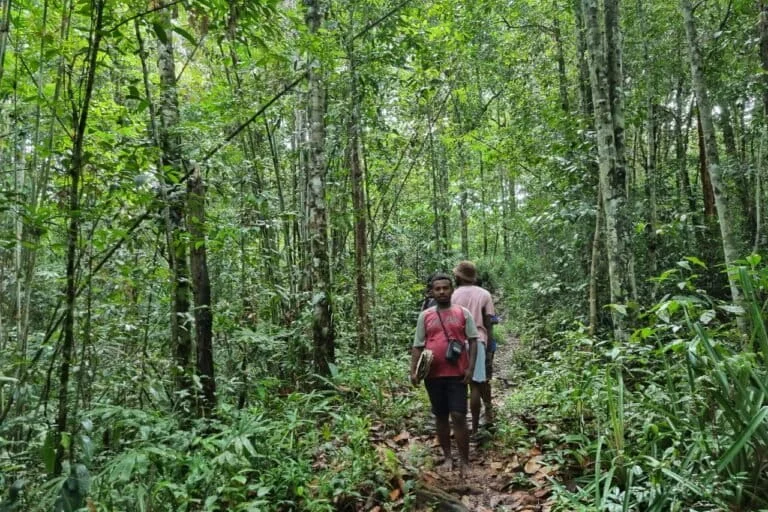
Deep within the dense, humid foliage of Malagufuk Village in the Sorong Regency of Southwest Papua, a prehistoric figure emerges from the shadows. With a steady, upright gait, the Northern Cassowary (Casuarius unappendiculatus) moves with a quiet authority that belies its massive size. Its neck, a striking palette of vibrant blues, yellows, and flashes of red, stands in sharp contrast to its coarse, jet-black plumage. This rare footage, captured by camera traps installed by the Indonesia Nature Film Society (INFIS) and the Cornell Lab of Ornithology in collaboration with the local indigenous community, offers a rare glimpse into the life of one of the world’s most elusive and ecologically significant avian species.
The footage reveals a solitary cassowary meticulously pecking at fallen seeds scattered across the forest floor, while another sequence shows a parent leading a juvenile—its feathers a camouflaged brown—through the undergrowth. These moments are more than just cinematic triumphs; they are the centerpiece of the documentary film "In Search of The Northern Cassowary," a project that highlights the critical intersection of indigenous wisdom, scientific research, and environmental advocacy. Alongside another film, "Island of the Hornbills," these productions were showcased during the Flora Malesiana Symposium XII and the Nature-Based Solutions Conference in Manokwari, serving as a poignant reminder of the fragile balance required to sustain the "Forest Architects" of Papua.
The Ecological Blueprint: Birds as Forest Architects
In the complex ecosystem of the Papuan rainforest, biodiversity is not a product of chance but the result of a tireless labor force consisting of three primary avian groups: cassowaries, hornbills, and birds of paradise. According to Yoki Hadiprakarsa, an esteemed ornithologist from the Rekam Nusantara Foundation, these birds operate with a specific division of labor that ensures the health and regeneration of the forest.
Cassowaries, as the heavyweights of the forest floor, are responsible for the dispersal of large seeds that other animals cannot consume. Their digestive systems are uniquely adapted to process large fruits, stripping away the pulp while leaving the seeds intact. When these seeds are excreted, often miles away from the parent tree, they are deposited in a rich casing of natural fertilizer. This process, known as megafaunal dispersal, is vital for the survival of many primary forest tree species.
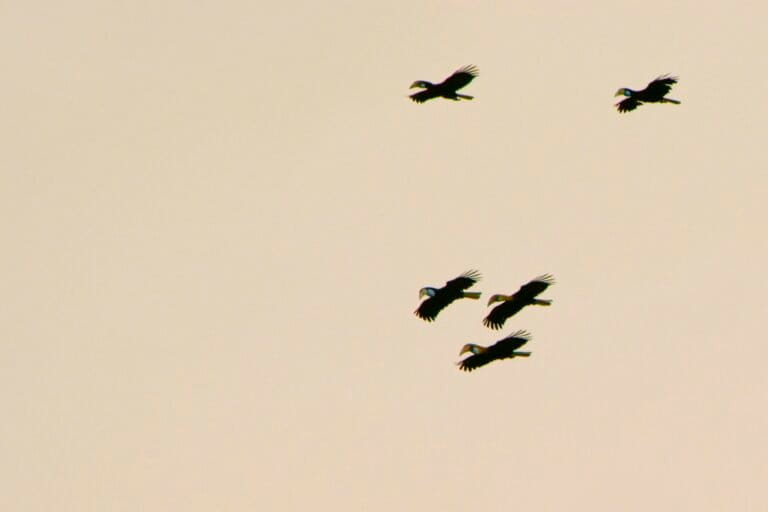
While the cassowary manages the ground level, the Papuan Hornbill (Rhyticeros plicatus) serves as the architect of the upper canopy. Capable of flying vast distances, hornbills distribute seeds across fragmented landscapes, bridging gaps in the forest that might otherwise remain barren. Meanwhile, the iconic Birds of Paradise (Paradisaeidae) manage the mid-story of the forest. Together, these species ensure that the forest remains a self-sustaining entity, capable of recovering from both natural disturbances and human-induced damage.
Research from Charles Darwin University supports this "architect" theory, emphasizing that the absence of cassowaries leads to a stagnation in tree regeneration. Without these birds, the diversity of the rainforest would plummet, eventually leading to a collapse of the ecosystem’s structural integrity.
The Moi People and the Philosophy of Sasi
The preservation of the Northern Cassowary in Malagufuk Village is inextricably linked to the stewardship of the Moi indigenous people. For generations, the Moi have lived by the philosophy of "Ko’ jaga alam, alam jaga ko’"—a phrase in the local dialect meaning "You protect nature, and nature will protect you." This is not merely a slogan but a governing principle that dictates how the community interacts with their ancestral lands.
Bastian Magablo, an indigenous youth leader from Malagufuk who participated in the documentary project, explains that the community’s survival is tied to the forest’s health. "Without nature, we cannot live," Magablo asserts. "Our water comes from the forest; our fish and our sustenance come from the earth. If the earth is destroyed, we lose our ability to exist."
To manage their resources, the Moi utilize a traditional conservation system known as "Sasi." This ancestral practice involves the temporary prohibition of harvesting certain resources or entering specific areas to allow the ecosystem time to recover. Before a Sasi is implemented, community leaders, church representatives, and elders convene to determine which zones require protection and which are open for sustainable use.

This indigenous zoning system has proven far more effective than external enforcement. Community members know exactly where they can hunt and where the "forest architects" must be left undisturbed. However, Magablo notes that this traditional order is frequently threatened by outsiders. Illegal poachers from beyond the village often enter the forest under the cover of night, targeting cassowaries, echidnas, and birds of paradise for the illegal wildlife trade.
Documenting Biodiversity Through the Lens of Science and Culture
The collaborative effort between the Cornell Lab of Ornithology and INFIS represents a modern approach to conservation that values both scientific data and local knowledge. The camera traps in Malagufuk did more than just track cassowaries; they provided a comprehensive inventory of the region’s staggering biodiversity.
The footage captured a wide array of endemic species, including the long-beaked echidna, the western crowned pigeon (Mambruk), the palm cockatoo, and various species of wallabies and ground cuscuses. These findings provide empirical evidence that the forests managed by the Moi people are among the most biodiverse regions on the planet.
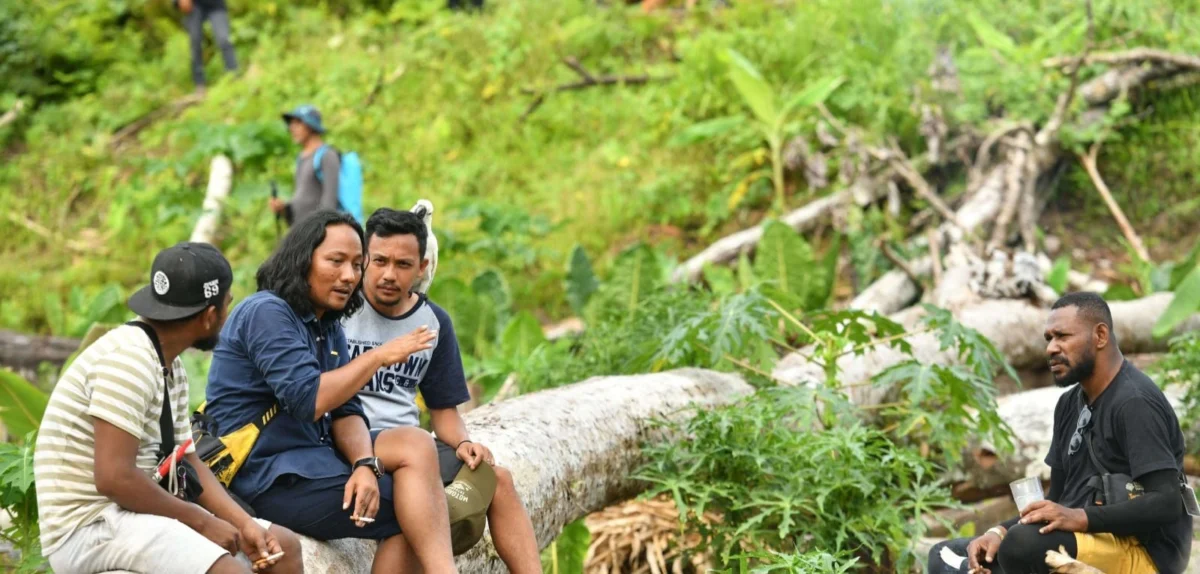
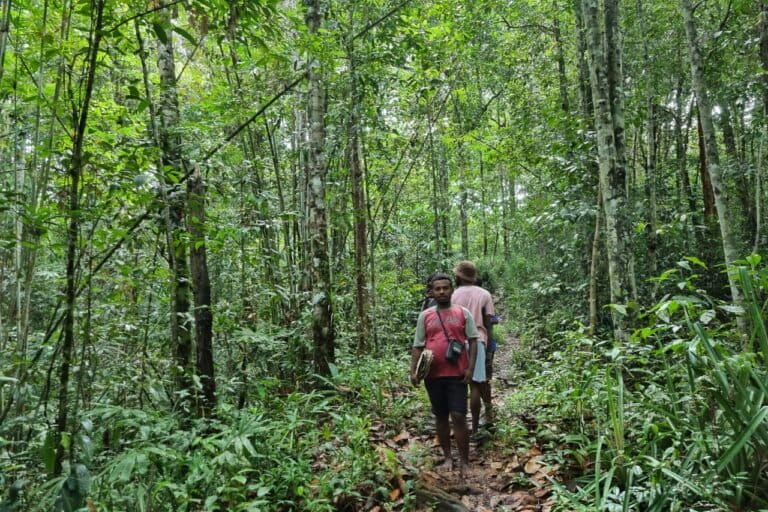
For the filmmaking team, the journey was as much about the people as it was about the birds. The documentary "In Search of The Northern Cassowary" chronicles the grueling process of tracking a bird that is notoriously shy and sensitive to human presence. It highlights the expertise of the local guides, whose ability to read the forest—tracking footprints and identifying feeding grounds—was essential to the project’s success.
Developmental Pressures and the Threat to Papua’s Identity
Despite the success of community-led conservation in Malagufuk, the broader landscape of Papua faces unprecedented developmental pressures. The region is currently a focal point for large-scale infrastructure and agricultural projects that threaten to override indigenous land rights and ecological safeguards.
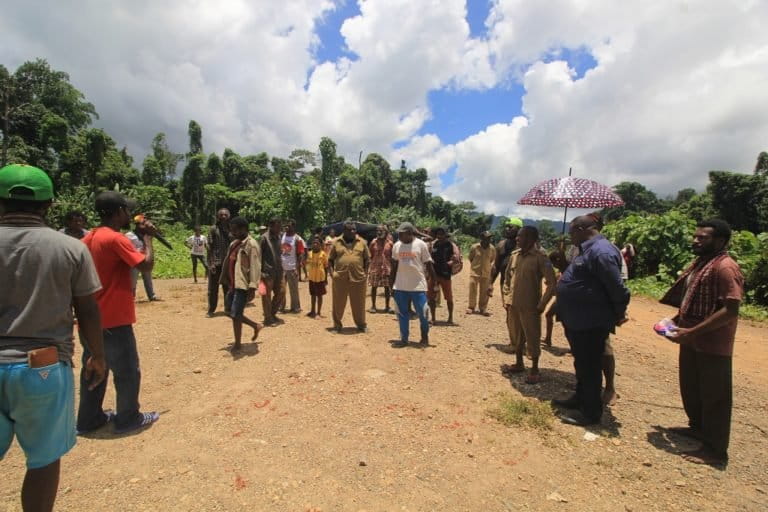
One of the primary concerns for the residents of Sorong is the potential conversion of forest land into mining concessions or industrial oil palm plantations. Furthermore, the planned construction of the Kali Warusam hydroelectric power plant (PLTA) poses a direct threat to the riverine ecosystems that many species depend on.
The Indonesian government’s "Food Estate" program has also drawn criticism from environmentalists and indigenous advocates. While intended to bolster national food security, these projects often involve the clearing of primary forests to make way for monoculture crops. For the people of Papua, the forest is not just a collection of trees; it is their "living pharmacy," their supermarket, and the foundation of their cultural identity.
Yanuarius Anouw, a representative from the Samdhana Institute and former director of Bentara Papua, argues that the destruction of the forest is synonymous with the destruction of Papuan identity. "Mahasiswa (students) and the younger generation have a powerful voice," Anouw stated during a film discussion in Manokwari. "They must speak out and remind the world that protecting the Papuan forest is about protecting who we are."
Analysis: The Path Toward Sustainable Conservation
The story of the Northern Cassowary and the Moi people highlights a critical tension in modern conservation: the gap between national development goals and local ecological realities. The "Forest Architects" are currently working in a landscape that is being rapidly reshaped by human ambition.
To ensure the long-term survival of Papua’s biodiversity, a multi-faceted approach is required:
- Legal Recognition of Indigenous Rights: Strengthening the legal framework for "Hutan Adat" (Customary Forests) would allow communities like the Moi to legally defend their lands against encroaching industrial interests.
- Integration of Traditional Knowledge: Modern conservation science must continue to partner with indigenous experts. The success of the Sasi system demonstrates that local management is often more resilient and cost-effective than top-down government mandates.
- Media as an Educational Tool: As noted by Yanuarius Anouw, documentary films serve as a bridge between rural realities and urban policy-making. By visualizing the "forest architects" and the communities that protect them, these films create a sense of national pride and urgency.
- Sustainable Ecotourism: Malagufuk has already begun exploring birdwatching tourism as a sustainable economic alternative to logging or hunting. If managed correctly, this can provide the community with the income needed to resist the lure of land-selling to corporations.
Conclusion: A Shared Responsibility
The fate of the Northern Cassowary is a litmus test for the future of the Papuan rainforest. If these birds disappear, the forest loses its ability to heal itself, and the indigenous cultures that have co-evolved with these ecosystems will face an existential crisis.
The work of Tim Laman, Yoki Hadiprakarsa, and the people of Malagufuk serves as a call to action. It reminds us that conservation is not a passive act but an active partnership between humans and the natural world. As the documentaries continue to be screened in villages and universities across Indonesia, the hope is that the next generation will see the cassowary not just as a bird, but as a vital partner in the survival of the planet.
The philosophy of Sasi and the tireless work of the forest’s avian architects offer a blueprint for a more sustainable future. However, this future can only be realized if the government, the private sector, and the public recognize that a standing forest in Papua is far more valuable than any commodity that could be extracted from its soil. The message from Malagufuk is clear: the forest is the lifeblood of the land, and its guardians—both feathered and human—must be protected at all costs.