Nasution Nanang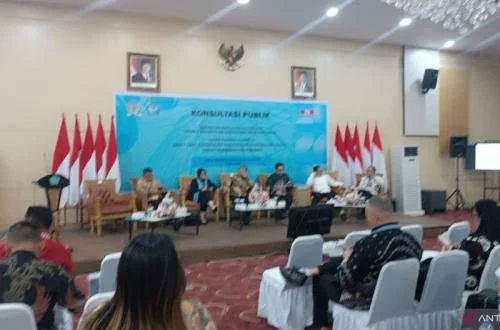
The urgent need for a comprehensive overhaul and synchronization of cooperative regulations between the central government and regional administrations in Indonesia was vehemently emphasized by Stefanus B.A.N. Liow, Chairman of the Regional Legislation Affairs Body (BULD) of the Regional Representative Council (DPD RI). Speaking during a pivotal public consultation in Manado on Thursday, Liow highlighted the prevailing inconsistencies within the existing regulatory framework as a significant impediment to the growth and effective functioning of cooperatives, a cornerstone of Indonesia’s economic philosophy. This consultative forum brought together key stakeholders from various levels of government, cooperative movements, academia, and village administrations, underscoring the broad consensus on the necessity of legislative reform to foster a more conducive environment for cooperative development across the archipelago.
The Constitutional Mandate and Historical Context of Cooperatives in Indonesia
Indonesia’s commitment to the cooperative model is enshrined in its foundational document, the 1945 Constitution. Article 33, Paragraph (1) explicitly states, "The economy shall be organized as a common endeavour based upon the principles of the family system." This constitutional mandate positions cooperatives not merely as economic entities but as a manifestation of the nation’s unique socio-economic ideals, emphasizing collective welfare, democratic principles, and mutual assistance (gotong royong). Historically, cooperatives have played a vital role in Indonesia’s economic development, particularly in rural areas, empowering farmers, fishermen, and small businesses. From the early 20th century, with figures like Mohammad Hatta championing the cooperative movement, these organizations have been seen as a mechanism to combat economic inequality and promote equitable distribution of wealth. The Cooperative Law No. 25 of 1992 has served as the primary legal framework for nearly three decades, guiding the establishment and operation of cooperatives. However, the rapidly evolving economic landscape, coupled with the decentralization of governance, has exposed significant gaps and ambiguities in this legislation, necessitating a contemporary and harmonized approach.
Regulatory Discord: The Ineffectiveness of Presidential Instructions
A central point of contention raised by Stefanus Liow revolves around the legal standing of Presidential Instructions (Instruksi Presiden or Inpres) within Indonesia’s hierarchical legal system. Liow clarified that Inpres, while directive in nature, do not fall within the established hierarchy of statutory regulations. This critical distinction means that Inpres lack the legal force to serve as a foundational basis for imposing administrative sanctions or other legal consequences. Consequently, any cooperative policies or programs heavily reliant on Inpres without corresponding legislative backing are susceptible to legal challenges and often fail to achieve their intended objectives due to an absence of enforceable mechanisms. This regulatory lacuna creates uncertainty and potential legal vulnerabilities for implementing agencies, particularly at the regional and village levels.
The North Sulawesi Provincial Government, represented at the consultation, expressed strong support for the swift revision of Law No. 25 of 1992 concerning Cooperatives. A key focus of this revision, as articulated by the provincial authorities, is the standardization of norms, standards, procedures, and criteria (NSPK) for cooperatives. The absence of clear and consistent NSPK leads to divergent interpretations and implementations across different regions, hindering uniform development and oversight. Harmonizing these elements is crucial for ensuring fair play, transparent governance, and efficient operations for all cooperatives, irrespective of their geographical location.
Distinguishing Koperasi Desa/Kelurahan Merah Putih (KDMP) and Badan Usaha Milik Desa (BUMDes)
Another critical aspect highlighted by Liow is the imperative to clearly delineate the operational and legal distinctions between Koperasi Desa/Kelurahan Merah Putih (KDMP) and Badan Usaha Milik Desa (BUMDes). Both entities operate at the village level and aim to bolster local economies, yet their legal foundations, governance structures, and programmatic objectives often create confusion and overlap.
BUMDes, established under Law No. 6 of 2014 concerning Villages, are village-owned enterprises intended to manage village assets, develop local economic potential, and provide public services for the welfare of village communities. They are directly accountable to the village government and are an integral part of the village’s administrative and economic structure. In contrast, KDMP, or "Red and White Village/Sub-district Cooperatives," often emerge from specific national programs designed to foster community-based cooperatives, sometimes with less distinct legal clarity regarding their integration with existing village economic structures or their independent cooperative status.
Liow stressed that cooperatives, fundamentally, must be unequivocally affirmed as direct manifestations of Article 33, Paragraph (1) of the 1945 Constitution. This constitutional grounding should dictate that both central and regional policies are consistently oriented towards the principles of economic democracy and the family system. Without this clear philosophical and legal anchor, the distinctions between KDMP and BUMDes blur, leading to administrative complexities, potential conflicts of interest, and ultimately, undermining the effectiveness of both types of entities in serving their respective communities.
BULD’s Extensive Monitoring and Identification of Core Issues
The DPD RI’s BULD has undertaken an extensive and rigorous monitoring process across all 38 provinces of Indonesia to comprehensively understand the challenges facing the cooperative sector. This robust process involved a multi-pronged approach, including absorbing community aspirations through various channels, conducting direct field visits to observe operations firsthand, and organizing public hearings with diverse stakeholders. This thorough investigation revealed three overarching problems plaguing the cooperative landscape:
- Potential for Criminal Risk for Village Heads: One of the most pressing concerns identified is the significant potential for village heads to face criminal charges related to financial management within village economic entities. This risk largely stems from the ambiguity surrounding the legal status and operational guidelines of certain cooperative programs, particularly when they interact with village funds or assets. Without clear legal frameworks distinguishing responsibilities and authorities, village heads often find themselves in precarious positions, vulnerable to accusations of mismanagement, even when acting in good faith.
- Ambiguity of Existing Cooperatives’ Existence: Many long-standing cooperatives, including the historically significant Koperasi Unit Desa (KUDs), face existential uncertainties due to the lack of clear regulatory recognition and support. Over time, legislative changes and the introduction of new programs have sometimes overshadowed or failed to adequately integrate these older, often deeply rooted, cooperative structures. This ambiguity can hinder their ability to access financing, receive government assistance, or even continue their operations effectively, despite their proven track record in community development.
- Overlap with Other Village Economic Entities Pre-KDMP: Before the widespread introduction of KDMP programs, many villages had established various other economic entities. The subsequent arrival of KDMP without clear guidelines for integration or distinction has led to significant overlaps and turf wars among these entities. This redundancy creates inefficiencies, competition for limited resources, and confusion among beneficiaries, ultimately fragmenting efforts to strengthen village economies.
Stefanus Liow emphatically asserted that these prevailing conditions are not indicative of a failure on the part of regional administrations or individual cooperatives. Instead, he attributed these systemic issues to a "poorly designed regulatory framework" (desain regulasi yang belum tepat). This crucial distinction shifts the blame from local implementers to the broader legislative architecture, emphasizing the need for top-down systemic reform rather than piecemeal local adjustments.
Strategic Recommendations for a Revitalized Cooperative Sector
Based on its exhaustive public consultations and monitoring findings, the BULD formulated six strategic recommendations aimed at revitalizing Indonesia’s cooperative sector and ensuring its alignment with national economic objectives:
- Accelerate the Revision of Law No. 25 of 1992: This is the most fundamental recommendation. An updated law is essential to address contemporary challenges, incorporate best practices, and provide a robust, clear, and consistent legal framework for all types of cooperatives. The revision should reflect the principles of decentralization and accommodate regional specificities while maintaining national standards.
- Strengthen the Legal Basis for KDMP Programs: To mitigate the risks faced by village heads and ensure the sustainability of KDMP, their legal foundation must be unequivocally strengthened. This could involve incorporating them explicitly into the revised cooperative law or developing subsidiary legislation that clearly defines their structure, governance, and relationship with village governments and existing cooperatives.
- Clarify the Institutional Relationship Between KDMP and BUMDes: A clear and unambiguous framework is required to define the roles, responsibilities, and operational boundaries of KDMP and BUMDes. This could involve establishing mechanisms for collaboration, preventing duplication of efforts, and ensuring that both entities contribute synergistically to village economic development without unnecessary competition.
- Orient Cooperative Policies Towards Quality Improvement: Beyond mere numerical growth, future cooperative policies should prioritize enhancing the quality, sustainability, and competitiveness of cooperatives. This involves focusing on capacity building, professional management, adoption of technology, and adherence to good corporate governance principles, rather than solely on the quantity of cooperatives established.
- Strengthen the Role of the Indonesian Cooperative Council (Dekopin): Dekopin, as the umbrella organization for cooperatives in Indonesia, plays a crucial role in advocacy, education, and coordination. BULD recommends empowering Dekopin in areas such as education and training, certification of cooperative managers, internal oversight mechanisms, legal advocacy for cooperatives, and harmonizing regulations. A robust Dekopin can act as a vital bridge between the cooperative movement, the government, and other stakeholders.
- Provide Protection for Existing Cooperatives, Especially KUDs: Recognizing the historical significance and ongoing contributions of established cooperatives, particularly KUDs, the recommendations call for specific protective measures. This could include safeguarding their assets, ensuring their continued legal recognition, and providing support to adapt to new regulations, thereby preserving their legacy and continued service to rural communities.
The Manado Public Consultation: A Platform for Dialogue and Consensus
The public consultation in Manado served as a critical platform for fostering dialogue and building consensus among various stakeholders. The event featured a distinguished panel of speakers and respondents, representing a cross-section of expertise and institutional perspectives.
Key Speakers included:
- Tahlis Gallang, Head of the Cooperatives and SMEs Agency of North Sulawesi: Provided insights into the regional challenges and opportunities for cooperatives and small and medium enterprises in North Sulawesi.
- Luki O.J. Kasenda, Secretary of United Villages North Sulawesi: Articulated the perspectives and concerns of village administrations regarding cooperative programs and their impact on village governance and development.
- G.S. Vicky Lumentut, Chairman of Dekopin North Sulawesi: Represented the voice of the cooperative movement in the region, offering practical insights into the operational realities and advocacy needs of cooperatives.
- Joy Elly Tulung, Chairman of the Indonesian Economists Association (ISEI): Offered an academic and economic perspective on the structural issues and policy implications for the cooperative sector.
Respondents who provided official perspectives from the central government included:
- Destry Anna Sari, Deputy for Cooperative Talent Development and Competitiveness, Ministry of Cooperatives and SMEs: Provided the central government’s view on talent development, capacity building, and strategies to enhance the competitiveness of cooperatives.
- La Ode Ahmad P. Bolombo, Director General of Village Government, Ministry of Home Affairs: Offered the perspective of the ministry responsible for village administration, highlighting the interface between village governance and cooperative development.
The presence of these high-level officials and representatives from both central and regional governments, along with cooperative leaders and academics, underscored the seriousness with which this issue is being addressed. It also signified a collaborative approach towards finding sustainable solutions for the cooperative sector.
Broader Impact and Implications for Indonesia’s Economic Future
The harmonization of cooperative regulations carries profound implications for Indonesia’s economic future. Firstly, it promises to enhance legal certainty and governance within the cooperative sector. Clear, consistent, and enforceable regulations will reduce the risk of legal disputes, promote transparency, and foster a more stable environment for cooperatives to thrive. This, in turn, will attract greater participation and investment, both from within the community and potentially from external partners.
Secondly, a robust regulatory framework will significantly contribute to economic development at the grassroots level. By empowering cooperatives with clear guidelines and legal protections, they can more effectively contribute to local economies, create employment opportunities, and improve the livelihoods of their members. This aligns directly with the constitutional mandate of an economy based on familial principles and economic democracy.
Thirdly, the DPD RI’s proactive role, through BULD, highlights the importance of regional autonomy in national policymaking. By collecting aspirations from 38 provinces, the DPD RI ensures that the revised legislation will not be a top-down imposition but a reflection of the diverse needs and challenges faced by communities across Indonesia. This consultative approach strengthens democratic processes and ensures that central policies are regionally sensitive and effective.
Finally, strengthening cooperatives will play a crucial role in achieving inclusive growth and reducing inequality. As member-owned and democratically controlled organizations, cooperatives inherently aim to distribute benefits equitably among their members. By fostering their growth and ensuring their legal protection, the government can further leverage cooperatives as a powerful tool for poverty alleviation and socio-economic empowerment, particularly in remote and underserved areas.
The journey towards a fully harmonized and effective cooperative regulatory framework is complex and requires sustained political will and collaborative effort. However, the comprehensive findings and strategic recommendations put forth by BULD DPD RI, combined with the broad support from regional governments and key stakeholders, signal a promising path forward. The successful revision of Law No. 25 of 1992 and the implementation of accompanying policies will be a testament to Indonesia’s commitment to its unique economic philosophy and its aspiration for a more just and prosperous society for all.