Nila Kartika Wati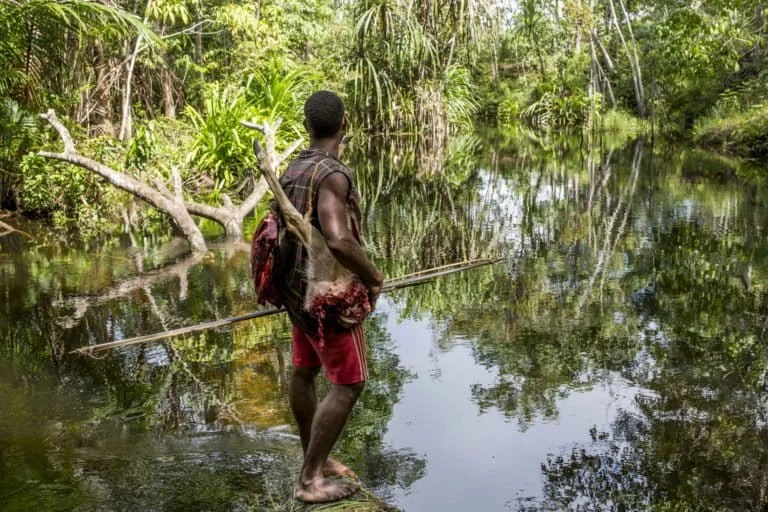
Indigenous communities in the regencies of Boven Digoel, Merauke, and Mappi have formally lodged a legal objection against the Indonesian Ministry of Forestry following the controversial reclassification of nearly half a million hectares of ancestral forest land. On February 10, 2026, twelve representatives of customary land owners, supported by legal counsel, submitted a formal letter to the Ministry in Jakarta demanding the immediate revocation of ministerial decrees that have paved the way for large-scale industrial development under the banner of National Strategic Projects (PSN). The legal challenge marks a significant escalation in the ongoing tension between the central government’s drive for food and energy self-sufficiency and the land rights of Indigenous Papuans.
The dispute centers on Ministry of Forestry Decree Number 591 of 2025 and its predecessor, Decree Number 430 of 2025. These administrative orders effectively removed "forest area" status from 486,939 hectares of land in South Papua, reclassifying it as "Other Use Areas" (Alokasi Penggunaan Lain or APL). According to Tigor Hutapea, a lawyer from the Yayasan Pusaka Bentala Rakyat who represents the indigenous groups, the move is a direct infringement on the customary rights of the native population. The communities are calling for the recognition of their ancestral domains and the cancellation of the decrees, which they argue were issued without their consent or knowledge.
A Rapid Shift in Land Status: The Chronology of Deregulation
The legal and administrative process that led to this massive land release was remarkably swift, raising concerns among civil society organizations regarding transparency and due diligence. The foundation for this shift was laid with the issuance of Presidential Instruction (Inpres) Number 14 of 2025, which mandated the acceleration of National Strategic Projects focused on food, energy, and water security. This high-level directive prioritized the development of vast tracts of land in Papua to address national commodity shortages.
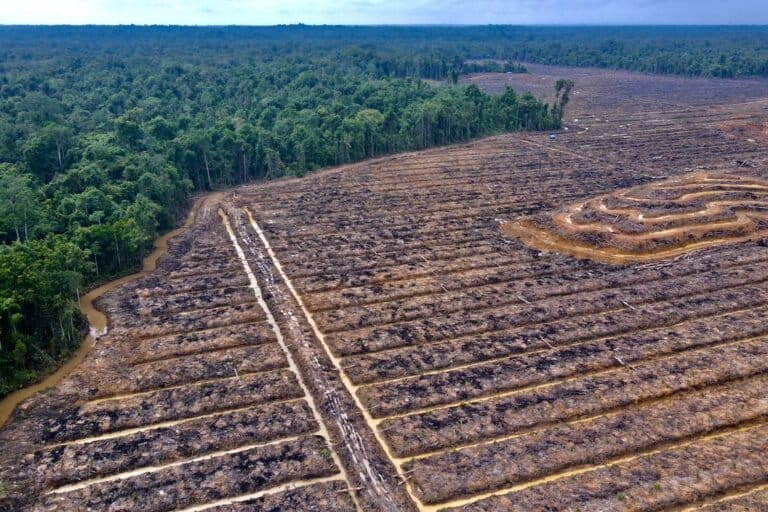
Following the Presidential Instruction, the Ministry of Forestry issued Decree No. 430/2025, which was later updated and replaced by Decree No. 591/2025 in September 2025. This latter decree formalized the change in land function across three key regencies in the newly formed South Papua province. Merauke bore the brunt of the reclassification with 333,966 hectares affected, followed by Boven Digoel with 143,142 hectares, and Mappi with 9,731 hectares.
Simultaneously, the provincial government of South Papua underwent a rapid revision of its Regional Spatial Plan (RTRW). The deliberation process for the new spatial plan began in September 2025 and was finalized by October 2025 through Regional Regulation (Perda) Number 3 of 2025. This one-month turnaround for a major spatial planning overhaul has been criticized by environmental advocates as a "lightning-fast" administrative maneuver designed to bypass rigorous social and environmental impact assessments.
Corporate Interests and the Privatization of Customary Land
Analysis conducted by Yayasan Pusaka Bentala Rakyat reveals that the land release is not merely a theoretical change in map status but a precursor to massive corporate expansion. Of the 486,939 hectares released, approximately 328,000 hectares have already been allocated under Right to Cultivate (HGU) and Right to Build (HGB) permits to PT Agrinas Pangan Nusantara. This company is central to the government’s vision of creating a modern agricultural hub in the region.
Franky Samperante, Executive Director of Yayasan Pusaka, characterized the policy as a form of land grabbing through the privatization of extractive economies. He argued that the government is utilizing the label of "National Strategic Projects" to commodify indigenous forests for the benefit of large-scale industrial agriculture. The intended projects include intensive plantations for biodiesel, biomass, and bioethanol, as well as export-oriented food crops. These operations typically rely on high-tech machinery, chemical fertilizers, and modern management structures—elements that Samperante argues are incompatible with the traditional livelihoods and ecological stewardship of the Papuan people.
The Violation of FPIC and the Struggle for Hutan Adat
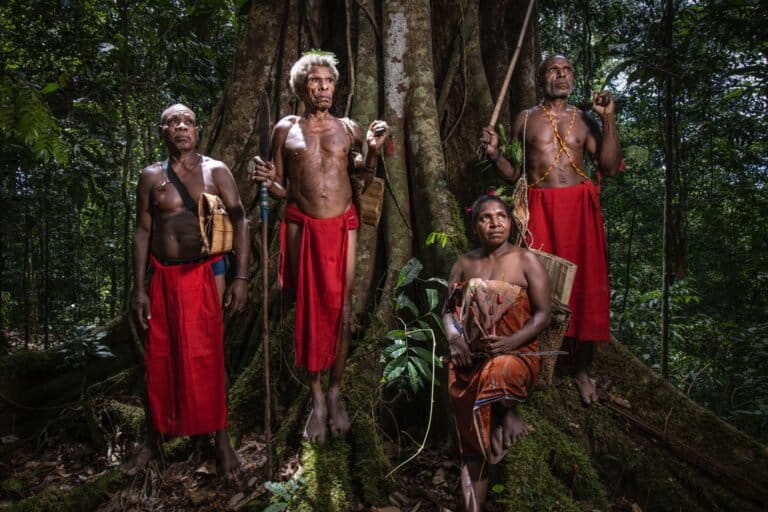
A primary grievance cited by the indigenous representatives is the total absence of Free, Prior, and Informed Consent (FPIC). Teddy Wakum, Director of LBH Papua Merauke, stated that the customary land owners were shocked to learn of the ministerial decisions through secondary sources rather than direct consultation. Under international human rights standards and various national guidelines, the government is required to engage in meaningful dialogue with indigenous communities before reclassifying land that they have managed for generations.
The irony of the situation is compounded by the fact that many of these communities were already in the process of seeking formal legal recognition for their lands. For instance, eight clans from the Wambon Kenemopte tribe had submitted applications for "Indigenous Forest" (Hutan Adat) status as early as September 2023. Albertus Tenggare, a representative of the Wambon Kenemopte, noted that while the community was struggling to meet the rigorous bureaucratic requirements set by the Ministry of Environment and Forestry, the government was simultaneously working to strip the forest of its protected status to accommodate palm oil and food estate projects.
"We are still trying to complete the administrative requirements for our forest recognition, yet the Minister has already changed the status of our forest to ‘non-forest’ to be planted with oil palm," Tenggare said. He described the action as a form of "ecocide" and a blatant disregard for the survival of indigenous groups.
Ecological Risks and the "Colonial Paradigm" of Development
Environmental organizations have warned that the scale of deforestation resulting from these decrees will be catastrophic. Refki Saputra, a Forest Campaigner for Greenpeace Indonesia, urged a total evaluation of the forest release policy. He argued that the government continues to operate under a "colonial paradigm" that views Papua as "Terra Nullius"—empty land belonging to no one.
"There is still a deep-seated assumption that the land in Papua is vacant and masterless," Saputra said. "This allows the state to justify the occupation of indigenous forests while denying the existence and rights of the people who live there."
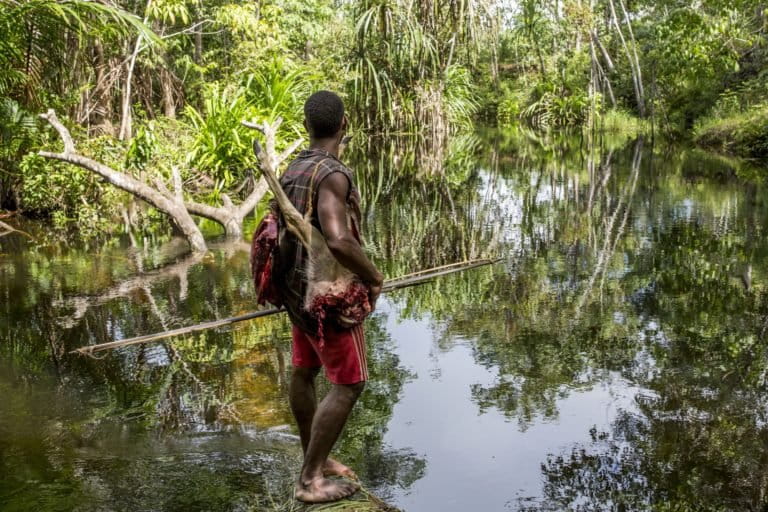
The ecological stakes are globally significant. Papua is home to some of the highest levels of biodiversity on the planet. Recent data indicates that Papua possesses approximately 13,634 species of flora, of which 68% are endemic. This surpasses the plant diversity of Madagascar, previously considered the world’s leader in floral endemism. The conversion of nearly 500,000 hectares into industrial zones threatens to destroy these unique ecosystems and the traditional food systems—such as sago harvesting and hunting—that sustain the local population.
Human Rights Concerns and the Komnas HAM Report
The push for National Strategic Projects in Papua has also come under fire from the National Commission on Human Rights (Komnas HAM). In a research report titled "The Impact of National Strategic Projects on Human Rights," published in December 2024, the commission criticized the government’s focus on business and investment at the expense of social and economic equity.
The Komnas HAM data highlighted that PSNs have been a significant source of human rights violations across Indonesia, with at least 114 formal complaints filed. These violations include the infringement of the right to participate, the right to information, and the right to a safe environment. The report concluded that many projects fail to create inclusive economic growth and instead exacerbate the marginalization of vulnerable groups.
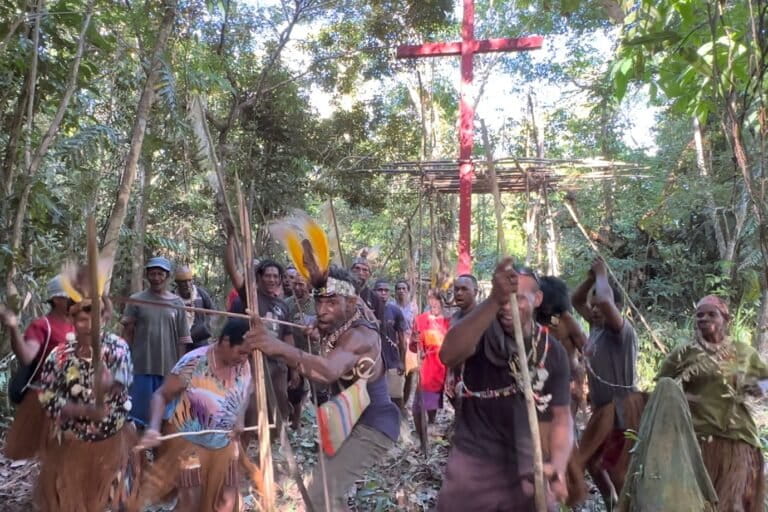
Maikel Primus Peuki, Executive Director of Walhi Papua, expressed frustration that the findings of Komnas HAM have been largely ignored by the administration. He questioned whether the development of Papua is truly intended for the benefit of the Papuan people or for external corporate interests. "The government claims these projects are for food security, but they are destroying the local food sources that the indigenous Papuan people rely on to survive," Peuki said.
A Call for Total Evaluation and Potential Litigation
The coalition of indigenous groups and civil rights organizations, operating under the banner of "Solidarity for Merauke," has issued a stern warning to the central government. If the Ministry of Forestry does not revoke Decrees 591 and 430 of 2025, the communities intend to take the matter to court.
The advocates are calling for several immediate actions:
- A Moratorium on PSN in Papua: An immediate halt to all large-scale extractive projects that have not received genuine consent from local communities.
- Total Evaluation of Forest Releases: A comprehensive review of all land reclassifications in South Papua to ensure they align with environmental sustainability and indigenous rights.
- Restoration of Ancestral Lands: The return of land currently designated for PSN to the traditional owners.
- Adherence to FPIC: The implementation of a mandatory and transparent consultation process for any future development plans.
As the indigenous communities of Boven Digoel, Merauke, and Mappi stand their ground, the situation in South Papua serves as a critical test for the Indonesian government’s commitment to both its climate goals and its constitutional obligation to respect customary law. The outcome of this legal and social struggle will likely determine the ecological and cultural landscape of the region for decades to come. Organizations like Greenpeace and Walhi emphasize that the government must learn from past ecological disasters in Sumatra and Aceh, where rapid land conversion led to long-term social and environmental crises. For the people of South Papua, the forest is not just a resource to be exploited; it is their "living space," their culture, and their future.