Tata Titiana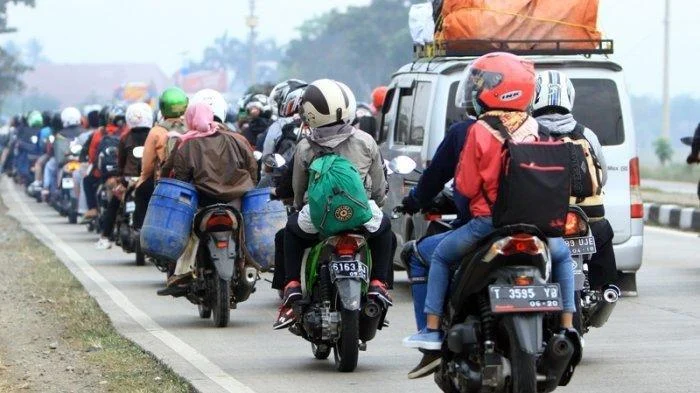
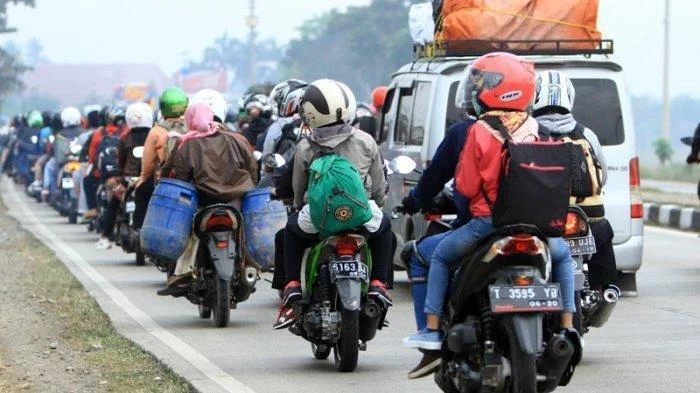
Indonesia has officially permitted its citizens to undertake the traditional mudik (homecoming) to their hometowns for the Eid al-Fitr (Idul Fitri) celebration in 2021, marking a significant departure from the strict prohibition enforced in the preceding year. This decision, announced by the Minister of Transportation, Budi Karya Sumadi, during a working meeting with Commission V of the House of Representatives (DPR RI) on Tuesday, March 16, 2021, signals a cautious shift in the government’s approach to managing public mobility during the pandemic. However, the Ministry of Transportation has clarified that this is not an encouragement to travel, as the ministry lacks the authority to issue such directives. Instead, the focus is on establishing a robust framework to facilitate safe travel.
The government’s decision to allow mudik in 2021 comes after a year of unprecedented restrictions in 2020, when the burgeoning COVID-19 pandemic led to a nationwide ban on homecoming journeys. This ban was a critical measure aimed at curbing the spread of the virus, particularly from densely populated urban centers to more rural areas where healthcare infrastructure might be less equipped to handle a surge in cases. The economic and social implications of the 2020 ban were substantial, disrupting deeply ingrained cultural practices and impacting the livelihoods of many who depend on the annual migration.
For Eid al-Fitr 1442 Hijri, the government intends to collaborate closely with the COVID-19 Task Force (Gugus Tugas Covid-19) to develop specific mechanisms for mudik travel. The overarching goal is to prevent these journeys from becoming a vector for COVID-19 transmission into villages and other communities. As stated in an Instagram post by Minister Budi Karya Sumadi, the Ministry of Transportation will engage in consultations with various stakeholders to ensure a conducive mudik season. Key among these considerations are the tightening of travel requirements and the implementation of enhanced tracing protocols.
Evolving Travel Regulations: Conditions and Requirements for 2021 Homecoming
Minister Budi Karya Sumadi outlined several key conditions and provisions for individuals wishing to undertake the mudik journey in 2021. These measures are designed to mitigate the risks associated with increased public movement.
Firstly, the stringent adherence to health protocols is paramount throughout the entire travel process, from the point of departure, during the journey itself, and upon arrival at the destination. This includes maintaining physical distancing, consistent use of face masks, and ensuring regular disinfection of transportation facilities and public spaces.
Secondly, to anticipate potential surges in passenger numbers, the government will implement rigorous tracing mechanisms. This aims to quickly identify and isolate any individuals who may have contracted the virus, thereby preventing further spread.
Thirdly, the validity period for screening tests, such as rapid antigen tests, will be shortened. This measure ensures that test results are current and accurately reflect an individual’s health status at the time of travel. The specific duration of this shortened validity period is still under review and will be clearly communicated to the public.
Beyond these primary conditions, other health protocols will be further reinforced. These include limiting the number of passengers in vehicles to ensure adequate space for distancing, and carefully managing service schedules to avoid overcrowding at transportation hubs. The public is urged to take personal responsibility and demonstrate a high degree of compliance with these health protocols for the collective well-being. The precise details of the mudik mechanism are still being finalized by the Ministry of Transportation in conjunction with relevant parties.
Expert Apprehension and the Persistent Threat of Transmission
Despite the government’s decision to permit mudik for Eid al-Fitr 2021, the move has been met with apprehension from public health experts. Many epidemiologists express concerns about the continued potential for COVID-19 transmission, even with the ongoing vaccination program. Riris Andono Ahmad, an epidemiologist from Gadjah Mada University (UGM), suggested that the decision might stem from an assumption that the vaccination coverage is already sufficient to control the situation.
However, Riris emphasizes that the primary challenge lies not solely in the protection offered by vaccination, but in the behavioral adherence of travelers. He warns that if individuals fail to strictly implement health protocols, the transmission of COVID-19 will persist, much like it did before the advent of vaccines. This underscores the critical role of individual responsibility in public health management.
The choice of transportation mode is therefore deemed highly significant. The government is reportedly facilitating the provision of COVID-19 screening equipment, such as GeNose, at various terminals, stations, and airports. This initiative aims to provide travelers with accessible testing options and to identify potential infections before individuals embark on their journeys.
Riris suggests that public transportation might be a safer option compared to private vehicles, as it allows for more structured oversight and adherence to protocols. The concern with private vehicles is the potential for less stringent supervision, which could inadvertently become a conduit for virus transmission to destination areas. Therefore, travelers are encouraged to utilize public transport if they choose to undertake the mudik journey this year, as it offers a greater degree of governmental monitoring should any issues arise.
The Enduring Importance of Health Protocols Post-Vaccination
It is crucial to reiterate that receiving a COVID-19 vaccine does not grant a complete exemption from adhering to health protocols in public spaces. Even individuals who have been vaccinated must continue to diligently practice measures such as mask-wearing, maintaining physical distance, and frequent hand hygiene. The presence of the virus in the community means that transmission remains a possibility, and vaccinated individuals can still carry and transmit the virus, albeit with a reduced risk of severe illness.
Riris Andono Ahmad expressed a personal hope that, at a macro level, the mudik for Lebaran could ideally be postponed. He anticipates that the pandemic may not have fully subsided by Eid al-Fitr 2021, and that vaccination coverage might still be insufficient to significantly mitigate the risk of widespread transmission. This perspective highlights the ongoing public health debate surrounding the balance between facilitating cultural practices and safeguarding public health during a pandemic.
Contextualizing the Decision: Lessons from 2020 and Historical Precedents
The decision to allow mudik in 2021 is a direct response to the challenges and experiences of 2020. The complete ban on homecoming travel in 2020, while effective in limiting immediate transmission during the Eid period, had profound social and economic repercussions. Many families were separated for extended periods, and the absence of migrant workers returning to their villages impacted local economies. The cultural significance of mudik as a time for family reunions and community bonding could not be overstated.
Historically, the concept of restricting large-scale public movement for religious holidays is not entirely unprecedented in Indonesia. For instance, records indicate that a ban on mudik was also enforced in 1946, shortly after Indonesia’s declaration of independence. This historical precedent demonstrates that the government has, in the past, prioritized public safety and national stability over traditional migratory practices during times of crisis. The 1946 ban was likely influenced by the prevailing conditions of the time, which may have included public health concerns or security issues.
The Role of Technology and Infrastructure in Safe Mudik
The government’s plan to deploy screening technologies like GeNose at transportation hubs is a significant step in leveraging technological advancements for public health management. GeNose, developed by researchers at Gadjah Mada University, is a breathalyzer-based diagnostic tool that can detect COVID-19 infection by analyzing volatile organic compounds (VOCs) in a person’s breath. Its rapid testing capability and relatively low cost make it a potentially valuable tool for mass screening at points of high transit.
The successful implementation of such technologies, however, hinges on several factors: the availability of sufficient devices, trained personnel to operate them, and efficient systems for managing test results and follow-up actions. Furthermore, the accuracy and reliability of these screening tools are subject to ongoing scientific scrutiny and validation.
Beyond screening, the government is also focusing on improving the infrastructure and operational procedures at transportation hubs. This includes ensuring adequate ventilation in enclosed spaces, implementing contactless payment systems to minimize physical interaction, and potentially staggering departure and arrival times to reduce congestion.
Economic and Social Implications of the 2021 Mudik Decision
The allowance of mudik in 2021 is expected to have a positive impact on various sectors of the Indonesian economy. The transportation industry, including airlines, bus operators, and train services, will likely see an increase in demand. Similarly, businesses in regions that typically receive a surge of visitors during Eid al-Fitr, such as the hospitality and retail sectors, can anticipate a boost in activity.
However, this economic revival comes with inherent risks. A significant increase in inter-regional travel could lead to a resurgence of COVID-19 cases if not managed effectively. This could, in turn, necessitate renewed public health restrictions, potentially negating any short-term economic gains and prolonging the pandemic’s overall impact.
The social implications are equally complex. For many Indonesians, mudik is a deeply cherished tradition that symbolizes family unity and cultural continuity. The ability to participate in these traditions, even with restrictions, can provide a much-needed sense of normalcy and psychological relief after a prolonged period of social distancing and isolation. Conversely, the potential for travelers to unknowingly carry the virus to vulnerable relatives, particularly the elderly, remains a significant concern.
The Path Forward: A Balancing Act Between Mobility and Public Health
The Indonesian government’s decision to permit mudik for Eid al-Fitr 2021 represents a delicate balancing act between the desire to uphold cultural traditions and the imperative to protect public health. The success of this policy will depend on the effective implementation of stringent health protocols, robust surveillance and tracing mechanisms, and the active cooperation of the public.
The lessons learned from the 2020 ban and the ongoing global experience with COVID-19 underscore the fact that managing a pandemic requires constant adaptation and a data-driven approach. While the 2021 mudik season offers a glimmer of hope for many, it also serves as a stark reminder that vigilance and adherence to public health guidelines remain critical as Indonesia navigates the complexities of the ongoing pandemic. The coming weeks will be crucial in assessing the effectiveness of the implemented measures and determining the trajectory of the pandemic in Indonesia.