Nila Kartika Wati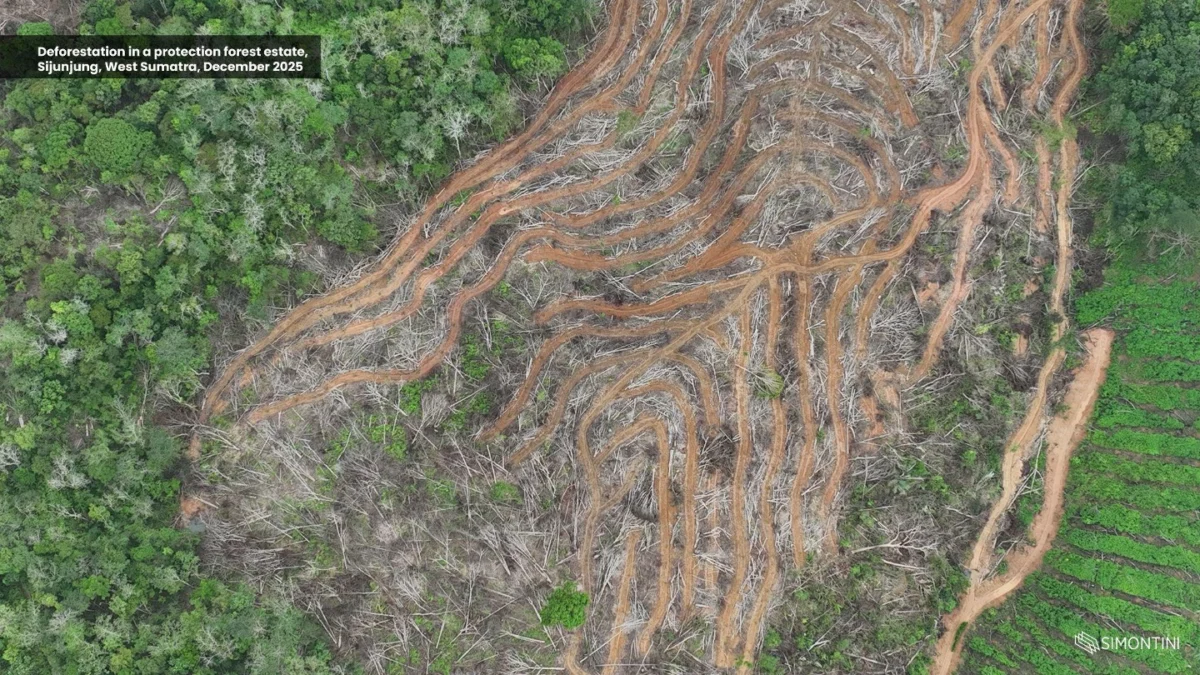
The Status of Deforestation in Indonesia 2025 report, recently published by the environmental organization Yayasan Auriga Nusantara, has revealed a staggering 66 percent increase in forest loss over the past year. According to the comprehensive study, known as STADI 2025, Indonesia’s total deforested area expanded from 261,575 hectares in the previous monitoring period to 433,751 hectares in 2025. This significant uptick marks a troubling trend for the nation’s remaining primary forests, with much of the destruction linked to government-backed National Strategic Projects (PSN), including large-scale food estate programs and infrastructure development in the country’s easternmost regions.
The findings are the result of a rigorous multi-layered methodology combining spatial modeling from Sentinel-2 satellite imagery at a 10-meter resolution with monthly deforestation alerts from the University of Maryland. These digital detections were further validated through visual inspections and ground-level verification to ensure the highest degree of accuracy. The report highlights a shift in the geography of forest loss, noting that while traditional hotspots in Kalimantan and Sumatra remain critical, the "frontier" of deforestation has moved aggressively into Papua.
Regional Breakdowns: Kalimantan and Sumatra Under Pressure
For more than a decade, Kalimantan has remained the epicenter of Indonesian deforestation. Timer Manurung, Chairman of Yayasan Auriga Nusantara, confirmed during the report’s launch in Jakarta on March 31 that Kalimantan recorded the highest loss of any island, totaling 158,283 hectares. This represents a 22 percent increase from the previous year’s figure of approximately 130,000 hectares. Manurung noted that Kalimantan has consistently held the top position for forest loss since 2013, driven by a combination of coal mining, industrial timber plantations, and oil palm expansion.
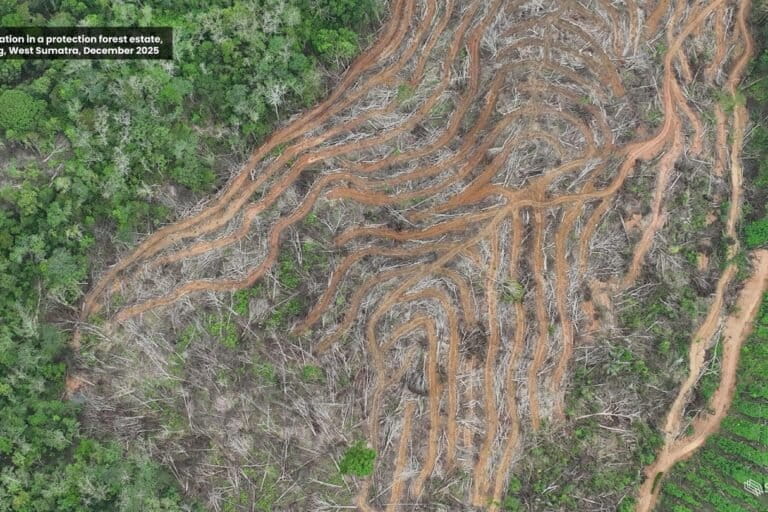
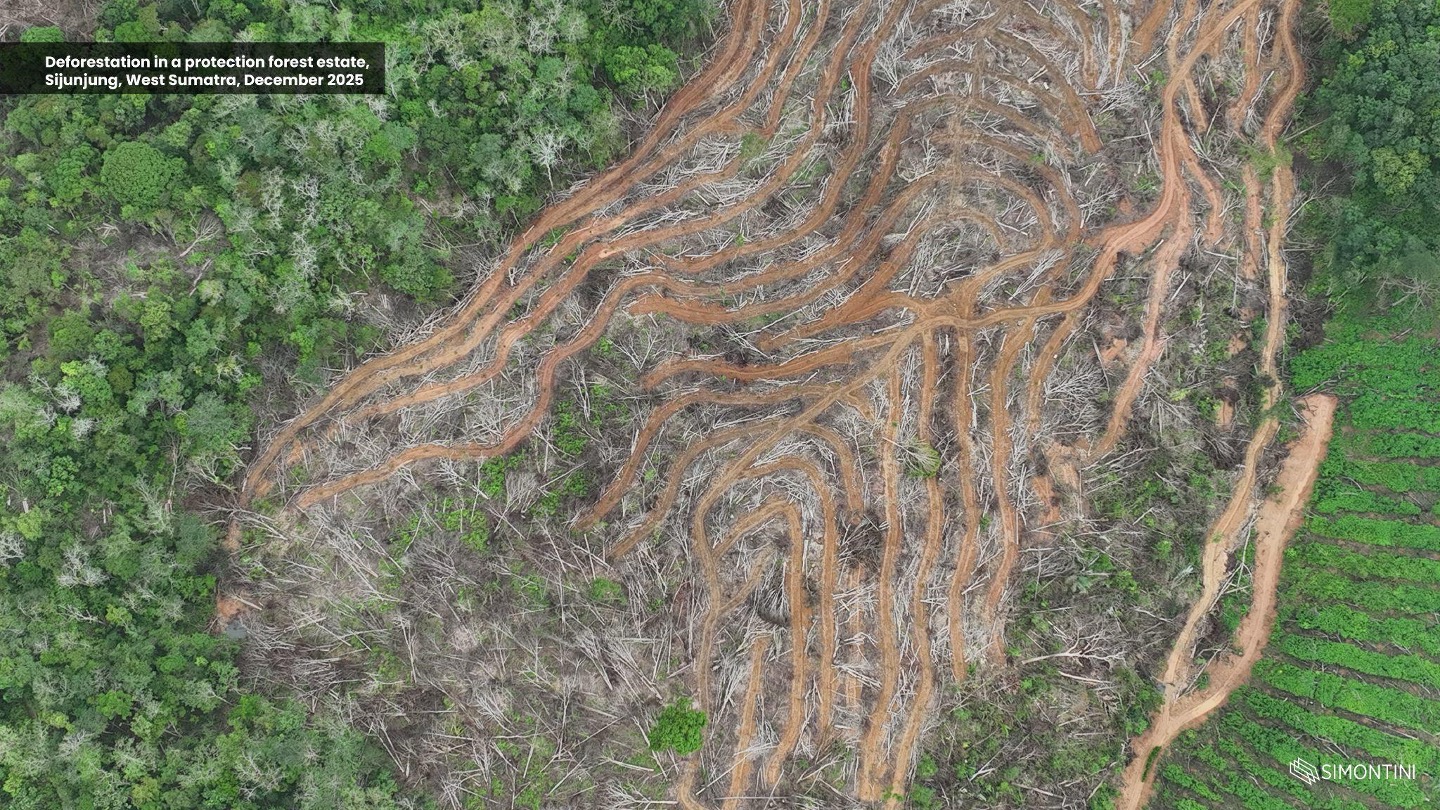
Sumatra followed as the second most impacted region, with 144,150 hectares of forest cleared. The report highlighted a direct correlation between rapid deforestation and the increasing frequency of natural disasters. Three provinces in Sumatra that suffered from devastating floods and landslides in late 2025 also saw the most dramatic spikes in forest removal. Aceh’s deforestation rate soared by 426 percent, jumping from 8,962 hectares to 38,157 hectares. North Sumatra saw a 281 percent increase, while West Sumatra recorded a massive 1,034 percent surge, with forest loss escalating from 2,606 hectares to 26,940 hectares within a single year.
The New Frontier: Papua and the Impact of National Strategic Projects
The most alarming trend identified in the STADI 2025 report is the acceleration of forest clearing in Papua. Deforestation in the region increased by 348 percent, rising from 17,341 hectares to 77,678 hectares. Analysts at Auriga point to the central government’s development agenda as the primary catalyst. In Central Papua, the site of the Siboru Fak Fak Airport—a National Strategic Project—deforestation reached 26,978 hectares. Meanwhile, Southwest Papua and West Papua lost 9,459 and 8,421 hectares, respectively.
The report suggests that the administrative fragmentation of Papua into more provinces (Daerah Otonomi Baru) has inadvertently triggered a wave of infrastructure development. New administrative centers require new roads, government buildings, and utilities, which in turn attract industrial investment. Timer Manurung warned that this is only the beginning. He argued that the current surge is a "warning sign" because the infrastructure and workforce are not yet fully established; once they are, the pressure on Papua’s pristine forests could become insurmountable.
A significant portion of the loss in Papua is attributed to the "Food Estate" program. The government has allocated approximately 20.6 million hectares of forest land nationwide for food, energy, and water reserves. Auriga’s spatial analysis indicates that 8.8 million hectares of this allocation consists of natural forests. In 2025 alone, 78,213 hectares of deforestation occurred within these reserve areas, accounting for 18 percent of the national total.
The Legality of Destruction: Concessions and Policy Drivers
One of the most striking revelations of the report is that the majority of deforestation is not the result of "illegal" activity in the traditional sense. Approximately 58 percent of the forest loss in 2025 occurred within areas where the government had granted formal permits or where state projects were active.
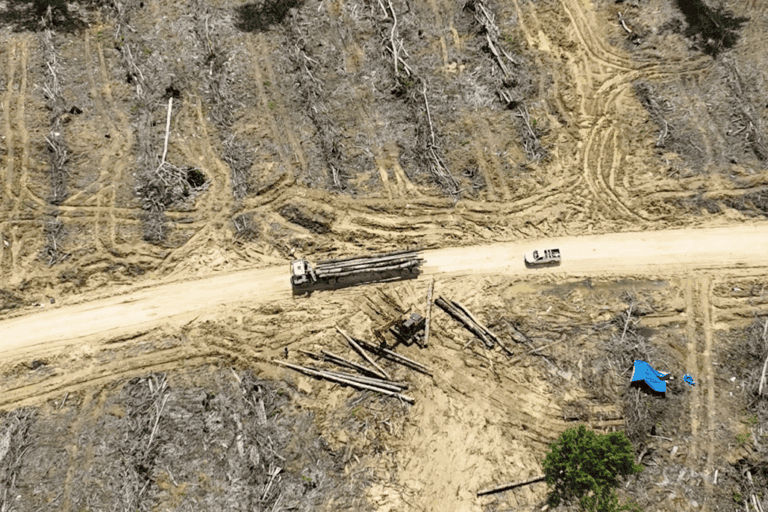
Of the total national deforestation, 44 percent took place within industrial concessions. Specifically, mining concessions accounted for 41,162 hectares, forestry concessions (timber plantations) for 110,898 hectares, and oil palm plantations for 37,910 hectares. This data suggests that current regulatory frameworks are facilitating, rather than preventing, the large-scale removal of natural forest cover.
In Sulawesi, a paradoxical trend emerged where the drive for "energy security" resulted in the destruction of food security assets. Thousands of hectares of productive rice paddies, which had sustained local communities for decades, were cleared to make way for industrial smelters and energy-related infrastructure. Conversely, in other regions, natural forests were razed to create new rice fields under the food estate banner, a move critics describe as "rice security" rather than holistic food security.
Crisis in Conservation: Wildlife and Habitat Loss
The report provides a grim outlook for Indonesia’s protected areas. Deforestation within conservation zones tripled in 2025, rising from 7,700 hectares in 2024 to 25,077 hectares. If the definition is expanded to include formal conservation areas, wildlife habitats, and other protected zones—totaling some 63 million hectares—then 43 percent of all national deforestation is occurring within land that is technically meant to be preserved.
Among the most affected areas are:
- Kerinci Seblat National Park: 6,362 hectares lost.
- Jayawijaya Wildlife Reserve: 3,210 hectares lost.
- Gunung Leuser National Park: 1,379 hectares lost.
- Lorentz National Park: 889 hectares lost.
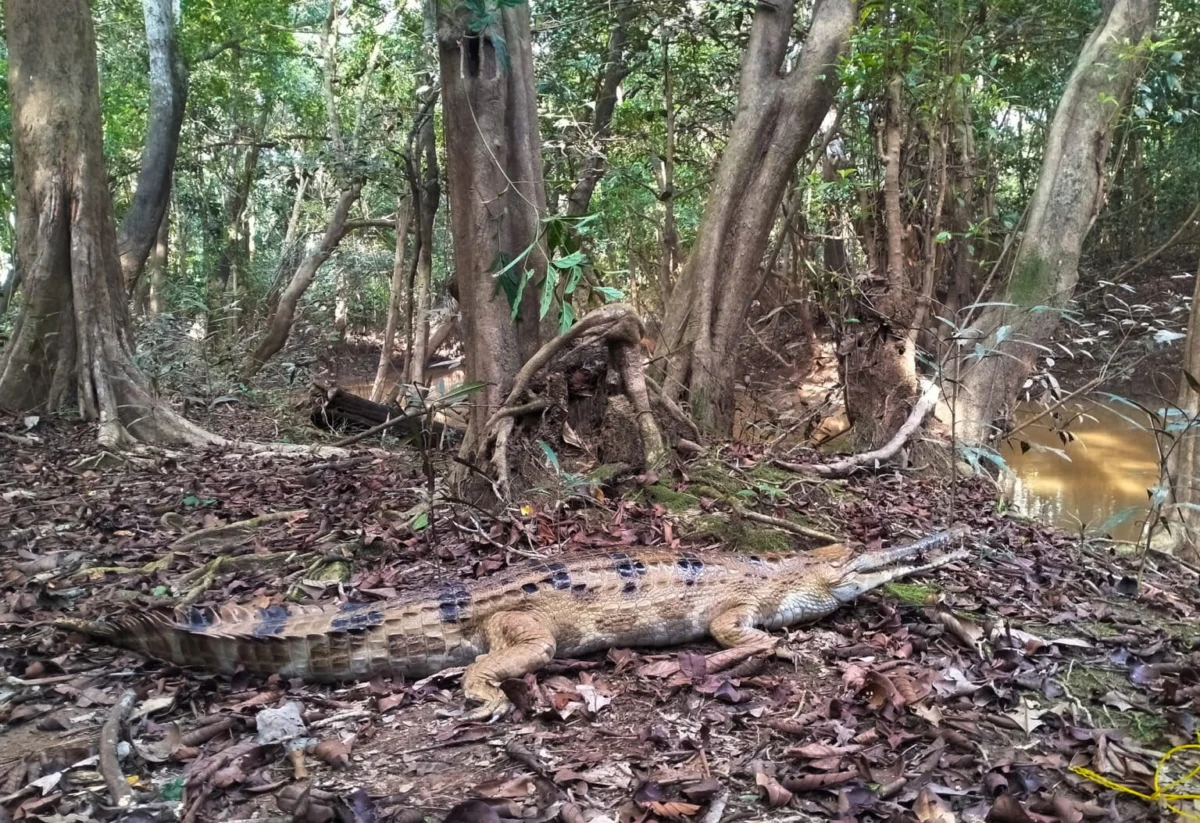
This loss of habitat is pushing Indonesia’s iconic and endangered species closer to extinction. Auriga recorded that 150,000 hectares of deforestation occurred within the specific habitats of endemic species. The Sumatran tiger’s habitat shrank by 78,049 hectares, while the Bornean orangutan lost 66,890 hectares of its range. Other species severely impacted include the Sumatran elephant (25,301 hectares lost), the Sumatran rhino (18,477 hectares), and the critically endangered Tapanuli orangutan (505 hectares).
The report identifies a massive disparity in protection resources as a key reason for this failure. In Lorentz National Park in Papua, the protection budget is as low as Rp25,000 to Rp60,000 per hectare, with a single ranger responsible for 35,000 hectares. In contrast, national parks in Java, such as Gede Pangrango, receive millions of rupiah per hectare and have a ranger ratio of one person per 157 hectares.
Government Response and Methodological Debates
In response to the report, Ristianto Pribadi, Head of the Bureau of Public Relations and International Cooperation at the Ministry of Forestry, expressed appreciation for Auriga Nusantara’s efforts in promoting transparency. However, he urged caution when comparing the figures directly with government data. The Ministry of Forestry reported its own preliminary deforestation figure of 166,450 hectares for the period ending September 2025, noting that this data is still being finalized.
Pribadi explained that the discrepancy in numbers often stems from differing definitions of "deforestation." The Ministry defines it strictly as the permanent loss of forest cover. In contrast, many NGOs use "tree cover loss" as a metric, which includes temporary loss from harvesting in industrial timber plantations. The Ministry views timber plantations as sustainable managed forests where harvesting is part of a cycle, not a permanent loss. Furthermore, the Ministry only counts the initial conversion of natural forest to plantation as deforestation, whereas other models might count every harvest cycle.
Despite these methodological differences, the Ministry acknowledged that the increasing pressure on forests is a "serious signal" that requires a robust policy response. Pribadi noted that land-use changes are influenced by a complex mix of legal activities, including production forest management and national development programs that have undergone official licensing processes.
Recommendations for Future Governance
To address the escalating crisis, Yayasan Auriga Nusantara has proposed a seven-point strategy for the Indonesian government:
- Strengthened Legal Framework: The issuance of a Presidential Regulation (Perpres) specifically for natural forest protection, which carries more legal weight and potential for sanctions than a Presidential Instruction (Inpres).
- Spatial Planning Control: Implementing strict controls over the revision of Regional Spatial Plans (RTRW) to prevent the legal "bleaching" of forest status into "Other Use Areas" (APL) for the benefit of concessions.
- Expansion of Preservation Areas: Accelerating the protection of habitats located outside formal forest zones, such as the Batang Toru ecosystem.
- Resource Redistribution: Reallocating rangers and budgets from Java to high-risk areas in Papua and Kalimantan to ensure effective field monitoring.
- Corporate Accountability: Pushing the private sector to adopt genuine Environmental, Social, and Governance (ESG) standards to eliminate deforestation from supply chains.
- Incentive Schemes: Providing financial and administrative incentives for communities and institutions that successfully protect forests, especially those outside state-managed lands.
- Data Transparency: Opening deforestation data to the public to foster an honest, data-driven dialogue between the state, civil society, and the international community.
As Indonesia balances its ambitions for economic growth and food sovereignty with its international climate commitments, the STADI 2025 report serves as a critical reminder of the environmental costs associated with the current development trajectory. The surge in deforestation, particularly in the ecologically sensitive regions of Papua and Sumatra, suggests that without a significant shift in policy, the nation’s remaining natural heritage faces an uncertain future.