Nila Kartika Wati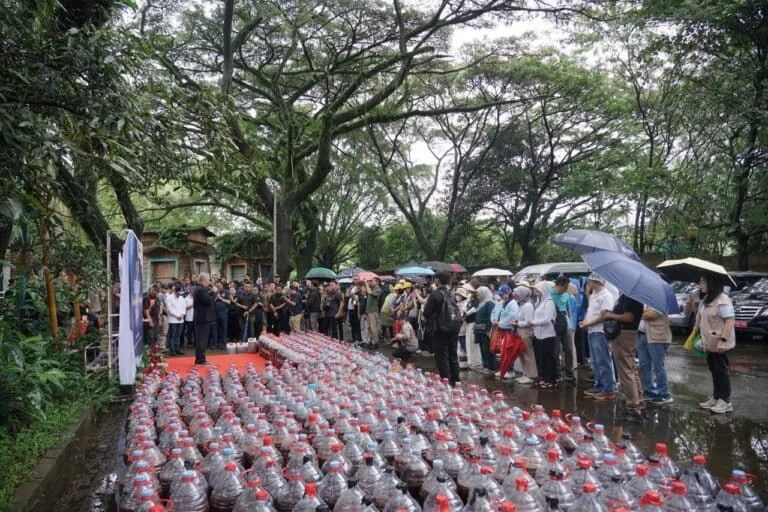
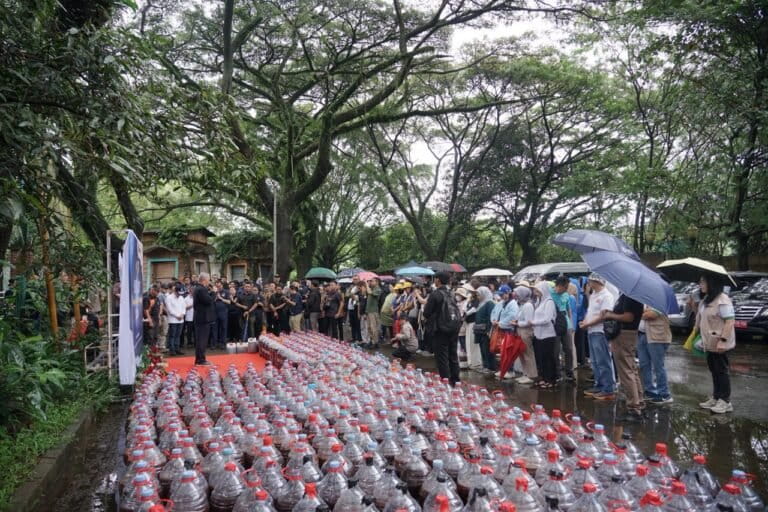
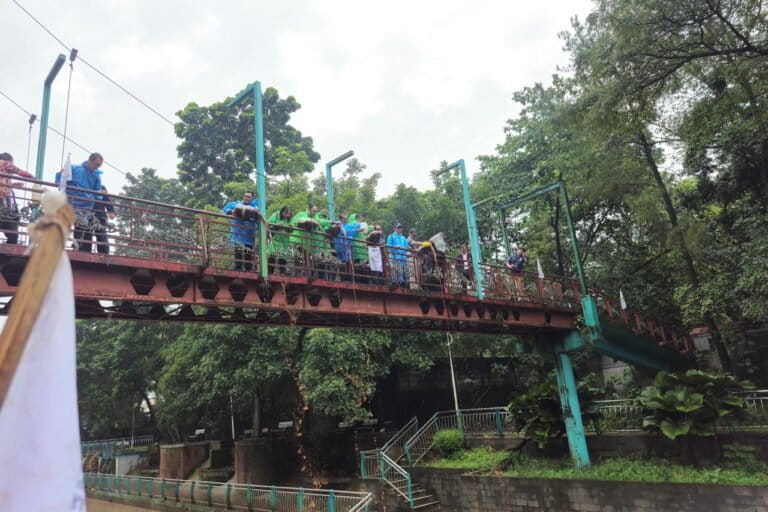
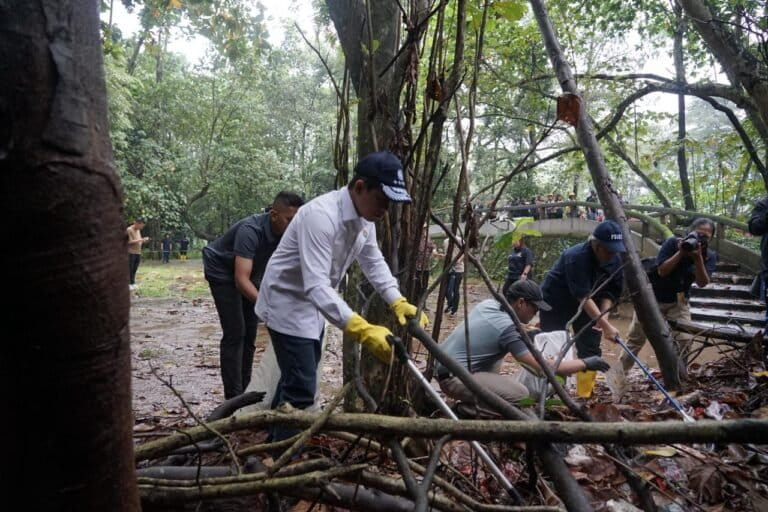
The Indonesian Ministry of Environment and the Bureau of Environmental Impact Control (BPLH) recently spearheaded a massive environmental intervention in the Cisadane River basin, following a catastrophic pesticide spill that devastated local aquatic life. On Saturday, March 8, 2026, Hanif Faisol Nurofiq, the Minister of Environment and Head of BPLH, led a public ceremony to pour 10,000 liters of eco-enzyme into the Jaletreng River, a critical tributary of the Cisadane. This event, which involved the Indonesian Buddhist Youth Generation (Gemarbudhi) and various community groups, was officially recognized by the Indonesian Museum of Records (MURI) as the largest single application of eco-enzyme for river restoration in the nation’s history.
Minister Hanif stated that the initiative was a core component of the government’s efforts to remediate the water quality of the Cisadane River, which suffered severe contamination following a massive fire at a pesticide warehouse owned by PT Biotek Saranatama on February 9, 2026. "We are very proud of the active participation of the younger generation in this concrete action to restore the Cisadane River," the Minister said in an official statement. "We hope this activity serves as an inspiration for all levels of society to play an active role in protecting our environment. The river is not only the lifeblood of today but also determines the quality of life for our children and grandchildren in the future."
The government’s strategy aims to neutralize hazardous pesticide compounds that have lingered in the water column and sediment since the industrial accident. However, while the administration celebrates the record-breaking feat, environmental scientists and non-governmental organizations (NGOs) have raised significant questions regarding the scientific validity and actual efficacy of using eco-enzymes to treat industrial chemical spills.
Chronology of the Contamination Crisis
The environmental crisis began in the early hours of February 9, 2026, when a fire broke out at the PT Biotek Saranatama facility. The warehouse contained significant stockpiles of agricultural chemicals, including potent insecticides. As firefighters worked to extinguish the blaze, the resulting runoff—laden with concentrated pesticides—entered the drainage systems and eventually flowed into the Jaletreng and Cisadane Rivers.
In the days following the fire, a massive ecological disaster unfolded. Thousands of fish and other aquatic organisms were found dead along a 41-kilometer stretch of the river, extending from the site of the spill all the way to the Teluk Naga area in Tangerang Regency. Preliminary investigations by the Ministry of Environment confirmed the presence of organophosphate compounds, specifically Profenofos and Cypermethrin, in the water.
In response to the immediate threat, the Ministry took several emergency steps, including securing the remaining chemical waste at the fire site and deploying Environmental Management Inspectors (PPLH) to establish a perimeter. The government also announced plans to collaborate with the National Research and Innovation Agency (BRIN) to explore bioremediation options, particularly if pesticide residues remained high in the river’s sediment.
The Scientific Debate: Is Eco-Enzyme the Right Tool?
Eco-enzyme is a complex solution produced by the fermentation of organic kitchen waste, sugar, and water. While it has gained popularity in Indonesia for domestic cleaning and small-scale organic waste management, experts warn that its application in large-scale industrial pollution scenarios is largely untested and potentially misleading.
Prigi Arisandi, the Executive Director of Ecological Observation and Wetlands Conservation (Ecoton), expressed skepticism regarding the government’s approach. Speaking to the media, Arisandi argued that the microorganisms found in eco-enzymes are not specifically engineered or biologically equipped to break down complex toxic substances like organophosphates. "The bacteria in eco-enzyme are not the correct type for degrading or performing bioremediation on insecticide toxins that have spilled into a river," Arisandi explained.
He further noted that eco-enzyme is more appropriate for treating domestic organic waste rather than Hazardous and Toxic Substances (B3). According to Ecoton, the government should have prioritized a comprehensive scientific disclosure of the river’s current state before launching a public intervention. Arisandi emphasized the need for a detailed mapping of the contamination’s characteristics and the remaining concentrations of toxins in the sediment and riverbank vegetation.
Echoing these concerns, Nindhita Proboretno, Co-Director of the Nexus3 Foundation, highlighted the lack of scientific evidence supporting the use of eco-enzymes for neutralizing substances like Profenofos or Cypermethrin in open, flowing ecosystems. "If this step is positioned as the primary solution, there is a risk that the public will get the impression that the pollution has been handled, even though pesticide residues in the environment may not have actually decreased," she warned.
Proboretno explained that while bioremediation—the use of living organisms to remove pollutants—is a legitimate scientific field, it typically requires highly controlled environments and specific microbial strains tailored to the target pollutant. "Eco-enzyme is a fermented mixture with a non-standardized composition of microorganisms, so it cannot be assumed to be effective in breaking down pesticides," she added.
Toxicological Profile and Public Health Implications
The two primary chemicals identified in the spill, Profenofos and Cypermethrin, pose significant risks to both the environment and human health. Both are classified by the World Health Organization (WHO) as Class II (Moderately Hazardous).
Profenofos is an organophosphate that acts as a neurotoxin. In humans, acute exposure can lead to symptoms such as nausea, dizziness, and respiratory distress. Long-term exposure or high-dose ingestion can cause severe neurological damage and reproductive issues. In aquatic environments, it is extremely toxic to fish and invertebrates, disrupting their nervous systems and leading to rapid mortality.
Cypermethrin, a synthetic pyrethroid, is also highly toxic to aquatic life. For humans, contact can cause skin irritation, respiratory problems, and gastrointestinal distress. Because the Cisadane River serves as a vital source of raw water for Regional Water Utility Companies (PDAM) in the Tangerang and Greater Jakarta areas, the presence of these residues in the water supply is a matter of urgent public concern.
Nindhita Proboretno pointed out that the ease with which these chemicals entered the river system indicates a systemic failure in industrial safety and chemical management at the PT Biotek Saranatama facility. "When hazardous chemicals can easily enter a river body, it shows there is a gap in the management and pollution prevention systems that should have been anticipated," she said.
Regulatory Framework and Systematic Recovery
Dyah Paramita, a Senior Researcher at the Center for Regional Policy and Governance (CRPG), criticized the government’s response as being "reactive" rather than "systematic." She argued that any intervention in a major ecosystem should be grounded in the framework provided by Government Regulation No. 22 of 2021 concerning the Implementation of Environmental Protection and Management.
According to Paramita, the legal recovery process should follow a strict hierarchy:
- Inventory of Water Bodies: Identifying the hydrological, ecological, and chemical characteristics of the river through satellite imagery and field investigations.
- Water Quality Classification: Establishing the current baseline of the river against national standards.
- RPPMA (Water Quality Protection and Management Plan): Developing a formal plan at the national and regional levels that integrates monitoring data and sets clear targets for pollutant reduction.
"If the water quality after the pesticide pollution no longer meets the established quality standards, we need to see exactly which parameters are exceeding the thresholds," Paramita stated. She emphasized that without a transparent, science-based plan, ceremonial actions like pouring eco-enzyme may serve as a public relations success but fail as an environmental remedy.
The Need for Transparency and Long-term Monitoring
As the Cisadane River continues to recover, environmental advocates are calling for total transparency from the Ministry of Environment and BRIN. The public, they argue, has a right to know the specific levels of pesticide residues remaining in the water, the sediment, and the tissues of surviving fish.
"The most important thing is the disclosure of monitoring results to the public," said Proboretno. "People need to know if there are hazardous materials in their environment and how large the risks are to their health and the ecosystem."
The Ecoton group has also urged the government to implement a long-term monitoring plan. Pesticides like organophosphates can persist in riverbed sediments for extended periods, potentially being re-released into the water column during heavy rains or dredging activities. A comprehensive recovery strategy would involve not just the addition of enzymes or microbes, but the physical removal of contaminated sediments and the restoration of riparian buffer zones that help filter pollutants.
While the 10,000-liter eco-enzyme pour has successfully raised public awareness about the plight of the Cisadane, the scientific community remains watchful. The true measure of the river’s recovery will not be found in record books, but in the return of its biodiversity and the long-term safety of the water used by millions of residents in the surrounding region. The Ministry of Environment has yet to release a detailed technical report on the impact of the eco-enzyme application, leaving the debate over its effectiveness open as the region grapples with the aftermath of one of its worst industrial water pollution incidents in recent years.