Nila Kartika Wati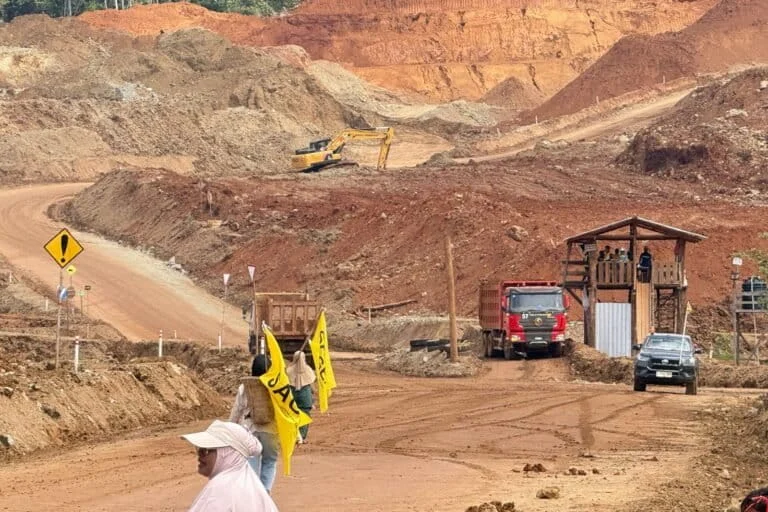
The Indonesian nickel industry, currently the world’s most dominant force in the production of stainless steel and electric vehicle (EV) battery components, is grappling with a profound paradox where market leadership is being purchased at the expense of severe environmental degradation and economic instability. While the nation’s ambition to become a global hub for the green energy transition remains a cornerstone of its economic policy, the reality on the ground reveals a landscape of oversupply, falling prices, and a carbon footprint that contradicts the very essence of the "green" revolution it seeks to support. As Indonesia accounts for an ever-increasing share of the global market, reaching an estimated 64% of total refined nickel production by 2025, experts warn that the current trajectory is unsustainable without radical policy shifts and a genuine commitment to decarbonization.
The Dynamics of Global Oversupply and Price Volatility
The rapid expansion of Indonesia’s nickel processing capacity has led to a significant imbalance in the international market. According to data from the International Nickel Study Group (INSG), the global nickel surplus is projected to rise from approximately 209,000 tons in 2025 to 261,000 tons by 2026. This abundance of supply has had a predictable and painful impact on global prices. At the end of last year, nickel prices plummeted to approximately US$14,125 per ton, a sharp decline that has put immense pressure on higher-cost producers elsewhere in the world, leading to mine closures in regions like Australia and New Caledonia.
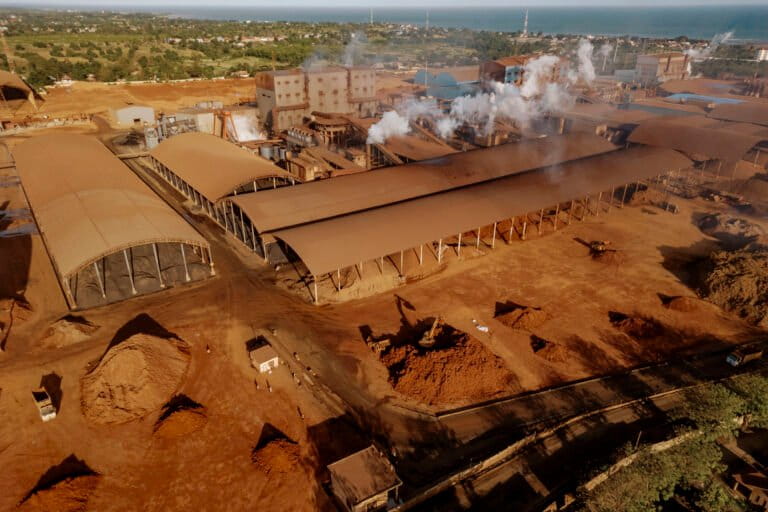
Arianto Sangadji, a prominent researcher from the Action for Ecology and People’s Emancipation (AEER), notes that while prices have seen a slight and fluctuating recovery toward the US$17,000 per ton range, the fundamental issue of oversupply remains unaddressed. The aggressive push to commission new smelters, primarily funded by Chinese investment, has created a production juggernaut that the global market struggles to absorb, even with the rising demand for electric vehicles. This surplus not only threatens the profitability of the sector but also diminishes the leverage Indonesia has in demanding better environmental and social standards from its industrial partners.
The Carbon Paradox: Dirty Energy for Green Batteries
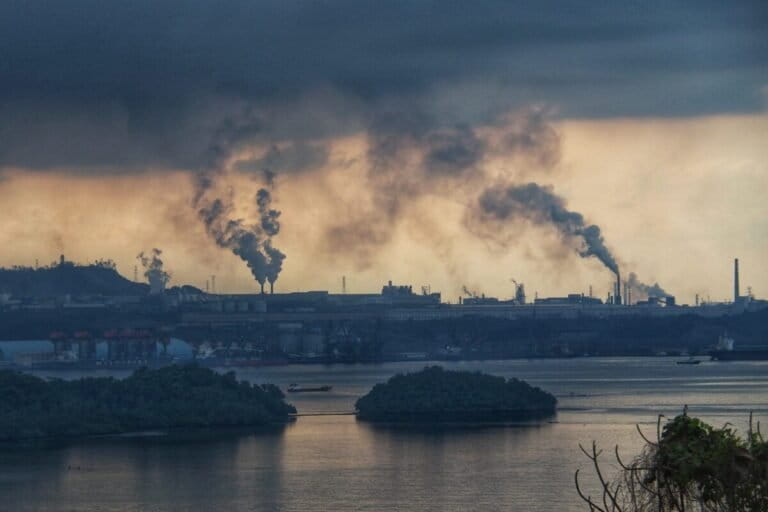
The most striking irony of the Indonesian nickel boom lies in its carbon intensity. The processing of nickel, particularly for the battery-grade Mixed Hydroxide Precipitate (MHP), relies on technologies that are heavily dependent on fossil fuels. High-Pressure Acid Leaching (HPAL), while touted as the solution for processing low-grade limonite ore into EV battery precursors, leaves a massive carbon trail. Arianto’s research indicates that while HPAL is more energy-efficient than the older Rotary Kiln Electric Furnace (RKEF) method, it still produces between 18 and 33 tons of CO2 for every ton of nickel-cobalt product.
The RKEF process, used primarily to produce Nickel Pig Iron (NPI) for the stainless steel industry, is even more pollutive, emitting between 40 and 120 tons of CO2 per ton of nickel. The root of this high emission profile is Indonesia’s reliance on "captive" coal-fired power plants—facilities built specifically to power industrial parks in remote areas like Morowali and Halmahera. Currently, there are approximately 72 captive coal plants with a total capacity of 15.4 Gigawatts serving the nickel industry. This capacity exceeds the total electricity available to the general populations of Sulawesi and North Maluku combined, highlighting a stark disparity between industrial growth and public infrastructure.
The Tragedy of the Commons and the Need for Holistic Policy
The current state of the industry is a textbook example of the "Tragedy of the Commons," according to Meditya Wasesa, an Associate Professor of Business Analytics at the Bandung Institute of Technology (ITB). In this scenario, shared natural resources are extracted at an unsustainable rate for the profit of specific entities, while the broader community and the environment bear the long-term costs. Wasesa argues that Indonesian nickel policy has historically been experimental, often relying on high-risk trials like export bans and tax incentives without fully calculating the socio-environmental fallout.
To move beyond this, Wasesa advocates for the use of "system dynamics" computational simulations. This scientific approach allows policymakers to project the quantitative impact of decisions—such as royalty rates or export limits—before they are implemented. His research emphasizes the need for an "equilibrium" that balances the three pillars of sustainability: people, planet, and profit. He warns that the government can no longer afford to hide behind mining corporations or prioritize short-term revenue over the preservation of biodiversity, such as the endangered species found in Sulawesi’s forests, or the water rights of indigenous communities.
European Regulatory Pressure and the Rise of "Green Nickel"
As Indonesia struggles with its domestic challenges, the international landscape is shifting toward stricter accountability. Michael Reckordt, an expert from the German organization PowerShift, emphasizes that the European Union (EU) is no longer interested in nickel at any cost. With the European Green Deal aiming for carbon neutrality by 2050, the demand is shifting toward "green nickel"—raw materials produced with minimal environmental impact and high ethical standards.
Key regulations are set to redefine the global supply chain:
- EU Battery Regulation: Starting next year, this regulation mandates high recovery rates for minerals from end-of-life batteries (90% by 2027). By 2031, new batteries must contain a minimum percentage of recycled nickel, reducing the long-term reliance on newly mined ore.
- Corporate Sustainability Due Diligence Directive (CSDDD): Although its full implementation has been delayed by the EU until 2029, similar laws are already active in Germany and France. These laws require companies like BMW, Mercedes-Benz, and Volkswagen to identify and mitigate human rights and environmental risks throughout their entire supply chains.
- Legal Recourse: Under these new frameworks, civil society organizations and affected communities in producer nations like Indonesia gain the right to seek compensation in European courts if companies fail their due diligence obligations.
Reckordt points out that Indonesia’s reliance on coal power could become a major barrier to market access. European automakers are increasingly ambitious, with many targeting net-zero emissions by 2038. If Indonesian nickel remains tied to high-emission coal, it risks being excluded from the premium European market, which is increasingly focused on a circular economy and reduced raw material consumption.
A Chronology of Policy and Environmental Degradation
The evolution of Indonesia’s nickel industry has been marked by several pivotal moments that have led to the current impasse:
- 2014: Indonesia implements its first major ban on the export of raw mineral ores to encourage domestic smelting.
- 2017: The ban is partially relaxed to allow companies time to complete smelter construction.
- 2020: A full ban on nickel ore exports is reinstated, triggering a massive influx of investment, primarily from China, into industrial parks in Sulawesi and North Maluku.
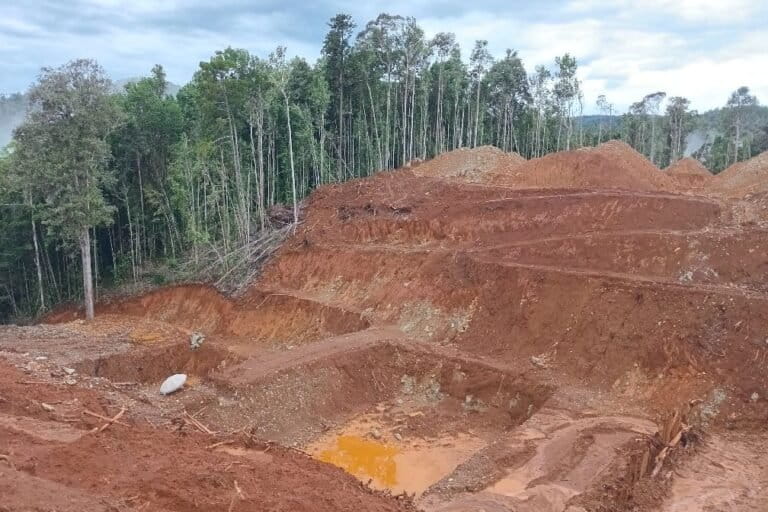
- 2022-2023: Rapid commissioning of HPAL plants begins, but concerns over "deep-sea tailings placement" (DSTP) and carbon emissions from captive coal plants gain international attention.
- 2024: The Ministry of Energy and Mineral Resources (ESDM) begins cutting mining quotas (RKAB) from 360 million tons to 250 million tons in an attempt to stabilize the market and curb environmental destruction.
Strategic Recommendations for Industry Reform
To prevent a total environmental and economic collapse, experts and civil society groups are calling for radical intervention. The consensus among researchers like Arianto Sangadji and organizations like AEER is that the era of unchecked expansion must end.
First, there must be a strict moratorium on new smelter permits for both RKEF and HPAL technologies. The existing oversupply suggests that additional capacity will only serve to further depress prices and accelerate deforestation. Second, the government must accelerate the phase-out of captive coal plants. A target of 2034 for the total decommissioning of these plants is proposed, requiring a swift transition to renewable energy sources like solar, wind, or geothermal power to run the smelters.
Third, the reduction of mining quotas (RKAB) must be strictly enforced. By limiting production to 250 million tons per year, Indonesia can potentially influence global prices upward while slowing the rate of "land clearing" and the displacement of indigenous peoples. Finally, there is a desperate need for transparency in the supply chain. Global consumers, including the major EV manufacturers, must be held accountable for the conditions at the start of their value chains in places like Morowali and Sagea.
Implications and the Future Outlook
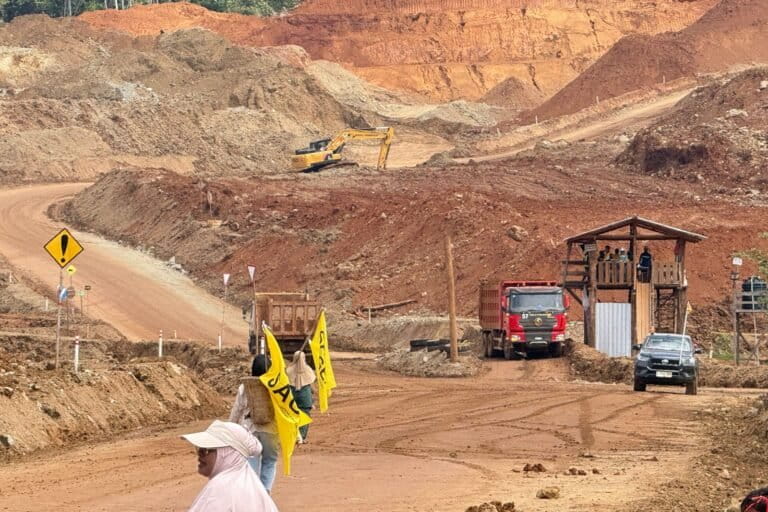
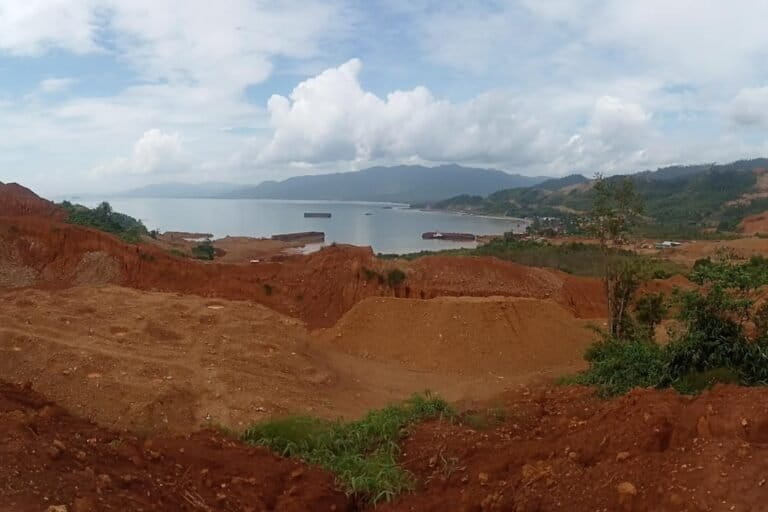
The stakes for Indonesia are high. If the country continues to prioritize volume over value and sustainability, it risks creating a landscape of "stranded assets"—massive industrial complexes that are no longer compatible with a world demanding low-carbon solutions. Furthermore, the social cost of mining—evidenced by the loss of clean water in Sagea and the deforestation of Maba Sangaji—creates a legacy of conflict that could haunt the nation for generations.
The transition to a green economy was never meant to be a zero-sum game where the environment in the Global South is sacrificed for the air quality of the Global North. For Indonesia’s nickel industry to have a future, it must undergo a fundamental transformation from a high-carbon extraction machine into a transparent, low-emission component of the global circular economy. The tools for this transformation—scientific modeling, stricter regulation, and a shift to renewable energy—are available. What remains to be seen is whether the political will exists to use them before the "Tragedy of the Commons" reaches its final, irreversible chapter.