Hadi Wijaya
The discourse surrounding the "childfree" lifestyle has resurfaced with significant intensity in the Indonesian public sphere, sparked by the controversial remarks of social media influencer and YouTuber Gita Savitri Devi, commonly known as Gitasav. The debate, which has permeated various social media platforms, centers on the choice to voluntarily remain childless, a concept that Gitasav recently linked to "natural anti-aging" and a stress-free life. This assertion has prompted a wave of responses from religious scholars, sociologists, and government officials, all of whom are weighing the personal autonomy of individuals against traditional religious values and the long-term demographic health of the nation. Among the most prominent voices in this discussion is Ustazah Tria Meriza, the founder of @sekolahmuslimah.bahagia, who has articulated a rigorous critique of the childfree ideology from an Islamic jurisprudential and theological perspective.
Ustazah Tria Meriza’s intervention comes at a time when Indonesia, the world’s most populous Muslim-majority nation, is navigating the complexities of modernization and the influx of Western individualistic values. Through a series of educational videos and social media posts, most notably on her Instagram account, Ustazah Tria has argued that the adoption of a childfree lifestyle is "haram" (forbidden) for Muslim couples based on four primary pillars of Islamic thought. Her analysis suggests that the childfree movement is not merely a personal reproductive choice but is rooted in a broader ideological shift that challenges the fundamental objectives of Islamic marriage and the preservation of the human race.
The first argument posited by Ustazah Tria centers on the ideological origins of the childfree concept. She asserts that the idea is a product of Western secularism, a worldview that seeks to decouple religious guidance from the private and public spheres of life. In a secular framework, decisions regarding family and procreation are often made based on the principle of utilitarianism—maximizing personal pleasure and minimizing perceived burdens—rather than adhering to divine commands. Ustazah Tria emphasizes that for a Muslim, the standard for action must always be the distinction between "halal" (permissible) and "haram" (forbidden), rather than a simple calculation of personal benefit or convenience. She warns that adopting secular ideologies without critical filter can lead to a erosion of the "fitrah" (natural disposition) of the human soul as envisioned in Islam.
The second point of contention involves the economic anxieties that often drive the decision to remain childfree. Many proponents of the lifestyle cite the rising cost of living, the "sandwich generation" phenomenon, and the desire for financial independence as reasons to avoid the expenses associated with child-rearing. However, Ustazah Tria argues that this rationale directly contradicts the Islamic "aqidah" (creed). Central to the Muslim faith is the belief that Allah is "Ar-Razzaq" (The Provider) and that He has guaranteed the "rizq" (provision) of every living creature. Citing various Quranic principles, she notes that fearing poverty as a result of having children is a lack of trust in divine providence. This theological stance aligns with historical Islamic teachings that view children not as a financial burden, but as a source of "barakah" (blessing) and a responsibility for which the means will be provided.
Thirdly, Ustazah Tria points to the legal and spiritual objectives of marriage in Islam, known as "Maqasid al-Shari’ah." One of the essential goals of a Sharia-compliant marriage is the preservation of lineage and the continuation of the human race ("Hifzh al-Nasl"). She references Surah an-Nahl, Verse 72 of the Holy Quran, which states: "And Allah has made for you from yourselves mates and has made for you from your mates sons and grandchildren and has provided for you from the good things. Is it in falsehood that they believe and in the favor of Allah they disbelieve?" According to this perspective, the procreative aspect of marriage is not an optional byproduct but a fundamental purpose. Choosing to permanently and voluntarily forgo children without a valid medical or emergency reason is seen as an intentional subversion of the divine design for the family unit.
The fourth and perhaps most culturally resonant argument is the Prophetic encouragement to have children. Ustazah Tria cites a well-known Sahih (authentic) Hadith narrated by Abu Daud, an-Nasa’i, and Ahmad, in which the Prophet Muhammad (peace be upon him) said: "Marry those who are loving and fertile, for I will be proud of your great numbers before the other nations on the Day of Resurrection." This tradition underscores the communal value of a large and vibrant "Ummah" (community). In the Islamic tradition, children are viewed as a "sadaqah jariyah" (continuous charity) for their parents; their prayers and righteous deeds continue to benefit the parents even after death. By opting out of parenthood, Ustazah Tria argues that couples are depriving themselves of this spiritual legacy and failing to contribute to the strength of the Muslim community.
The controversy was reignited when Gitasav, an Indonesian influencer living in Germany, responded to a comment on Instagram praising her youthful appearance. Gitasav replied that not having children is a "natural anti-aging" remedy because one can sleep for eight hours, avoid the stress of screaming children, and afford cosmetic procedures like botox. While her supporters viewed this as a bold statement of personal autonomy and a rejection of the societal pressure on women to become mothers, many in Indonesia viewed it as a dismissive and hedonistic take on the sacred role of motherhood. The backlash was swift, with netizens, celebrities, and religious figures alike weighing in on the "sanctity of the womb" and the joys of parenting despite its challenges.
To understand the weight of this debate, one must look at the broader global and domestic context. The childfree movement, which gained traction in the late 20th century in Western nations such as the United States, France, and the United Kingdom, has recently begun to find a foothold in East Asian and Southeast Asian countries. In nations like South Korea and Japan, birth rates have plummeted to record lows, leading to "demographic cliffs" that threaten economic stability and the sustainability of social welfare systems. While Indonesia’s total fertility rate (TFR) remains relatively stable at around 2.1 to 2.2 children per woman, the government has expressed concern about the potential for a "middle-income trap" if the productive-age population begins to shrink prematurely.
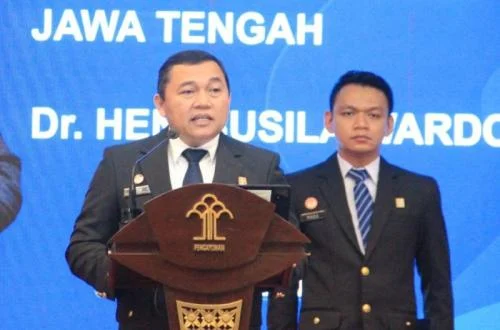
The National Population and Family Planning Board (BKKBN) of Indonesia has also responded to the childfree trend. Dr. (H.C.) dr. Hasto Wardoyo, Sp.OG (K), the Head of BKKBN, has frequently emphasized that while the government promotes the "dua anak lebih sehat" (two children are healthier) campaign to ensure quality upbringing, the idea of having no children at all is not aligned with the national goal of creating a "Golden Generation" by 2045. From a physiological and medical standpoint, Hasto Wardoyo has noted that delaying pregnancy too long can increase health risks for women, although he acknowledges that the decision to have children is a private right. However, he stresses that the family is the smallest and most vital unit of the state; if the desire to form families diminishes, the social fabric of the nation is at risk.
The sociological implications of the childfree lifestyle in Indonesia are multifaceted. Critics of the movement, like Ustazah Tria, argue that it fosters an "individualistic" mindset that values personal comfort over communal responsibility. Conversely, proponents of the childfree choice often point to "unresolved trauma," "fear of repeating bad parenting patterns," and "environmental concerns" regarding overpopulation as legitimate reasons for their stance. Some mental health advocates suggest that the pressure to have children in a society that lacks a strong social safety net and affordable childcare can be overwhelming, leading some to reject the idea of parenthood altogether as a form of self-preservation.
However, the Islamic perspective, as articulated by scholars like Ustazah Tria, seeks to reframe these challenges within a spiritual context. She concludes her message by reminding her followers that "having many children is fun" and rewarding, suggesting that the difficulties of parenting are outweighed by the spiritual and emotional fulfillment it brings. Her stance is a call to return to traditional values, urging the younger generation to be cautious of "importing" ideologies that may be incompatible with their religious identity.
The debate over the childfree lifestyle is unlikely to be resolved soon, as it touches upon deeply held beliefs about gender roles, economic security, and the meaning of life. As Indonesia continues to modernize, the tension between individual choice and collective duty will likely remain a central theme in its social discourse. For now, the voices of religious leaders like Ustazah Tria Meriza serve as a significant counter-narrative to the global trend of declining birth rates, reaffirming the central role of the family and the religious mandate for procreation in the Indonesian Muslim identity. The "Gitasav phenomenon" has served as a catalyst for a much deeper conversation about what it means to live a "happy" life—whether that happiness is found in the freedom of the individual or the continuity of the lineage and the service to a higher divine purpose.