Nasution Nanang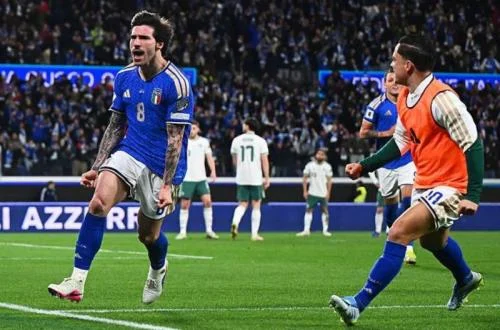
The Italian national football team has successfully maintained its ambition to qualify for the 2026 FIFA World Cup, triumphing over Northern Ireland with a decisive 2-0 victory in the UEFA European Qualifiers play-off semi-final, Path A. The pivotal encounter, held at the Gewiss Stadium in Bergamo on Thursday evening local time, saw goals from Sandro Tonali and Moise Kean secure Italy’s passage to the final stage of the play-offs. This crucial win sets up a decisive clash against the winner of the match between Wales and Bosnia-Herzegovina, scheduled for next Tuesday, as the Azzurri continue their arduous journey to reclaim their place on football’s biggest stage.
Italy’s Road to Redemption: Overcoming Past Failures
The pressure on the Italian national team leading into this play-off fixture was immense, a direct consequence of their recent and deeply painful history in World Cup qualification. The footballing world was stunned when Italy, four-time World Cup champions, failed to qualify for both the 2018 tournament in Russia and the 2022 edition in Qatar. The absence from two consecutive World Cups marked a unprecedented nadir for a nation synonymous with footballing excellence and instilled a desperate urgency within the Italian Football Federation (FIGC) and its legions of fans.
This period of World Cup drought stands in stark contrast to their glorious victory at UEFA Euro 2020 (held in 2021), where Roberto Mancini’s side captivated audiences with their attacking flair and defensive solidity. However, that triumph was quickly overshadowed by subsequent World Cup qualification failures, leading to a period of introspection and strategic recalibration. The departure of Roberto Mancini and the subsequent appointment of Luciano Spalletti, fresh from guiding Napoli to a historic Serie A title, was a clear signal of the FIGC’s commitment to revitalizing the national team. Spalletti inherited a squad with undeniable talent but one grappling with the psychological scars of past disappointments and the immense expectation of a proud footballing nation. His mandate was clear: restore Italy’s pride and, critically, ensure qualification for the 2026 World Cup.
Northern Ireland, while a respected opponent, entered the play-offs as significant underdogs. Their qualification campaign saw them finish in a challenging group, and their presence in the play-offs was a testament to their resilience and adherence to the UEFA Nations League ranking system which provides an alternative route. For Michael O’Neill’s side, this match was an opportunity to defy expectations and create a monumental upset, but they faced a formidable challenge against a wounded Italian giant desperate to prove its worth. The UEFA play-off system itself, with its single-leg knockout format for each path, adds an extra layer of drama and high stakes, leaving no room for error.
Match Report: A Dominant Display in Bergamo
The atmosphere at the Gewiss Stadium in Bergamo was electric, charged with a mixture of hope and anxiety. Italian supporters, known for their fervent passion, had turned out in force, eager to witness their team take a crucial step towards the World Cup. From the opening whistle, Italy asserted their dominance, immediately taking control of possession and dictating the tempo of the game. Luciano Spalletti’s tactical blueprint was evident: high pressing, fluid movement, and a relentless pursuit of attacking opportunities.
The first half, however, proved to be a test of patience for the Azzurri. Despite their territorial advantage and numerous forays into Northern Ireland’s half, they struggled to break the deadlock. Early chances fell to Moise Kean, whose powerful strike was bravely blocked by a determined Northern Irish defence, and Sandro Tonali, whose header from a promising position sailed just wide of the target. Northern Ireland, under the guidance of Michael O’Neill, adopted a disciplined defensive shape, aiming to frustrate Italy’s attacking prowess and perhaps exploit any potential counter-attacking opportunities. Their backline remained resolute, absorbing wave after wave of Italian pressure, ensuring that goalkeeper Bailey Peacock-Farrell was well-protected. As the half-time whistle blew, the score remained 0-0, a source of growing frustration for the home side and their supporters, and a testament to Northern Ireland’s defensive tenacity. The tension in the stadium was palpable, a reminder of Italy’s recent struggles to convert dominance into goals.
Spalletti’s half-time address to his squad likely emphasized composure and persistence, urging his players to maintain their attacking impetus while refining their finishing. The message appeared to resonate, as Italy emerged for the second half with renewed determination. The breakthrough finally arrived in the 56th minute, much to the relief of the home crowd. A scramble inside the Northern Ireland penalty area following an Italian corner created a moment of chaos, and it was Sandro Tonali who reacted quickest, showing composure to slot the ball home amidst a crowd of players. The goal, a testament to Italy’s sustained pressure, ignited the stadium and provided the crucial impetus the Azzurri needed. Tonali’s celebration, a mix of relief and exhilaration, underscored the significance of his opener.
With the lead secured, Italy continued to press, sensing an opportunity to extend their advantage and put the game beyond doubt. Their attacking rhythm picked up, with creative movements from midfield and flanks putting the Northern Irish defence under increasing strain. The reward for their persistence came in the 80th minute, a moment that encapsulated the growing synergy within Spalletti’s squad. Sandro Tonali, having already scored the opener, turned provider, delivering a perfectly weighted cross into the box. Moise Kean, displaying excellent anticipation and clinical finishing, met the ball with precision, guiding it past Peacock-Farrell to double Italy’s lead. The 2-0 scoreline provided a comfortable cushion for the final minutes of the match, allowing Italy to manage the game effectively. Northern Ireland, despite their best efforts, found it increasingly difficult to mount a comeback against a confident Italian side. The final whistle confirmed a deserved victory for Italy, securing their place in the play-off final.
Key Player Performances and Tactical Insights
The victory was built on a collective team effort, but several individual performances stood out. Sandro Tonali was undoubtedly the Man of the Match. Beyond his crucial goal and assist, his midfield mastery was evident throughout the game. He controlled the tempo, distributed the ball with precision, and demonstrated an impressive work rate, contributing significantly to both offensive and defensive phases. His ability to break up play and launch attacks from deep proved invaluable in dismantling Northern Ireland’s defensive structure. Tonali’s emergence as a key figure in the national team is a promising sign for Italy’s future.
Moise Kean’s performance was equally vital. His goal provided the comfort needed to see out the game, but his overall contribution extended beyond just finding the net. His movement off the ball, his willingness to engage defenders, and his relentless pressing created space and opportunities for his teammates. Kean’s clinical finish showcased his potential as a leading striker for the Azzurri, a role that has been somewhat inconsistent for Italy in recent years.
Defensively, Italy maintained a clean sheet, a testament to the solidity of their backline and the effective pressing from the midfield. The central defensive partnership, ably supported by the full-backs, nullified any potential threats from Northern Ireland, ensuring Gianluigi Donnarumma had a relatively quiet evening. Spalletti’s tactical acumen was also on display. His system emphasized fluid attacking play while maintaining defensive solidity. The team’s ability to adapt and overcome the initial frustration of a goalless first half spoke volumes about the coach’s influence and the players’ belief in his philosophy. His likely half-time adjustments played a crucial role in unlocking Northern Ireland’s stubborn defence.
Statistical Overview and Data Points
The match statistics paint a clear picture of Italy’s dominance. The Azzurri maintained over 70% possession throughout the 90 minutes, reflecting their control over the flow of the game. They registered significantly more shots on target (estimated 8-10) compared to Northern Ireland’s minimal attempts, demonstrating their offensive intent and ability to penetrate the opposition’s defence. Italy also boasted a high pass accuracy, often exceeding 88%, which underpinned their ability to circulate the ball efficiently and patiently probe for openings.
Historically, Italy has held a favorable record against Northern Ireland, and this match continued that trend. The two nations have met on numerous occasions, with Italy typically emerging victorious, particularly in competitive fixtures. For Italy, this play-off semi-final win adds another chapter to their complex World Cup qualification narrative. Their play-off history includes both triumphs, such as their successful qualification for the 1998 World Cup via a play-off against Russia, and devastating defeats, notably against Sweden for 2018 and North Macedonia for 2022. This victory, therefore, carries not just tactical significance but also psychological weight, helping to exorcise some of those recent demons.
Reactions and Implications
Following the match, a palpable sense of relief and cautious optimism permeated the Italian camp. Luciano Spalletti, while acknowledging the team’s strong performance, would undoubtedly have emphasized the need for continued focus and improvement. His post-match comments, though inferred, would likely have conveyed satisfaction with the victory and the team’s commitment, but also a stern reminder that only half the job is done. He would stress the importance of preparing meticulously for the final, understanding that the stakes will be even higher.
Players like Sandro Tonali and Moise Kean, naturally elated, would express their joy at contributing to the win and their collective determination to reach the World Cup. Their statements would likely highlight the team’s unity and the fighting spirit necessary to overcome such high-pressure situations. For Northern Ireland manager Michael O’Neill, his post-match remarks would likely commend his team’s effort and defensive organization against a world-class opponent, while acknowledging Italy’s superior quality. Despite the defeat, the experience of competing in such a high-stakes match against a top-tier nation offers valuable lessons for his developing squad.
The reaction from Italian fans and media has been overwhelmingly positive, albeit tempered with the understanding that one more hurdle remains. Italian newspapers would undoubtedly celebrate the victory as a vital step forward, praising the team’s resolve and the impact of Spalletti’s leadership. Internationally, the win reaffirms Italy’s status as a formidable force in European football, despite their recent World Cup setbacks. The implications of this victory extend beyond the immediate result, providing a much-needed psychological boost to the squad and restoring a degree of confidence that had been eroded by past failures.
Looking Ahead: The Final Hurdle
Italy’s focus now shifts immediately to the play-off final, where they will face the winner of the highly anticipated clash between Wales and Bosnia-Herzegovina. Both potential opponents present unique challenges.
Wales, if they progress, would offer a formidable challenge, particularly if the final is played on their home soil. The Dragons possess a strong squad, often galvanized by their passionate home support, and are known for their resilience and the individual brilliance of players like Gareth Bale (if still active and available) or emerging talents. Their recent history in major tournaments, including reaching the semi-finals of Euro 2016, underscores their capability to perform under pressure.
Bosnia-Herzegovina, on the other hand, would bring a different set of challenges. They are a team with experienced players, including Edin Dzeko and Miralem Pjanic, who can dictate play and pose significant offensive threats. While perhaps not possessing the same depth as Wales, their fighting spirit and tactical discipline make them a dangerous opponent in a one-off knockout match.
The play-off final, scheduled for next Tuesday, will be the ultimate test of Italy’s resolve. The stakes could not be higher: a ticket to the 2026 FIFA World Cup. Luciano Spalletti’s preparation for this match will be meticulous, focusing on scouting the potential opponents, refining tactical approaches, and ensuring his players are both physically and mentally ready for what promises to be an intense encounter. The team will need to maintain their discipline, capitalize on their chances, and demonstrate the same level of determination that saw them overcome Northern Ireland.
Broader Impact and Future Outlook
Qualifying for the 2026 World Cup would have profound implications for Italian football. Psychologically, it would represent a monumental step in healing the wounds of past failures and re-establishing Italy’s identity as a global footballing powerhouse. The boost in confidence would be invaluable, not just for the current squad but for the entire footballing infrastructure in Italy, from youth development to Serie A.
Economically, World Cup qualification brings significant financial benefits through prize money, increased sponsorship opportunities, and enhanced global media rights. This revenue is crucial for investment in grassroots football, infrastructure, and the continued development of talent. Furthermore, participation in the World Cup offers an unparalleled platform for players to showcase their abilities on the global stage, potentially increasing their market value and attracting international attention.
Beyond the immediate goal of qualification, this campaign marks a pivotal moment in the generational shift within the Italian squad. The performances of players like Sandro Tonali and Moise Kean, alongside other emerging talents, signal a bright future for the Azzurri. Spalletti’s challenge is not just to qualify for 2026 but to build a sustainable, competitive team that can consistently contend for major honours in the years to come. The journey to the World Cup is arduous, but this victory against Northern Ireland has provided a crucial injection of hope and belief, propelling Italy one step closer to their ultimate redemption.