Bambang Pamungkas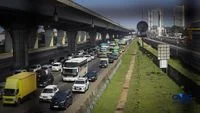
The annual mass exodus from Jakarta and its surrounding areas, known as "mudik," is well underway for Eid al-Fitr 1447 H (2026), with nearly 1.5 million vehicles already having departed the Jabotabek region in the days leading up to the festive holiday. This significant movement underscores the enduring cultural tradition and the immense logistical challenge it presents for Indonesia’s transportation infrastructure.
According to data released by PT Jasa Marga (Persero) Tbk, the state-owned toll road operator, a total of 1,483,703 vehicles exited the Jabotabek area between March 11 and March 18, 2026, corresponding to H-10 to H-3 of Idulfitri. This figure represents a substantial 30.1% surge compared to normal traffic conditions, which typically see around 1.14 million vehicles traversing these routes. The sheer volume of departures highlights the early commencement of the mudik season and the strategic decisions made by many travelers to avoid the anticipated peak congestion.
Rivan A. Purwantono, President Director of Jasa Marga, indicated that the current figure accounts for approximately 42% of the total projected mudik traffic for the year. Authorities anticipate that around 3.5 million vehicles will depart Jabotabek by the end of the entire Eid holiday period, including both the outbound and return flows. This projection reflects a consistent upward trend in mudik participants over recent years, driven by economic recovery, improved infrastructure, and the deep-seated cultural importance of celebrating Eid with family in ancestral hometowns.
Directional Flow and Regional Impacts
The distribution of outbound traffic reveals distinct patterns, with the majority of travelers heading east. A significant 788,710 vehicles, or 53.1% of the total, were recorded heading towards the Trans Jawa toll road network and Bandung. This corridor remains the most popular choice, connecting Jakarta to major cities across Java. The western route towards Merak, serving Sumatra-bound travelers, saw 402,945 vehicles, accounting for 27.2% of the total. Meanwhile, the southern route to the Puncak region, a popular tourist destination, registered 292,048 vehicles, representing 19.7% of the early exodus.
Digging deeper into the data, the Trans Jawa corridor experienced the most dramatic increase in traffic volume. The Gerbang Tol Cikampek Utama, a critical gateway to the Trans Jawa highway, recorded 523,223 vehicles passing through, more than doubling its normal traffic volume. This segment’s exponential growth underscores its strategic importance and the concentrated effort required for its management. In contrast, traffic heading towards Bandung via Kalihurip Utama saw a more modest increase of 6.8%, with 265,487 vehicles.
The western route to Merak also observed a notable rise, with 402,945 vehicles, an increase of 4.7% compared to normal conditions. This corridor is vital for those continuing their journey across the Sunda Strait to Sumatra, often involving ferry crossings that add another layer of logistical complexity. The southern route to Puncak, accessed via Ciawi, registered 292,048 vehicles, a 3.8% increase, reflecting its consistent appeal as a shorter-distance holiday destination for many Jabotabek residents.
The Initial Peak and Year-on-Year Comparisons
The temporary peak of the early mudik flow occurred on H-3 Lebaran, Wednesday, March 18, 2026. On this day alone, 270,315 vehicles departed Jabotabek, marking a staggering 98.3% increase over normal daily traffic. This figure not only highlights the intensity of the pre-holiday travel but also surpassed the peak mudik volume from the previous year by 4.62%. Such year-on-year growth demonstrates the continuous upward trend in mudik participants and the increasing pressure on existing infrastructure.
The Ministry of Transportation had earlier projected a record-breaking number of travelers for Eid 2026, estimating that over 190 million people nationwide would participate in mudik. This comprehensive projection includes all modes of transport, from private vehicles to public transportation like trains, buses, airplanes, and ferries. The surge in private vehicle usage, as evidenced by Jasa Marga’s data, aligns with this broader forecast and highlights the preferences of many Indonesian families for the flexibility and convenience of personal transport, despite potential congestion.
Comprehensive Traffic Management Strategies
To mitigate the inevitable congestion accompanying such a massive movement, a series of sophisticated traffic management measures have been implemented. Rivan A. Purwantono confirmed the deployment of national one-way traffic systems and contraflow lanes, executed under the discretion of the National Police. These strategies are not static but are dynamically adjusted based on real-time traffic volume data, visual monitoring via CCTV, and on-the-ground reports from police officers. "Until now, one-way and contraflow traffic engineering is still ongoing through Police discretion. This implementation is based on significantly increased vehicle traffic volume data from Jakarta to Semarang, CCTV visual monitoring, and reports from police officers on the ground," Rivan stated on Thursday evening, March 19, 2026.
These measures are crucial for maintaining traffic flow, especially on critical arteries like the Trans Jawa toll road, which experiences some of the highest traffic densities during mudik. The one-way system, for instance, dedicates all lanes of a multi-lane highway to a single direction of travel for extended periods, effectively doubling or tripling capacity for outbound traffic. Contraflow, on the other hand, utilizes opposing lanes for traffic moving in the primary direction, providing temporary relief in specific bottleneck areas. The effectiveness of these strategies relies heavily on real-time coordination between Jasa Marga, the National Police, and other relevant agencies.
Ensuring Traveler Comfort and Safety: Rest Area Management
Beyond traffic flow, ensuring the comfort and safety of travelers is paramount. Jasa Marga has activated a total of 64 rest areas along its toll roads, including five functional rest areas specifically opened for the Eid period to accommodate the surge in vehicles. Recognizing that even these extensive facilities can become overcrowded, the company has also prepared alternative resting spots outside the toll road network. These include 10 designated Public Fuel Stations (SPBU) along the Trans Jawa route, offering additional options for motorists.
Rivan explained that these alternative rest areas are strategically located not far from toll gates, ensuring easy accessibility for drivers. They are equipped with essential facilities such as toilets, prayer rooms, and often include local small and medium enterprise (UMKM) tenants, allowing travelers to purchase food and beverages while supporting local economies. Crucially, drivers utilizing these alternative rest areas can re-enter the toll road through the same gate without incurring additional charges, provided their origin and destination remain unchanged. This flexible approach aims to prevent excessive queuing and congestion at primary rest areas, which can sometimes spill over onto the main toll lanes, exacerbating traffic problems.
Broader Context: The Significance of Mudik
The Eid al-Fitr mudik is more than just a mass movement; it is a deeply ingrained socio-cultural phenomenon in Indonesia. It represents a collective desire to return to one’s hometown or ancestral village to celebrate Eid with extended family, apologize for past wrongdoings, and strengthen familial bonds. This tradition has significant economic implications, as the influx of urban dwellers injects substantial capital into rural and regional economies through spending on food, gifts, transportation, and local services.
The government, through various ministries, plays a central role in facilitating and managing this annual event. The Ministry of Transportation, for instance, coordinates efforts across all transport sectors, issues safety guidelines, and conducts inspections of public transport vehicles to ensure roadworthiness. The Ministry of Public Works and Housing (PUPR) is responsible for ensuring road infrastructure is in optimal condition, often suspending road construction projects during the mudik period to minimize disruptions. The National Police are critical for traffic management, security, and accident prevention.
Historically, the scale of mudik has steadily increased, posing perennial challenges related to congestion, safety, and public health. Over the years, significant investments in infrastructure, particularly toll roads and public transportation networks, have been made to accommodate this growth. For Eid 2026, the comprehensive planning also includes awareness campaigns promoting safe driving practices, urging drivers to rest adequately, and discouraging overloading vehicles.
Anticipating the Return Flow (Arus Balik)
As the outbound mudik progresses, authorities are already turning their attention to the "arus balik," or the return flow, which typically occurs a few days after Eid al-Fitr. This return journey often presents its own set of challenges, as millions of people simultaneously head back to major urban centers like Jakarta. Jasa Marga and the National Police will likely implement similar, if not more intensive, traffic management strategies for the return journey, including one-way systems and contraflow on inbound lanes.
The successful management of both the outbound and inbound mudik flows is a testament to the extensive planning and coordination among various government agencies, state-owned enterprises, and private sector partners. It reflects a national effort to ensure that millions of Indonesians can safely and comfortably participate in one of the country’s most cherished annual traditions, reinforcing family ties and contributing to regional economies. The early departure of nearly 1.5 million vehicles from Jabotabek is just the beginning of this monumental national movement, setting the stage for the full scale of Eid al-Fitr 2026 travel.