Nasution Nanang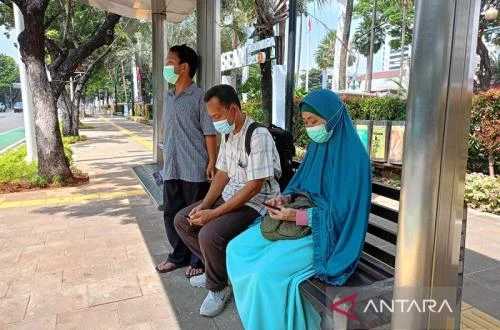
The air quality in Jakarta was classified as unhealthy for sensitive groups on Friday morning, necessitating immediate health advisories for its vast population. Latest data from the widely recognized air quality monitoring platform IQAir, recorded at 05:00 AM Western Indonesia Time (WIB), strongly recommended residents, particularly those in vulnerable categories, to wear masks when outdoors. This recurring environmental challenge underscores the persistent battle Indonesia’s capital faces against atmospheric pollution, a problem exacerbated by seasonal factors and rapid urbanization.
According to IQAir’s measurements, Jakarta’s Air Quality Index (AQI) reached a concerning 115, indicating an unhealthy status for sensitive individuals. The concentration of fine particulate matter, specifically PM2.5, was measured at 41 micrograms per cubic meter (µg/m³). This figure is alarmingly high, representing 8.2 times the annual air quality guideline value established by the World Health Organization (WHO). Such elevated levels of PM2.5 pose significant health risks, prompting authorities and health experts to issue urgent warnings and reiterate protective measures.
PM2.5 refers to microscopic airborne particles with a diameter of 2.5 micrometers or less. These minuscule particles are diverse in origin, comprising elements such as dust, smoke from various sources, and soot. Due to their extremely small size, PM2.5 particles can penetrate deep into the respiratory system and even enter the bloodstream, bypassing the body’s natural defense mechanisms. Chronic exposure to these pollutants has been scientifically linked to a heightened risk of premature mortality, with individuals suffering from pre-existing cardiovascular or chronic pulmonary diseases being particularly susceptible. The potential health impacts extend beyond immediate respiratory discomfort, encompassing a spectrum of severe conditions including strokes, heart attacks, lung cancer, and exacerbated asthma.
The current recommendations issued in response to the deteriorating air quality are clear and aim to mitigate immediate health risks. For sensitive groups, which include children, the elderly, pregnant women, and individuals with respiratory or cardiovascular conditions, the use of N95 or equivalent masks is strongly advised when venturing outside. Furthermore, all residents are encouraged to minimize outdoor activities, especially during peak pollution hours. To prevent the infiltration of polluted air indoors, it is recommended to keep windows and doors closed. The use of air purifiers equipped with HEPA filters is also suggested for indoor environments to improve air quality within homes and workplaces. These measures, while crucial for short-term protection, highlight the systemic nature of Jakarta’s air pollution problem and the need for more comprehensive, long-term solutions.
Jakarta’s Persistent Air Quality Challenge: A Broader Context
Jakarta’s struggle with air pollution is not an isolated incident but a chronic issue deeply rooted in its rapid development, high population density, and geographical characteristics. As one of the world’s largest megacities, the capital region is home to over 10 million people, with an even larger population residing in the surrounding Greater Jakarta metropolitan area (Jabodetabek). This immense concentration of human activity inevitably generates substantial amounts of pollutants.
The primary contributors to Jakarta’s air pollution are multi-faceted. Vehicle emissions stand out as a major culprit, given the city’s notorious traffic congestion and reliance on private transportation. Millions of motorcycles and cars, many of which are older models with less efficient emission controls, traverse the city daily, releasing harmful gases and particulate matter into the atmosphere. Industrial activities within and around the city, including factories and power plants, particularly those relying on coal, also contribute significantly to the atmospheric burden. Construction dust from Jakarta’s perpetual urban expansion, along with open waste burning practices in informal settlements, further compounds the problem.
Adding to these anthropogenic sources, seasonal weather patterns play a crucial role. The current dry season, typically spanning from May to August, is a period when air quality tends to worsen. With less rainfall to wash away pollutants from the atmosphere, airborne particulate matter accumulates, leading to higher concentrations. Stagnant air masses, common during dry periods, also trap pollutants closer to the ground, preventing their dispersion and exacerbating the impact on ground-level air quality. This meteorological phenomenon creates a challenging environment for air quality management, demanding proactive measures from authorities.
Chronology of Efforts and Ongoing Initiatives
The issue of air pollution in Jakarta has garnered increasing attention over the past decade, leading to various attempts at mitigation by both local and central governments. Historically, initiatives have ranged from promoting public transportation and expanding its network, such as the TransJakarta bus rapid transit system and the Jakarta MRT, to implementing emission testing programs for vehicles. However, the sheer scale of the problem and the rapid pace of urban growth have often outstripped the effectiveness of these measures.
In recent years, public awareness and advocacy for cleaner air have grown significantly. Citizen lawsuits against the government regarding air pollution have highlighted the public’s demand for more decisive action. These legal challenges have put pressure on authorities to acknowledge the severity of the crisis and develop more robust strategies.
Responding to these pressures and the persistent poor air quality readings, the DKI Jakarta Provincial Government has reiterated its commitment to tackling the issue with a rapid response plan. This plan is particularly crucial during the dry season months, which are historically associated with higher pollution levels. Key components of this intensified effort include:
-
Enhancement of Monitoring Systems: The government aims to upgrade and expand its network of air quality monitoring stations across the capital. More comprehensive and real-time data collection is essential for understanding pollution sources, identifying hotspots, and evaluating the effectiveness of intervention strategies. Improved monitoring also allows for more timely public advisories.
-
Stricter Vehicle Emission Testing: Recognizing the significant contribution of vehicular emissions, the provincial government plans to intensify and enforce vehicle emission testing programs. This includes encouraging mandatory testing for private vehicles and ensuring that public transport and commercial fleets comply with emission standards. Incentives for adopting cleaner vehicles and disincentives for high-emitting ones are also under consideration.
-
Evaluation of the Air Pollution Control Strategy (SPPU): A critical step involves a thorough evaluation of the existing Air Pollution Control Strategy (SPPU). This comprehensive review will encompass several key aspects:
- Analysis of PM2.5 Trends: Detailed analysis of historical and current PM2.5 concentration trends to identify patterns, seasonal variations, and the impact of existing policies.
- Sectoral Emission Load Assessment: A granular assessment of emission contributions from various sectors, including transportation, industry, residential, and energy production. This will help pinpoint the largest sources and guide targeted interventions.
- Public Health Impact Assessment: A robust evaluation of the direct and indirect health impacts of air pollution on Jakarta’s residents, providing evidence-based justification for policy changes and resource allocation.
The government emphasizes that effective air pollution control in Jakarta cannot be achieved in isolation. It necessitates a collaborative approach involving multiple stakeholders. This includes cross-regional cooperation with neighboring provinces and cities within the Jabodetabek area, as pollutants do not respect administrative boundaries. Furthermore, robust collaboration among various regional government agencies (Organisasi Perangkat Daerah) is vital to ensure a coordinated and multi-sectoral response, integrating environmental policies with urban planning, transportation, and public health initiatives.
Comparative Data and Health Implications
While Jakarta often garners international attention for its air quality issues, it is important to place its current status within a broader national context. On the day in question, Jakarta ranked as having the fifth-worst air quality among major Indonesian cities monitored by IQAir. Serpong, a satellite city within Greater Jakarta, recorded the highest AQI at 165, followed by Tangerang Selatan (142), Surabaya (142), and Bandung (122). This highlights that air pollution is a widespread challenge across Indonesia’s rapidly developing urban centers, rather than being unique to the capital. However, given Jakarta’s status as the economic and administrative heart of the nation, its air quality issues have profound implications.
The health burden associated with air pollution in Jakarta and other Indonesian cities is substantial. Beyond the immediate risks of respiratory infections and exacerbated chronic conditions, long-term exposure to high levels of PM2.5 is a leading risk factor for non-communicable diseases. The Global Burden of Disease study consistently ranks ambient particulate matter pollution among the top environmental risk factors for premature death and disability-adjusted life years (DALYs) in Indonesia. Children are particularly vulnerable, with studies indicating that exposure to air pollution can impair lung development, increase the risk of asthma, and potentially affect cognitive development.
Economically, the cost of air pollution is immense. Health-related expenditures, lost productivity due to illness, and premature mortality impose a significant financial burden on individuals, healthcare systems, and the national economy. Estimates suggest that air pollution costs several percentage points of GDP in affected regions due to these direct and indirect impacts. For a dynamic economic hub like Jakarta, maintaining a healthy workforce and environment is paramount for sustained growth and prosperity.
Statements from Stakeholders and Expert Perspectives
Officials from the DKI Jakarta Provincial Government, while acknowledging the severity of the challenge, have consistently reiterated their commitment to implementing the outlined strategies. A spokesperson from the Jakarta Environmental Agency (Dinas Lingkungan Hidup) recently stated, "We understand the public’s concerns and are working tirelessly to improve our air quality. The dry season presents unique challenges, but our rapid response plan, coupled with long-term policy adjustments, aims to safeguard public health and achieve sustainable environmental quality." They often emphasize the need for collective action, urging citizens to play their part by opting for public transport, maintaining their vehicles, and avoiding waste burning.
Environmental advocacy groups, such as Greenpeace Indonesia and the Clean Air Initiative, have, however, often expressed concerns about the pace and effectiveness of current interventions. They frequently call for more stringent regulations, faster adoption of renewable energy sources, and a complete overhaul of the urban transportation system. An expert from a leading environmental NGO commented, "While the government’s efforts are noted, the scale of the problem demands more radical solutions. We need to see a clear timeline for phasing out coal-fired power plants in the vicinity of Jakarta, aggressive promotion of electric vehicles, and a truly integrated public transport network that makes private car ownership less appealing." They also advocate for greater transparency in pollution data and more robust public engagement in policy formulation.
Health experts, meanwhile, continue to stress the critical link between air quality and public well-being. Dr. Budi Santoso, a pulmonologist based in Jakarta, warned, "The current PM2.5 levels are dangerous, especially for our most vulnerable citizens. We are seeing a noticeable increase in patients presenting with respiratory issues during periods of high pollution. The long-term implications for public health, particularly for children and the elderly, are profound and require sustained, multi-sectoral interventions beyond just recommending masks." These statements underscore the urgency and the complex, interconnected nature of the problem, requiring a holistic approach that integrates environmental protection with public health policy.
Broader Impact and Future Implications
The recurring air pollution crisis in Jakarta has far-reaching implications that extend beyond immediate health concerns. Environmentally, it signifies a broader ecological imbalance within the megacity and its surrounding industrial areas. The degradation of air quality impacts biodiversity, affects climate patterns, and contributes to the urban heat island effect, further compounding environmental challenges.
Societally, air pollution can exacerbate existing inequalities. Vulnerable communities, often residing in areas with higher exposure to pollution sources and lacking access to adequate healthcare, bear a disproportionate burden of the health impacts. This raises questions of environmental justice and the need for equitable distribution of environmental benefits and burdens.
From a policy perspective, the challenge necessitates a paradigm shift towards sustainable urban planning and development. This includes aggressive investment in green infrastructure, expansion of green spaces, promotion of cycling and pedestrian-friendly environments, and the development of smart city technologies to optimize traffic flow and manage emissions. The reliance on fossil fuels, particularly coal for energy generation, also needs to be critically re-evaluated, with a clear roadmap towards renewable energy sources. Enforcing existing environmental laws and introducing new, more stringent regulations are crucial, along with effective monitoring and accountability mechanisms.
The international perception of Jakarta is also at stake. As a major regional capital and a hub for international business and tourism, consistently poor air quality can deter foreign investment, impact the quality of life for expatriates, and diminish the city’s appeal as a global destination.
Looking ahead, Jakarta’s ability to achieve cleaner air will hinge on a combination of technological innovation, political will, and public participation. While the challenges are immense, the growing public awareness and the government’s intensified efforts provide a glimmer of hope. The success of Jakarta in tackling this complex environmental and public health crisis could serve as a model for other rapidly urbanizing cities in Southeast Asia and beyond, demonstrating that sustainable development and clean air are not mutually exclusive goals but essential components of a thriving modern metropolis. The current situation serves as a stark reminder that environmental stewardship is not merely an option but a critical imperative for the well-being of its citizens and the city’s future.