Nila Kartika Wati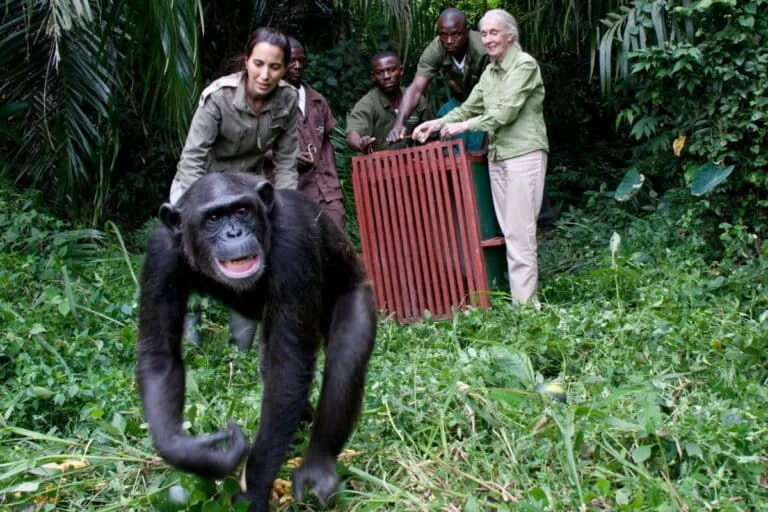
April 3 has long been recognized by the international community as the birthday of Dr. Jane Goodall, the pioneering primatologist whose work in Tanzania’s Gombe Stream National Park redefined the boundary between humans and the animal kingdom. However, the date has recently evolved into a more profound global observance: Jane Goodall Day. This transition marks a shift from mere celebration of a historic figure to a mobilized call for collective environmental action. The core ethos of the day is built upon a deceptively simple premise—the "One Action" initiative—which encourages individuals to perform a single, tangible act of service for the benefit of people, animals, or the environment.
The initiative seeks to transform Goodall’s legacy from a static historical narrative into a living, breathing movement. By focusing on individual agency, Jane Goodall Day tests the hypothesis that the habits of conservation and empathy she championed can be sustained through the decentralized efforts of millions. This approach mirrors Goodall’s own career-long refusal to center her work solely on herself. Even at the height of her fame, she consistently diverted the spotlight toward the chimpanzees of Gombe, the disappearing forests of Africa, and the local communities who serve as the ultimate stewards of the land.
The Foundation of Roots & Shoots and the Democratization of Conservation
Central to this enduring legacy is Roots & Shoots, a program Goodall founded in 1991 with a group of 12 students in Dar es Salaam, Tanzania. While Goodall is globally famous for her scientific discoveries—such as the observation that chimpanzees make and use tools—she has frequently stated that Roots & Shoots is the achievement she most wishes to be remembered for. The program was designed to solve a fundamental problem in conservation: the feeling of helplessness among the youth.
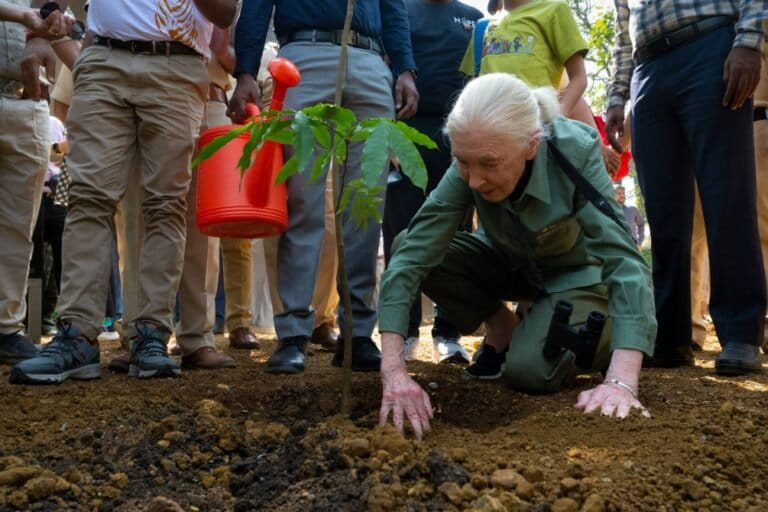
Roots & Shoots operates on a model of shared responsibility. It empowers young people to identify problems in their own neighborhoods and develop their own solutions. This "local first" strategy removes the need for high-level institutional permission, allowing projects to scale from cleaning a local park to launching national reforestation campaigns. Today, the program has expanded to nearly 100 countries, involving hundreds of thousands of participants. The underlying philosophy is that the capacity for global change begins with local repetition.
Anna Rathmann, the Executive Director of the Jane Goodall Institute (JGI) USA, notes that Jane Goodall Day serves as a practical manifestation of this belief. According to Rathmann, the day is an invitation to "embody" the conviction that every individual can make a difference. By inviting people to perform one beneficial act, the Institute provides proof that the movement Goodall sparked in 1960 continues to accelerate in the 21st century.
The Tacare Model: Integrating Human Welfare with Wildlife Protection
One of the most significant yet often overlooked aspects of Goodall’s legacy is the Tacare (pronounced "take-care") model. Developed in the 1990s in collaboration with Emmanuel Mtiti and other Tanzanian professionals, Tacare revolutionized the field of conservation by acknowledging that wildlife cannot be protected in a vacuum. In the late 20th century, Goodall realized that the chimpanzees of Gombe were under threat not just from poaching, but from the desperate economic needs of the people living around the park.
Mtiti, who worked closely with Goodall to pilot the program, explains that Tacare is based on a principle of deep listening. Rather than imposing Western conservation standards on local villages, JGI staff began by asking residents about their primary concerns. These conversations revealed that issues like soil erosion, lack of healthcare, and poor access to education were driving the encroachment into chimpanzee habitats.
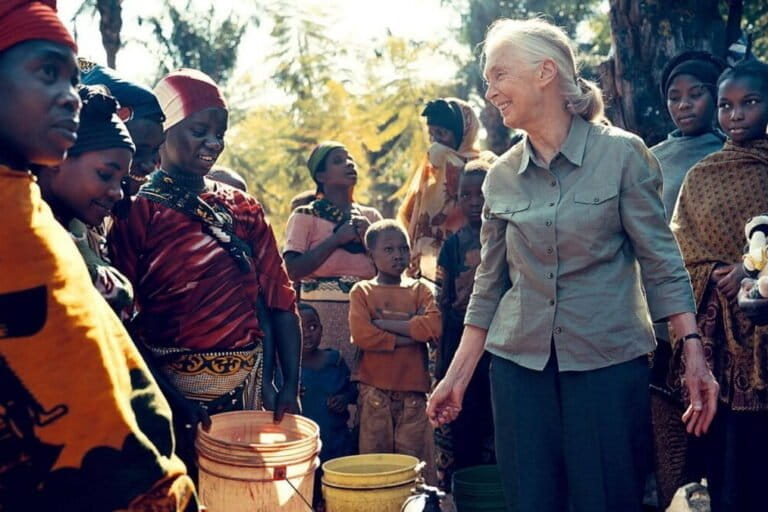
By building solutions that addressed human livelihoods—such as providing micro-loans for sustainable businesses, improving maternal health services, and introducing high-yield farming techniques—the Tacare model turned former adversaries of the park into its most ardent protectors. This community-centered approach has since been replicated across Africa, helping to restore forest corridors in Uganda, the Democratic Republic of the Congo, and beyond. The success of Tacare demonstrates that conservation is most effective when it is a byproduct of community prosperity rather than a restriction upon it.
From Binoculars to Satellites: The Evolution of Conservation Science
While Goodall’s early work relied on patient, ground-level observation with little more than a notebook and binoculars, the Jane Goodall Institute has become a leader in the integration of high-tech tools for environmental monitoring. Dr. Lilian Pintea, Vice President of Conservation Science at JGI, recalls a pivotal moment in Gombe when he showed Goodall satellite imagery of the region. Goodall famously described the technology as "magical," not for its novelty, but for its ability to visualize the long-term health of the ecosystem.
Today, JGI utilizes a sophisticated array of technologies, including Geographic Information Systems (GIS), real-time satellite data, and mobile mapping apps. These tools allow researchers to track habitat loss as it happens, identifying illegal logging or wildfires in remote areas. However, Pintea emphasizes that technology remains a supplement to, not a replacement for, Goodall’s original methodology. The core remains rooted in curiosity and the engagement of local "citizen scientists" who use smartphones to monitor their own community forests.
This marriage of traditional field biology and cutting-edge data science has enabled JGI to manage vast landscapes. In Uganda, for example, Michael Jurua, who began his journey as a child in a Roots & Shoots club, now leads conservation science efforts that protect critical chimpanzee populations. His career path exemplifies the "full circle" impact of Goodall’s work: a student inspired by her message who grows into a professional leader using advanced science to implement her vision.
A Global Network of Action
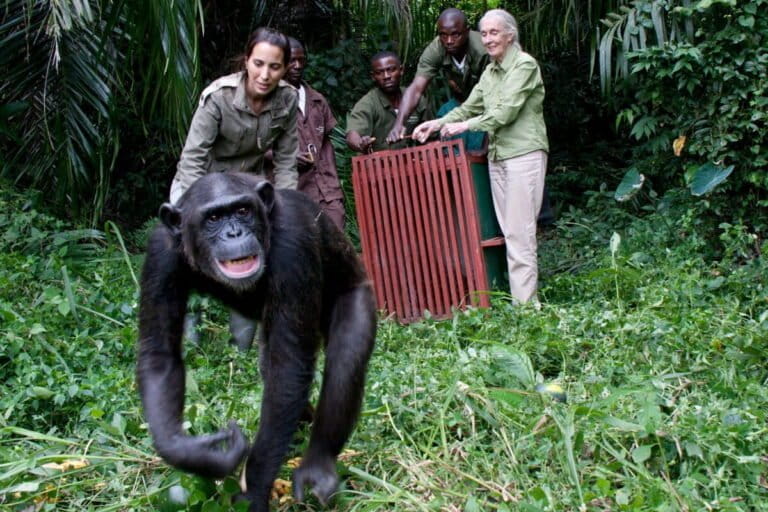
The reach of the Jane Goodall Institute extends far beyond the borders of Tanzania. In the Republic of the Congo, Dr. Rebeca Atencia manages the Tchimpounga Chimpanzee Rehabilitation Center, one of the largest sanctuaries in Africa. Atencia’s work focuses on the rescue and rehabilitation of chimps orphaned by the illegal commercial bushmeat and pet trades. Her efforts have set international standards for animal welfare, ensuring that rescued primates are given the opportunity to live in semi-wild environments that mimic their natural habitats.
The success of such high-profile projects is supported by an invisible infrastructure of local coordinators, field researchers, and community leaders. Whether it is Priscilla Shao managing veterinary labs in Gombe or volunteer teachers in Asia leading Roots & Shoots workshops, the network is sustained by thousands of small decisions. Goodall herself has noted that these "small" actions are the most vital because they create the momentum necessary for systemic change.
The Chronology of a Movement: Key Milestones
To understand the weight of Jane Goodall Day, one must look at the timeline of her contributions to science and activism:
- 1960: Jane Goodall arrives at Gombe Stream Reserve. Within months, she observes the chimpanzee "David Greybeard" using a grass stalk to fish for termites, shattering the scientific definition of man as the sole "tool-maker."
- 1977: The Jane Goodall Institute for Wildlife Research, Education and Conservation is founded to support the ongoing research at Gombe and expand chimpanzee protection.
- 1986: At a conference in Chicago, Goodall realizes the extent of the threats facing chimpanzees across Africa. She decides to leave her field research to become a global advocate.
- 1991: Roots & Shoots is launched, shifting the focus toward youth empowerment and global environmental education.
- 1994: The Tacare pilot program begins in 12 villages surrounding Gombe, marking the birth of community-centered conservation.
- 2002: Goodall is appointed a United Nations Messenger of Peace.
- Present Day: Jane Goodall Day is established as a global moment for the "One Action" initiative.
Analysis: Hope as a Tool for Resilience
In a modern era often defined by "climate anxiety" and the rapid loss of biodiversity, Goodall’s focus on hope has sometimes been criticized as overly optimistic. However, a closer analysis of her philosophy reveals that for Goodall, hope is not a passive emotion but a disciplined practice. Dr. Deus Mjungu, Director of Gombe Forest Research, explains that Jane Goodall Day represents hope in action at a time when habitat loss and climate change make conservation increasingly difficult.
Goodall’s approach avoids two common psychological traps: the belief that individual actions are meaningless and the demand for immediate, total victory. By focusing on what can be done "now, in this place," she offers a pathway to resilience. This pragmatic hope is what allows a village in Tanzania to spend ten years replanting a hillside or a group of students in the United States to lobby for the removal of single-use plastics in their cafeteria.
The impact of this philosophy is quantifiable. In the regions where Tacare and JGI operate, forest cover has stabilized or increased, and chimpanzee populations in protected areas have shown greater resilience against external pressures. Furthermore, the "Roots & Shoots" alumni network has produced a generation of policymakers, scientists, and educators who carry Goodall’s ethical framework into various sectors of global society.
Conclusion: The Continuing Journey
Jane Goodall Day is ultimately an invitation to participate in a legacy that is far from finished. Goodall often uses the metaphor of a long, dark tunnel with a small speck of light at the end. She asserts that the light of hope will not come to us; rather, we must find the courage to walk toward it.
The day serves as a reminder that the work started by a young woman with a pair of secondhand binoculars in 1960 has evolved into a global standard for how humans should interact with the natural world. It is a call to move beyond the role of a spectator and become a participant in the restoration of the planet. Whether through a small act of local conservation or a lifelong commitment to environmental science, the message of Jane Goodall Day remains consistent: every individual matters, every individual has a role to play, and every individual makes an impact. This practice of repeated, meaningful action is perhaps the most enduring tribute to a life dedicated to understanding and protecting the diversity of life on Earth.