Nasution Nanang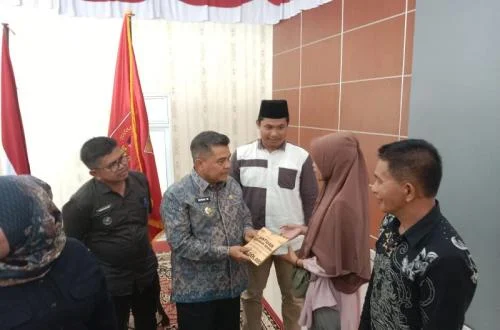
LUBUK BASUNG, AGAM – The Indonesian Ministry of Social Affairs (Kemensos) has allocated a substantial aid package totaling IDR 11.70 billion (approximately USD 735,000) to assist victims of recent hydrometeorological disasters in Agam Regency, West Sumatra. The crucial assistance, officially handed over on Friday, April 3, 2024, aims to alleviate the severe economic burden on affected residents and catalyze the region’s long-term recovery efforts. This comprehensive relief initiative underscores the government’s unwavering commitment to supporting communities grappling with the devastating aftermath of natural calamities, providing essential financial lifelines to thousands of individuals and families striving to rebuild their lives and restore their livelihoods. The aid is a critical component of the broader national response to ensure that affected populations receive immediate support while laying the groundwork for sustainable rehabilitation.
The Scale of Assistance: A Detailed Breakdown
The IDR 11.70 billion package is meticulously structured to address various immediate and mid-term needs of the disaster victims. A significant portion, amounting to IDR 11.06 billion, is earmarked for living allowances (Jaminan Hidup or Jadup) for 8,195 individuals hailing from 2,297 households. Each eligible individual will receive IDR 1,450,000, disbursed over a three-month period. This allowance is designed to cover essential basic needs such as food, temporary shelter, clothing, and other immediate necessities, providing a crucial safety net for families who have lost homes, sources of income, or access to essential services. For many, this direct financial assistance is the primary means to sustain themselves during the arduous initial phase of recovery, preventing further economic hardship and ensuring basic human dignity.
Beyond the living allowances, the Kemensos aid also includes provisions for those who suffered the ultimate loss or sustained injuries. A total of IDR 120 million has been allocated for the second phase of compensation for eight deceased victims, with each family receiving IDR 15 million. This financial support aims to ease the burden of funeral expenses and provide some measure of solace to grieving families. Additionally, 105 individuals who sustained injuries during the disasters will receive a total of IDR 525 million in compensation, with each injured person receiving IDR 5 million. This assistance is intended to help cover medical expenses, rehabilitation costs, or compensate for temporary loss of income due to injury, ensuring that victims can access necessary healthcare and recover without undue financial strain.
Bupati Agam, Benni Warlis, emphasized the profound impact of this aid. "The assistance disbursed is expected to be utilized for basic needs over the next three months," he stated, highlighting the immediate practical benefits. He further articulated that this aid package represents a tangible manifestation of the state’s presence and commitment to its citizens in times of crisis. The comprehensive nature of the aid, encompassing living allowances, death benefits, and injury compensation, reflects a holistic approach by the government to address the multi-faceted challenges faced by disaster-affected communities.
Agam’s Vulnerability: A Landscape Prone to Hydrometeorological Events
Agam Regency, situated in the mountainous and coastal regions of West Sumatra, is inherently vulnerable to hydrometeorological disasters. These events, which include floods, landslides, and strong winds, are primarily driven by meteorological and hydrological processes. West Sumatra, characterized by its challenging topography of steep slopes, numerous river basins, and high annual rainfall, provides fertile ground for such calamities. The region’s position near the equator contributes to its tropical climate, which typically involves distinct rainy seasons marked by intense precipitation.
Compounding these natural vulnerabilities are factors such as land degradation, often resulting from deforestation, unsustainable agricultural practices, and unchecked urban expansion into risk-prone areas. These activities diminish the land’s capacity to absorb water, increasing surface runoff and making slopes more susceptible to landslides. When exceptionally heavy rainfall occurs, as it frequently does during the peak of Indonesia’s rainy season (typically from November to April), rivers can rapidly overflow their banks, inundating low-lying areas, while saturated soil on steep hillsides can lose stability, triggering destructive landslides. The recent disasters in Agam are a stark reminder of this persistent vulnerability, necessitating ongoing vigilance and proactive disaster mitigation strategies. Climate change projections suggest an increase in the intensity and frequency of extreme weather events, further exacerbating these risks for regions like Agam.
Chronology of Disaster and Response
The backdrop to Kemensos’s aid disbursement is a series of devastating hydrometeorological events that gripped West Sumatra, including Agam Regency, during the early months of 2024. The period between February and March 2024 witnessed relentless heavy rainfall across the province, leading to widespread flooding and multiple landslides.
- Pre-Disaster Warnings: Ahead of the critical period, the Meteorology, Climatology, and Geophysics Agency (BMKG) had issued several warnings about extreme weather patterns, including heavy rainfall and potential for hydrometeorological disasters, urging residents in vulnerable areas to remain vigilant. These warnings, disseminated through various channels, aimed to provide communities with crucial lead time for preparedness.
- The Disaster Events (February-March 2024): Beginning in early February and intensifying through March, torrential rains pounded West Sumatra. In Agam, this resulted in rivers swelling beyond their capacity, leading to flash floods that submerged residential areas, agricultural lands, and critical infrastructure. Concurrently, the saturated soil on steep slopes gave way, triggering landslides that blocked roads, destroyed homes, and tragically claimed lives. Villages were isolated, communication lines disrupted, and thousands were displaced from their homes. The scale of the damage was extensive, impacting not only residential areas but also public facilities, agricultural lands, and local economies.
- Immediate Aftermath and Emergency Response: In the immediate wake of the disasters, local authorities, spearheaded by the Regional Disaster Management Agency (BPBD) of Agam, swiftly launched emergency response operations. Search and rescue teams, comprising local volunteers, military personnel (TNI), and police (Polri), were deployed to evacuate trapped residents, provide first aid, and recover victims. Temporary shelters were established in schools, community centers, and mosques to accommodate the displaced. Initial damage assessments were conducted to gauge the extent of the destruction and identify the most pressing needs, paving the way for targeted relief efforts.
- Central Government Mobilization: Recognizing the severity of the situation, the central government, through Kemensos and other related ministries, quickly mobilized resources. Kemensos’s rapid response teams were dispatched to Agam to coordinate with local authorities, gather accurate data on affected populations, and assess the types of aid required. This phase involved meticulous data collection to ensure that aid reached those most in need, based on verified information regarding casualties, injuries, and displacement.
- Aid Disbursement (April 3, 2024): Following comprehensive assessments and logistical preparations, the IDR 11.70 billion aid package was formally disbursed on April 3, 2024. The handover ceremony, attended by local officials and representatives from Kemensos, symbolized the culmination of weeks of coordinated efforts and the government’s unwavering commitment to supporting recovery. The direct distribution mechanism aimed to ensure transparency and efficiency in aid delivery, directly benefiting the intended recipients.
Beyond Immediate Relief: Pathways to Long-Term Recovery
While the immediate financial aid is critical for addressing urgent needs, the path to long-term recovery for Agam and its residents extends far beyond the initial three-month period covered by the living allowances. The disasters have inflicted profound damage on the local economy, particularly on the agricultural sector, which forms the backbone of many livelihoods in the region. Rice fields, plantations, and livestock have been destroyed or severely impacted, leaving many families without their primary source of income.
The government’s broader recovery strategy, as hinted by Bupati Benni Warlis, includes provisions for temporary shelters, indicating a recognition of the housing crisis faced by those whose homes were destroyed or rendered uninhabitable. These shelters provide a safe interim solution while plans for permanent housing reconstruction or relocation are formulated. However, rebuilding homes and restoring livelihoods are complex processes that require sustained support, including access to capital for rebuilding businesses, agricultural inputs for replanting, and vocational training for those whose traditional livelihoods are no longer viable.
Beyond the material damage, the psychological toll on disaster victims is significant. Displacement, loss of loved ones, and the destruction of personal belongings can lead to trauma, anxiety, and depression. Comprehensive recovery efforts must therefore integrate psychosocial support services to help communities heal and regain their sense of security and well-being. The challenge lies in transitioning from emergency relief to sustainable rehabilitation and reconstruction, fostering resilience within the community to withstand future shocks. This transition requires careful planning, effective coordination across multiple government agencies, and active participation from the affected communities themselves.
Multi-Stakeholder Engagement: A Unified Front
The response to the Agam disasters exemplifies a multi-stakeholder approach, involving various levels of government and key national figures. Bupati Agam, Benni Warlis, expressed profound gratitude for the central government’s swift and substantial intervention. His statement, "This assistance is a form of the state’s presence for the community affected by the disaster," underscores the crucial role of national solidarity and support in times of crisis. He also reiterated the importance of community vigilance against extreme weather conditions and adherence to government advisories, emphasizing a shared responsibility in disaster preparedness.
The mention of President Prabowo Subianto and Vice President Gibran Rakabuming Raka in the context of supporting Agam’s recovery signifies the highest level of government attention and commitment. Such presidential and vice-presidential endorsement provides political impetus and ensures that resources are prioritized for the affected regions. While a direct statement from Kemensos Minister Tri Rismaharini was not explicitly provided in the original article, the ministry’s swift action aligns with her known proactive approach to disaster response, emphasizing rapid deployment of aid and direct engagement with affected communities.
The concerted efforts extend beyond Kemensos. The National Disaster Management Agency (BNPB) plays a crucial role in overall disaster coordination, damage assessment, and early recovery planning. The Ministry of Public Works and Public Housing (PUPR) is vital for infrastructure repair and reconstruction, including roads, bridges, and public facilities. The Ministry of Health provides essential medical aid, sanitation services, and public health campaigns. The collaboration between these central agencies and their local counterparts, such as the Agam Regency government and its BPBD, is paramount for an effective and integrated disaster response and recovery operation, ensuring a unified front against the challenges posed by natural calamities.
The Broader Implications: Resilience and Preparedness
The hydrometeorological disasters in Agam and the subsequent government response carry significant broader implications for regional development, disaster risk reduction, and national policy.
- Economic Impact: The immediate economic disruption is profound, but the long-term effects can be even more debilitating. Damage to agricultural land, infrastructure, and small businesses can stifle economic growth for years. The aid, while substantial, is a temporary measure. Sustainable economic recovery will require strategic investments in diversifying livelihoods, improving agricultural resilience, and supporting local enterprises to rebuild and innovate. The disruption to supply chains and local markets also has ripple effects across the regional economy of West Sumatra.
- Social Impact: Beyond the immediate displacement and trauma, disasters can erode social cohesion and exacerbate existing inequalities. Vulnerable groups, such as the elderly, children, and those with disabilities, often bear the brunt of such events. The provision of temporary shelters and psychosocial support is critical, but fostering long-term community resilience also involves strengthening social networks, empowering local leadership, and promoting inclusive recovery processes that address the specific needs of all affected populations.
- Environmental Considerations: The recurring nature of hydrometeorological disasters in regions like Agam highlights the critical link between environmental degradation and disaster risk. Deforestation, particularly on steep slopes and along riverbanks, significantly increases the likelihood and severity of landslides and floods. This underscores the urgent need for robust environmental protection measures, including reforestation programs, sustainable land-use planning, and stricter enforcement of environmental regulations to prevent further degradation and mitigate future risks.
- Policy and Preparedness: The events in Agam serve as a critical learning opportunity for strengthening national and regional disaster preparedness and response frameworks. This includes investing in more sophisticated early warning systems, particularly for flash floods and landslides, and ensuring that these warnings effectively reach remote communities. Furthermore, there
is a pressing need to build more resilient infrastructure, capable of withstanding extreme weather events, and to integrate disaster risk reduction into all development planning. Public education campaigns on disaster preparedness, evacuation procedures, and safe building practices are also essential to empower communities to protect themselves. This move from a reactive response to a proactive preparedness paradigm is crucial for future resilience.
In conclusion, the IDR 11.7 billion aid package from Kemensos is a vital lifeline for the people of Agam, demonstrating the Indonesian government’s deep commitment to its citizens in times of crisis. While providing immediate relief and supporting the initial stages of economic recovery, these efforts are part of a larger, ongoing challenge. The experience in Agam underscores the imperative for continuous investment in disaster risk reduction, environmental stewardship, and robust social safety nets to build a more resilient West Sumatra capable of navigating the increasing complexities of natural disasters in a changing climate. The collective resolve of government, communities, and all stakeholders will be paramount in transforming vulnerability into strength and ensuring a sustainable future for the region.