Nasution Nanang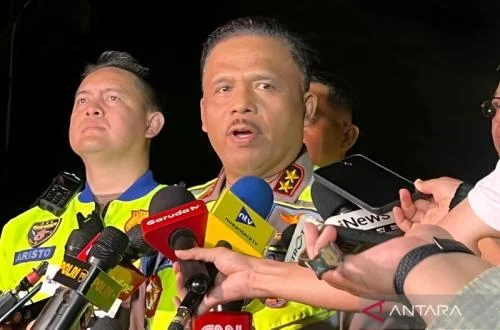
The Indonesian National Police Traffic Corps (Korlantas Polri) has announced the potential implementation of a nationwide one-way traffic management system along the Trans Java Toll Road, spanning from Km 414 to Km 70, to manage the anticipated surge in vehicles during the Eid al-Fitr return flow in 2026. This measure is being considered as a proactive step to ensure the smooth and safe passage of millions of motorists returning to major urban centers after the holiday period. The decision to activate such an extensive traffic engineering scheme will be contingent upon real-time monitoring of traffic density, as stated by the Head of Korlantas Polri, Inspector General of Police Agus Suryonugroho.
Understanding the "Arus Balik" Challenge
Eid al-Fitr, locally known as Lebaran, marks the end of the Islamic holy month of Ramadan and is the most significant holiday in Indonesia. It triggers an annual mass exodus, known as "mudik," where tens of millions of people travel from urban centers to their hometowns and villages across the archipelago. Following the celebrations, a reverse migration, or "arus balik" (return flow), occurs, typically concentrating traffic back towards Jakarta and other major cities. This period is characterized by immense pressure on Indonesia’s infrastructure, particularly the primary arteries like the Trans Java Toll Road. The sheer volume of vehicles, encompassing private cars, buses, and motorcycles, often leads to severe congestion, extended travel times, and heightened risks of accidents.
Historically, managing the Lebaran traffic has been a complex undertaking for Indonesian authorities. Every year presents unique challenges influenced by factors such as the timing of the holiday, economic conditions, and weather. The Trans Java Toll Road, a critical infrastructure project connecting the western and eastern parts of Java, has become the backbone for inter-city travel, significantly reducing travel times but also becoming the focal point for congestion during peak seasons. Its strategic importance necessitates meticulous planning and dynamic traffic management strategies to prevent gridlock and ensure public safety.
The Proposed Nationwide One-Way System: Scope and Conditions
Inspector General Agus Suryonugroho elaborated on the parameters for the proposed national one-way system. The scheme would cover a significant stretch of approximately 344 kilometers, from Km 414, typically around the Semarang-Batang area, westward to Km 70, which is situated near the Cikampek Utama Toll Gate. This extensive coverage aims to create a dedicated, uninterrupted flow for returnees heading towards Jakarta, alleviating bottlenecks that commonly form at various points along the route.
The critical factor determining the activation of this national one-way system is the level of traffic density. Korlantas Polri employs a sophisticated system of surveillance, including CCTV cameras, drone monitoring, and ground patrols, to gather real-time data on vehicle volumes. Inspector General Suryonugroho emphasized that continuous monitoring would be conducted to ascertain the precise number of vehicles entering the Jakarta metropolitan area. Should a significant surge in traffic be detected, warranting drastic intervention to prevent widespread congestion, the national one-way system would be initiated. Conversely, if traffic remains manageable without a substantial spike, the traffic engineering efforts might be scaled down or shifted to more localized interventions, potentially focusing on specific segments around Batang or Kendal, which are known choke points.
Contextualizing Traffic Management Strategies
The use of one-way systems, contraflow, and odd-even plate restrictions has become standard practice for Korlantas Polri during major holiday periods. These measures are not arbitrary but are based on years of experience and data analysis concerning traffic patterns and congestion dynamics. A one-way system, by dedicating all lanes of a multi-lane highway in a single direction, maximizes road capacity and allows for a smoother, faster flow of vehicles over a long distance. While highly effective in moving large volumes of traffic, it requires extensive coordination, clear signage, and robust communication to inform motorists and ensure compliance. It also necessitates careful management of entry and exit points along the affected stretch.
In previous years, partial one-way or contraflow systems have been successfully implemented to mitigate congestion. Contraflow, which involves allocating one or more lanes from the opposing direction of traffic to the dominant flow, is often used for shorter segments or when traffic volume is high but not severe enough to warrant a full one-way. The decision to consider a national one-way underscores the anticipated scale of the 2026 return flow and the commitment of authorities to proactive and comprehensive traffic management.
Real-time Monitoring and Phased Approach
The strategy outlined by Korlantas Polri highlights a phased approach to traffic management. The initial stages involve localized and more flexible measures, which can then be escalated if conditions demand. This adaptive strategy allows authorities to respond effectively to evolving traffic situations without prematurely implementing disruptive measures. The "Presisi" initiative, a cornerstone of modern Indonesian policing, emphasizes predictive, responsible, transparency, and justice-oriented approaches. In the context of traffic management, this translates into leveraging data analytics and real-time intelligence to anticipate and respond to traffic challenges, ensuring police actions are proportionate and effective.
The dynamic nature of the return flow necessitates this flexibility. Factors such as weather conditions, incidents on the road, and even public holiday schedules can influence traffic patterns. Therefore, the ability to activate or deactivate traffic schemes on short notice, based on real-time data, is crucial for optimal management.
Enforcement of Logistics Vehicle Restrictions
Amidst the preparations for the return flow, Korlantas Polri is also focusing on enforcing regulations concerning heavy-duty vehicles, specifically those with three axles or more. Inspector General Agus Suryonugroho noted that on Friday, March 27, 2026, when general traffic was observed to be relatively light, the focus shifted towards ensuring compliance among these vehicles. This emphasis is in line with a direct instruction from the National Police Chief, who has urged logistics companies operating three-axle vehicles to postpone their journeys during the peak return flow period.
This directive is a standard measure implemented during major holidays to prioritize the mobility and safety of private vehicles and passenger transport. Heavy trucks, due to their size, weight, and slower acceleration, can significantly impede traffic flow and contribute to congestion, especially on inclines or during lane changes. Furthermore, they present a higher risk in terms of accident severity. By temporarily restricting their operations, authorities aim to create a clearer, safer path for the millions of returning holidaymakers, thereby enhancing overall traffic fluidity and reducing accident potential. While this measure poses operational challenges for logistics companies, it is widely recognized as a necessary sacrifice for public good during critical periods.
Chronology of Recent Traffic Measures (March 26-27, 2026)
Even before the potential national one-way system, Korlantas Polri had already initiated localized traffic engineering measures to manage the early phases of the return flow. On Thursday, March 26, 2026, a "Presisi" local one-way system was implemented from Km 132 of the Cipali Toll Road to Km 70 of the Cikampek Utama Toll Road. This segment is a critical convergence point for traffic originating from various parts of West Java and Central Java.
Subsequently, a second phase of the "Presisi" local one-way was opened, extending from Km 263 of the Pejagan Toll Road to Km 70. The Pejagan Toll Road serves as a gateway for traffic coming from Central Java and parts of East Java. The combined effect of these local one-way systems is to funnel traffic efficiently towards the Jakarta direction, preparing for the larger potential national scheme. These initial interventions demonstrate a proactive approach, aiming to manage traffic in stages and prevent small congestions from escalating into major gridlocks. The designation "Presisi" signifies the police’s commitment to data-driven, precise, and transparent operations in managing these complex traffic scenarios.
Statements from Key Officials
Inspector General Pol Agus Suryonugroho reiterated the core objective behind these extensive traffic management plans: "Our primary goal is to ensure the safety and smooth journey for all ‘mudik’ and ‘arus balik’ participants. The decision to implement a national one-way will be data-driven, based on continuous monitoring of vehicle volume heading towards Jakarta." He also emphasized the importance of public cooperation and adherence to traffic regulations and official advisories.
The National Police Chief’s instruction regarding logistics vehicles underscores the top-down commitment to prioritizing passenger traffic. This directive is typically communicated through official channels to trucking associations and logistics companies well in advance, allowing them to adjust their schedules and operations. While the economic implications for the logistics sector are acknowledged, the overriding concern remains the welfare and safety of the vast number of citizens participating in the Eid migration.
Broader Implications and Impact
The implementation of a national one-way system, if enacted, would have far-reaching implications:
- Safety and Efficiency Gains: The most immediate benefit would be a significant reduction in travel time for returnees and a lower risk of head-on collisions, which can be a concern with contraflow systems. By streamlining traffic flow, emergency services can also respond more effectively to incidents.
- Economic Considerations for Logistics: While beneficial for passenger traffic, restrictions on three-axle vehicles and potential detours or delays due to one-way systems can impact the supply chain. Logistics companies face increased operational costs, extended delivery times, and the need for meticulous planning to navigate these restrictions. Dialogue between authorities and logistics associations is crucial to minimize disruption.
- Technological Integration in Traffic Monitoring: The reliance on real-time data for decision-making highlights the increasing integration of technology in Indonesian traffic management. Advanced CCTV networks, drone surveillance, traffic sensor data, and predictive analytics are essential tools that enable Korlantas Polri to make informed decisions swiftly.
- Public Cooperation and Communication: The success of any large-scale traffic management scheme heavily depends on public awareness and cooperation. Clear, timely, and consistent communication through various channels – social media, radio, variable message signs, and news outlets – is vital to inform motorists about the implemented schemes, alternative routes, and expected conditions.
- Lessons for Future Eid Celebrations: Each Eid period provides invaluable lessons for authorities. The experience gained from managing the 2026 return flow, whether with local or national one-way systems, will undoubtedly inform and refine future traffic management strategies, contributing to a continuous improvement cycle in handling Indonesia’s unique annual mass migration.
In conclusion, Korlantas Polri’s consideration of a nationwide one-way system for the 2026 Eid al-Fitr return flow reflects a proactive and comprehensive approach to managing one of the world’s largest annual human migrations. Backed by real-time monitoring, a phased implementation strategy, and a commitment to public safety, these measures aim to ensure a smoother, safer, and more efficient journey for millions of Indonesians returning home after the holiday celebrations. The collaborative efforts between law enforcement, infrastructure operators, and public awareness campaigns will be paramount to the success of these critical traffic management operations.