Nasution Nanang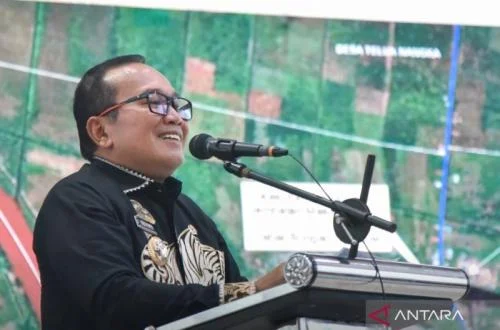
PONTIANAK, Indonesia – The Kubu Raya Regency government in West Kalimantan has embarked on a strategic and collaborative effort to address the long-standing issue of uninhabitable homes (RTLH) situated along riverbanks, areas traditionally underserved by conventional government programs due to complex land legality issues. This groundbreaking initiative, spearheaded by Kubu Raya Regent Sujiwo, was unveiled during a significant coordination meeting held in Sungai Raya on Sunday, April 5, marking a pivotal shift towards a more inclusive approach to housing welfare.
Addressing a Persistent Socio-Economic Challenge
The presence of RTLH, particularly in riparian zones, presents a multifaceted challenge for many regions across Indonesia. For Kubu Raya, a regency characterized by its extensive river networks and coastal areas, a significant portion of its population resides in settlements directly adjacent to waterways. These communities, often reliant on rivers for transportation, livelihood, and daily life, frequently face precarious living conditions. Their homes, often constructed with rudimentary materials and lacking proper sanitation and infrastructure, expose residents to health risks, environmental hazards, and a perpetual cycle of poverty.
Regent Sujiwo articulated the core dilemma during the coordination meeting: "The issue of legal land ownership along riverbanks has been the primary impediment for these areas to access programs funded by state finances. Are we just going to let them be?" His poignant question underscored the moral imperative and the urgent need for innovative solutions to reach these marginalized populations. Traditional government housing programs, which typically require clear land titles for eligibility, have historically bypassed these informal settlements, leaving thousands without access to improved housing. This initiative represents a direct response to that systemic exclusion, acknowledging that a one-size-fits-all approach is insufficient for the diverse socio-economic landscape of the regency.
A Collaborative Framework for Social Welfare
Recognizing the limitations of conventional approaches, the Kubu Raya Regency government has forged an unprecedented alliance involving various public and private entities. This multi-stakeholder partnership is designed to circumvent the legal land ownership obstacles and channel resources directly to the communities in need. Key partners in this collaborative framework include:
- Baznas (National Amil Zakat Agency): As a national institution responsible for collecting and distributing zakat, infaq, and shadaqah, Baznas plays a crucial role in mobilizing charitable funds for social welfare programs, including housing rehabilitation. Their involvement brings a strong humanitarian and community-based funding stream to the initiative.
- Korpri (Indonesian Civil Servants Corps): Representing civil servants, Korpri’s participation often involves encouraging contributions from its members, fostering a sense of collective responsibility among government employees for the welfare of their communities. This can translate into financial support, volunteerism, and advocacy.
- Bank Kalbar (West Kalimantan Regional Development Bank): Regional banks often have robust Corporate Social Responsibility (CSR) programs. Bank Kalbar’s involvement could provide significant financial backing, potentially through grants, low-interest loans for home improvements, or direct contributions as part of their commitment to regional development. Their understanding of local economic dynamics makes them a valuable partner.
- Perumda Tirta Raya (Regional Water Utility Company): While primarily focused on water supply, Perumda Tirta Raya’s participation could extend to improving sanitation facilities, providing access to clean water connections for rehabilitated homes, or contributing expertise in infrastructure development within riverine communities.
- DPRD Provinsi Kalimantan Barat (West Kalimantan Provincial House of Representatives): The involvement of provincial legislators is vital for policy support, budget advocacy at the provincial level, and ensuring the program aligns with broader regional development plans. Their oversight also lends legitimacy and transparency to the initiative.
This diverse consortium exemplifies the gotong royong (mutual cooperation) ethos deeply embedded in Indonesian culture, transforming it into a structured, institutionalized mechanism for social good. Regent Sujiwo emphasized that the rehabilitation of RTLH in these challenging areas is fundamentally a "social and humanitarian mission that must be carried out through collective effort."
The Broader Context: Housing Challenges in Indonesia
Indonesia, as a developing nation, continually grapples with the issue of adequate housing. The National Socio-Economic Survey (Susenas) data often reveals a significant number of households residing in RTLH across the archipelago. Factors contributing to this include rapid urbanization, poverty, natural disasters, and the aforementioned land tenure issues. Government programs like the "One Million Houses Program" and various slum upgrading initiatives (Kotaku) have been implemented at the national level, aiming to reduce housing backlog and improve living conditions. However, specific geographic challenges, such as riverbank settlements, often fall through the cracks of these broader schemes due to their unique legal and environmental complexities.
Kubu Raya’s initiative, therefore, serves as a localized, adaptive response to a national problem, demonstrating how local governments can innovate to meet the specific needs of their constituents. The regency’s estimated 1.460 units of homes already constructed or rehabilitated under existing programs this year, while commendable, highlight the persistent gap for riverbank communities. This new collaborative model is precisely designed to bridge that gap.
Implementation Strategy: Data-Driven and Community-Centric
To ensure the program’s effectiveness and equitable distribution of aid, the Kubu Raya Regency government has outlined a meticulous implementation strategy focused on accurate data collection and active community engagement. Regent Sujiwo announced that a comprehensive "data collection will be carried out by the government, involving relevant regional work units (OPD) to directly collaborate" on the ground. This involves:
- Dinas Pekerjaan Umum (Public Works Department): Responsible for technical assessments of housing conditions, structural integrity, and feasibility of repairs or reconstruction. Their expertise is critical in ensuring safe and durable housing solutions.
- Bappeda Litbang (Regional Development Planning Agency and Research & Development): Tasked with integrating the housing program into the regency’s overall development plans, ensuring sustainable outcomes, and providing research-backed insights into the socio-economic profiles of target communities.
- Dinas Sosial (Social Affairs Department): Plays a vital role in identifying eligible beneficiaries, assessing socio-economic vulnerabilities, and ensuring that the most disadvantaged households receive priority assistance. They also help in community mobilization and social support.
This collaborative data collection process ensures a holistic understanding of the beneficiaries’ needs, moving beyond mere structural deficiencies to encompass socio-economic factors. The direct involvement of OPDs is crucial for building trust with local communities and gathering ground-level intelligence that informs tailored interventions.
Furthermore, the initiative builds upon existing community-led efforts. Regent Sujiwo revealed that "some homes in the riverbank areas have already begun to be rehabilitated with active community participation." This pre-existing momentum, fueled by local initiative and gotong royong, provides a strong foundation for the expanded program. It underscores the importance of community ownership and participation, ensuring that solutions are culturally appropriate and sustainable. Maintaining and fostering this "public trust built through social assistance collection during major religious holidays" is paramount for the long-term success of the program.
Potential Impacts and Implications
The Kubu Raya initiative carries significant potential for positive change, extending beyond the mere provision of shelter:
- Social Upliftment: Improved housing conditions directly translate to better public health outcomes, reduced incidence of waterborne diseases, and enhanced safety. Children growing up in stable homes are more likely to perform better in school, breaking cycles of poverty across generations. A sense of dignity and belonging is restored to residents previously marginalized.
- Economic Empowerment: Stable housing can provide a foundation for economic stability. Residents with secure homes are better positioned to pursue livelihoods, invest in small businesses, and access financial services. The construction and rehabilitation activities themselves will generate local employment and stimulate the local economy.
- Environmental Stewardship: While focused on housing, the program offers an opportunity to integrate environmental considerations. Improved sanitation systems can reduce river pollution, and sustainable building practices can mitigate environmental impact. Furthermore, a planned approach to riverbank settlements can help manage flood risks and promote ecological balance.
- Policy Innovation and Replication: Kubu Raya’s multi-stakeholder model, designed to overcome legal hurdles for informal settlements, could serve as a blueprint for other regencies and cities across Indonesia facing similar challenges. Its success could influence national policy frameworks, encouraging more flexible and adaptive approaches to housing for vulnerable populations.
- Strengthening Governance: By demonstrating a proactive, empathetic, and innovative approach to a complex social problem, the Kubu Raya Regency government enhances its legitimacy and strengthens public trust. The collaboration with diverse partners also showcases effective multi-level governance and the power of public-private partnerships in achieving development goals.
Challenges and the Path Forward
Despite the promising start, the Kubu Raya initiative will undoubtedly face challenges. Sustaining funding, managing the expectations of a large number of beneficiaries, coordinating diverse stakeholders, and ensuring the long-term maintenance of rehabilitated homes will require continuous effort and adaptive management. Furthermore, while the program addresses the immediate need for improved housing, a holistic approach would also require tackling root causes of poverty, enhancing educational opportunities, and strengthening economic resilience within these communities.
The target for repairing RTLH in riverbank areas is set to be achieved in stages, emphasizing the long-term commitment required. Through the synergistic efforts of all involved parties, the Kubu Raya Regency government aims to significantly improve the quality of life and living conditions for its riverine and coastal communities. This pioneering initiative stands as a testament to the power of collaboration and local innovation in addressing persistent socio-economic challenges, setting a hopeful precedent for inclusive development in West Kalimantan and beyond.