Bambang Pamungkas
The ambitious plan to establish the Merah Putih Village Cooperative (Kopdes Merah Putih) in East Flores Regency, Nusa Tenggara Timur (NTT), remains in limbo, awaiting the definitive resolution of land ownership in areas previously scarred by protracted inter-community conflicts. While the government maintains that the crucial rural development project could still proceed, it is strictly contingent upon one fundamental condition: the land designated for the cooperative’s facilities must be legally "clear and clean," free from any encumbrances or disputes. This mandate underscores a broader national commitment to ensuring legal certainty as a cornerstone of sustainable development, particularly in regions with complex socio-historical land issues.
Ahmad Zabadi, the Secretary of the Ministry of Cooperatives, Small and Medium Enterprises (Kemenkop UKM), reiterated the government’s stance from his office in Jakarta on Wednesday, March 25, 2026. He confirmed that the opportunity for the cooperative’s establishment in the two targeted villages, Waiburak and Narasaosina, remains open. However, he stressed that the path to realizing the Kopdes Merah Putih’s physical infrastructure is firmly tied to the impeccable legal status of the land. "Whether the Merah Putih Village Cooperatives will be built in these two villages? It should be yes. But of course, they must be built on land whose status is already clear and clean," Zabadi stated, emphasizing the non-negotiable nature of this requirement.
The absence of such legally unencumbered land has, to date, prevented any physical construction, including the essential cooperative stores and warehouses, from commencing in Waiburak and Narasaosina. This delay highlights a critical bottleneck in the government’s wider strategy to foster economic resilience and social cohesion through community-based enterprises. The Ministry’s position is not new; it has been a guiding principle since the inception of the Merah Putih cooperative program. "Because there is no clear and clean land yet, physical structures, outlets, and warehouses for the Merah Putih Village Cooperative have not been built in these two villages," Zabadi explained, referencing a circular from the previous Minister of Cooperatives that explicitly laid down these stringent land-use guidelines. This directive mandates that any land earmarked for the cooperative’s infrastructure must undergo thorough legal vetting to prevent future disputes and ensure the project’s long-term viability.
The Merah Putih Cooperative Initiative: A National Vision for Rural Empowerment
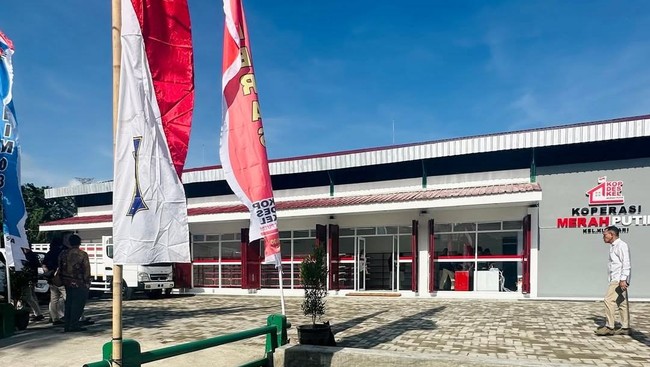
The Kopdes Merah Putih program is a flagship national initiative launched by the Indonesian government to invigorate rural economies, reduce regional disparities, and strengthen community resilience. Named "Merah Putih" (Red and White) to symbolize national unity and patriotic spirit, the program aims to establish robust, self-sufficient cooperatives at the village level across the archipelago. Its core objectives include facilitating access to capital, markets, and technology for rural communities, particularly farmers, fishermen, and small-scale entrepreneurs. By pooling resources and fostering collective action, these cooperatives are envisioned as engines of local economic growth, enabling villagers to add value to their products, improve bargaining power, and create sustainable livelihoods.
Nationally, the program has seen considerable progress. Zabadi confirmed that out of over 83,000 Merah Putih Village/Sub-district Cooperatives established across Indonesia, approximately 30,000 to 32,000 are currently in various stages of physical construction. This significant number underscores the government’s commitment to the program and its potential to transform rural landscapes. However, the situation in East Flores serves as a stark reminder of the complex challenges that can impede even the most well-intentioned development initiatives, especially when confronted with deeply rooted local issues like land conflicts. The national target reflects a broad strategy to empower villages as key actors in national development, aligning with the broader agenda of strengthening village autonomy and self-governance.
East Flores: A Region Grappling with Legacy of Conflict
East Flores Regency, situated on the eastern part of Flores Island, is a region renowned for its stunning natural beauty, rich cultural heritage, and vibrant agricultural and fishing communities. However, like many other areas in Indonesia, it has not been immune to internal conflicts, particularly those stemming from land disputes. The specific conflicts that affected Waiburak and Narasaosina villages, while not detailed in the immediate report, are indicative of broader issues in Indonesia where customary land rights (hak ulayat) often clash with state land claims or individual ownership certificates, especially in areas with historical grievances or unclear administrative boundaries.
Sources familiar with regional dynamics suggest that such conflicts in Flores often arise from overlapping claims between different clans or communities over ancestral lands, disputes over natural resources, or disagreements following informal land transactions that lack formal legal recognition. These conflicts can escalate rapidly, leading to social fragmentation, displacement, economic disruption, and even violence. In the aftermath of such conflicts, communities are left to grapple with not only the immediate physical damage but also deep-seated mistrust and socio-economic trauma. The government, through various peacebuilding and reconciliation initiatives, typically works to restore order, mediate disputes, and facilitate recovery efforts. The introduction of economic development programs like the Kopdes Merah Putih in such areas is often seen as a crucial component of long-term peacebuilding, aiming to provide sustainable economic opportunities that can mitigate potential triggers for renewed conflict.
For Waiburak and Narasaosina, the proposed cooperative represents a beacon of hope for post-conflict recovery. These villages, like many in East Flores, rely heavily on subsistence agriculture and artisanal fishing. The lack of robust infrastructure, limited access to markets, and vulnerability to price fluctuations make their economies precarious. A well-functioning cooperative could offer collective processing facilities for agricultural produce (e.g., cashews, cocon, coffee) or fish, access to fairer prices, and a platform for collective marketing, thereby significantly improving the livelihoods of thousands of residents. The delay in construction, therefore, not only hinders economic progress but also prolongs the period of uncertainty for communities striving to rebuild.
Chronology of the Stalled Project
The timeline leading to the current stalemate is crucial for understanding the complexities involved:
- Pre-2020: The inter-community land conflicts in Waiburak and Narasaosina villages reached their peak, causing significant social disruption and economic hardship. Local and regional authorities initiated peacebuilding efforts and reconciliation dialogues.
- Early 2021: Following a period of relative calm, the central government, through its various ministries, began identifying areas requiring targeted economic interventions as part of post-conflict recovery and broader rural development strategies. East Flores, including Waiburak and Narasaosina, was flagged due to its vulnerability and potential for growth.
- Late 2021 – Early 2022: The national "Koperasi Desa Merah Putih" program was officially launched. The Ministry of Cooperatives, Small and Medium Enterprises, in coordination with local governments, began a nationwide mapping of potential cooperative sites.
- Mid-2023: Waiburak and Narasaosina were identified as prime candidates for the Kopdes Merah Putih program. Initial community consultations were held, and the concept of a cooperative was generally well-received by the villagers, who saw it as a path to economic recovery.
- Late 2023 – Early 2024: Feasibility studies and preliminary site assessments were conducted. During this phase, the intricate nature of land ownership in the proposed locations began to emerge. Overlapping claims, lack of formal titles, and lingering disputes from previous conflicts became apparent.
- Mid-2024: The Ministry of Cooperatives, in line with its established "clear and clean" land policy, put a halt on the physical construction phase in Waiburak and Narasaosina. This decision was based on internal reports highlighting the unresolved legal status of the land parcels identified for the cooperative’s infrastructure.
- Late 2024 – Present (March 2026): Efforts have been ongoing, involving local government, traditional leaders, and the National Land Agency (BPN), to mediate and formalize land ownership. However, due to the complexity of the disputes and the need for meticulous verification, a definitive "clear and clean" status has yet to be achieved, thus prolonging the delay in the cooperative’s development.
The "Clean and Clear" Imperative: Legal Foundations and Challenges
The government’s insistence on "clean and clear" land status is rooted in sound legal principles and a pragmatic approach to preventing future conflicts. Indonesian land law, particularly Law No. 5/1960 concerning Basic Agrarian Regulations, recognizes various forms of land rights, including individual ownership (hak milik), rights to cultivate (hak guna usaha), and customary land rights (hak ulayat). The process of land certification, managed by the National Land Agency (BPN) under the Ministry of Agrarian Affairs and Spatial Planning, is designed to provide legal certainty and protect property rights.
However, in many rural areas, especially those with historical conflicts or strong traditional governance structures, formal land titles are often absent or contested. Customary land rights, though recognized by law, can be difficult to translate into formal certificates due to imprecise boundaries, oral traditions of ownership, and conflicting claims between different adat (customary) communities. In post-conflict zones like East Flores, these challenges are compounded by a legacy of mistrust, displacement, and potentially altered land use patterns.
Legal experts highlight that bypassing the "clear and clean" requirement, even for a benevolent project like a cooperative, could set a dangerous precedent. It might inadvertently legitimize contested claims, create new grievances, or even reignite old conflicts, undermining the very stability the cooperative aims to foster. The process of making land "clear and clean" typically involves:
- Verification of Ownership: Scrutinizing all existing documents, traditional claims, and historical records.
- Boundary Delineation: Physically mapping and demarcating the land parcels.
- Conflict Resolution: Mediating and resolving any competing claims or disputes through legal channels or customary arbitration.
- Issuance of Formal Titles: Registering the land and issuing official certificates through the BPN.
This process can be time-consuming and resource-intensive, requiring close collaboration between local communities, traditional leaders, the BPN, and legal aid organizations.
Official Perspectives: A United Front on Legal Certainty
Beyond Ahmad Zabadi’s statements, other government entities are implicitly or explicitly involved in the East Flores situation. While no direct quotes from other ministries were available in the original report, their roles can be inferred:
- Ministry of Agrarian Affairs and Spatial Planning/National Land Agency (BPN): This ministry plays a pivotal role in resolving land disputes and issuing land certificates. A hypothetical statement from BPN might emphasize their ongoing efforts to accelerate land mapping and certification programs across Indonesia, particularly in conflict-prone areas. "We understand the urgency of development projects, especially those designed for community empowerment," a BPN official might state. "Our teams are committed to assisting local governments and communities in East Flores to clarify land statuses through mediation, survey, and formal registration, ensuring all processes adhere strictly to agrarian laws and respect customary rights where applicable."
- Local Government (East Flores Regency): The local administration is a key partner in implementing national programs and addressing local challenges. The Regent of East Flores or a representative from the Regional Development Planning Agency (Bappeda) would likely express strong support for the Kopdes Merah Putih, acknowledging its potential to revitalize the local economy. "The Merah Putih Cooperative is vital for our communities in Waiburak and Narasaosina, offering a pathway to sustainable livelihoods and strengthening social bonds post-conflict," a local official might convey. "We are actively collaborating with the Ministry of Cooperatives, the BPN, and community leaders to expedite the resolution of land issues, recognizing that legal certainty is paramount for any lasting development."
- Ministry of Villages, Development of Disadvantaged Regions, and Transmigration (Kemendes PDTT): While not directly quoted, this ministry’s mandate often overlaps with rural development initiatives. They would likely support the cooperative model as a tool for poverty reduction and community self-reliance, while also advocating for a holistic approach that includes land tenure security.
Local Hopes and Hurdles: Voices from East Flores
For the communities of Waiburak and Narasaosina, the delays are a source of mixed emotions – hope for the future tempered by frustration with the present. Community leaders, speaking on behalf of their constituents, would undoubtedly articulate the pressing need for the cooperative.
"We have waited long for this opportunity," a customary leader from Waiburak might express. "The cooperative promises better prices for our crops and a stable income, which we desperately need after years of hardship. We understand the need for proper land papers, but we also hope the government can help us resolve these complex issues faster, as our people cannot wait forever."
A village head from Narasaosina might add, "Our young people often leave for the cities because there are not enough opportunities here. The cooperative could change that, creating jobs and keeping families together. We are ready to work with all parties to ensure the land is clear, but the process must be accelerated." These sentiments underscore the human impact of bureaucratic delays and the urgent need for practical solutions that respect both legal protocols and community welfare.
Economic and Social Ramifications of Delay
The prolonged delay in establishing the Kopdes Merah Putih in East Flores carries significant economic and social ramifications. Economically, it means continued stagnation for the communities in Waiburak and Narasaosina. Farmers and fishermen remain vulnerable to exploitative middlemen and volatile market prices. The absence of collective processing and marketing facilities limits their ability to add value to their produce, perpetuating a cycle of low income. The potential for job creation within the cooperative, from management to processing and logistics, also remains unrealized.
Socially, the delay can breed frustration and potentially erode trust in government initiatives. While the communities understand the need for legal land status, a prolonged wait can lead to disillusionment. In post-conflict areas, such frustrations can be particularly sensitive, as they might inadvertently stir old grievances or create new social tensions if not managed effectively. The cooperative is not just an economic entity; it is also a symbol of reconciliation and renewed community cohesion. Its stalled progress can therefore hinder broader peacebuilding efforts.
Addressing the Root Cause: The Path to Resolution
To break the deadlock in East Flores, a concerted and multi-pronged approach is required. This would involve:
- Expedited Land Dispute Resolution: The National Land Agency (BPN) needs to dedicate specialized teams to mediate and resolve the specific land disputes in Waiburak and Narasaosina. This might involve a combination of traditional mediation, cadastral surveys, and legal arbitration. Prioritizing these cases, given their link to a national development program and post-conflict recovery, is crucial.
- Inter-Ministerial Coordination: Enhanced coordination between the Ministry of Cooperatives, the Ministry of Agrarian Affairs and Spatial Planning, the Ministry of Villages, and the local government is essential. A joint task force could streamline decision-making and resource allocation to address the land issues.
- Community Engagement and Legal Aid: Providing legal assistance and extensive education to the local communities on land rights and formal certification processes can empower them to participate more effectively in resolving disputes.
- Flexible Policy Implementation: While the "clear and clean" mandate is vital, exploring flexible mechanisms for interim land use agreements or phased development, contingent on ongoing resolution efforts, could be considered, provided it does not compromise legal integrity.
National Context: A Broader Picture of Cooperative Growth
The situation in East Flores, while challenging, should be viewed within the broader success of the Kopdes Merah Putih program. With tens of thousands of cooperatives already under construction nationally, the program is making tangible progress in many other regions. For example, in parts of West Java or Central Sulawesi, where land tenure is more clearly defined, cooperatives have rapidly established themselves, providing significant benefits to local farmers through improved access to fertilizer, better irrigation systems, and collective marketing of cash crops like rice and coffee. In some areas, these cooperatives have even diversified into microfinance and tourism, demonstrating the full potential of the model.
These successes underscore the viability and impact of the cooperative model when foundational requirements, such as legal land status, are met. The challenge in East Flores, therefore, highlights not a flaw in the program’s vision, but rather the unique and persistent structural barriers that exist in certain regions of Indonesia, particularly those with complex historical legacies.
Implications for Future Rural Development
The East Flores case offers valuable lessons for future rural development initiatives, especially in areas with similar socio-historical complexities. It reinforces the critical importance of comprehensive pre-project due diligence, particularly regarding land ownership and tenure. A thorough legal and socio-cultural assessment must be conducted early in the planning phase to identify and mitigate potential obstacles. Moreover, it emphasizes the need for flexible, localized approaches to development that acknowledge and respect customary laws and local governance structures, while simultaneously working to integrate them with national legal frameworks.
The Merah Putih Village Cooperative program embodies a national aspiration for equitable growth and community empowerment. Its success in East Flores and similar regions hinges not just on funding or political will, but fundamentally on the meticulous resolution of underlying issues like land rights. The government’s unwavering commitment to legal certainty, while causing delays in specific instances, ultimately aims to build a more resilient and equitable foundation for development across Indonesia, preventing future conflicts and ensuring the long-term sustainability of its investments in rural prosperity. The path forward for Waiburak and Narasaosina, though arduous, remains illuminated by the promise of collective empowerment, contingent on the diligent and collaborative efforts to untangle the intricate web of land ownership.