Eko Sulistyo
In a move that has sent shockwaves through the Indonesian entertainment industry and social media landscape, the high-profile and often controversial public figure Lucinta Luna has publicly announced a profound personal transformation, expressing a clear desire to return to her original identity as a man, Muhammad Fatah. This revelation, shared during a period of significant spiritual reflection, marks a dramatic pivot for an individual who has spent the better part of a decade as one of Indonesia’s most prominent transgender icons. The announcement was not merely a verbal statement but was accompanied by symbolic actions during the Eid al-Fitr festivities in Seoul, South Korea, suggesting a deep-seated shift in her self-perception and religious conviction.
A Pivotal Moment of Spiritual Reflection in Seoul
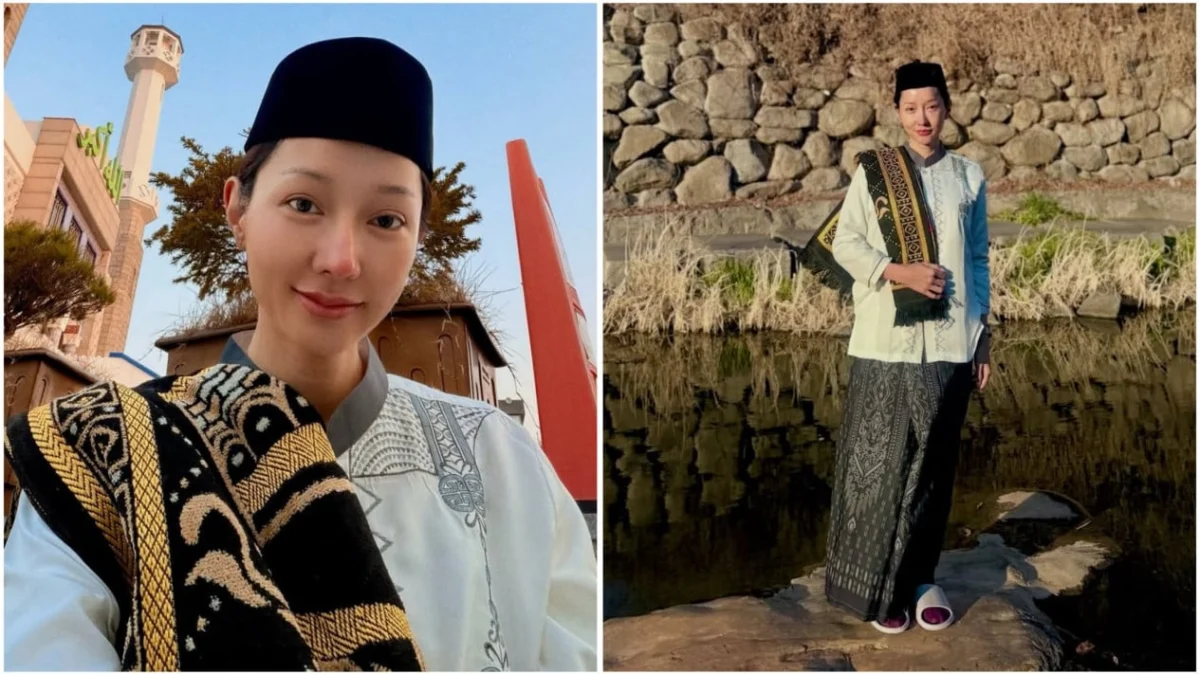
The public first caught a glimpse of this transition when Lucinta Luna shared images and videos of her Eid al-Fitr 1447 H (2026) celebrations at the Seoul Central Mosque. Departing from her usual glamorous and hyper-feminine public image, she appeared wearing a traditional male Muslim cap (peci) and a sarong. Most notably, she chose to join the male congregants in the prayer hall, occupying a space in the men’s "saf" (prayer row).
This choice of location and attire served as a visual confirmation of her internal struggle. By performing the Eid prayer in the men’s section, she effectively bypassed the legal recognition she had fought for years to obtain in Indonesia. Despite having successfully petitioned the courts to change her gender and name in official state documents years prior, the act of praying as a man in one of South Korea’s most prominent Islamic centers signaled a priority of spiritual authenticity over legal status.
Speaking in a recent interview on the "Butik Haji Igun" podcast hosted by celebrity designer Ivan Gunawan, she clarified that the decision to pray in the men’s section was a deliberate step toward reconciling with her "kodrat," a term used in Indonesian culture to describe one’s divinely ordained nature or biological destiny. She noted that while she is legally a woman in the eyes of the Indonesian state, her conscience compelled her to seek a different path during her moments of worship.
The Psychological Burden of a Decade-Long Persona
The transition back to the identity of Muhammad Fatah appears to be the culmination of years of intense psychological pressure and emotional exhaustion. During her conversation with Ivan Gunawan, the influencer revealed the dark side of her celebrity status, which was built on a foundation of numerous plastic surgeries and a carefully curated feminine persona.
She admitted to a decade-long hiatus from regular religious practices, stating that she had not performed formal prayers for approximately ten years. This spiritual void, coupled with the relentless scrutiny of the public and the constant "hujatan" (social media abuse) from critics, led to a severe decline in her mental health. She described her life as a public figure as feeling like a "robot" or a "statue," existing only to fulfill the expectations of others and the demands of her brand, rather than living an authentic life.
To cope with the overwhelming stress and the dichotomy between her public image and private turmoil, she confessed to a long-term dependence on psychiatric support and sedative medications. The constant need to maintain a specific appearance and the fear of public judgment created a cycle of anxiety that she claimed could only be broken by returning to her roots. "I was tired of being a puppet," she remarked, explaining that the peace she sought had remained elusive despite her fame and financial success.
The Conflict Between Legal Recognition and Internal Conviction
One of the most complex aspects of this development is the legal context surrounding her gender identity. In 2019 and early 2020, the North Jakarta District Court officially granted a petition to change her gender from male to female and her name from Muhammad Fatah to Ayluna Putri. This legal victory was a landmark moment for her, providing the administrative basis for her life as a woman.
However, the recent announcement suggests that legal affirmation did not provide the emotional or spiritual resolution she anticipated. During the podcast, she acknowledged the irony of her situation, noting that while she possesses all the legal documentation and has undergone extensive physical transformations to align with a female identity, her "inner voice" began to pull her back toward her original state.
She emphasized that her decision to pray as a man while abroad was a way to find "calm, tranquility, and peace" without the immediate pressure of the Indonesian public eye. The choice of South Korea as the setting for this revelation was strategic, providing a degree of anonymity and a neutral ground to explore her spiritual reconnecting.
A Chronology of Transformation: From Muhammad Fatah to Lucinta Luna and Back
To understand the weight of this announcement, one must look at the timeline of the subject’s public life:
- The Early Years: Known as Muhammad Fatah, the individual worked in various roles within the beauty and entertainment industry before rising to prominence.
- The Rise of Lucinta Luna (2018-2019): A persona was created that took the Indonesian internet by storm. Despite persistent rumors and "leaked" documents regarding her past, she maintained a firm stance that she was a cisgender woman.
- Legal Transition (2020): Following a legal battle and public controversy, court documents were publicized confirming the legal change of gender and name. This period was marked by high-profile media appearances and the solidification of her brand as a "Barbie-like" figure.
- The Period of Controversy and Fame: For several years, she remained a fixture in the tabloid press, known for her numerous cosmetic surgeries in South Korea and Thailand, her high-profile relationships, and her frequent social media feuds.
- Spiritual Crisis (2024-2025): Hints of dissatisfaction began to emerge in her content, with more frequent mentions of mental health struggles and the exhaustion of maintaining her public image.
- The Turning Point (April 2026): The Eid al-Fitr prayer in Seoul and the subsequent interview with Ivan Gunawan serve as the formal declaration of her intent to reclaim her identity as Muhammad Fatah.
As part of this new phase, she has also taken the physical step of cutting her long hair into a short, traditionally masculine style. She asserted that this change was not a "sensasi" (publicity stunt) but a serious commitment to her new path.
Public Reaction and Societal Implications in Indonesia
The reaction to the announcement has been polarized, reflecting the complex social and religious fabric of Indonesia. On one hand, many conservative religious groups and individuals have welcomed the news, viewing it as a "hidayah" (divine guidance) and a positive return to traditional values. On social media, comments sections have been filled with messages of support from those who believe she is making the "correct" choice according to religious doctrine.
On the other hand, members of the LGBTQ+ community and human rights advocates have expressed a more nuanced view. Some worry that such a high-profile "reversal" might be used by detractors to argue that transgender identities are merely "phases" or psychological aberrations, potentially increasing the stigma faced by others who do not share her desire to detransition.
Furthermore, there is a segment of the public that remains skeptical, given her history of using personal drama to drive engagement and "viral" moments. However, the somber tone of her recent interviews and the specific details regarding her mental health struggles have led many observers to believe that this transition is rooted in a genuine personal crisis rather than a marketing strategy.
Analysis of the Broader Impact on Celebrity Culture
The case of Muhammad Fatah highlights a growing discourse regarding the mental health of digital influencers in Southeast Asia. The pressure to maintain a specific, often artificial, persona can lead to a phenomenon known as "influencer burnout," where the boundary between the "self" and the "brand" becomes dangerously blurred.
In the Indonesian context, where religious identity is central to public life, the intersection of gender identity, celebrity status, and Islamic faith creates a unique set of pressures. Her admission that she felt like a "robot" underscores the dehumanizing aspect of extreme social media fame. Her journey suggests that even with legal protection and physical transformation, the lack of social and spiritual integration can lead to profound internal conflict.
The Future of Muhammad Fatah in the Public Eye
As of April 2026, the individual formerly known primarily as Lucinta Luna appears to be in a transitional phase. While the "Lucinta Luna" brand remains a powerful entity with millions of followers, the shift toward the identity of Muhammad Fatah raises questions about her future career path. Will she continue to operate in the entertainment industry as a male figure, or will she retreat from the spotlight to seek a more private life?
The decision to cut her hair and participate in male religious rites suggests a desire for a clean break from the past. However, the path to "returning to one’s nature" is often as complex as the path away from it. The Indonesian public will undoubtedly continue to watch closely as one of its most famous figures navigates this new chapter.
In conclusion, the announcement by the individual known as Lucinta Luna to return to her identity as Muhammad Fatah is more than a celebrity gossip story; it is a significant cultural event that touches on themes of faith, legal identity, mental health, and the heavy price of fame in the digital age. Whether this leads to a permanent departure from her previous persona or a new, more integrated way of living remains to be seen, but for now, it stands as a stark reminder of the human search for peace amidst the noise of modern celebrity.