Nasution Nanang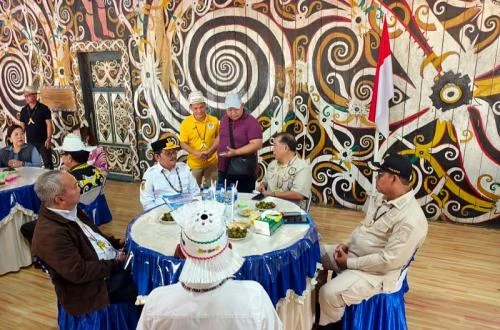
The Government of Malinau Regency and the North Kalimantan Provincial Government, alongside representatives from Malaysia, recently convened a crucial border coordination meeting to foster cross-border synergy and address pressing issues along the Indonesia-Malaysia frontier. Held in Long Nawang, Apau Kayan, a remote district within Malinau Regency, North Kalimantan, the bilateral forum underscored the mutual commitment to strengthen ties, facilitate development, and improve the welfare of communities residing in these vital border regions. The meeting brought together key stakeholders from both nations, marking a significant step towards a more integrated and prosperous shared border.
Driving Bilateral Cooperation and Development
The coordination meeting saw Malinau Regency express its strong support for enhanced bilateral cooperation, particularly concerning the strategic development of border infrastructure. Wakil Bupati (Deputy Regent) Malinau, Jakaria, articulated the local government’s enthusiasm for the initiative, emphasizing the importance of collective action. "We welcome the holding of this coordination meeting and I invite all parties to strengthen cross-border synergy," Jakaria stated via a short message on Thursday, highlighting the proactive stance of the Indonesian side. The Indonesian delegation actively pushed for the accelerated construction of a Post Lintas Batas Negara (PLBN), or State Border Post, on the Sarawak side, specifically at a location identified as Tapak Mega. This proposed development is seen as critical for formalizing trade, enhancing security, and facilitating regulated movement across the international boundary.
A key request from Malinau was for the Malaysian authorities to grant leniency and protection to residents from Apau Kayan who regularly travel to Sarawak for essential goods and services. This plea stems from the unique geographical challenges and severe infrastructure limitations within the Apau Kayan region, which often force its inhabitants to rely on markets in neighboring Malaysia for their daily necessities. Jakaria underscored the urgency of this humanitarian consideration, advocating for these provisions to be in place even before the envisioned PLBN on the Malaysian side becomes operational. The Deputy Regent further elaborated on the historical context, explaining that the existing relationships between the communities of Apau Kayan and Sarawak predate the formation of modern nation-states, emphasizing that these borders are not merely lines of separation but dynamic spaces of social, economic, and cultural interaction. Therefore, he stressed, the long-standing harmonious relationship must be continually nurtured and strengthened.
The Malaysian delegation, led by Datuk Wilson Uga Anak Kumbong, the Deputy Minister for Digital of Sarawak, acknowledged the Indonesian proposals, signifying Malaysia’s willingness to engage constructively on these shared challenges. While specific commitments from the Malaysian side regarding the PLBN construction timeline or immediate leniency measures were not detailed in the initial reports, their participation in the high-level meeting and subsequent site visit indicated a serious consideration of the points raised by the Indonesian representatives. The meeting served as a vital platform for direct dialogue, fostering understanding and setting the stage for future collaborative actions.
Background: The Strategic Importance of the Border Region
The Indonesia-Malaysia border, particularly in North Kalimantan, is characterized by its remote, dense tropical rainforests, rugged terrain, and a complex network of rivers. This geographical reality profoundly impacts the lives of communities living in areas like Apau Kayan. Malinau Regency, located in the interior of North Kalimantan, shares an extensive land border with Sarawak, Malaysia. The Apau Kayan plateau, in particular, is one of the most isolated regions in Indonesia, often accessible only by river or small aircraft, making overland travel to other parts of Indonesia challenging, time-consuming, and expensive.
Historically, communities such as the Kenyah, Kayan, and Lun Bawang peoples have inhabited both sides of this border for centuries, long before colonial demarcation lines created the modern international boundary. These indigenous groups share deep cultural, familial, and economic ties, with cross-border movement being a traditional way of life. For residents of Apau Kayan, access to basic goods, healthcare, and educational facilities can sometimes be significantly easier and more affordable by crossing into Sarawak than by traveling to provincial centers within Indonesia. This reliance highlights a critical developmental disparity that both governments are now attempting to address through formal cooperation and infrastructure development. The informal cross-border trade, though vital for local livelihoods, also presents challenges related to regulation, security, and potential illicit activities, underscoring the need for formal border management mechanisms.
The Push for Border Infrastructure: Indonesia’s National Strategy
Indonesia has, for several years, implemented a national strategy to develop its border regions, encapsulated in President Joko Widodo’s "Nawa Cita" (Nine Priorities) agenda, particularly the third point: "building Indonesia from the periphery with strengthened regions and villages." A cornerstone of this strategy is the construction of integrated State Border Posts (PLBNs) across the country’s land borders. These PLBNs are designed not only as immigration and customs checkpoints but also as hubs for economic development, offering facilities for trade, tourism, and community services. They symbolize Indonesia’s commitment to asserting its sovereignty while simultaneously uplifting its border communities.
Indonesia has already made significant strides in this regard. In the Apau Kayan region itself, the PLBN Terpadu Long Nawang in Kayan Hulu District, Malinau Regency, stands as a testament to this commitment. This integrated border post provides a formal gateway for movement and trade on the Indonesian side. The Malaysian delegation, accompanied by Deputy Governor of North Kalimantan Ingkong Ala, Deputy Regent Jakaria, and members of the Malinau Regional House of Representatives (DPRD), seized the opportunity to directly inspect the Long Nawang PLBN. This visit was crucial, offering Malaysian officials firsthand insight into Indonesia’s border management infrastructure and potentially informing their own plans for the proposed Tapak Mega PLBN.
The urgency of developing a corresponding PLBN on the Sarawak side at Tapak Mega is paramount for several reasons. A formalized border crossing would streamline customs and immigration procedures, reducing the risks and inefficiencies associated with informal crossings. It would also enable better monitoring of goods and people, enhancing both national security and public health protocols. From an economic perspective, a formal PLBN would pave the way for structured cross-border trade, potentially attracting investment and stimulating economic growth in the hitherto underserved border areas. The development aligns with a broader vision of transforming border regions from mere peripheries into vibrant economic gateways.
Ensuring Welfare and Protection for Border Communities
The request for leniency and protection for Apau Kayan residents visiting Sarawak underscores a deeply humanitarian aspect of border management. The geographical isolation of Apau Kayan means that reaching major Indonesian towns for supplies can involve arduous journeys lasting several days, often relying on expensive air transport or perilous river routes. In contrast, access to towns in Sarawak, such as Lawas or Ba’kelalan, can be significantly shorter and more manageable, especially for communities located directly adjacent to the border. This disparity has historically driven residents to seek essential goods, from food staples to fuel and construction materials, across the border.
The lack of formal entry points and the varying enforcement of immigration laws can expose these residents to vulnerabilities, including potential legal issues or exploitation. By requesting leniency, Malinau aims to ensure that its citizens, who are simply trying to meet their basic needs due to their challenging circumstances, are treated with understanding and afforded necessary protections by Malaysian authorities until formal mechanisms are fully in place. This pragmatic approach recognizes the existing realities of border life and seeks to mitigate immediate hardships while long-term solutions are being implemented. It also reinforces the idea that border management should prioritize the welfare of local populations, who often bear the brunt of geopolitical divisions.
Statements from Key Officials
Malinau’s Commitment: Wakil Bupati Jakaria reiterated Malinau’s unwavering commitment to fostering a collaborative environment with its Malaysian neighbors. He emphasized that the meeting was not just about infrastructure but about strengthening the "long-standing relationship" between the communities, a bond that transcends modern political boundaries. Jakaria’s call for "strengthening cross-border synergy" reflects a comprehensive approach that encompasses economic development, social welfare, and cultural preservation. The local government sees the border not as a barrier, but as a bridge for mutual growth and understanding.
North Kalimantan’s Support: The presence of Wakil Gubernur Ingkong Ala signified the North Kalimantan Provincial Government’s robust support for these initiatives. The province, which shares the longest land border with Malaysia among Indonesian provinces, recognizes the strategic importance of effective border management for regional stability and economic prosperity. While specific statements from Ingkong Ala were not detailed in the initial report, his active participation in the delegation and the tour of the Long Nawang PLBN underscore the provincial administration’s commitment to facilitating cross-border cooperation and ensuring the welfare of its border communities. North Kalimantan’s strategic location makes it a crucial player in Indonesia’s broader efforts to develop its frontier regions.
Malaysia’s Engagement: Datuk Wilson Uga Anak Kumbong’s leadership of the Malaysian delegation highlights Sarawak’s direct interest in the discussions. As a neighboring state that shares cultural and economic ties with North Kalimantan, Sarawak’s engagement is vital. While specific public statements from the Malaysian side regarding immediate actions were not provided, their active participation in the coordination meeting and their visit to the Indonesian PLBN suggest a positive reception to the proposals. It indicates a willingness to explore avenues for improved border management and community facilitation, aligning with the spirit of good neighborliness between Indonesia and Malaysia. The focus on digital transformation within Datuk Wilson’s portfolio also hints at potential future collaborations in areas like digital connectivity to bridge the digital divide in remote border areas.
Broader Implications and Future Outlook
The recent border coordination meeting carries significant implications across various sectors, setting a precedent for future collaborative growth between Indonesia and Malaysia, particularly at the sub-national level.
Economic Development and Formalization of Trade: The proposed PLBN at Tapak Mega, coupled with the existing Long Nawang PLBN, holds immense potential to formalize cross-border trade. This formalization can lead to increased transparency, better regulation, and potentially lower transaction costs for legitimate traders. It could also open avenues for specific commodity exchanges, boosting local economies on both sides. By providing designated entry and exit points, both governments can better track trade flows, collect revenues, and prevent illicit activities, transforming informal trade into a structured economic driver for remote areas. This shift could also attract greater investment into these regions, improving infrastructure and creating new job opportunities.
Social Cohesion and Cultural Exchange: The emphasis on strengthening historical and cultural ties acknowledges the unique social fabric of the border communities. Formalizing crossings and ensuring humane treatment for residents can reinforce these bonds, allowing families to connect more easily and cultural exchanges to flourish. This fosters a sense of shared identity and mutual respect, reducing the potential for social friction that can sometimes arise from poorly managed borders. It also ensures that the traditional way of life, which often involves cross-border interactions, can continue within a regulated and supportive framework.
Enhanced Border Security and Stability: A well-managed border with established PLBNs is crucial for national security. It allows for better control over the movement of people and goods, helping to curb issues such as smuggling, illegal migration, and potential cross-border crime. The coordinated efforts discussed in the meeting can lead to improved intelligence sharing and joint security operations, contributing to overall regional stability. For Indonesia, strengthening its border infrastructure is also an assertion of its territorial integrity and sovereignty.
Strengthening Bilateral Diplomacy: Meetings like this, involving both central and sub-national government representatives, are vital for robust bilateral relations. They provide a direct channel for addressing specific regional issues that might not always be prioritized at the national level. By successfully resolving local challenges through cooperation, Indonesia and Malaysia can build greater trust and confidence, strengthening their overall diplomatic ties. This localized diplomacy can serve as a model for other border areas, fostering a more integrated and cooperative relationship between the two Southeast Asian nations.
In conclusion, the coordination meeting in Long Nawang represents a critical juncture in Indonesia-Malaysia border relations. It signifies a shared vision for transforming border regions from challenging peripheries into dynamic hubs of development, security, and cultural exchange. By addressing immediate needs, such as protection for border communities, and pursuing long-term goals like infrastructure development, both governments are laying the groundwork for a more prosperous, secure, and harmonious future along their shared frontier. The commitment to synergy and cooperation expressed by both sides holds the promise of significant positive impacts for the people and economies of Malinau, North Kalimantan, and Sarawak.