Chalifah Fatihah
Measles, a highly contagious respiratory infection caused by the Morbillivirus, is not exclusively a childhood ailment; adults are also susceptible and can face severe complications. This article delves into the characteristics of measles in adults, its transmission, the potential risks, and the critical symptoms to recognize, emphasizing the importance of vaccination and public health awareness.
The highly contagious nature of measles stems from its airborne transmission. The virus spreads not only through direct contact but also via respiratory droplets expelled through coughing, sneezing, and even speaking. These infectious particles can remain suspended in the air for over two hours and linger on surfaces or in dust, making environments with high population density, poor ventilation, and humidity particularly conducive to its spread.
While typically associated with children, measles can affect adults who have not been vaccinated or have received fewer than the recommended two doses of the Measles, Mumps, and Rubella (MMR) vaccine. Individuals with weakened immune systems are also at a heightened risk of contracting the disease. The global resurgence of measles in recent years, often linked to declining vaccination rates, underscores the persistent threat this preventable disease poses to all age groups. Public health organizations worldwide have expressed concern over outbreaks occurring in regions with suboptimal immunization coverage, highlighting the critical need for sustained vaccination efforts.
Understanding the Symptoms of Measles in Adults
The symptomatic presentation of measles in adults generally mirrors that in children. However, adults who contract the illness are at a greater risk of experiencing severe complications. The World Health Organization (WHO) reports that the most frequent complications occur in children under five years of age and adults over 30. These complications can be life-threatening and include pneumonia, ear infections, vision loss, encephalitis (brain inflammation), and a rare but fatal central nervous system disease. The AARP has further detailed the potential severity of these complications, stressing the importance of early detection and medical intervention.
The initial phase of measles infection, known as the incubation period, typically lasts around 10 days. During this time, individuals may experience a range of symptoms that can often be mistaken for a severe cold or flu. These early symptoms include:
- Fever: A sudden onset of high fever, often reaching up to 40 degrees Celsius (104 degrees Fahrenheit).
- Conjunctivitis: Red, watery eyes are a hallmark symptom.
- Rhinorrhea and Nasal Congestion: A significant nasal discharge and a feeling of a blocked nose.
- Cough: A persistent and often dry cough.
This initial phase, referred to as the invasion period, can last between 48 to 96 hours. During this time, the virus is actively replicating, and the individual becomes highly contagious, even before the characteristic rash appears.
The Development of the Measles Rash and Koplik’s Spots
A critical diagnostic indicator of measles, appearing approximately 24 to 36 hours before the widespread rash, are Koplik’s spots. These are small, distinct white or bluish-white spots, each surrounded by a reddish area, measuring about 1/32 of an inch (0.75 mm) in diameter. They typically manifest on the mucous membranes of the mouth, particularly on the inner lining of the cheeks opposite the molars. Their presence is a strong signal that measles is developing, even if other symptoms are still relatively mild.
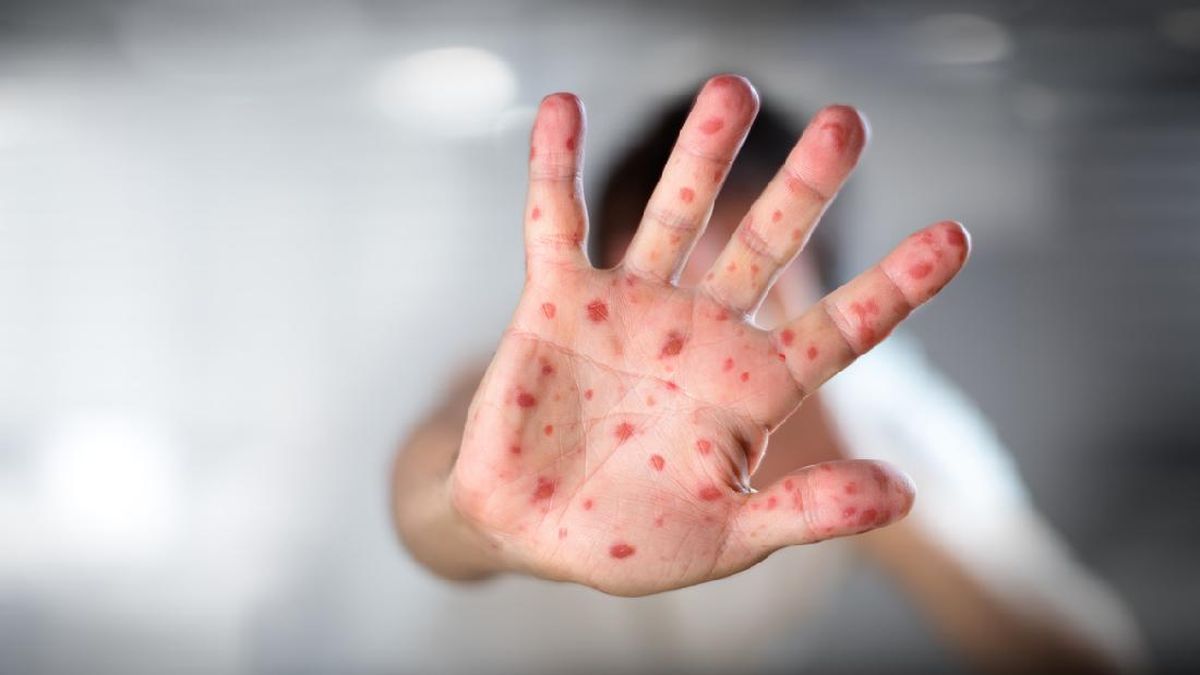
Following the appearance of Koplik’s spots, the characteristic measles rash emerges. This rash typically begins on the face, often starting behind the ears and along the hairline, and then spreads downwards to cover the rest of the body, including the trunk, arms, and legs. The rash initially appears as flat, red blotches, which may gradually become more pronounced and raised. As the rash reaches its peak, the fever can also intensify.
The measles rash usually lasts for about five to six days. As it begins to fade, the temperature of the affected individual tends to drop rapidly, and the other cold-like symptoms, such as nasal discharge and cough, start to recede. The rash typically fades in the same order it appeared, starting from the face and moving downwards. After the rash subsides, a fine, dusty-looking desquamation, or peeling of the skin, may occur in the affected areas.
The Global Context of Measles and Vaccination Efforts
Measles was once a near-universal childhood illness, but the development and widespread adoption of the MMR vaccine in the latter half of the 20th century dramatically reduced its incidence. The MMR vaccine is a safe and effective combination vaccine that protects against measles, mumps, and rubella. According to the Centers for Disease Control and Prevention (CDC), two doses of the MMR vaccine are about 97% effective at preventing measles.
Despite the availability of this highly effective vaccine, measles outbreaks continue to occur globally. These outbreaks are often attributed to a complex interplay of factors, including:
- Declining Vaccination Rates: In some communities, a hesitancy towards vaccination, fueled by misinformation and skepticism, has led to a decrease in MMR immunization coverage. This creates pockets of vulnerability where the virus can spread more easily.
- Waning Immunity: While the MMR vaccine provides long-lasting immunity, in rare cases, immunity can wane over time. Booster doses may be recommended for certain individuals or during outbreaks.
- International Travel: The interconnectedness of the modern world means that measles can be quickly transported across borders by infected individuals, leading to outbreaks in previously measles-free regions.
- Conflict and Displacement: Areas experiencing conflict or large-scale population displacement often have compromised healthcare infrastructure, leading to lower vaccination rates and increased susceptibility to infectious diseases like measles.
The World Health Organization (WHO) has set ambitious goals for measles eradication, but achieving these targets requires sustained global commitment to vaccination programs and robust surveillance systems. Reports from the WHO indicate that while significant progress has been made in reducing measles mortality, the disease remains a major public health threat, particularly in low- and middle-income countries. The agency regularly publishes data on global measles cases and vaccination coverage, providing a critical overview of the ongoing challenges and successes in controlling the disease.
Preventing Measles: The Critical Role of Vaccination
The most effective way to prevent measles and its potentially severe complications in both children and adults is through vaccination. Public health authorities universally recommend that children receive two doses of the MMR vaccine, with the first dose typically given between 12 and 15 months of age and the second dose between 4 and 6 years of age.
For adults, the vaccination recommendations vary depending on their vaccination history and risk factors. Generally, adults born after 1956 who have not been vaccinated or do not have evidence of immunity should receive at least one dose of the MMR vaccine. Healthcare workers, students in post-secondary institutions, and international travelers are often prioritized for vaccination due to their increased risk of exposure or transmission.
It is crucial for individuals to consult with their healthcare provider to determine their vaccination status and whether they require the MMR vaccine. Reliable sources of information on vaccination schedules and recommendations include national health organizations like the CDC in the United States, Public Health England in the UK, and the Ministry of Health in various countries.
Broader Implications and Public Health Analysis
The resurgence of measles serves as a stark reminder of the fragility of herd immunity when vaccination rates decline. Herd immunity occurs when a sufficiently large percentage of a population is immune to a disease, making its spread unlikely. When vaccination rates fall below this threshold, even highly effective vaccines cannot fully protect a community, and outbreaks become more probable.
The economic and social implications of measles outbreaks are significant. Beyond the direct healthcare costs associated with treating infected individuals and managing complications, outbreaks can disrupt schools, workplaces, and community activities. The fear of infection can lead to reduced social interaction and economic productivity. Furthermore, the burden of measles disproportionately affects vulnerable populations, including those in poverty, with limited access to healthcare, and those with underlying health conditions.
Public health initiatives aimed at combating measles must therefore be multi-faceted. They include not only robust vaccination campaigns but also comprehensive public education efforts to counter misinformation, strengthen surveillance systems to detect outbreaks early, and ensure equitable access to vaccines for all populations. International cooperation is also vital to coordinate response efforts and share best practices in measles control.
In conclusion, measles remains a formidable public health challenge, with adults facing significant risks of severe illness and complications. Understanding the symptoms, recognizing the importance of vaccination, and supporting public health efforts are paramount in preventing the spread of this preventable disease and protecting communities worldwide. The lessons learned from past measles outbreaks underscore the enduring value of vaccination as a cornerstone of public health and disease prevention.