Nila Kartika Wati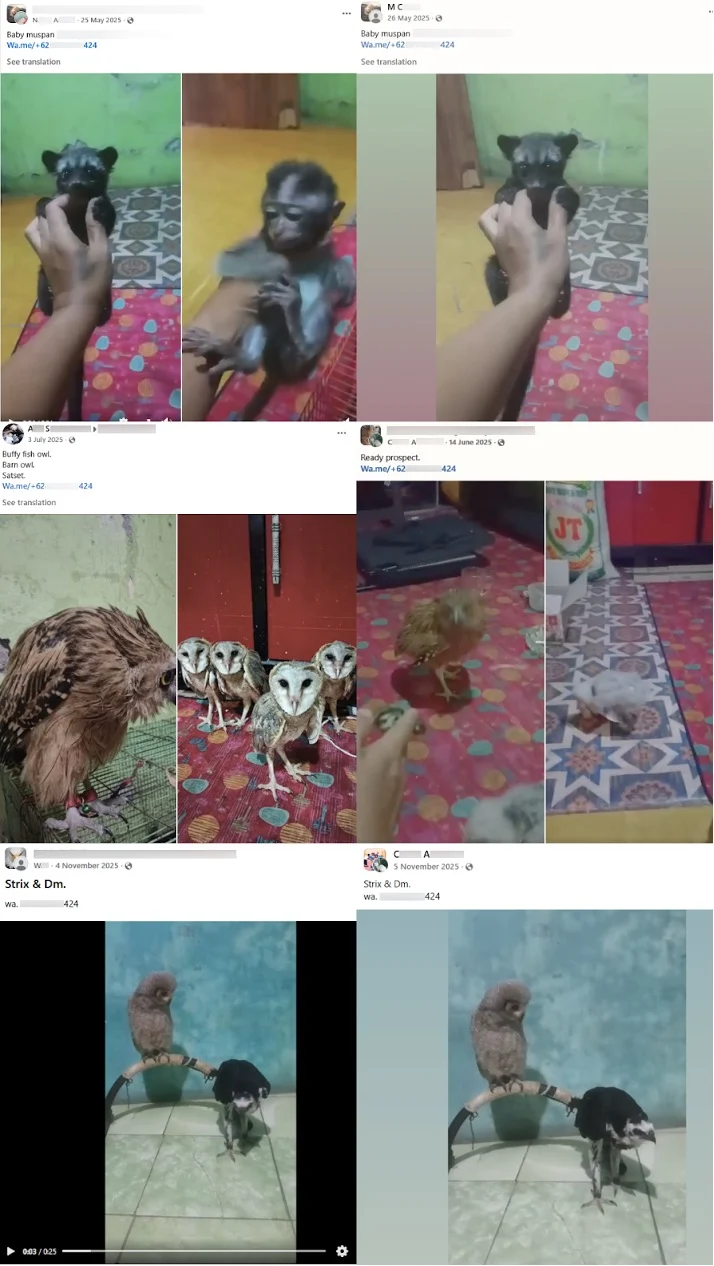
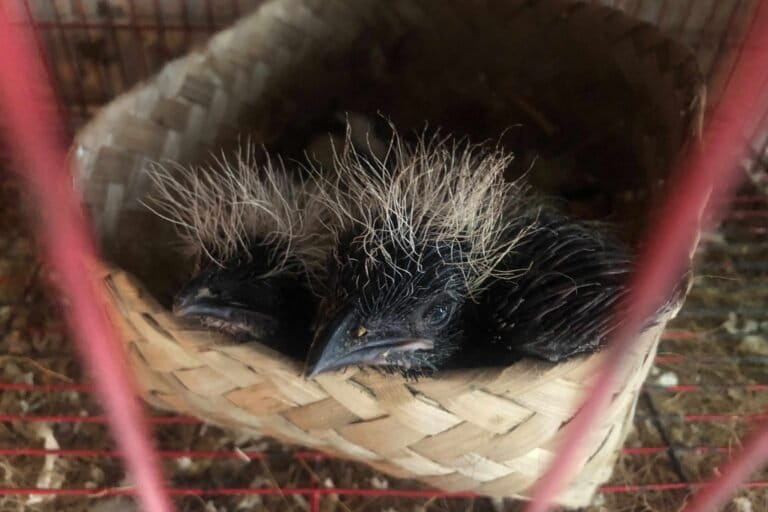
In the quiet corners of Cibinong, Bogor Regency, a nondescript storefront named Sato Exotic served as a critical node in a sprawling network of illegal wildlife trafficking that spans both physical borders and digital platforms. In mid-November 2025, an investigation conducted by Mongabay Indonesia and the international investigative collective Bellingcat revealed three Javan Coucal (Centropus nigrorufus) chicks, barely two weeks old, languishing in a cage without their mother. These birds, endemic to the island of Java and listed as a protected species under Indonesian law, were being prepared for shipment to Purwokerto via an inter-provincial bus driver—a common, low-tech method used to bypass formal logistics monitoring.
The Javan Coucal has been a fixture on the International Union for Conservation of Nature (IUCN) Red List since 1994, categorized as a vulnerable species. Despite conservation efforts, its status was reaffirmed in a 2025 assessment following a catastrophic decline in population, now estimated to be fewer than 10,000 mature individuals. At Sato Exotic, these rare specimens were priced at a mere IDR 175,000 (approximately USD 11) per bird. The store’s owner, Jordan Bastian, admitted that the birds were poached directly from their natural habitat in Tasikmalaya, West Java, through a supplier with a steady stream of wild-caught stock.
The Mechanics of Digital Camouflage
The investigation into Sato Exotic highlights a disturbing trend in the evolution of the illegal wildlife trade: the use of mainstream e-commerce and social media platforms to mask illicit activities. While Tokopedia, one of Indonesia’s largest e-commerce platforms, officially prohibits the sale of endangered species, Sato Exotic successfully bypassed these safeguards through "digital camouflage."
A deep dive into the store’s online presence revealed 71 listings of wildlife, the majority of which were categorized under deceptive labels. Endangered animals were listed as "tools," "toys," "aquarium decorations," or "books." In other instances, species were misidentified to evade keyword filters; birds and squirrels were frequently listed as "hamsters" or "reptiles." Bastian noted that the majority of his revenue came from these online sales, with orders arriving daily, while the physical storefront in Cibinong remained largely empty, serving more as a holding facility than a retail space.
This digital shift presents a significant challenge for law enforcement. Since its inception in 2017, Sato Exotic operated without the mandatory wildlife distribution permits required by Law No. 5 of 1990 concerning the Conservation of Biological Natural Resources and Their Ecosystems. Under Indonesian law, even the trade of non-protected wildlife requires a Domestic Fish and Wildlife Transport Permit (SATS-DN) from the Natural Resources Conservation Agency (BKSDA) to verify that the animals are sourced from captive breeding programs rather than the wild. Without this documentation, any trade is considered illegal.
A Chronology of Investigation and Institutional Response
The timeline of the investigation underscores the friction between grassroots reporting and institutional enforcement. On November 28, 2025, the investigative team presented their findings to senior officials at the Ministry of Forestry, including Dwi Januanto Nugroho, Director General of Law Enforcement (Gakkum), and Satyawan Pudyatmoko, Director General of Conservation of Natural Resources and Ecosystems. Both officials pledged to investigate the matter.
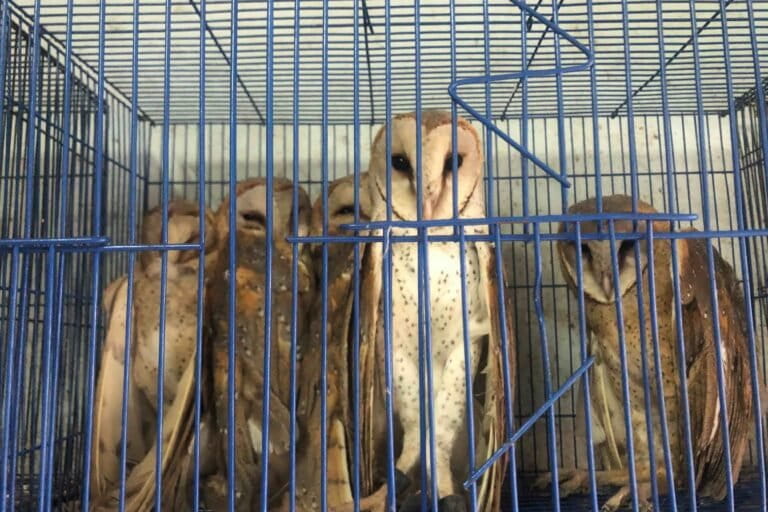
On December 1, 2025, three officers from the BKSDA Region I Bogor conducted a "sudden inspection" (sidak) at the Sato Exotic shop. However, the results of the raid were underwhelming. Stephanus Hanny Rekyanto, the head of BKSDA Region I Bogor, stated that his team found no protected species on-site, only non-protected animals such as barn owls (Tyto alba) and collared scops owls. Stephanus claimed the owner had "repented" after previous brushes with the law and was now complying with Ministry of Environment and Forestry Regulation No. P.106/2018.
The investigation, however, provided a different reality. When shown photographs of the Javan Coucal chicks taken at the shop just weeks prior, Stephanus initially struggled to identify the young birds. It took the intervention of a bird breeder present at the BKSDA office to confirm that the images were indeed of the endangered Javan Coucal. Despite this evidence, Stephanus noted that BKSDA’s role is limited to monitoring and education; actual criminal enforcement falls under the jurisdiction of the Ministry’s Law Enforcement Division (Gakkum).
The Broker Network: Facebook and the "Rekber" System
The trade is not limited to individual shops but is supported by an intricate web of "brokers" or "middlemen" who operate through social media. Bellingcat’s investigation identified nine Facebook groups with a combined membership of over 70,000 people dedicated to wildlife trading. These groups were moderated by accounts linked to Sato Exotic, including a profile under the name Athalia Berliana (AB).
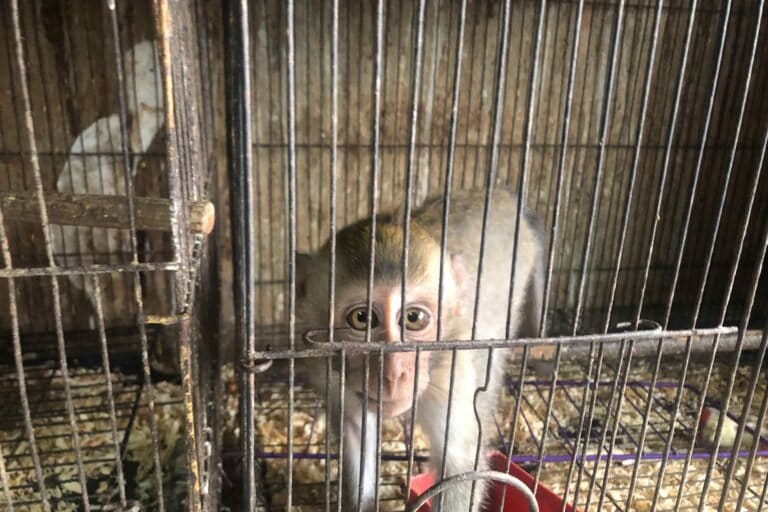
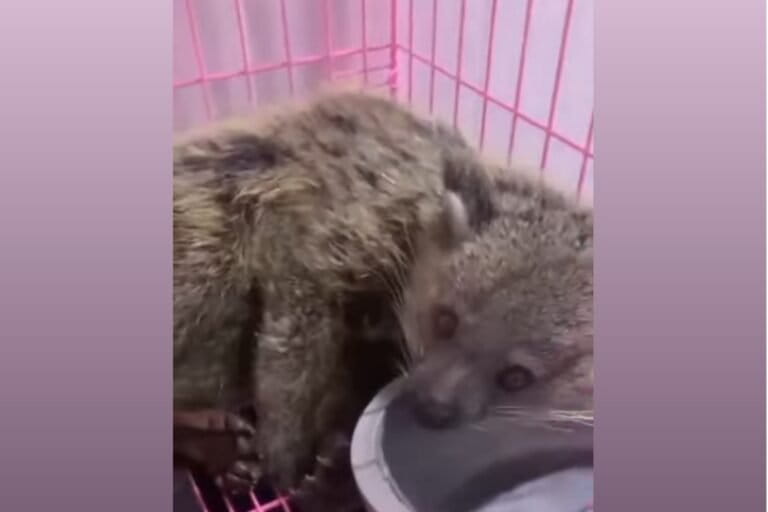
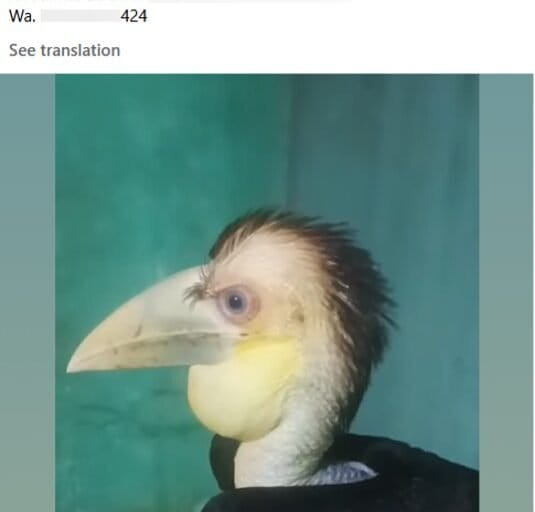
By analyzing contact information and metadata, investigators linked six different Facebook profiles to a single broker known as "Jibon" (Azie Soka Smithh). These accounts utilized the same WhatsApp numbers and photographed animals against identical backgrounds—often inside the Sato Exotic shop. These brokers would advertise a variety of species, including the Binturong (bearcat) and the Great Hornbill, both of which are strictly protected under Indonesian law.
The brokers operate with a high degree of sophistication. They rarely use their real names and avoid face-to-face transactions. Instead, they utilize a "Rekber" (Rekening Bersama) or joint account system. This acts as a third-party escrow service, where the buyer’s money is held until the animal is delivered, providing a layer of perceived security for both the buyer and the seller while keeping the identities of the traffickers shielded from the authorities.
Following the investigation’s outreach to Meta (the parent company of Facebook and Instagram), the six profiles and nine groups were permanently removed for violating policies on restricted goods and services.
Biological and Legal Implications
The Javan Coucal serves as a grim case study for the impact of this trade. As a specialist of low-lying wetlands and dense vegetation (up to 800 meters above sea level), its habitat is already under pressure from agricultural expansion and urban development in West Java. The removal of chicks as young as two weeks old from the wild ensures a high mortality rate and prevents the natural replacement of the aging wild population.
From a legal perspective, the penalties for such trade are becoming increasingly severe. Under the newly updated Law No. 32 of 2024, the trade or possession of protected species can result in prison sentences ranging from three to fifteen years. Despite this, the "low risk, high reward" perception persists among local traders. Jordan Bastian, in a follow-up interview in February, claimed he was unaware the Javan Coucal was protected, stating, "Selling protected animals is confusing now; the profit is small, but the risk is huge. Better to stay safe."
Analysis of the Enforcement Gap
The case of Sato Exotic highlights a critical gap in Indonesia’s conservation efforts: the disconnect between digital monitoring and physical enforcement. While the Ministry of Forestry has implemented "cyber patrols" to monitor social media conversations and transaction codes, the agility of traffickers often outpaces bureaucratic responses.
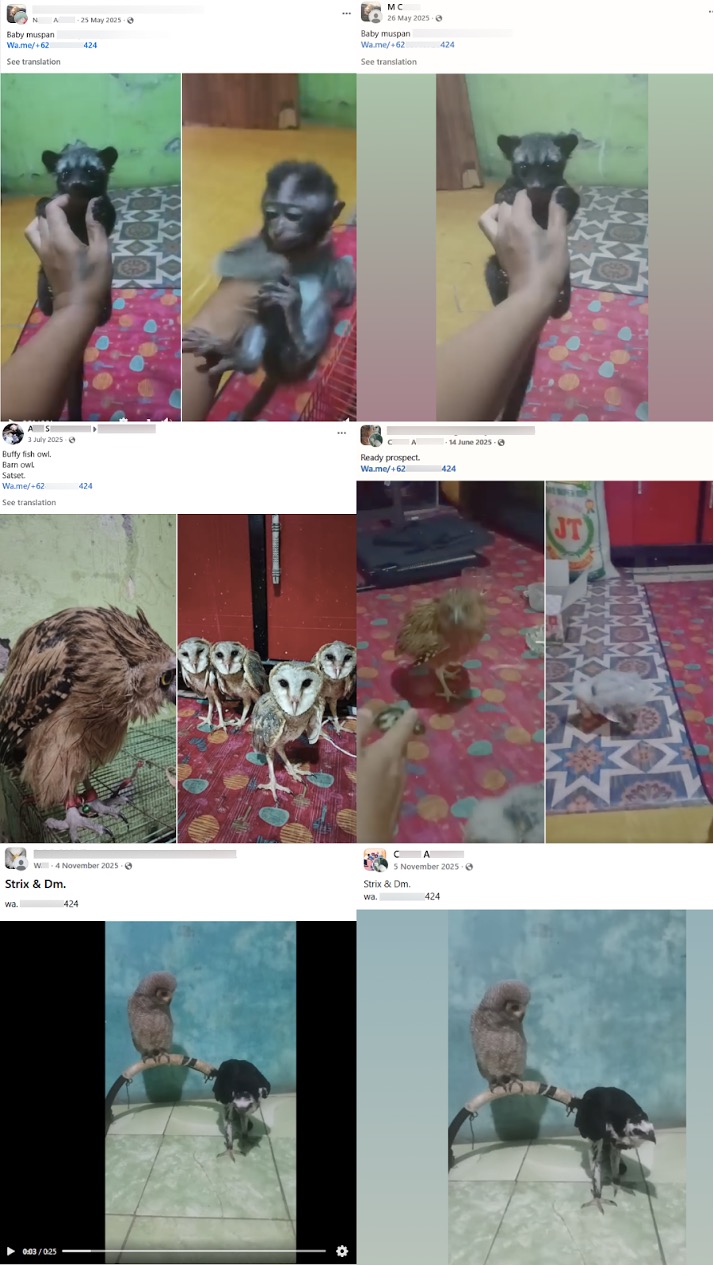
The use of "coded language" (such as "Bintu" for Binturong or "Celepuk WC" for wild-caught owls) allows traders to bypass automated detection systems. Furthermore, the reliance on inter-provincial buses and "courier" services makes the physical movement of animals nearly impossible to track without intelligence-led stings at transit hubs.
Data from the NGO Garda Animalia indicates that the trade in vulnerable species—including macaques, gibbons, and cockatoos—remains high. Between 2020 and 2025, while some fluctuations occurred, the overall trend of online advertisements for these animals has remained steady. The anonymity of the internet, combined with the logistical ease of the "Rekber" system, has created a resilient marketplace that persists despite occasional platform bans.
Conclusion and Future Outlook
The closure of Sato Exotic’s Tokopedia account and the deletion of the associated Facebook groups represent a temporary victory for conservationists, but the underlying infrastructure of the trade remains intact. The investigation proves that traffickers are deeply embedded in local communities and utilize a sophisticated blend of traditional and modern methods to exploit Indonesia’s biodiversity.
For lasting change, experts argue that enforcement must move beyond reactive raids and toward systemic disruption of the broker networks. This requires closer cooperation between tech giants like Meta and Tokopedia, regional BKSDA offices, and the national Gakkum division. Without a unified front that addresses both the digital storefronts and the physical poaching routes, endemic species like the Javan Coucal will continue to be priced and sold into extinction, one deceptive listing at a time.