Nasution Nanang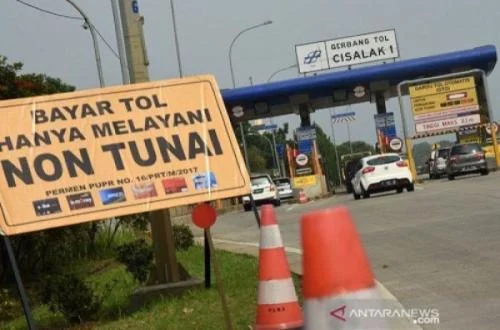
CENTRAL JAVA, INDONESIA – The Indonesian Ministry of Public Works (PU) has officially announced that the highly anticipated Multi Lane Free Flow (MLFF) non-cash, contactless, and barrier-free toll transaction system will undergo a rigorous re-trial. The significant announcement was made by Minister of Public Works Dody Hanggodo on Saturday, March 28, at Rest Area KM379 A on the Batang-Semarang Toll Road, signaling a renewed commitment to modernizing Indonesia’s critical toll road infrastructure. This decision comes after the initial pilot project conducted in Bali failed to yield sufficiently conclusive results regarding its successful implementation, necessitating a comprehensive re-evaluation and subsequent re-testing phase.
The MLFF system represents a pivotal shift in how motorists interact with toll roads, promising enhanced efficiency, reduced congestion, and a seamless travel experience. Unlike traditional toll gates that require vehicles to stop or slow down for electronic card taps, MLFF utilizes advanced technologies such as Global Navigation Satellite System (GNSS), Radio Frequency Identification (RFID), and Automatic Number Plate Recognition (ANPR) to automatically deduct tolls as vehicles pass through gantries at normal highway speeds. This technology is designed to eliminate physical barriers, thus allowing for a continuous flow of traffic, which is critical for reducing bottlenecks, especially during peak hours and holiday seasons on Indonesia’s increasingly busy toll network. The vision for MLFF is not merely to upgrade payment methods but to fundamentally transform the user experience, making toll roads more efficient and less stressful for commuters and logistics operations alike.
Unpacking the Initial Trial and the Need for Re-Evaluation
The initial pilot project for the MLFF system was launched in Bali, specifically on the Bali Mandara Toll Road, a crucial artery connecting Ngurah Rai International Airport with various tourist destinations. While strategically chosen for its controlled environment and moderate traffic volume, the trial, as acknowledged by Minister Dody Hanggodo, did not provide the unequivocal data needed to declare it a complete success. Several factors contributed to this ambiguity, including potentially insufficient traffic volume to fully stress-test the system’s capacity, specific geographic and infrastructure characteristics of the Bali Mandara Toll Road that might not be representative of the broader Indonesian toll network, and perhaps, initial challenges in user adoption and technological integration.
One of the primary objectives of any pilot project is to identify unforeseen technical glitches, user interface issues, and operational bottlenecks in a real-world setting before a nationwide rollout. The "unclear conclusion" from the Bali trial likely indicates that while the core technology may have functioned, its performance under varying conditions, its readiness for mass deployment, and its overall impact on traffic flow and user satisfaction could not be definitively assessed. This necessitated a more robust and expansive testing environment to truly validate the system’s capabilities and address any lingering uncertainties. The government’s decision to conduct a re-trial underscores a cautious and methodical approach, prioritizing thoroughness and reliability over a rushed implementation. It reflects an understanding that a successful nationwide deployment requires a system that is not only technologically sound but also operationally robust and legally enforceable across diverse conditions.
Comprehensive Stakeholder Involvement in the Re-Trial
The upcoming re-trial is poised to be a far more comprehensive undertaking, involving a wider array of governmental bodies to ensure transparency, accountability, and legal enforceability. Minister Dody Hanggodo emphasized that the re-testing plan involves significant participation from the Financial and Development Supervisory Agency (BPKP), the Attorney General’s Office (Kejaksaan), and the National Police (Kepolisian). This multi-agency involvement is critical for several reasons:
- BPKP (Badan Pengawasan Keuangan dan Pembangunan – Financial and Development Supervisory Agency): BPKP’s role will be to conduct rigorous financial and operational audits of the MLFF system during the re-trial. This includes scrutinizing the procurement processes, evaluating the cost-effectiveness of the technology, assessing the efficiency of revenue collection, and ensuring that public funds are utilized judiciously. Their oversight will provide an independent assessment of the project’s financial viability and adherence to good governance principles. Given the substantial investment required for such an infrastructure project, BPKP’s involvement is crucial for building public trust and ensuring fiscal prudence.
- Kejaksaan (Attorney General’s Office): The Attorney General’s Office will play a vital role in providing legal counsel and oversight, ensuring that all aspects of the MLFF implementation comply with existing laws and regulations. This includes reviewing contracts with technology providers, assessing the legal framework for data collection and privacy, and ensuring that any enforcement mechanisms for non-payment are legally sound. Their participation helps mitigate potential legal challenges and provides a robust legal foundation for the system’s operation.
- Kepolisian (National Police): The police’s involvement, particularly through the Traffic Corps (Korlantas Polri), is paramount for the successful enforcement of the MLFF system. As MLFF eliminates physical toll booths, the challenge of identifying and penalizing vehicles that fail to pay tolls becomes more complex. The police will be instrumental in developing and implementing effective enforcement strategies, which could include the use of ANPR for identifying violators, establishing clear protocols for issuing fines, and integrating MLFF data with existing traffic violation systems. Their expertise in law enforcement and traffic management is indispensable for ensuring compliance and maintaining order on the toll roads.
This integrated approach aims to create a robust framework that covers not just the technical functionality of MLFF but also its financial, legal, and enforcement dimensions, addressing the multifaceted challenges inherent in such a transformative infrastructure project.
Strategic Selection of New Test Locations: Jabodetabek and Trans Jawa
The re-trial locations are a significant departure from the initial Bali pilot, with consideration being given to high-traffic corridors such as those in the Greater Jakarta area (Jabodetabek) or along the Trans Jawa Toll Road. This strategic shift is driven by the need to test the MLFF system under conditions that are truly representative of Indonesia’s most congested and frequently used toll segments.
- Jabodetabek: The Jakarta-Bogor-Depok-Tangerang-Bekasi (Jabodetabek) area boasts some of the highest traffic volumes in Southeast Asia. Toll roads within this region, such as the Jakarta Outer Ring Road (JORR), Jagorawi, and Jakarta-Cikampek, experience immense daily traffic, characterized by heavy commuter flow, logistics movements, and frequent congestion. Testing MLFF in Jabodetabek would provide invaluable data on the system’s ability to handle massive transaction volumes, maintain accuracy under dense traffic conditions, and effectively alleviate bottlenecks in critical urban arteries. The complexities of multiple entry and exit points, varying vehicle types, and diverse user behaviors in this area would present a rigorous testbed for the MLFF technology.
- Trans Jawa Toll Road: The Trans Jawa Toll Road, stretching over 1,000 kilometers from Merak in Banten to Probolinggo in East Java, is the backbone of Java’s inter-city connectivity and logistics network. It experiences significant long-distance traffic, particularly during national holidays (like Eid al-Fitr and Christmas/New Year), when congestion can become extreme. Testing MLFF on Trans Jawa would assess its scalability over long distances, its resilience against varying environmental conditions, and its impact on inter-provincial logistics and travel times. The ability of MLFF to manage traffic flow across such an extensive network during peak travel periods would be a definitive measure of its success.
The selection of these high-traffic areas underscores the government’s intention to subject the MLFF system to the most challenging real-world scenarios, thereby ensuring its reliability and effectiveness before a broader national rollout. The insights gained from these locations will be crucial for fine-tuning the system and developing comprehensive deployment strategies.
BPJT’s Emphasis on Meticulous Preparation
Wilan Oktavian, the Head of the Toll Road Regulatory Agency (BPJT), reiterated the critical importance of meticulous preparation before determining the precise location and timing for the advanced trials. BPJT, as the primary regulatory body for Indonesia’s toll roads, plays a central role in overseeing the MLFF project. Oktavian’s statement highlights the need for a holistic approach to readiness, which encompasses:
- Technical Readiness: Ensuring that the MLFF technology itself is fully optimized, including hardware (gantries, sensors, cameras), software (billing, data processing, enforcement algorithms), and network infrastructure. This involves thorough testing of accuracy, speed, and reliability of the transaction process under various conditions.
- Regulatory Framework: Developing a robust legal and regulatory framework that clearly defines user obligations, payment mechanisms, enforcement protocols for non-compliance, and data privacy safeguards. This framework must be comprehensive, unambiguous, and easily understandable by the public.
- Stakeholder Engagement: Actively involving all relevant stakeholders, including toll road operators, technology providers, financial institutions, law enforcement agencies, and most importantly, road users. This includes conducting public awareness campaigns, gathering feedback, and addressing concerns proactively.
- Operational Protocols: Establishing clear operational procedures for managing the MLFF system, including customer service for inquiries and disputes, maintenance schedules for equipment, and incident response protocols.
- Reporting and Evaluation: Developing detailed reporting mechanisms to capture all relevant data during the trial, allowing for a thorough evaluation of the system’s performance against predefined key performance indicators (KPIs). This data will be crucial for making informed decisions about future implementation.
BPJT’s commitment to thorough preparation reflects an understanding that the success of MLFF hinges not just on the technology itself, but on the entire ecosystem surrounding its operation.
Addressing Key Implementation Challenges
Sony Sulaksono Wibowo, a member of BPJT, further elucidated several critical issues that still require significant adjustment and coordination before the MLFF system can be successfully deployed. These challenges broadly fall into three categories:
-
Technology Integration with Toll Operators: The Indonesian toll road network is operated by various state-owned and private entities, each potentially using different internal systems for billing, traffic management, and customer relations. The MLFF system must seamlessly integrate with these diverse operational systems. This involves developing standardized interfaces, ensuring data compatibility, and managing the transition from existing electronic toll collection (ETC) systems to MLFF. Complexities arise from differing hardware and software environments, requiring significant coordination and potentially substantial upgrades for existing operators. The goal is to ensure a smooth transition without disrupting current toll operations or causing revenue leakage.
-
Payment Mechanisms: A crucial aspect of MLFF is the payment process. While the system is "free flow," users still need to pay their tolls. This requires robust, secure, and user-friendly payment mechanisms. Options could include:
- Pre-registered accounts linked to vehicles: Users would register their vehicle and link it to a digital wallet or bank account, with tolls automatically deducted.
- On-demand payment through mobile apps: Users could pay within a certain timeframe after passing a gantry.
- Integration with existing e-money platforms: Leveraging popular Indonesian e-wallet services.
Developing a system that caters to diverse user preferences while ensuring security, real-time processing, and clear reconciliation is a significant challenge. Public awareness and education campaigns will be vital to ensure widespread adoption and understanding of these new payment methods.
-
Law Enforcement for Toll Violations: The absence of physical barriers makes enforcement of non-payment a primary concern. Sony Sulaksono Wibowo specifically highlighted the need for coordination with Korlantas Polri (the National Police Traffic Corps) to establish a robust legal framework for enforcement. This framework must clearly define what constitutes a violation, the penalties involved, the process for identifying violators (e.g., through ANPR and vehicle registration data), issuing fines, and handling disputes. Key considerations include:
- Data Privacy: Ensuring that vehicle and user data collected for enforcement purposes is handled in accordance with privacy laws.
- Accuracy of Identification: Minimizing errors in number plate recognition to avoid wrongful fines.
- Inter-agency Coordination: Seamless data sharing and operational cooperation between BPJT, toll operators, and Korlantas Polri.
- Public Education: Clearly communicating the enforcement rules and consequences to road users to encourage compliance.
Without a clear and enforceable legal umbrella, the MLFF system risks high rates of non-compliance, undermining its financial viability and overall effectiveness.
A Brief History of Toll Road Development and Payment Systems in Indonesia
Indonesia’s journey with toll roads began in the late 1970s, primarily to support economic development and improve inter-city connectivity. The first toll road, Jagorawi, opened in 1978. For decades, toll collection was predominantly manual, involving cash payments at physical booths. This method, while straightforward, was prone to human error, lengthy queues, and inefficiencies.
The early 2000s saw the gradual introduction of electronic toll collection (ETC) systems, initially through dedicated electronic cards (e-Toll cards) that could be tapped at payment gates. This marked a significant step towards modernization, reducing transaction times and congestion to some extent. By 2017, the Indonesian government mandated the exclusive use of non-cash payments on all toll roads, accelerating the adoption of e-Toll cards and integrating them with various bank-issued electronic money products. While this move largely eliminated cash transactions, it still required vehicles to stop or slow down at barriers, which continued to contribute to traffic bottlenecks, especially at high-volume toll plazas.
The concept of MLFF emerged as the next logical step in this evolution, aiming to completely remove physical barriers and enable true free-flow traffic. Discussions and planning for MLFF began several years ago, driven by the government’s ambitious infrastructure development agenda and the need to enhance the efficiency of the burgeoning toll road network. The initial tender processes and technology selection were part of this long-term vision, leading to the first pilot in Bali. The re-trial signifies a commitment to perfect this system, learning from past experiences to build a truly robust and future-proof toll payment solution.
Broader Implications and Expected Benefits of MLFF
The successful implementation of MLFF carries profound implications for Indonesia’s economy, environment, and the daily lives of its citizens.
-
Economic Impact:
- Reduced Logistics Costs: For the freight and logistics industry, MLFF promises significant time savings by eliminating delays at toll gates, translating into lower operational costs, faster delivery times, and improved supply chain efficiency. This can enhance Indonesia’s competitiveness in regional and global markets.
- Fuel Savings: Reduced idling time at toll gates directly translates into lower fuel consumption for millions of vehicles, offering both economic benefits to motorists and a reduction in national fuel imports.
- Increased Productivity: For commuters and businesses, saved travel time can be reallocated to more productive activities, contributing to overall economic growth.
- Improved Infrastructure Utilization: By making toll roads more efficient, MLFF can encourage greater usage, maximizing the return on investment for expensive infrastructure projects.
-
Environmental Benefits:
- Reduced Emissions: Less idling means fewer exhaust emissions (CO2, NOx, particulate matter), contributing to improved air quality, especially in urban areas like Jabodetabek, and aligning with Indonesia’s climate change commitments.
- Lower Noise Pollution: Smoother traffic flow can also lead to a reduction in traffic-related noise pollution.
-
User Experience:
- Seamless Travel: The most immediate and noticeable benefit for drivers will be the elimination of stops at toll gates, providing a truly seamless and stress-free travel experience.
- Convenience: Automated payment removes the need to prepare cards or cash, enhancing convenience.
- Safety: Reduced sudden braking and acceleration at toll gates can potentially lead to fewer accidents.
-
Challenges and Risks:
- Public Acceptance and Adoption: A major challenge will be educating the public about the new system and ensuring widespread adoption of the required payment mechanisms. Resistance to change or confusion could hinder implementation.
- Data Security and Privacy: The collection of vehicle movement and payment data raises concerns about data security, privacy, and potential misuse. Robust safeguards and clear policies are essential.
- Initial Investment Costs: The transition to MLFF requires significant investment in new infrastructure (gantries, sensors, data centers) and system integration, which needs to be carefully managed.
- Technical Glitches: Any new technology rollout is susceptible to initial technical issues, which could lead to billing errors or system downtime, requiring efficient customer support and rapid problem resolution.
- Equitable Access: Ensuring that all road users, including those without smartphones or easy access to digital payment methods, can seamlessly use the system.
Timeline of MLFF Initiative in Indonesia (Illustrative)
- Early 2010s: Initial discussions and studies on advanced toll collection systems, including free-flow concepts, begin as congestion on existing toll roads grows.
- 2017: Government mandates 100% non-cash payments on all toll roads, accelerating the adoption of e-Toll cards and setting the stage for more advanced systems.
- 2018-2019: BPJT and Ministry of Public Works begin formal studies and tender preparations for the MLFF system, evaluating various technologies and potential providers.
- 2020: A consortium is selected to develop and implement the MLFF system, with initial plans for a pilot project.
- 2021: Detailed planning and preparatory work for the MLFF pilot project commence.
- 2022: Initial MLFF pilot project is launched on the Bali Mandara Toll Road.
- Late 2022 – Early 2023: Evaluation of the Bali pilot yields "unclear conclusions," prompting a review of the implementation strategy.
- March 2023: Minister Dody Hanggodo announces the decision for a comprehensive re-trial of the MLFF system, with expanded stakeholder involvement and strategic selection of high-traffic test locations.
- Late 2023 – 2024 (Projected): Commencement of the re-trial in Jabodetabek or Trans Jawa, with ongoing evaluations and adjustments.
- Beyond 2024 (Projected): Phased national rollout of MLFF across Indonesia’s toll road network, pending successful re-trial and regulatory approvals.
Concluding Outlook
The decision to re-trial the Multi Lane Free Flow system underscores the Indonesian government’s dedication to developing a world-class transportation infrastructure. While the initial pilot faced challenges, the renewed commitment, coupled with expanded stakeholder involvement from BPKP, Kejaksaan, and Kepolisian, and a strategic shift to higher-traffic test environments, indicates a thorough and cautious approach. The successful implementation of MLFF holds immense potential to revolutionize road travel in Indonesia, offering significant economic, environmental, and social benefits. However, overcoming the remaining challenges related to technology integration, payment mechanisms, and robust law enforcement will be paramount. The upcoming trials will be crucial in determining the viability and ultimate success of this ambitious project, paving the way for a more efficient and seamless future for Indonesia’s toll roads.