Azin Asro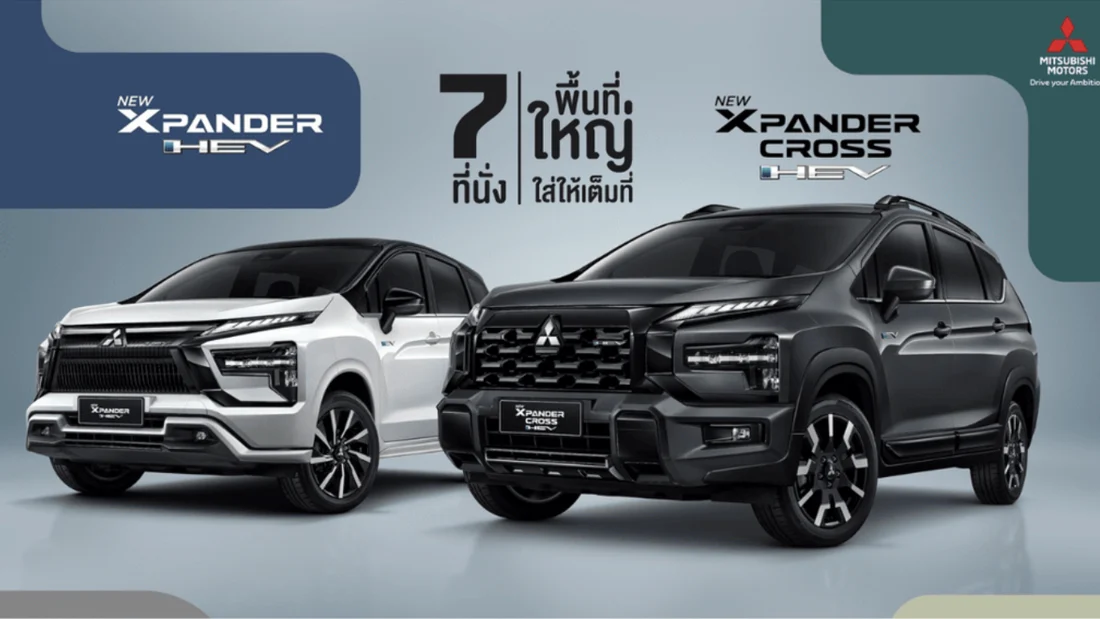
The landscape of the Southeast Asian automotive market has reached a significant milestone with the official unveiling of the 2026 Mitsubishi Xpander HEV (Hybrid Electric Vehicle) at the Bangkok International Motor Show (BIMS). This debut marks a pivotal transition for one of the region’s most successful multi-purpose vehicles (MPVs), signaling Mitsubishi Motors Corporation’s (MMC) commitment to its "Challenge 2025" mid-term business plan, which prioritizes electrification in core markets. Following a series of incremental updates in early 2025, the 2026 model year represents a sophisticated leap forward, integrating advanced hybrid technology, enhanced driving dynamics, and a modernized interior designed to compete in an increasingly eco-conscious segment.
The Xpander HEV is not merely a powertrain swap; it is a comprehensive re-engineering of the vehicle to meet the demands of modern families who seek fuel efficiency without sacrificing the utility and ruggedness for which the Xpander is known. By leveraging Mitsubishi’s decades of experience in electric and 4WD technology, the 2026 Xpander HEV aims to redefine the expectations of the entry-level electrified MPV market.
Advanced Hybrid Powertrain and Performance Specifications
At the heart of the 2026 Mitsubishi Xpander HEV lies a newly developed hybrid system that pairs a dedicated internal combustion engine with a high-output electric motor. The vehicle utilizes a 1.6-liter naturally aspirated four-cylinder petrol engine, identified by the engine code 4A92. This engine is specifically tuned to operate on the Atkinson cycle, a configuration favored in hybrid applications for its high thermal efficiency. On its own, the 1.6L unit produces 95 PS of power and 134 Nm of torque.
However, the primary driver of the vehicle’s performance is the electric motor. Delivering 116 PS (approximately 85 kW) and an instantaneous torque of 255 Nm, the electric motor provides the punchy acceleration required for urban stop-and-go traffic. This motor is powered by a 1.1 kWh lithium-ion battery pack, strategically placed to maintain the vehicle’s low center of gravity and interior space. The system operates through a series-parallel hybrid configuration, allowing the vehicle to run on pure electricity in low-speed scenarios, utilize the engine as a generator to charge the battery, or combine both power sources for maximum performance during high-speed overtaking.
This hybrid synergy results in a significant reduction in fuel consumption compared to the standard internal combustion engine (ICE) variant. Preliminary data suggests that the HEV model can achieve up to a 34% improvement in fuel efficiency in urban driving conditions and a 15% improvement in combined cycles. For consumers, this translates to lower operating costs and a reduced carbon footprint, aligning with regional governmental efforts to lower vehicle emissions.
Enhanced Driving Dynamics: Seven Drive Modes and Active Yaw Control
One of the most notable upgrades in the 2026 Xpander HEV is the introduction of a sophisticated drive mode selector, a feature typically reserved for higher-end SUVs. Mitsubishi has equipped the model with seven distinct driving modes: Normal, Wet, Gravel, Tarmac, Mud, Charge, and EV.
- EV Mode: Allows for near-silent, zero-emission driving over short distances, ideal for residential areas.
- Charge Mode: Prioritizes the engine to recharge the battery to a specific level, ensuring electric power is available when needed later.
- Wet and Mud Modes: Adjust traction control and power delivery to ensure stability on slippery or unpaved surfaces, which are common in the Southeast Asian rainy season.
- Tarmac and Gravel Modes: Optimize the vehicle’s handling characteristics for different road textures, enhancing driver confidence.
Complementing these modes is the inclusion of Active Yaw Control (AYC). Originally developed for the legendary Mitsubishi Lancer Evolution and more recently implemented in the Mitsubishi Xforce, AYC is a technology that controls the braking forces between the front wheels. By applying subtle braking to the inner wheel during a corner, the system reduces understeer and allows the vehicle to follow the driver’s intended line more precisely. This addition is particularly beneficial for a high-ground-clearance MPV like the Xpander, as it significantly improves stability during sudden maneuvers or on winding roads.
Interior Sophistication and Technological Integration
The 2026 Xpander HEV receives a substantial interior overhaul that elevates the cabin’s premium feel. The most immediate change is the adoption of a new color palette, featuring black synthetic leather upholstery accented by Copper (tembaga) stitching. This copper theme is a deliberate design choice by Mitsubishi to symbolize the "electric" nature of the vehicle, as copper is a primary conductor in electrical systems.
The driver’s cockpit has been modernized with an 8-inch full LCD digital instrument cluster. This screen provides high-resolution graphics and customizable layouts, allowing drivers to monitor hybrid system energy flow, battery levels, and drive mode status in real-time. Occupying the center of the dashboard is a new 10-inch touchscreen infotainment head unit. This system is fully compatible with wireless Apple CarPlay and Android Auto, ensuring seamless smartphone integration for navigation and media.
Despite the technological advancements, Mitsubishi has preserved the Xpander’s core strength: versatility. The vehicle remains a true seven-seater. The second-row seats feature a 40:20:40 split-folding configuration with a "fold-and-tumble" mechanism, providing easy access to the third row. The third row itself can be folded completely flat into the floor, creating a massive cargo area for families with active lifestyles.
Regional Strategy and Market Positioning
The decision to debut and launch the Xpander HEV in Thailand first is a strategic move by Mitsubishi Motors. Thailand serves as a primary production hub for the ASEAN region and offers significant government incentives for electrified vehicles under the "EV 3.5" policy framework. This allows Mitsubishi to price the hybrid variant competitively against traditional ICE competitors.
In the Thai market, the 2026 Mitsubishi Xpander HEV is priced starting at 939,000 Baht (approximately Rp 486 million). For those seeking a more rugged aesthetic, the Xpander Cross HEV—which features higher ground clearance and SUV-style body cladding—is offered at 969,000 Baht (approximately Rp 502 million). These price points place the Xpander HEV in direct competition with the Toyota Veloz and the Suzuki Ertiga Hybrid, though Mitsubishi’s "full hybrid" system offers a more robust electric driving experience than the mild-hybrid systems found in some rivals.
Industry analysts suggest that the Xpander HEV will play a crucial role in maintaining Mitsubishi’s market share in the "Big Three" ASEAN markets: Thailand, Indonesia, and the Philippines. As fuel prices fluctuate and urban centers implement stricter emissions standards, the hybrid MPV is positioned as the ideal middle ground for consumers who are not yet ready to transition to full Battery Electric Vehicles (BEVs) due to charging infrastructure concerns.
The Roadmap for Indonesia: Production and Delivery
While the spotlight is currently on the Bangkok International Motor Show, Mitsubishi has confirmed that Indonesia remains a central pillar of its electrification strategy. Atsushi Kurita, President Director of PT Mitsubishi Motors Krama Yudha Sales Indonesia (MMKSI), has provided a clear timeline for the hybrid’s arrival in the archipelago.
"We are currently in the final stages of preparation for our hybrid transition," Kurita stated during a recent media briefing in Jakarta. "Our plan is to begin local production of our hybrid models in the first semester of 2026. Following the ramp-up of our manufacturing facilities, we anticipate that the first units will be delivered to Indonesian consumers in the second semester of the same year."
The delay between the Thai launch and the Indonesian production is attributed to the need for local supply chain localization. Mitsubishi aims to maximize the local content of its hybrid vehicles in Indonesia to qualify for government incentives and ensure long-term spare parts availability. This move is also expected to bolster the Indonesian automotive industry, as it involves upgrading local manufacturing plants to handle high-voltage battery assembly and hybrid-specific powertrains.
Broader Implications and Environmental Impact
The introduction of the Xpander HEV is a significant step toward the "greening" of the Southeast Asian automotive sector. MPVs are the highest-volume vehicle segment in countries like Indonesia and the Philippines. By electrifying its best-selling model, Mitsubishi is ensuring that a large portion of the vehicle fleet becomes significantly cleaner.
From an environmental perspective, the widespread adoption of HEVs serves as an effective bridge. While BEVs offer zero tailpipe emissions, their environmental benefits are often tied to the cleanliness of the national power grid. In contrast, HEVs provide immediate carbon reductions by optimizing the efficiency of internal combustion. Furthermore, because HEVs do not require external charging infrastructure, they are immediately viable in rural and suburban areas where EV chargers are currently scarce.
Conclusion: A New Era for the Xpander
The 2026 Mitsubishi Xpander HEV represents a harmonious blend of proven reliability and forward-thinking technology. By integrating the e:Motion hybrid system with established features like Active Yaw Control and versatile interior packaging, Mitsubishi has created a vehicle that addresses the practical needs of families while acknowledging the global shift toward sustainability.
As the automotive industry moves toward an uncertain future, the Xpander HEV stands as a testament to Mitsubishi’s ability to evolve. With a clear production timeline for Indonesia and a strong debut in Thailand, the 2026 Xpander HEV is poised to remain a dominant force in the regional market, proving that the era of the hybrid MPV has officially arrived. The combination of improved fuel economy, advanced safety tech, and modern digital features ensures that the Xpander will continue to be a household name across Southeast Asia for years to come.