Paryono Ramadhan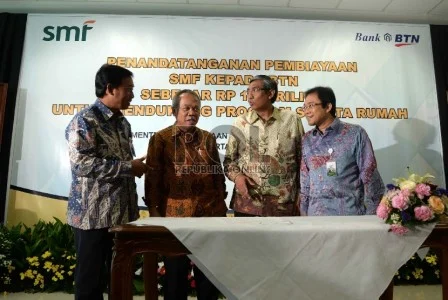
The Indonesian government is steadfast in its commitment to addressing the nation’s persistent housing deficit, declaring an all-out mobilization of available resources to ensure the resounding success of the ambitious One Million Houses Program. This pledge was emphatically reiterated by Minister of Public Works and Housing (PUPR), Basuki Hadimuljono, who underscored the program’s critical focus on providing affordable housing for low-income communities. The Minister’s remarks were delivered during a pivotal signing ceremony in Jakarta last week, marking a significant cooperation agreement between PT Sarana Multigriya Finansial (SMF) and Bank Tabungan Negara (BTN), an alliance set to inject substantial capital into the national housing finance ecosystem.
Strategic Financial Injection: The SMF-BTN Collaboration
At the heart of the recent development is the substantial financial commitment from PT Sarana Multigriya Finansial (SMF), a state-owned enterprise operating under the Ministry of Finance. SMF, a key player in the secondary mortgage market, extended a significant loan facility amounting to IDR 1.5 trillion (approximately USD 100 million) to Bank Tabungan Negara (BTN). This strategic financial infusion is specifically earmarked to bolster BTN’s capacity to disburse mortgages, particularly targeting the low-income segment of society. The collaboration aims to streamline access to housing finance, thereby directly contributing to the government’s overarching goal of making homeownership an achievable reality for a broader spectrum of Indonesian citizens.
SMF’s role in the Indonesian financial landscape is crucial for the long-term sustainability of the housing sector. As a non-bank financial institution, it primarily functions to develop and deepen the secondary mortgage market by securitizing mortgage loans and providing funding to primary mortgage lenders like BTN. This mechanism allows banks to free up capital, enabling them to originate new loans and expand their reach. For BTN, a state-owned bank with a historical mandate to support housing development, this funding from SMF is vital. It enhances its liquidity and strengthens its ability to meet the high demand for subsidized housing loans, which are often characterized by lower interest rates and longer tenures, catering specifically to those with limited financial means. The partnership underscores a coordinated governmental approach, leveraging financial institutions to amplify social housing initiatives.
A Multi-pronged Approach to Funding the Housing Dream
Minister Basuki Hadimuljono outlined a comprehensive funding strategy for the One Million Houses Program, highlighting diverse sources beyond the SMF-BTN partnership. This multi-pronged approach reflects the sheer scale of the housing challenge and the government’s determination to tap into various financial reservoirs. Among the significant potential contributors, the Minister specifically mentioned:
-
BPJS Ketenagakerjaan (Workers Social Security Agency): A substantial potential contribution of IDR 48.5 trillion (approximately USD 3.2 billion) is anticipated from BPJS Ketenagakerjaan. This agency, responsible for workers’ social security, is increasingly playing a role in housing finance through various programs designed to benefit its members. These programs often include housing loan facilities, down payment assistance, or even direct investment in affordable housing projects, leveraging the vast pool of workers’ contributions to address a fundamental social need. The involvement of BPJS Ketenagakerjaan represents a significant expansion of non-traditional funding sources for housing, aligning social security objectives with national development goals.
-
FLPP (Fasilitas Likuiditas Pembiayaan Perumahan – Housing Financing Liquidity Facility): The government itself is a primary financier through the FLPP scheme, with an allocation of IDR 5.1 trillion (approximately USD 340 million). The FLPP is a long-standing government-backed program that provides subsidized interest rates for housing loans, primarily targeting low-income households. It operates by providing liquidity support to commercial banks and sharia banks, enabling them to offer mortgages at significantly lower, fixed interest rates for extended periods (often up to 20 years). This mechanism makes homeownership accessible to individuals who would otherwise be unable to afford conventional market-rate mortgages. The FLPP has been a cornerstone of Indonesia’s affordable housing strategy for years, continuously adapting to market conditions and expanding its reach.
-
DIPA APBN (Daftar Isian Pelaksanaan Anggaran Anggaran Pendapatan dan Belanja Negara – State Budget Implementation Document): An additional IDR 8.1 trillion (approximately USD 540 million) is channeled directly from the State Budget (APBN) through DIPA. These funds are typically allocated for direct government spending on housing-related infrastructure, land acquisition for public housing, or direct subsidies for housing construction. DIPA allocations ensure that critical foundational elements for housing development, such as basic utilities, roads, and other communal facilities, are funded, thereby reducing the overall cost burden on developers and, consequently, on homebuyers. This direct budgetary support is essential for creating an enabling environment for housing development, especially in underserved areas.
The synergy of these funding streams – from state-owned financial institutions, social security funds, and direct government budgetary allocations – illustrates a comprehensive, multi-stakeholder approach to tackle the complex issue of housing affordability and availability.
The Genesis and Imperative of the One Million Houses Program
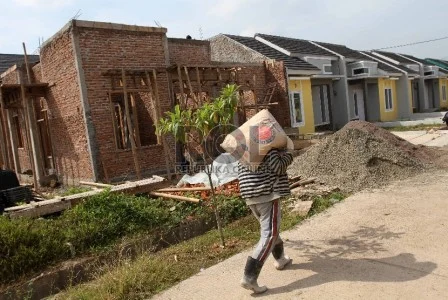
The One Million Houses Program was initially launched in 2015 by President Joko Widodo as a flagship initiative to address Indonesia’s severe housing backlog. At its inception, the national housing deficit was estimated to be in the range of 11-12 million units, encompassing both households without any housing and those living in substandard conditions. The program’s ambitious target was to facilitate the construction of one million new homes annually, a goal deemed essential to keep pace with population growth, rapid urbanization, and the increasing demand from young families and first-time homebuyers.

The program is not merely about constructing buildings; it is fundamentally about improving the quality of life, fostering social equity, and stimulating economic growth. Adequate housing is recognized as a basic human right and a cornerstone of human development. For low-income communities, owning a home provides stability, security, and an asset that can appreciate in value, thereby contributing to intergenerational wealth building and poverty alleviation. Furthermore, the construction sector is a significant driver of economic activity, creating millions of jobs directly and indirectly across various industries, from manufacturing and logistics to financial services. The program, therefore, has far-reaching socio-economic implications, extending beyond the immediate provision of shelter.
Navigating the Complexities: Key Challenges and Strategic Recommendations
Despite the government’s unwavering commitment and substantial financial mobilization, the path to achieving the One Million Houses Program’s goals is fraught with challenges. Indonesia Property Watch, a prominent independent research and consultancy firm in the property sector, has consistently highlighted five critical areas that demand concerted governmental action for the program to truly succeed:
-
Land Availability and Management through a Land Bank: The scarcity of affordable land, particularly in rapidly urbanizing areas, remains a formidable obstacle. Land prices in Indonesia, especially around major metropolitan centers, tend to follow market mechanisms driven by speculation and development pressure, making it prohibitively expensive for affordable housing projects. Indonesia Property Watch advocates for the establishment and effective operation of a national land bank. A land bank would involve the government proactively acquiring strategic land parcels, holding them, and then releasing them specifically for public good projects, including affordable housing, at controlled prices. This mechanism would insulate affordable housing development from volatile market speculation, ensuring that the cost of land does not render projects unfeasible. Such a system requires robust legal frameworks, transparent acquisition processes, and strong political will to overcome potential resistance from private landholders and developers.
-
Dedicated Institutional Focus for People’s Housing: The complexity of the housing sector, involving multiple ministries, agencies, and regional governments, often leads to fragmentation of efforts and bureaucratic inefficiencies. The recommendation for a dedicated institution or a highly focused entity to manage people’s housing aims to centralize policy-making, streamline coordination, and provide a singular point of accountability. Such an institution could oversee the entire lifecycle of affordable housing projects, from land acquisition and planning to financing and allocation, ensuring greater coherence and effectiveness. While the Ministry of PUPR holds the primary mandate, a more focused body could potentially accelerate project delivery and enhance responsiveness to specific community needs.
-
Sustainable and Diversified Funding Mechanisms: While the current funding strategy involves FLPP, BPJS, and DIPA, the scale of the housing deficit necessitates even more innovative and sustainable funding solutions. The challenge lies in ensuring a consistent flow of funds that can withstand economic fluctuations and changing government priorities. Indonesia Property Watch emphasizes exploring a broader spectrum of financing options, including public-private partnerships, leveraging capital markets more effectively through securitization beyond SMF’s current scope, and potentially exploring social impact bonds or green bonds for sustainable housing projects. Diversifying funding sources reduces reliance on any single mechanism and enhances the long-term viability of the program.
-
Accurate Data and Information on Housing Needs: Effective policy-making and targeted interventions are heavily reliant on precise and up-to-date data regarding the housing shortage. This includes granular information on the number of households without adequate housing, their income levels, geographical distribution, specific housing preferences, and the characteristics of existing substandard housing. Gaps in data can lead to misallocation of resources, inefficient project planning, and failure to reach the most vulnerable populations. A robust national housing database, continuously updated and easily accessible, is crucial for evidence-based policy formulation, monitoring progress, and evaluating the program’s impact. This data would also inform the design of more tailored housing solutions, moving beyond a one-size-fits-all approach.
-
Streamlining Bureaucracy and Reducing Costs: The administrative burden and associated costs significantly inflate the price of housing in Indonesia. This includes complex and lengthy permitting processes, high fees for land certification, and connection costs for essential utilities like electricity (PLN) and water. These "hidden costs" are ultimately passed on to homebuyers, making housing less affordable. The recommendation calls for a radical simplification of regulatory frameworks, consolidation of permits, and a reduction in administrative fees. Government initiatives like the Online Single Submission (OSS) system have aimed to address this, but persistent challenges remain at the regional level. Expediting permit approvals, reducing bureaucratic red tape, and subsidizing utility connection costs for affordable housing projects are essential steps to lower the final price point for low-income buyers.
Chronology and Evolution of the Program
Since its launch in 2015, the One Million Houses Program has evolved significantly. Initially, it faced considerable hurdles in meeting its ambitious annual target, primarily due to the very challenges outlined above. However, with consistent government focus and adaptive policy changes, including reforms to FLPP, greater involvement of state-owned enterprises, and efforts to simplify regulations, the program has made steady progress. While year-on-year achievements have varied, the cumulative number of houses built under the program has steadily climbed into the millions, providing shelter to a substantial number of Indonesian families. The program has spurred innovation in construction techniques, encouraged the development of new financial products, and fostered greater collaboration between the public and private sectors. It represents a continuous learning process, with the government regularly evaluating strategies and implementing adjustments to enhance efficiency and effectiveness.
Broader Impact and Future Outlook
The success of the One Million Houses Program carries profound implications for Indonesia’s socio-economic landscape. Economically, it acts as a powerful stimulus, driving growth in the construction sector and its extensive supply chain, creating jobs, and fostering local economies. Socially, it contributes to improved public health outcomes, enhanced educational opportunities for children in stable homes, and stronger community cohesion. It also plays a vital role in reducing the prevalence of informal settlements and improving urban planning by encouraging planned housing developments.
Looking ahead, the government’s commitment to the program remains unwavering. The focus will likely intensify on leveraging technology for more efficient construction, promoting sustainable and resilient housing solutions in the face of climate change, and ensuring equitable distribution of housing opportunities across all regions, including remote and underserved areas. The role of the private sector, incentivized through various government schemes, will be increasingly critical in augmenting the government’s efforts. Continuous dialogue between policymakers, developers, financial institutions, and community representatives will be essential to overcome persistent challenges and adapt to the evolving needs of the Indonesian population. The strategic funding, as exemplified by the SMF-BTN partnership and the broader financial mobilization, underscores the nation’s resolve to build a more equitable and prosperous future, one home at a time.