Bambang Pamungkas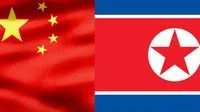
Pyongyang and Beijing have reaffirmed their strategic partnership, with North Korean leader Kim Jong Un and Chinese Foreign Minister Wang Yi engaging in high-level discussions aimed at fostering cross-border cooperation to challenge the dominance of a single global power. The meeting, held on Friday, April 10, local time, in Pyongyang, saw Kim Jong Un express robust support for China’s vision of a "multipolar world" and advocate for strengthened ties between the two long-standing allies. This diplomatic overture signals a concerted effort by both nations to recalibrate global power dynamics, particularly in opposition to what they perceive as American hegemony, and underscores a growing alignment in their respective foreign policy objectives.
Deepening Alliance Amidst Global Shifts
During the meeting, Kim Jong Un articulated North Korea’s unwavering support for China’s territorial integrity, explicitly referencing Beijing’s "One China principle." This principle asserts that Taiwan is an inalienable part of China’s territory, a stance that is a cornerstone of Chinese foreign policy. The endorsement, reported by the official Korean Central News Agency (KCNA), underscores the depth of political solidarity between the two nations, positioning North Korea firmly alongside China on a highly sensitive geopolitical issue. Kim also addressed unspecified regional and international matters, deeming current global issues as being of "common interest" and emphasizing the increasing importance of sustained bilateral relations within the prevailing geopolitical climate. This suggests a shared perception of global challenges and a mutual desire to coordinate responses.
Chinese Foreign Minister Wang Yi, on a two-day visit to North Korea, reciprocated these sentiments, declaring that the relationship between the two countries had entered a "new phase." This assessment follows last year’s pivotal summit between Kim Jong Un and Chinese President Xi Jinping. Wang underscored the necessity for enhanced communication and coordination on critical international and regional affairs, particularly in the face of an "unstable and complex international situation," according to a statement from the Chinese Ministry of Foreign Affairs. He further affirmed China’s readiness to bolster strategic exchanges and practical cooperation with North Korea, signaling a desire for more tangible collaboration across various sectors.
A Historical Nexus: Beijing and Pyongyang’s Enduring Ties
The relationship between North Korea and China is deeply rooted in history, often described with the metaphor "as close as lips and teeth." This bond was forged during the Korean War (1950-1953), when China intervened to support North Korea against the United Nations forces led by the United States. Since then, China has remained North Korea’s most crucial ally and economic lifeline, providing significant aid, trade, and diplomatic protection.
Despite occasional strains, particularly over North Korea’s nuclear weapons program and the imposition of international sanctions, Beijing has consistently sought to maintain stability on the Korean Peninsula and prevent the collapse of the Pyongyang regime. China accounts for over 90% of North Korea’s external trade, a vital conduit for goods, energy, and financial transactions that help sustain the isolated nation. This economic dependency grants Beijing considerable leverage, even as it navigates its own complex relationship with the international community regarding sanctions enforcement.
In recent years, China’s stance on North Korea has evolved, balancing its strategic interests with its responsibilities as a permanent member of the UN Security Council. While Beijing has voted in favor of various UN sanctions resolutions targeting Pyongyang’s nuclear and missile programs, it has also consistently advocated for dialogue and de-escalation, often resisting measures that could severely destabilize North Korea or lead to a humanitarian crisis. The recent rapprochement, marked by high-level visits and the resumption of transport links, signifies a deliberate effort by both sides to project a united front against perceived external pressures and to strengthen their traditional alliance in a rapidly changing global landscape.
Kim Jong Un’s Strategic Reorientation
Kim Jong Un’s foreign policy has undergone a significant reorientation in recent years. Emboldened by what he perceives as a "new Cold War" and a world moving towards "multipolarization," he has actively sought to break out of international isolation. This strategy involves cultivating deeper ties with governments that are in confrontation with the United States, positioning North Korea as part of a broader coalition challenging Washington’s global influence.
While Russia has emerged as a primary focus of Kim’s foreign policy, evident in the dispatch of thousands of North Korean troops and substantial weapons shipments to support Russia’s war against Ukraine, China remains an indispensable and traditional ally. The timing of this meeting with Wang Yi is particularly notable, following a period of intense engagement with Moscow. Kim Jong Un joined Russian President Vladimir Putin at a World War II ceremony in Beijing in September 2023, where he also held his first summit with Chinese President Xi Jinping in six years. These high-profile engagements are crucial components of Pyongyang’s strategy to portray itself as a key player in a unified front against what it views as American aggression and unilateralism.
This strategic shift follows the collapse of denuclearization diplomacy with the United States under former President Donald Trump in 2019. Since then, Kim has adopted an increasingly hardline stance, particularly towards South Korea, which he now labels as his "most hostile enemy." Pyongyang has consistently rejected Washington’s overtures for renewed talks, demanding that the U.S. first lift its preconditions for denuclearization. This uncompromising position has effectively frozen diplomatic channels and underscores Kim’s commitment to developing his country’s nuclear and missile capabilities as a core element of its national security.
Resumption of Practical Engagements and Diplomatic Chronology
A significant indicator of the warming relations between North Korea and China has been the resumption of direct flight services and passenger train operations between the two countries last month. These vital transportation links had been suspended since the onset of the COVID-19 pandemic in early 2020, severely impacting North Korea’s already isolated economy. Their re-establishment not only signifies a return to pre-pandemic levels of engagement but also provides a crucial conduit for trade, tourism, and diplomatic exchanges, further integrating North Korea into China’s economic orbit.
Wang Yi’s recent visit to Pyongyang, which began on Thursday, April 9, marked his first trip to North Korea in seven years. During his stay, he held extensive discussions with North Korean Foreign Minister Choe Sun Hui. The state media of both countries reported that these talks focused on facilitating further cooperation and exchanges, as well as engaging in "in-depth" conversations on international issues. While specific details regarding these international discussions were not disclosed by state media, it is highly probable that topics such as regional security, denuclearization, and the ongoing conflicts in the Middle East and Ukraine were on the agenda, reflecting the shared geopolitical interests and concerns of both nations.
Geopolitical Ramifications and Regional Responses
The timing of Wang Yi’s visit to North Korea carries significant geopolitical weight, occurring just weeks before a rescheduled summit between U.S. President Donald Trump and Chinese President Xi Jinping, anticipated in May. This sequence of events suggests a deliberate coordination of diplomatic efforts by Beijing, potentially aimed at strengthening its hand ahead of crucial discussions with Washington. Some South Korean officials have expressed cautious optimism that a Trump-Xi summit could create new diplomatic opportunities for engagement with Pyongyang, given the historical precedent of direct talks between Trump and Kim. However, North Korea’s current hardline stance makes any immediate breakthrough seem unlikely without significant concessions from the U.S.
The deepening alliance between North Korea and China sends a clear message to the international community, particularly the United States and its allies in the Indo-Pacific region. For Washington, this strengthened partnership complicates efforts to pressure North Korea into denuclearization and to enforce existing sanctions. The coordinated diplomatic and strategic moves by Pyongyang and Beijing could be interpreted as a direct challenge to the U.S.-led liberal international order, particularly in Asia.
South Korea, a direct neighbor and historical adversary of North Korea, views these developments with profound concern. A stronger North Korea, backed by China, could embolden Pyongyang to further accelerate its weapons programs and increase its assertive posture towards Seoul. Japan, another key U.S. ally in the region, also closely monitors these shifts, as North Korea’s missile tests frequently pose a direct threat to Japanese territory and airspace. The increasing cohesion between Pyongyang and Beijing could lead to greater instability in Northeast Asia, potentially escalating regional arms races and complicating multilateral security initiatives.
The Path Ahead: Challenges and Opportunities
The reinvigorated alliance between North Korea and China signifies a strategic realignment in response to evolving global power dynamics. For North Korea, it offers a crucial diplomatic and economic lifeline, helping to mitigate the effects of international sanctions and bolstering its position on the world stage. For China, it reinforces its regional influence, secures its strategic interests on the Korean Peninsula, and provides a partner in its broader effort to promote a multipolar world order.
However, this deepening partnership also presents significant challenges. It could further entrench North Korea’s isolation from the West, making denuclearization efforts even more difficult. The potential for increased military cooperation and intelligence sharing between Pyongyang and Beijing, especially concerning missile technology and cyber capabilities, could pose new threats to regional and global security. Moreover, the alliance risks undermining the international consensus on sanctions against North Korea, potentially leading to divisions within the UN Security Council and weakening the effectiveness of non-proliferation regimes.
The coming months will likely reveal the full implications of this renewed commitment between North Korea and China. As the geopolitical landscape continues to shift, marked by escalating tensions between major powers and ongoing conflicts, the Pyongyang-Beijing axis will undoubtedly play a critical role in shaping the future of Northeast Asia and the broader global order. The international community will closely observe whether this alliance primarily serves to stabilize a volatile region or if it further contributes to a fracturing world order, making diplomatic solutions to long-standing conflicts even more elusive.