Nila Kartika Wati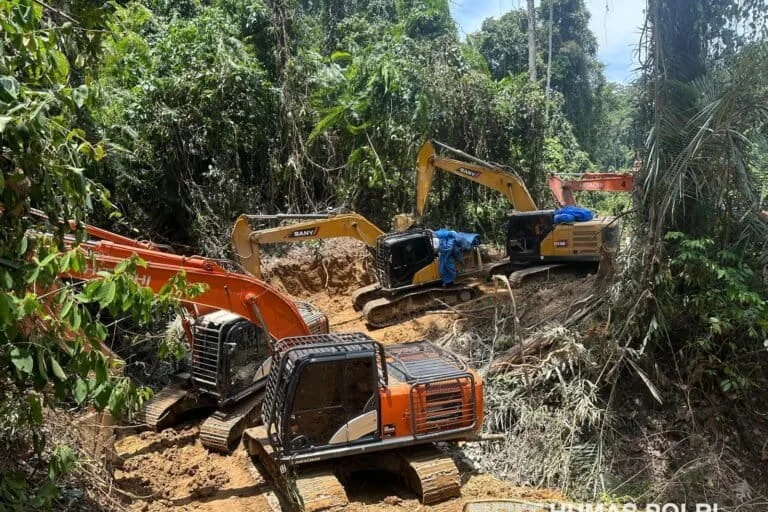
The North Sumatra Regional Police’s Mobile Brigade (Brimob) has successfully dismantled a large-scale illegal gold mining operation situated deep within the forest areas bordering Mandailing Natal (Madina) and South Tapanuli (Tapsel) regencies. During the operation conducted in early March 2026, law enforcement officials apprehended 17 mine workers and seized 12 units of heavy machinery, marking one of the most significant crackdowns on environmental crimes in the region in recent years. The raid highlights the persistent struggle against illicit extractive industries that continue to threaten Indonesia’s protected landscapes and state revenue.
The crackdown was spearheaded by the North Sumatra Police’s Mobile Brigade Command (Dansat Brimob), under the leadership of Senior Commissioner Rantau Isnur Eka. Following the initial sweep, investigators revealed that the illegal activity had been operating undetected for more than two months. During on-site interrogations, the 17 individuals detained claimed to be mere laborers, distancing themselves from the ownership or financing of the multi-billion rupiah operation. This standard defense has prompted civil society organizations and legal experts to demand a deeper investigation into the "intellectual actors" and financiers who provide the capital for such high-overhead illegal ventures.
Chronology of the Raid and Tactical Execution
The operation began with a strategic interception by Brimob personnel who initially stopped two excavators being transported toward the suspected mining sites. This preliminary action provided the intelligence necessary to pinpoint the exact coordinates of the illegal hubs. The investigation led the tactical teams to the villages of Muara Batang Angkola and Huta Godang Muda in the Siabu District of Mandailing Natal.
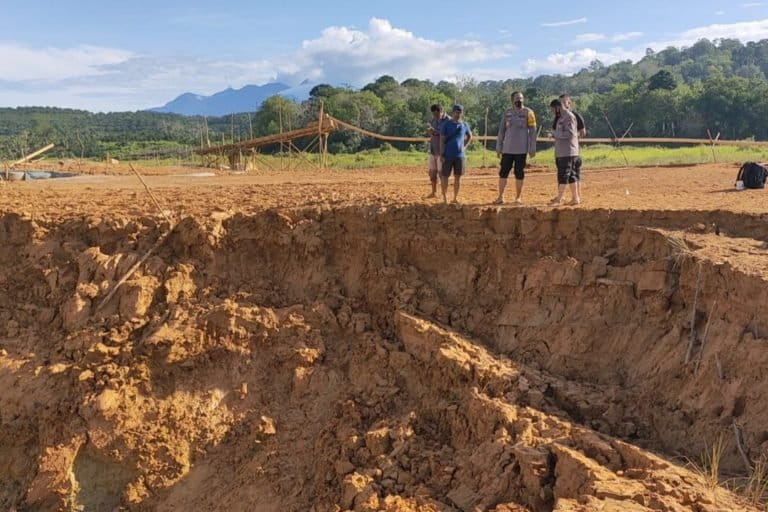
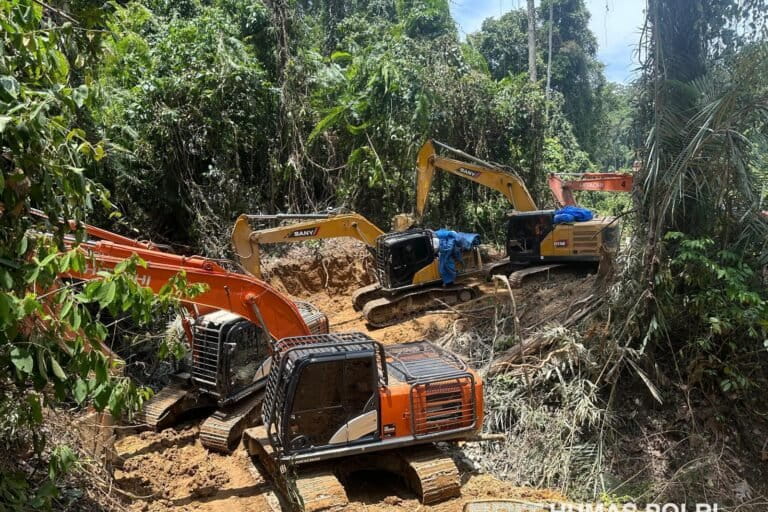
Upon arriving at the locations, the scale of the environmental destruction became apparent. To facilitate the entry of heavy machinery into the dense forest, the perpetrators had carved makeshift roads by dredging hillsides and clearing vast tracts of protected forest. Senior Commissioner Rantau Isnur Eka confirmed that the operation uncovered six distinct mining points: two located within the Mandailing Natal forest administration and four situated across the border in South Tapanuli.
The extraction process involved the use of high-powered excavators to tear through the earth, which were then supported by mechanical "box" systems used to filter gold-bearing silt and sand. This industrial-scale approach stands in stark contrast to traditional artisanal mining, indicating a well-funded criminal enterprise.
Tensions with "Rogue Elements" During the Operation
One of the most alarming aspects of the raid occurred during the extraction of the seized heavy machinery. As Brimob officers attempted to move the 12 excavators out of the forest to be used as evidence, they were confronted by a group of individuals claiming to be "authorities." These unidentified rogue elements attempted to obstruct the police and prevent the removal of the equipment.
The situation at the site reportedly became tense as the "security" personnel challenged the police’s jurisdiction. However, after a firm explanation and a display of tactical readiness by the Brimob unit, the group eventually withdrew, failing to stop the law enforcement process. While the North Sumatra Deputy Police Chief, Brigadier General Sonny Irawan, declined to elaborate on the specific affiliations of these rogue elements, he issued a stern warning that the police would investigate and prosecute anyone involved in the illegal trade, regardless of their background or position.
Legal Proceedings and the Hunt for Financiers
As of the latest update from the North Sumatra Police’s Directorate of Special Criminal Investigation (Ditreskrimsus), two individuals have been officially named as suspects. The Director, Rahmat Budi Handoko, identified the suspects as Abu Bakar, a resident of West Sumatra, and Ali Derlan, a resident of Mandailing Natal. Abu Bakar served as an excavator operator, while Ali Derlan was the mechanic responsible for the maintenance of the gold-filtering boxes.
Despite these arrests, the 17 other individuals detained during the raid are currently being treated as witnesses. The police are shifting their focus toward the logistical and financial trail of the operation. Brigadier General Sonny Irawan stated that investigators are currently tracing the origins of the 12 excavators. This involves summoning heavy equipment distributors to identify the original purchasers and tracking the flow of funds used to lease or buy the machinery.
"The investigation is not limited to the field workers. We are identifying the asset ownership and tracing the money trail to find the masterminds," Sonny Irawan said. By analyzing the serial numbers of the seized equipment and cross-referencing them with sales records, the police hope to bridge the gap between the laborers in the forest and the financiers in the cities.
Historical Context: A Decade of Impunity
The issue of illegal gold mining in Mandailing Natal is not a new phenomenon. Jaka Kelana, Manager of Advocacy and Campaigns for the Indonesian Forum for the Environment (Walhi) North Sumatra, noted that the region has been a hotspot for such activities for over a decade. In 2012, a joint task force of the Indonesian National Armed Forces (TNI) and the National Police (Polri) conducted a massive raid in Tor Sihayo, Naga Juang District.
However, Kelana argued that the continued existence of these mines suggests a systemic failure in law enforcement. "The fact that illegal mining is still flourishing after 10 years shows that the previous legal actions were not deterrent enough," he told Mongabay. He emphasized that for too long, the law has only touched the "small fish"—the laborers and operators—while the beneficiaries and corporate actors remain untouched.
Walhi is now calling for total transparency in the legal process, demanding that the public be informed of every stage from investigation to sentencing. They argue that without holding the financiers accountable, the "ecological debt" accrued by these operations will continue to grow at the expense of the local population.
Environmental Degradation and Public Health Risks
The ecological consequences of illegal mining in the Madina-Tapsel border are catastrophic. Dony Saputra, Director of the Sumatra Rainforest Institute (SRI), highlighted several critical impacts that extend beyond the immediate loss of trees.
- Mercury Pollution: Illegal gold processing often involves the use of mercury to separate gold from ore. This toxic heavy metal leaches into the Batang Angkola river system, entering the food chain and posing a severe risk to downstream communities. SRI has noted reports of neurological disorders and birth defects in the region, which they suspect are linked to long-term mercury exposure.
- Human-Wildlife Conflict: The destruction of the forest habitat has forced apex predators, such as the Sumatran tiger, out of their natural territories. This has led to an increase in tiger attacks on humans and livestock. "When the forest is cleared for mining, the prey base disappears, and the habitat is fragmented, making conflict inevitable," Saputra explained.
- Loss of Life: Illegal mines are notorious for being safety hazards. In recent years, multiple incidents have occurred where workers—often local women and men—were buried alive in unstable pits.
Legal Analysis: Testing the 2023 Criminal Code
The current investigation serves as a critical test for Indonesia’s newly enacted Criminal Code (KUHP 2023). Under the new code, specifically Article 49, there is a stronger emphasis on corporate and financier liability. The law now more clearly defines that criminal responsibility can be extended to those who provide the commands, maintain control, or determine the policies that lead to environmental crimes.
Legal analysts suggest that if the North Sumatra Police can successfully prosecute the financiers under these new provisions, it would set a powerful precedent for environmental protection across the archipelago. The use of 12 excavators—each costing upwards of one billion rupiah—is a clear indicator of corporate-level investment, providing the police with a "paper trail" that did not exist in the era of manual panning.
Economic Implications and State Loss
The financial impact of illegal mining in Indonesia is staggering. Recent estimates suggest that the country loses nearly Rp1,000 trillion in potential revenue due to the illegal extraction of minerals and gold. These operations evade taxes, ignore reclamation obligations, and bypass the Non-Tax State Revenue (PNBP) systems that fund local development.
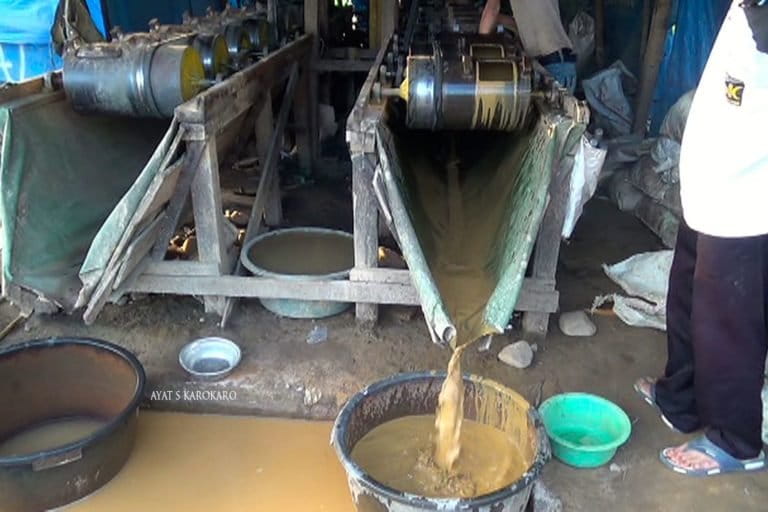
In Mandailing Natal, the "gold rush" has created a shadow economy that briefly enriches a few while leaving the local government to deal with the long-term costs of infrastructure damage and environmental restoration. The roads destroyed by heavy machinery and the siltation of rivers caused by mining runoff require public funds to fix, effectively meaning the public is subsidizing the profits of illegal miners.
Conclusion
The raid by Brimob Polda Sumut is a commendable step toward restoring the rule of law in the forests of North Sumatra. However, the success of this operation will not be measured by the number of excavators seized or the number of laborers arrested, but by the ability of the justice system to reach the architects of the operation.
As the investigation continues, the eyes of environmental advocates and the local community remain fixed on the North Sumatra Police. The goal is clear: to break the cycle of impunity that has allowed illegal mining to scar the landscape for decades. Only by holding the financiers and their "backers" accountable can Indonesia hope to protect its remaining primary forests and ensure a safe, mercury-free environment for future generations.