Nila Kartika Wati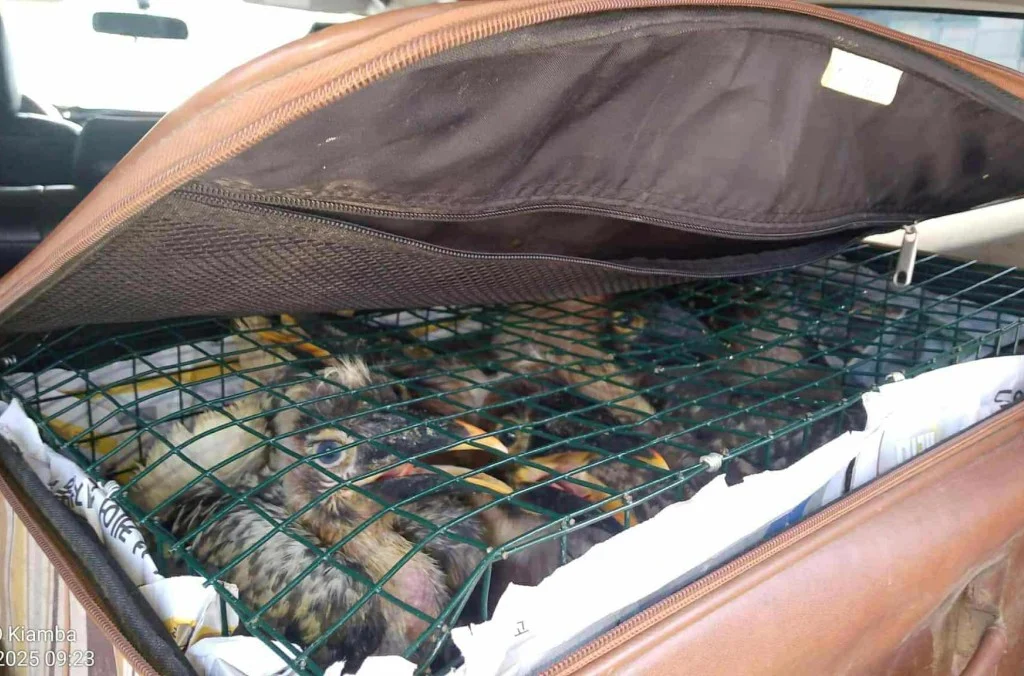
The scale of international environmental crime has reached an unprecedented peak, prompting a massive coordinated response from global law enforcement agencies that has resulted in record-breaking seizures and arrests. Operation Thunder 2025, a month-long intensive crackdown spearheaded by Interpol and the World Customs Organization (WCO), has exposed the staggering depth of the illegal trade in flora and fauna. Despite intensifying global efforts to curb these activities, the latest results indicate that criminal syndicates are diversifying their tactics, moving beyond well-known charismatic megafauna to exploit niche markets in exotic insects, marine life, and illegal timber.
The most recent data released by Interpol reveals that the 2025 iteration of the operation led to the seizure of more than 30,000 live animals and the apprehension of 1,100 suspects worldwide. These figures represent a significant escalation in both the volume of illegal goods intercepted and the number of individuals involved in the logistics of trafficking. The operation, which ran through September and October 2025, mobilized police, customs officials, border security, and forestry agencies across 134 countries. In total, authorities conducted 4,640 separate seizures, uncovering tens of thousands of protected plants, 30 tons of endangered species parts, and over 32,000 cubic meters of illegal timber.
The Financial and Ecological Toll of Environmental Crime
Interpol’s preliminary assessments suggest that the global wildlife trade is now valued at approximately $20 billion annually. However, law enforcement experts caution that this figure is likely a conservative estimate. Due to the clandestine nature of these criminal networks—which often utilize encrypted communication, shell companies, and the "dark web" to facilitate transactions—the true economic value of the trade could be significantly higher. This illicit economy does not merely represent a loss of revenue for states; it represents a catastrophic drain on global biodiversity and the stability of ecosystems.

A significant portion of the trade continues to be driven by the demand for traditional medicine and "status" foods. According to Interpol’s official statement, the bulk of the seizures involved the remains, parts, and derivatives of animals. These items are often processed into powders, tonics, or dried delicacies, making them easier to conceal during transport than live specimens. The persistence of these markets underscores the challenge of balancing cultural traditions with modern conservation requirements.
Global Coordination and the Role of the ICCWC
The success of Operation Thunder 2025 is attributed to the high level of cooperation between the World Customs Organization (WCO) and the International Consortium on Combating Wildlife Crime (ICCWC). The ICCWC, which includes Interpol, the WCO, the CITES Secretariat, the United Nations Office on Drugs and Crime (UNODC), and the World Bank, provides the intelligence framework necessary to track shipments across multiple jurisdictions.
During the two-month operational window, authorities successfully intercepted 5.8 tons of bushmeat. A notable trend observed in 2025 was the sharp increase in bushmeat shipments originating from Africa and destined for European markets. This pathway poses not only a conservation threat but also a severe public health risk, as unregulated meat can serve as a vector for zoonotic diseases.
The maritime sector also saw intense activity. Operation Thunder targeted the trafficking of marine species, resulting in the recovery of 245 tons of protected sea life. This included a staggering 4,000 pieces of shark fins, highlighting the ongoing struggle to protect apex predators in the world’s oceans. Shark finning remains one of the most lucrative and destructive practices in illegal fishing, driven by high demand in East Asian markets.

The Rise of "Micro-Trafficking" and the Case of Indonesia
One of the most concerning shifts identified in the 2025 report is the surge in the trade of smaller species, particularly arthropods. This category includes exotic insects, butterflies, and spiders. While these creatures lack the public profile of elephants or rhinos, their ecological importance is immense. Interpol reported the seizure of 10,500 butterflies, spiders, and insects protected under the Convention on International Trade in Endangered Species of Wild Fauna and Flora (CITES).
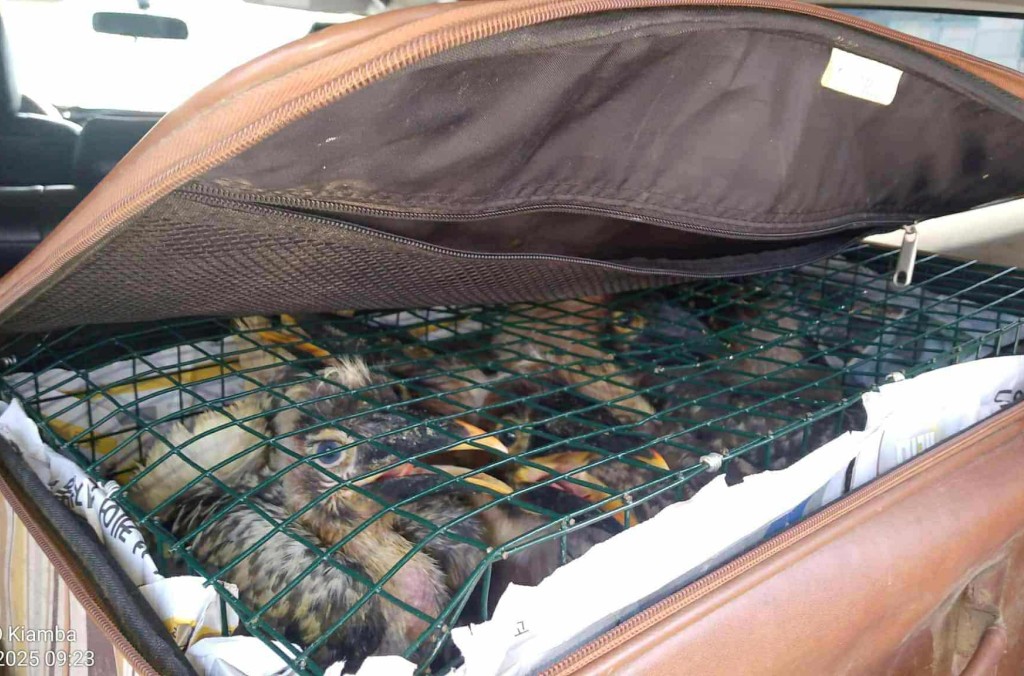
Indonesia emerged as a primary focal point for this "micro-trafficking." Indonesian authorities, working in tandem with the global task force, intercepted more than 3,000 birds and 7,000 types of arthropods, including rare spiders, butterflies, and centipedes. Law enforcement officials noted that the removal of these species from their natural habitats disrupts local food chains and risks the introduction of invasive species or diseases into new environments. Interpol emphasized that even though these creatures are small, their extraction can lead to serious "One Health" consequences, affecting the health of animals, humans, and the environment simultaneously.
Timber Trafficking: The "Green Gold" of the Black Market
The 2025 operation also highlighted the devastating scale of illegal logging. More than 32,000 cubic meters of illegal timber and 14,000 individual logs were seized across various borders. Interpol’s analysis indicates that between 15% and 30% of the global timber trade is sourced through illegal activities. This "green gold" trade has profound economic, social, and environmental impacts, contributing to rapid deforestation and the loss of carbon sinks essential for mitigating climate change.
In Asia, authorities intercepted a massive shipment containing 1,300 primate body parts—including skulls and bones—destined for North America. Meanwhile, in Vietnam, a major maritime bust led to the recovery of 4.2 ton of pangolin scales, along with various birds and reptiles. The pangolin remains the most trafficked mammal in the world, prized for its scales in traditional medicine despite a lack of scientific evidence regarding their efficacy.

The Nexus of Organized Crime and Global Security
Valdecy Urquiza, the Secretary General of Interpol, has been vocal about the evolving nature of wildlife traffickers. He noted that these individuals are rarely "lone wolf" poachers; rather, they are part of sophisticated, multi-commodity criminal networks. These syndicates often engage in a "convergence" of crimes, where the same routes and methods used to smuggle wildlife are also used for narcotics, weapons, and human trafficking.
"These syndicates target vulnerable species, undermine the rule of law, and endanger communities worldwide," Urquiza stated. He emphasized that Interpol’s mission is to dismantle the entire ecosystem of illegal activity, not just the low-level couriers. To support this, Interpol issued 69 notices during the operation—comprising 11 Red Notices for wanted persons, 11 Purple Notices to share information on criminal methods, and 47 Blue Notices to collect additional information on suspects.
Ian Saunders, Secretary General of the WCO, reinforced this sentiment by highlighting the role of Customs as the first line of defense. "Operation Thunder demonstrates the role of Customs in protecting society by intercepting illegal shipments, disrupting criminal networks, and protecting vulnerable species every day," Saunders said. However, he also stressed that enforcement alone is not enough. He called for enhanced intelligence sharing and stronger partnerships across the entire law enforcement community to ensure a sustainable future for global biodiversity.
Historical Context and Future Implications
The findings of Operation Thunder 2025 align with the trends identified in the 2024 United Nations Office on Drugs and Crime (UNODC) report. The UNODC noted that between 2015 and 2021, at least 4,000 species from 162 countries were traded illegally, with an estimated market value exceeding Rp320 trillion (approximately $20 billion). Of those species, 3,250 were listed under CITES protection.
The data suggests that while law enforcement is becoming more efficient at detection, the demand for illegal wildlife remains stubbornly high. The transition of trade to online platforms has made it harder to track, requiring authorities to invest more heavily in cyber-investigation and digital forensics.
The implications of these seizures are far-reaching. Beyond the immediate loss of individual animals, the illegal trade fuels corruption in government agencies, funds armed conflict in certain regions, and destroys the livelihoods of local communities that depend on sustainable eco-tourism. Furthermore, the massive seizure of timber in 2025 serves as a reminder that environmental crime is a direct contributor to the global climate crisis.
As Operation Thunder 2025 concludes, the message from the international community is clear: environmental crime is no longer a peripheral issue. It is a core threat to global security and ecological stability. The record-breaking results of the 2025 crackdown prove that while the "green" criminal underground is vast, the global network of law enforcement is closing the gap, utilizing every tool from satellite tracking to forensic DNA analysis to protect the world’s most vulnerable species. The fight, however, is far from over, and the data suggests that 2026 will require even greater vigilance as criminal networks adapt to these new levels of enforcement.