Lina Irawan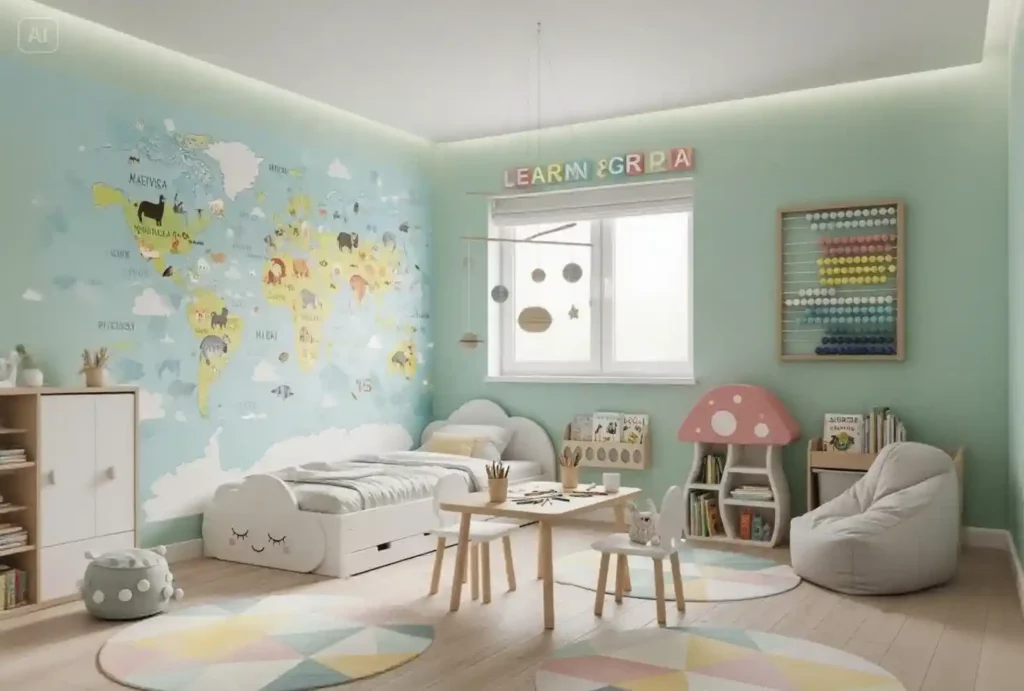
The strategic arrangement of a child’s bedroom layout, specifically the delineation between creative and rest zones, is a critical element in fostering healthy psychological development and promoting optimal sleep hygiene. Interior design specialists and child development experts consistently advocate for visually and functionally separating these areas through methods such as semi-open physical dividers, distinct carpet textures, and dual lighting systems. This deliberate spatial organization serves to train a child’s brain to differentiate between periods of active engagement (play and study) and tranquil repose (sleep). Simple yet impactful interventions include installing bright, cool white lighting for study areas, employing soft, warm white illumination for sleeping zones, and positioning furniture such that a study desk does not directly face the bed.
Designing a multifunctional children’s bedroom often presents a significant challenge for parents, particularly in an era where urban living frequently dictates smaller, more compact living spaces. When a single room must simultaneously accommodate burgeoning imagination and provide a sanctuary for restful sleep, a conflict of function is highly probable. Children who engage in play or study activities too close to their sleeping area often experience difficulty falling asleep, as their brains remain stimulated, potentially inhibiting the release of sleep-inducing hormones. Conversely, a study area that is too integrated with the bed can inadvertently foster laziness and a lack of focus, as the brain associates the bed with activities beyond sleep. Establishing clear boundaries between spaces for creativity and spaces for rest transcends mere interior aesthetics; it represents a direct investment in a child’s psychological development, cognitive function, and overall health quality. This transformation does not necessitate extensive room size or disruptive structural renovations. Instead, it relies on strategic visual manipulation and the clever utilization of functional decorative elements to create distinct environments within the confines of a single room. This comprehensive guide will delve into expert-recommended techniques for spatial arrangement, drawing insights from both interior design practitioners and developmental psychologists.
The Foundational Importance of Zone Separation for Growth and Development
Environmental psychology and pediatric sleep specialists universally agree that the physical environment profoundly influences human behavior. This concept is particularly relevant to sleep hygiene, a term referring to habits and practices conducive to sleeping well on a regular basis. When a child routinely engages in activities like coloring, building blocks, or playing with dolls on their bed, their brain unconsciously begins to associate the bed with active engagement. Consequently, when lights are dimmed and bedtime arrives, the brain may resist producing melatonin—the primary sleep hormone—at optimal levels, subconsciously anticipating further activity. A clear separation of zones directly addresses this root cause, helping to recalibrate the brain’s associations.
The creative zone is designed to stimulate cognitive and motor functions. This area demands freedom of expression, stimulating colors, and lighting conducive to focus and visual acuity. In contrast, the rest zone functions as a personal sanctuary. It necessitates a calming color palette, soft textures, and minimal visual distractions. Acknowledging and understanding this fundamental difference is the crucial first step before any furniture is moved or purchased. Studies in developmental psychology underscore that a well-defined physical environment aids in a child’s ability to transition between different states of mind—from alert and engaged to calm and reflective—a skill vital for emotional regulation and academic success. Research published in journals like Environmental Psychology frequently highlights how environmental cues can significantly impact mood, concentration, and relaxation, making intentional design choices paramount in children’s spaces.
Core Principles for Designing Multifunctional Children’s Rooms
Before embarking on furniture purchases or repositioning existing items, it is essential to grasp the fundamental principles guiding the design of multifunctional spaces. Experienced interior design professionals adhere to three absolute principles when crafting rooms with dual roles:

- Clear Delineation, Not Isolation: The goal is to create distinct zones without making the room feel smaller or claustrophobic. Solutions should allow for visual flow while signaling a change in function.
- Psychological Cues Over Physical Barriers: While physical barriers can be useful, the primary objective is to leverage psychological cues (lighting, color, texture) to guide behavior and mood.
- Flexibility and Adaptability: Children’s needs evolve rapidly. Designs should ideally be adaptable, allowing for easy adjustments as the child grows and their activities change. This might involve modular furniture or easily reconfigurable elements.
Three Primary Tools for Zone Separation Without Structural Renovation
Achieving effective zone separation does not require extensive construction. Three key interior elements possess the power to visually define spaces and create clear, albeit transparent, boundaries.
1. Functional Room Dividers
Room dividers offer the most literal solution for segmenting a space. However, it is crucial to avoid solid, opaque partitions that block light and views, as these can make the room feel cramped and suffocating. Interior space planning experts recommend utilizing open-shelf bookcases without solid backs, such as cube storage units. Position these units perpendicularly from a wall, between the bed and the play area. This serves a dual purpose: it subtly obstructs the direct view from the bed into a potentially messy play zone, and it provides valuable storage for toy baskets, books, and craft supplies. This approach also aligns with principles of minimalist design, encouraging organized storage within the creative zone.
Alternative dividers, particularly charming for a girl’s room, include macrame curtains or sheer canopies suspended from the ceiling. Textile materials provide a soft, aesthetic visual boundary that can be easily drawn back to expand floor space when needed, offering versatility and a whimsical touch. The use of translucent or semi-transparent materials maintains light flow, preventing the room from feeling sectioned off.
2. The Power of Area Rugs for Visual Boundaries
When a room’s footprint is too small to accommodate physical dividers like bookshelves, area rugs emerge as invaluable tools. Employing rugs is one of the most effective visual zoning techniques frequently adopted by world-class interior designers.
Place a vibrant or playfully patterned rug (e.g., pastel polka dots or geometric designs) specifically within the play area. This rug serves as a clear territorial marker, signaling to the child: "While I am on this rug, I am free to play and create." The visual distinction helps the child associate that specific patch of floor with active, imaginative engagement.
Conversely, the floor area beneath the bed can remain bare, or a soft, plush runner rug (such as faux sheepskin) in a neutral, solid color can be placed directly alongside the bed. The tactile difference in texture and visual contrast in color underfoot sends distinct sensory signals to the child’s brain, differentiating the function of each area. This sensory input contributes significantly to the psychological conditioning desired for effective zone separation.
3. Mood Regulation Through Strategic Lighting Manipulation
Lighting holds supreme authority in dictating human mood and atmosphere. Effective room design never relies solely on a single overhead light fixture. Implementing a layered lighting system is paramount.

For the creative zone, install an adjustable desk lamp or a pendant light that directly illuminates the workspace. Utilize LED bulbs with a Cool White or Daylight color temperature (typically 4000K – 5000K). This bluish-white light mimics natural daylight, stimulating cortisol production and keeping the child alert, energetic, and focused during drawing, reading, or studying. Research from institutions like the Lighting Research Center indicates that cooler color temperatures can enhance cognitive performance and alertness, making them ideal for task-oriented areas.
Transitioning to the rest zone, the main overhead light should be turned off. Instead, rely on a bedside lamp or dim wall sconces. Crucially, use bulbs with a Warm White temperature (around 2700K). This warm, yellowish light emulates the soft glow of sunset, signaling to the child’s brain that the day is concluding. This promotes the natural release of melatonin, preparing the body for sleep. The absence of stimulating light helps to wind down the nervous system, facilitating a smoother transition to sleep.
Specific Implementation: Designing for a Young Girl’s Room
With the core tools understood, let us apply them to the specific needs of an active young girl exploring her world.
Crafting a Productive Creative Zone
This zone demands energy and stimulation. Begin by positioning the study desk and an ergonomic chair facing a window or perpendicular to it. Avoid placing the desk directly against a blank, dark wall, which can stifle imagination and cause eye strain. Natural light is a powerful mood enhancer and reduces the need for artificial lighting during the day.
Young girls often accumulate numerous small items: art supplies, accessories, stickers, and building blocks. Install a pegboard on the wall above or adjacent to the study area. A pegboard offers versatile storage for pencil holders, allows for hanging artwork, and keeps small trinkets organized without cluttering the desk surface. This promotes tidiness and easy access to creative tools.
For floor-level play, consider a corner teepee tent or a small canopy adorned with floor cushions. This nook serves a dual purpose: it acts as an inviting reading corner, fostering early literacy, and transforms into a "secret headquarters" where imagination can flourish without boundaries. Such a space provides a sense of enclosure and privacy, encouraging focused play.
Engineering a Serene Sleep Sanctuary
The rest zone requires an approach diametrically opposed to the creative zone. The golden rule is simple: ensure the child cannot see the study area or any toy clutter when lying in bed. Bed placement is paramount.

Position the bed in a corner of the room, ideally against two solid walls. This configuration provides a psychological sense of security for the child, as they feel protected on two sides. Psychologists often refer to this as a "command position," where the child sleeps with their back to a solid wall and their gaze towards the door, but not directly aligned with the door’s opening. This allows them to feel in control of their space while also feeling safe.
Utilize bed linens made from pure, breathable cotton. For a girl’s room, choose subtle floral patterns or solid pastel colors that are not visually jarring. Critically, remove toy baskets and any highly stimulating, colorful objects from direct sight around the bed. This area should be free from visual distractions that could hinder relaxation.
The Psychology of Color in Dual-Function Spaces
Color emits frequencies that stimulate the human nervous system. Painting an entire room in a vibrant, intense color like hot pink, while initially appealing, can overstimulate a child, making it difficult for them to calm down at bedtime.
Professional designers employ a graded color palette technique. Use neutral or earth tone colors as the base wall color for the room—such as warm white, cream, or soft sage green. These calming base colors establish a serene atmosphere, particularly safeguarding the rest zone.
To infuse energy into the creative zone, implement a color blocking strategy. Paint a specific wall section behind the study desk or play area with a bolder color, or apply a dynamically patterned wallpaper. Touches of mustard yellow, dusty rose, or terracotta in these specific areas are sufficient to stimulate creativity without overwhelming the tranquility of the entire room. This method provides visual interest and energy where needed, while maintaining overall calm in the broader space.
Five Critical Mistakes to Avoid in Multifunctional Room Design
Numerous room renovation projects fall short of providing optimal comfort and functionality due to overlooking crucial operational details. Parents should actively avoid the following common pitfalls:

- Ignoring Ergonomics: Purchasing a child’s desk and chair without considering ergonomic principles can lead to poor posture, discomfort, and reduced concentration. An adjustable chair and desk are crucial for growing children.
- Insufficient Storage in the Creative Zone: A lack of easily accessible and organized storage for toys and art supplies invariably leads to clutter bleeding into the rest zone, defeating the purpose of separation. Modular storage units, wall shelves, and labeled bins are essential.
- Over-reliance on Overhead Lighting: A single central light fixture casts harsh shadows and fails to provide appropriate illumination for both task-oriented and relaxation activities. Layered lighting is not merely an aesthetic choice but a functional necessity.
- Placing the Bed in a High-Traffic Area: Positioning the bed directly in the path of the door or in the middle of the room can disrupt a child’s sense of security and make them feel exposed, hindering restful sleep.
- Overlooking Material Safety: Children’s rooms should prioritize non-toxic, durable, and easy-to-clean materials. Furniture with sharp corners or unstable construction should be avoided. Rugs should be slip-resistant.
Case Study Simulation: Optimizing Standard Room Sizes
To provide a tangible understanding, let’s project these theories onto standard Indonesian residential room sizes.
Scenario A: 3×3 Meter Room (Compact Space)
In this limited footprint, using solid physical dividers like bookshelves would make the room feel suffocating.
- Zoning Strategy: Rely heavily on visual cues. A distinct, brightly colored rug defines the play/study area, while the bed area features a soft, neutral runner or bare floor.
- Lighting: An adjustable desk lamp with cool white light for the study corner, and a wall-mounted night light with warm white light near the bed. The main overhead light should be dimmable or used sparingly.
- Furniture Placement: Place the bed against one wall, potentially with a headboard providing a sense of enclosure. The study desk should be positioned in the opposite corner, perhaps facing a window, maximizing natural light. Utilize wall-mounted shelves or a small pegboard above the desk to save floor space.
- Color Palette: Keep wall colors neutral (e.g., light grey or warm beige). Introduce pops of color through accessories, artwork, and the play area rug, rather than painting entire walls.
Scenario B: 3×4 Meter Room (Elongated Space)
A rectangular layout offers a significant advantage for creating more extreme separation between the two zones.
- Zoning Strategy: This layout is ideal for incorporating a semi-open room divider. A low, open-shelf bookcase can be placed perpendicular to the longer wall, effectively creating two distinct "rooms" within the space.
- Lighting: Utilize task lighting more aggressively. A pendant light over the study area with cool white light, and soft wall sconces or a floor lamp with warm white light in the sleeping zone.
- Furniture Placement: Position the bed at one end of the room, perhaps against the shorter wall, creating a clear "sleep end." The study desk and play area can then occupy the opposite end, separated by the bookcase divider. This maximizes the linear distance between activity and rest.
- Color Palette: This larger space allows for more adventurous color blocking. A vibrant accent wall in the creative zone, complemented by a calming, neutral color in the sleep zone, can be effectively implemented to reinforce the functional division.
Transformation of Space, Transformation of Character
The meticulous planning and implementation of a layout that separates creative and rest zones in a child’s room extends far beyond merely repositioning furniture. It is an intentional act of designing a micro-ecosystem that naturally shapes a child’s character, habits, and discipline. By leveraging functional dividers, manipulating carpet textures, and mastering layered lighting techniques, parents assume control over a multifunctional space, transforming it into an environment that nurtures holistic development.
A child’s room, thoughtfully designed with these principles, provides a dedicated space where imagination can freely soar during the day, and a protective sanctuary that embraces them with total tranquility at night. This structured environment helps children understand boundaries, manage their energy, and develop crucial self-regulation skills. The consistent cues from their surroundings foster better sleep patterns, improved concentration, and a greater sense of order.
Parents are encouraged to apply these principles, starting with the simplest steps. Begin by upgrading the light bulb in the study lamp to a cool white temperature and installing a warm-toned bedside lamp. Even these minor adjustments in visual cues can yield a massive impact on a child’s learning effectiveness and the joyful alertness they exhibit upon waking each morning. This investment in thoughtful design is an investment in a child’s long-term well-being and potential.