Nila Kartika Wati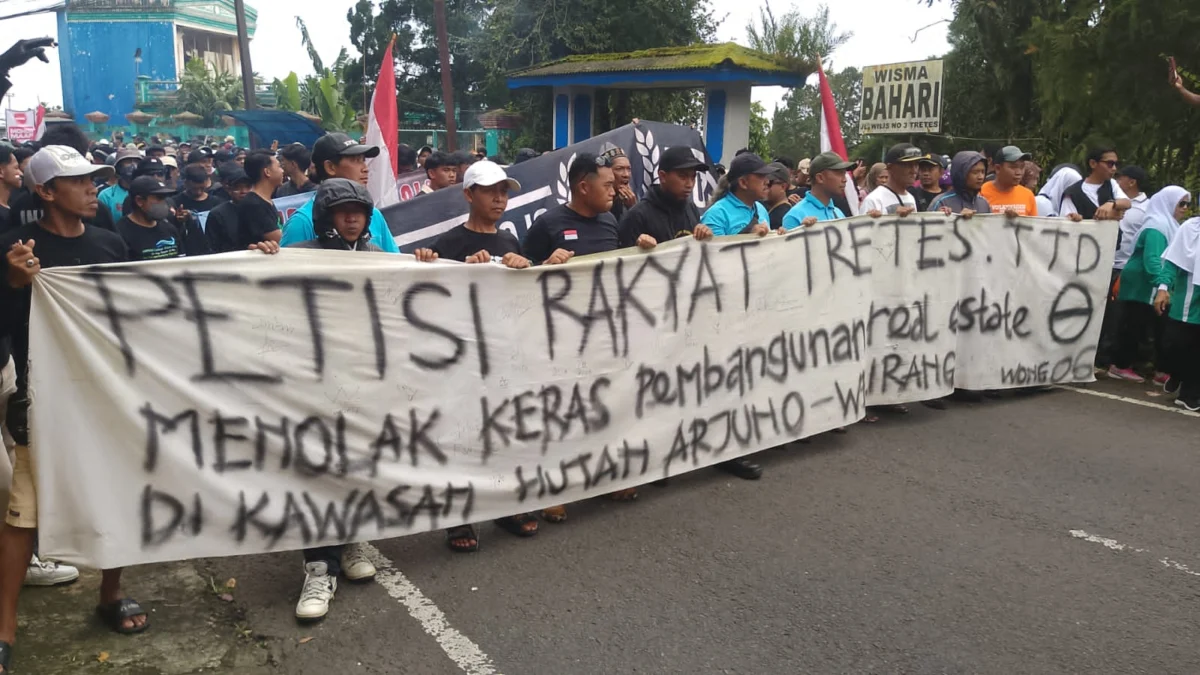
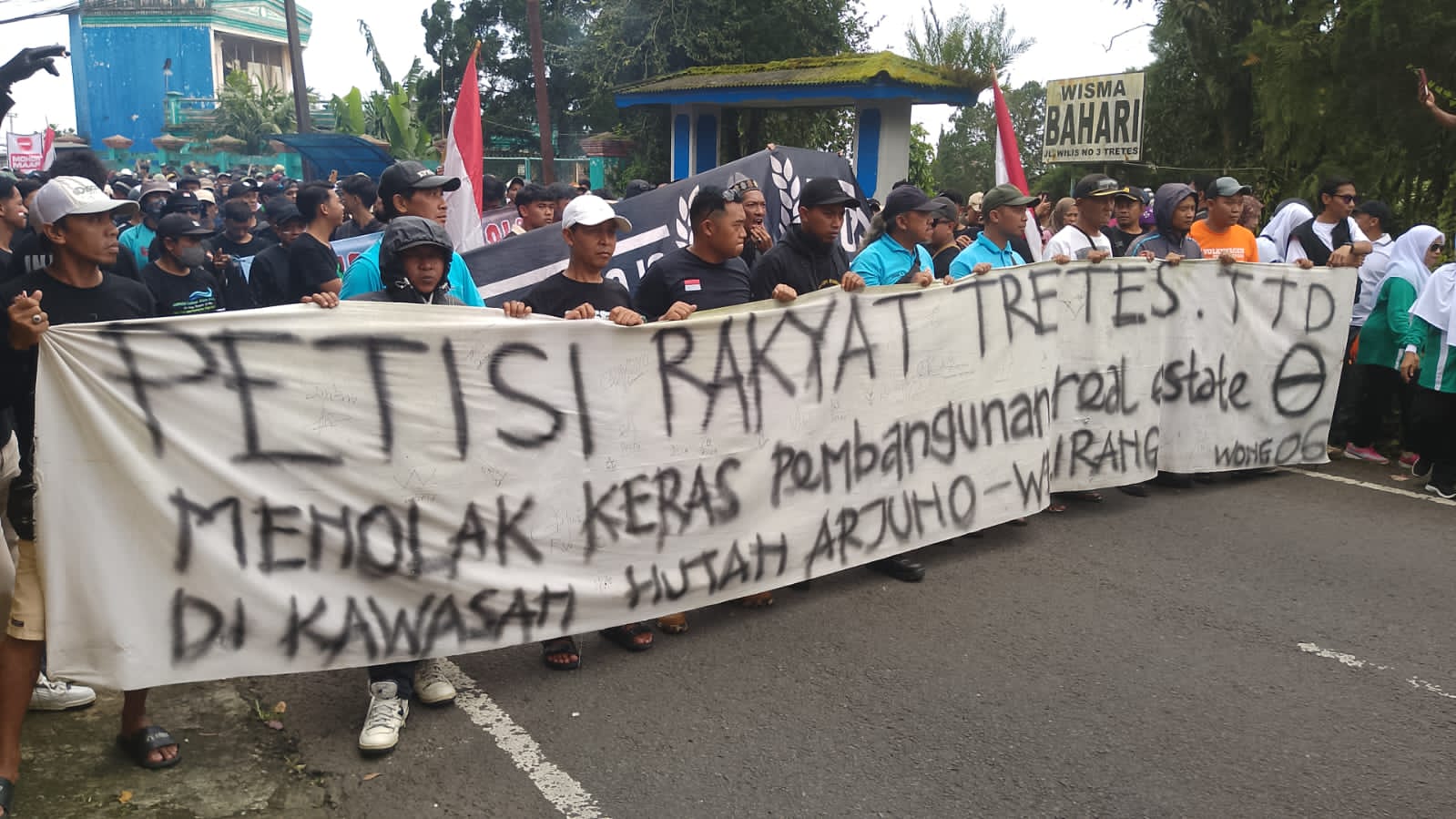
Tensions reached a boiling point in the highland resort area of Tretes, Pasuruan Regency, as approximately one thousand residents took to the streets on Sunday, March 29, 2026, to voice their vehement opposition to a planned luxury residential development. The demonstrators, organized under the banner of the People’s Movement for Forest Care (Gerakan Masyarakat Peduli Hutan, or Gema Duta), gathered in the Tretes sub-district of Prigen, brandishing posters and banners that decried the conversion of 22.5 hectares of forest land on the slopes of the Arjuno-Welirang mountain range. The protest comes on the heels of devastating floods that have ravaged the region, highlighting a growing conflict between rapid real estate investment and ecological preservation in East Java.
The protestors argue that the proposed elite housing project is not merely a matter of urban expansion but a direct threat to the hydrological and geological stability of the region. For the residents of Prigen and the downstream districts, the forest serves as a vital buffer against the elements. Its removal, they contend, is a recipe for catastrophic mudslides and intensified flash flooding, phenomena that have already begun to plague the regency with increasing frequency.
The Catalyst: Recent Flooding and Environmental Degradation
The timing of the protest is significant. Just days prior, starting on the night of Tuesday, March 24, 2026, heavy rainfall triggered massive flooding across 11 districts in Pasuruan. The disaster affected 6,650 families, totaling some 21,157 individuals. For many, these floods were the "final straw" that linked the degradation of the Arjuno-Welirang slopes to the misery of those living in the lowlands.
Priya Kusuma, the Chairman of the Gema Duta Alliance, emphasized that the recent flooding is an inescapable consequence of excessive natural exploitation. "We have watched for 14 years as the protected forests on the slopes of Mount Arjuno-Welirang have been ravaged by fires, leaving thousands of hectares damaged," Kusuma stated during the rally. He noted that while reforestation efforts have been initiated, they are far from complete. The recovery of the complex ecosystem—which includes various species of highland timber—is estimated to be only in its infancy, with only a small percentage of the former canopy restored.

The specific 22.5-hectare plot in question was originally classified as production forest managed by the state-owned forestry company, Perum Perhutani. This area was densely populated with Mahogany (Swietenia macrophylla) and Pine (Pinus merkusii). However, the land’s status was recently reclassified to "Other Use Area" (Alokasi Penggunaan Lain or APL) under the jurisdiction of the National Land Agency (BPN), effectively clearing the legal path for its conversion into a high-end residential estate.
A Broad Coalition of Dissent
The demonstration in Tretes saw a diverse turnout that transcended local village boundaries. While many participants hailed from the immediate vicinity of the slopes—such as Dayurejo, Pecalukan, Ledug, and Prigen—they were joined by residents from downstream areas like Beji, which frequently bears the brunt of flooding. The coalition also included university students, environmental activists, and nature enthusiasts, all united by the belief that the mountain’s ecology is a public good that must be protected.
The protestors are also directing their frustration at the local government. In October 2025, a Special Committee (Pansus) was formed by the Regional House of Representatives (DPRD) of Pasuruan Regency to investigate land-use issues and forest conversion. However, with the committee’s mandate set to expire soon, residents fear that the investigation will conclude without meaningful action.
"We submitted our grievances to the Pansus back in October 2025," Kusuma remarked. "Since then, we have seen devastating floods in Sumatra and Bali. It is as if the universe is giving us a warning. We are not anti-investment, but we refuse to accept a future where disaster is inevitable just to accommodate a few luxury homes. We cannot allow human lives to be the price of this development."
Historical Precedents and the Loss of Biodiversity
The community’s skepticism is rooted in a history of perceived "betrayals" regarding land use. Kusuma pointed to the development of a hotel and artificial tourism site within the Tretes Nature Tourism Park (TWA), which began operations in 2024. Despite initial community resistance, the project proceeded within the 92-hectare park managed by the East Java Natural Resources Conservation Agency (BBKSDA).
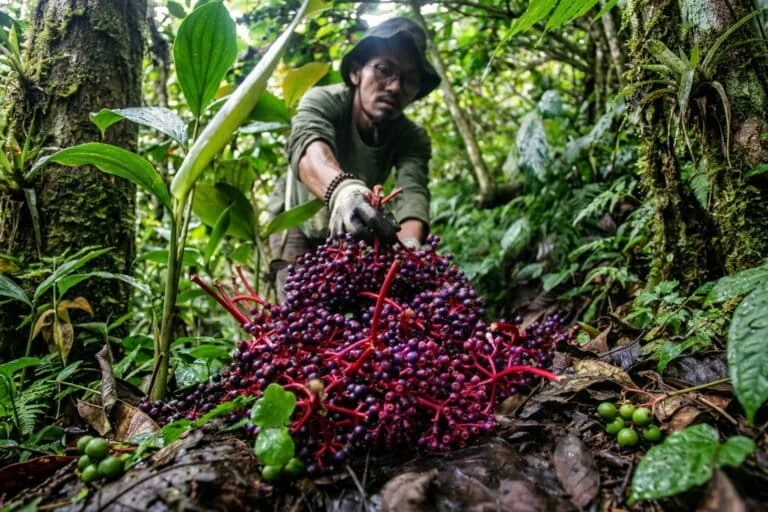
The TWA Tretes was once a bastion of biodiversity. According to BBKSDA statistics from 2016, the area was home to a lush variety of flora, including Kaliandra (Caliandra calothyrsus), Sengon (Albizia chinensis), Bendo (Artocarpus elasticus), and various species of Ficus and Eucalyptus. This habitat supported populations of long-tailed macaques, Javan lutungs, porcupines, deer, and diverse bird species like the brown prinia and kingfishers.
"When I was a child, this forest was dark and incredibly dense," Kusuma recalled. "You could hear the birds and see deer or wild boar. Now, much of that is being replaced by concrete."
Beyond the loss of wildlife, the primary concern remains the water supply. The Arjuno-Welirang landscape is the primary watershed for Pasuruan and surrounding regencies. The conversion of forest to pavement reduces the land’s ability to absorb rainwater, leading to the depletion of natural springs that thousands of residents rely on for their daily needs and agriculture.
Expert Analysis: The Link Between Land Use and Climate Risk
Pradipta Indra Ariono, the Executive Director of the Indonesian Forum for the Environment (WALHI) in East Java, has been a vocal critic of the project. He argues that forest bukaan (clearings) on mountain slopes drastically increase surface runoff. Without the root systems of trees to facilitate infiltration, rainwater flows directly into river systems, overwhelming them and causing flash floods.
"The forest is an inseparable ecosystem," Ariono explained. "Damage in the highlands inevitably leads to disasters in the lowlands. The government must move toward nature-based solutions rather than sporatic engineering projects."

Ariono has called on the Pasuruan Regency government to conduct a comprehensive audit of disaster potential over the last five years. He advocates for a long-term strategy that includes the restoration of forest functions, the expansion of Green Open Spaces (RTH), river normalization, and the modernization of drainage systems. He argues that such measures are the only way to mitigate the impacts of the global climate crisis and hydrometeorological disasters.
Meteorological Warnings and Extreme Weather
The current environmental crisis in Pasuruan is exacerbated by a period of extreme weather. Taufiq Hermawan, Head of the Juanda Meteorological Station (BMKG), recently issued a warning regarding the transition from the rainy season to the dry season in East Java. This transition, combined with the influence of Tropical Cyclone Narelle in the Indian Ocean and the passage of Rossby and Kelvin waves, has triggered intense rainfall, lightning, and strong winds.
"Significant evaporation in the Madura Strait is supporting the growth of convective clouds, leading to heavy rainfall," Hermawan stated. The BMKG has urged residents in mountainous areas or those near steep cliffs to be on high alert for landslides and flash floods, particularly as the topography of Pasuruan makes it highly susceptible to rapid water movement.
Government Response and Humanitarian Efforts
As the debate over land use continues, the government remains focused on disaster management. The recent floods saw water levels reach between 70 and 150 centimeters, with the Beji District being the hardest hit. Suharyanto, the Head of the National Disaster Management Agency (BNPB), visited the area on March 27, 2026, to inspect the emergency response.
Suharyanto praised the Pasuruan Regency government for its "proactive" stance in building disaster shelters and public kitchens. Sugeng Hariyadi, the Acting Head of the Pasuruan Regional Disaster Management Agency (BPBD), noted that while floodwaters have receded in most areas, Rejoso and Beji districts remain partially submerged.

The BPBD has established three modern shelters in Winongan, Rejoso, and Bangil, equipped with high-capacity kitchens capable of feeding 900 people per hour. "We are ensuring that the sanitation and health of the evacuees are prioritized," Hariyadi said. "We have distributed family kits containing hygiene products, clothing, and bedding to ensure comfort during this difficult time."
Conclusion: A Turning Point for Pasuruan
The protest in Tretes represents a critical juncture for Pasuruan. As the "City of Water," the regency’s identity and survival are inextricably linked to the health of the Arjuno-Welirang slopes. The clash between the Gema Duta alliance and the proponents of the elite housing project highlights a broader national struggle: how to balance the economic pressure for high-value development with the urgent need for environmental resilience.
For the residents of Pasuruan, the 22.5 hectares of forest are more than just trees; they are a shield against a changing climate. As the DPRD Pansus nears the end of its term, the community remains watchful, waiting to see if their voices will lead to a policy shift or if the march of "progress" will continue at the expense of ecological safety. With BMKG forecasting more extreme weather in the coming weeks, the urgency of resolving the land-use dispute has never been higher. The residents’ message is clear: investment is welcome, but not at the cost of the ground beneath their feet.