Nila Kartika Wati
The Indonesian government’s recent establishment of the Task Force for Innovation in Financing and Management of National Parks has ignited a firestorm of criticism from environmental advocates and human rights organizations. At the center of the controversy is the appointment of Hashim Djojohadikusumo, the younger brother of President Prabowo Subianto and a prominent business tycoon, as the head of the new body. Critics argue that the task force’s mandate—which emphasizes turning protected conservation areas into "profit centers"—threatens to prioritize economic gain over ecological preservation and the rights of indigenous communities.
The task force was formalized as part of the Prabowo administration’s broader strategy to diversify state revenue and leverage Indonesia’s vast natural resources for the burgeoning global green economy. Hashim is joined in the leadership by Vice Chair Raja Juli Antoni, who serves as the Minister of Forestry, and Mari Elka Pangestu, a member of the National Economic Council (DEN). This high-profile lineup underscores the administration’s intent to treat environmental conservation as a strategic economic sector rather than a purely scientific or protective endeavor.
A Paradigm Shift: From Conservation to Profit Centers
Minister of Forestry Raja Juli Antoni has been vocal about the government’s vision for the nation’s 57 national parks. He stated that the government aims to transform these areas into "world-class" destinations and "profit centers," primarily through the expansion of eco-tourism and private sector partnerships. According to the Minister, the revenue generated from these activities will provide a sustainable funding stream for the parks, reducing the burden on the state budget (APBN) while allegedly maintaining forest integrity.
"The goal is for the forest to be preserved and sustainable, while simultaneously ensuring that the wildlife we are proud of—the wealth of this nation—is also well-protected," Raja Juli Antoni said in a recent public statement. He emphasized that the task force remains open to private sector involvement, provided that sustainability standards are met.
However, environmental groups see this as a dangerous departure from the primary purpose of national parks. Arie Rompas, Head of the Forest Campaign Team at Greenpeace Indonesia, pointed out that national parks already have a dedicated management structure through the National Park Offices (Balai Taman Nasional) and specialized units within the Ministry of Environment and Forestry. The creation of an ad-hoc task force led by a business figure suggests a shift toward the commodification of nature.
"The formation of this task force indicates a different orientation," Rompas warned. "We are concerned that this is a move to place economic interests above environmental protection. It risks turning our last bastions of biodiversity into targets for exploitation, mirroring the degradation we have seen in production forests and protected forest areas."
The Conflict of Interest Debate
The appointment of Hashim Djojohadikusumo has raised significant ethical and legal questions regarding potential conflicts of interest. Hashim is the founder and President Director of the Arsari Group, a conglomerate with vast interests in mining, plantations, and forestry. Furthermore, he was recently appointed as the President’s Special Envoy for Climate Change and Energy.
Firdaus Cahyadi, Program Officer for Natural Resources and Climate Justice at the TIFA Foundation, argued that Hashim’s dual roles as a business leader and a high-ranking government official create a "danger signal" for natural resource governance. "The line between public mandate and business instinct becomes very thin when you are dealing with potential profits in the trillions of rupiah," Cahyadi said.
As the head of the task force, Hashim will have exclusive access to primary data regarding land use, biomass potential, and carbon certification. Critics fear that without rigorous oversight, this information could provide an unfair economic advantage to business entities affiliated with the ruling elite. Cahyadi further warned that the ad-hoc nature of the task force might allow it to operate with less parliamentary scrutiny than permanent government departments, increasing the risk of "green-grabbing"—the appropriation of land for environmental or economic purposes under the guise of green initiatives.
Carbon Trading: A "False Solution" Under Fire
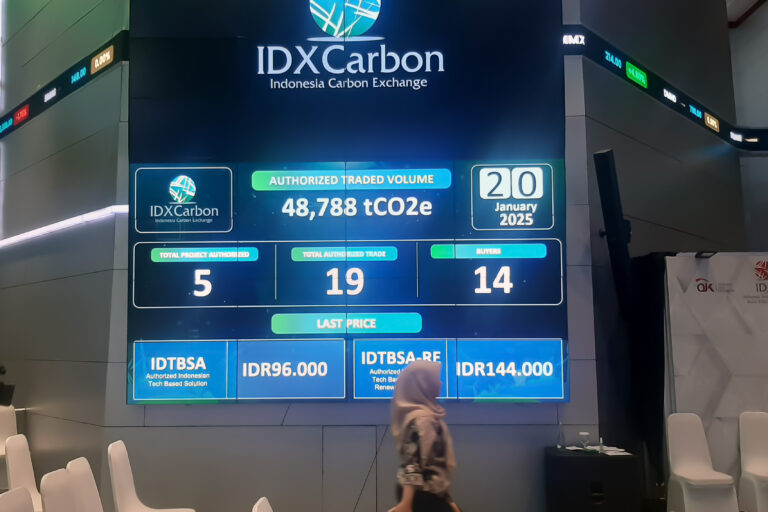
A major component of the task force’s agenda is the acceleration of carbon trading. Indonesia aims to become a global hub for the carbon market, leveraging its tropical forests to sell carbon credits to international corporations and nations seeking to offset their emissions. Hashim Djojohadikusumo has projected that the Indonesian carbon market could generate billions of dollars in revenue, with operations expected to scale up significantly by June 2026.
"In July, we hope that the trading will be quite large; it is estimated that billions of dollars could enter Indonesia," Hashim stated in early 2026, describing the move as a "tremendous breakthrough."
The government’s strategy focuses on Nature-Based Solutions (NBS), specifically through Afforestation, Reforestation, and Revegetation (ARR) schemes. Deputy Minister of Forestry Rohmat Marzuki confirmed that the task force would seek alternative funding through international carbon trading schemes to supplement the national budget.
However, civil society organizations remain deeply skeptical. Uli Arta Siagian, National Campaign Coordinator for WALHI (Indonesian Forum for the Environment), argued that carbon trading often serves as a "false solution" that allows polluters to continue their activities while commodifying forests.
"We have yet to see scientific evidence that carbon projects, including REDD and REDD+, actually contribute to a real reduction in global emissions," Siagian noted. "Furthermore, there is a lack of proof that these projects prevent deforestation in the long term. Instead, they risk turning the forest into a mere accounting tool while ignoring the ecological and social complexities of the land."
Threat to Indigenous Rights and Tenurial Security
Perhaps the most pressing concern raised by critics is the impact on indigenous peoples and local communities. Many of Indonesia’s national parks were established on lands that have been inhabited by indigenous groups for generations, often long before the modern Indonesian state was formed. The process of designating these areas as national parks was frequently done unilaterally, without proper field verification or the consent of local inhabitants.
Examples of such overlaps include:
- Lore Lindu National Park (Central Sulawesi): Overlaps with the ancestral lands of the Ngata Toro community.
- Bukit Barisan Selatan National Park (Lampung): Encompasses areas claimed by the Marga Belimbing indigenous community.
- Dodaga (North Maluku): Where the Tobelo Dalam people face increasing marginalization due to conservation boundaries.
WALHI warns that if these parks are turned into carbon concessions or high-end tourism hubs, the risk of criminalization and violence against indigenous people will skyrocket. Under carbon trading schemes, every tree is viewed as a tradable credit, which often leads to restricted access for communities who rely on the forest for their livelihoods.
"The commodification of these areas will create new opportunities for the criminalization of people whose tenurial status has never been cleared by the state," Siagian said. "Instead of creating a task force for profit, the government should be evaluating the 57 national parks to return ancestral lands to their rightful owners."
Alternative Paths to Conservation Funding
Critics argue that the government does not need to commercialize national parks to find funding. Arie Rompas suggested that the state could generate significant revenue by strictly enforcing environmental recovery fees on companies—particularly palm oil and mining firms—that have illegally operated within or damaged forest estates.
"The government has the option to collect environmental restoration funds from corporations that have historically exploited our forests," Rompas suggested. "These funds could be earmarked specifically for the protection of conservation areas, while the companies still face legal sanctions for their violations."
Furthermore, conservation experts emphasize that the most effective way to protect national parks is through "conservation partnerships" with local communities. M. Ali Imron, Director of Forest and Wildlife at WWF Indonesia, advocated for a model where indigenous and local communities are the primary subjects of conservation efforts.
"Indigenous and local communities should not just be passive recipients of impact; they must be part of the planning, decision-making, and the primary beneficiaries of conservation," Imron stated. "By recognizing customary land rights, the state can reduce its management burden while ensuring that the forest remains protected by the people who have the greatest stake in its survival."
Implications for the Future of Indonesian Conservation
The formation of the Task Force for Innovation in Financing and Management of National Parks represents a pivotal moment in Indonesia’s environmental policy. While the government frames it as an innovative step toward sustainable development and economic independence, the backlash suggests a deep-seated distrust in the "top-down" and "profit-first" approach.
The intersection of high-level political appointments, family ties to the presidency, and the push for multi-billion-dollar carbon markets creates a complex landscape fraught with risk. If the task force prioritizes short-term economic gains and private sector interests, it could lead to the degradation of the very ecosystems it is tasked with "managing."
As the 2026 deadline for the full operation of the carbon market approaches, international observers and domestic stakeholders alike will be watching closely. The challenge for the Prabowo administration will be to prove that it can balance its ambitious economic goals with the non-negotiable requirements of ecological integrity and social justice. Without a transparent framework and the genuine inclusion of indigenous voices, the "world-class" national parks envisioned by the government may become symbols of exclusion rather than conservation success.