Azin Asro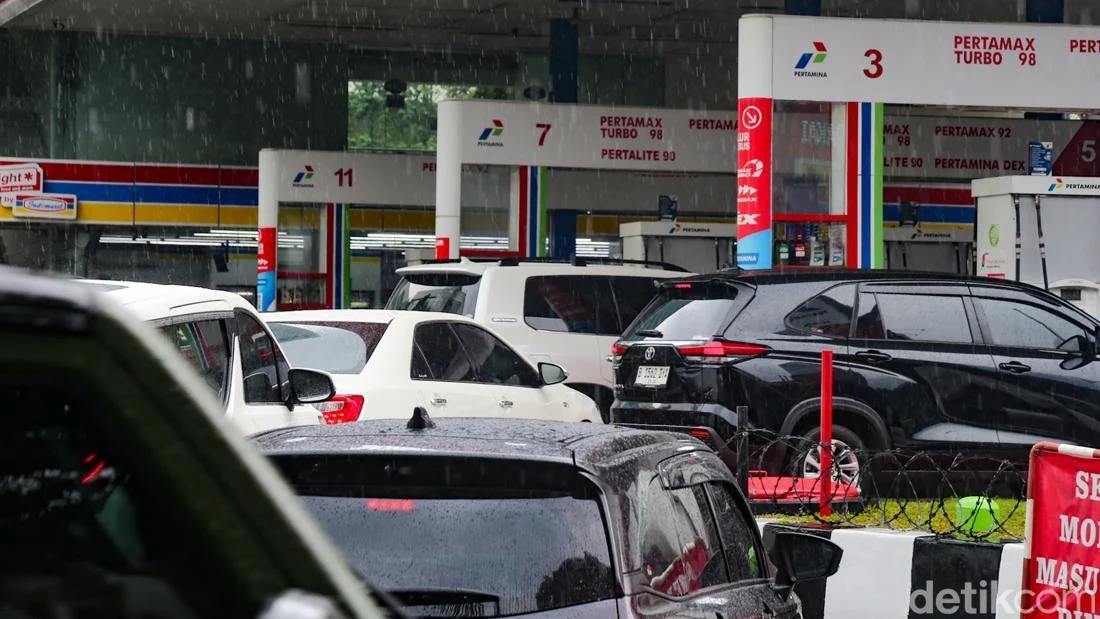
The administration of President Prabowo Subianto has officially announced that there will be no adjustments to the prices of both subsidized and non-subsidized fuels (BBM) starting April 1, 2026, ending weeks of market speculation regarding a potential price hike. State Secretary Prasetyo Hadi confirmed on Tuesday that the government, in coordination with the Ministry of Energy and Mineral Resources (ESDM) and the state-owned energy enterprise Pertamina, has decided to maintain the current pricing structure to ensure domestic economic stability. The decision, which comes directly from the President, is designed to shield the Indonesian public from global energy volatility and to maintain the momentum of national economic growth.
The announcement serves as a formal rebuttal to rumors circulating within the energy sector and across social media platforms suggesting that a significant price adjustment was imminent due to fluctuations in global crude oil benchmarks and the current exchange rate of the Indonesian Rupiah against the US Dollar. By maintaining the status quo, the government aims to prevent a ripple effect that could lead to increased logistics costs, higher food prices, and a general rise in the inflation rate, which remains a primary concern for the current cabinet.
Presidential Directive and the Priority of Public Welfare
The decision to freeze fuel prices was finalized following a high-level coordination meeting involving several key ministries and Pertamina’s board of directors. State Secretary Prasetyo Hadi emphasized that President Prabowo Subianto’s stance on energy pricing is rooted in the principle of "pro-people" economics. According to Prasetyo, the President has consistently instructed his ministers to weigh every economic policy against its potential impact on the lower and middle-class segments of the population.
"We need to convey that after intensive coordination between the government, the Ministry of ESDM, and Pertamina, and based on the direct instructions of the President, the decision has been made to keep prices unchanged," Prasetyo stated during a press briefing in Jakarta. "The President always prioritizes the interests of the people and the welfare of the community in every decision-making process. Therefore, Pertamina has declared that it will not be implementing any price adjustments for subsidized or non-subsidized fuel at this time."
This directive underscores a strategic shift in how the administration handles energy subsidies. While fiscal discipline remains a goal, the government views fuel price stability as a non-negotiable tool for maintaining social order and consumer confidence. The administration believes that by absorbing the potential costs of global oil price increases through the state budget (APBN) or Pertamina’s internal mechanisms, it can prevent a contraction in household spending, which accounts for more than half of Indonesia’s Gross Domestic Product (GDP).
Debunking Market Speculation and Ensuring Supply Security
In the days leading up to the announcement, rumors of an April 1 price hike had triggered concerns among transport cooperatives and small business owners. Historically, fuel price changes in Indonesia have often occurred at the start of a new month, leading to "panic buying" or hoarding in the final days of the preceding month. Prasetyo Hadi urged the public to remain calm and to ignore unverified information, assuring that the government’s commitment to price stability is firm.
"We hope that with this statement, the public can receive clearer and more accurate information. There is no need for panic," Prasetyo added. He further addressed concerns regarding the national fuel supply, asserting that Pertamina has secured sufficient stocks to meet the nation’s energy demands for the foreseeable future. The assurance of supply is critical, particularly as the country approaches periods of high seasonal demand. "There is no need for anxiety because we guarantee the availability of fuel. We guarantee it. And prices will not be adjusted."
Pertamina’s logistics and distribution network, which spans the entire archipelago from Sabang to Merauke, has been placed on high alert to ensure that distribution remains smooth. The state energy firm has been instructed to monitor stock levels at gas stations (SPBU) across all regions to prevent any localized shortages that could be misinterpreted by the public as a precursor to a price change.
Economic Background: Inflation and Purchasing Power
The decision to hold fuel prices comes at a time when the Indonesian economy is navigating a complex global landscape. While Indonesia has maintained a relatively stable inflation rate compared to many Western economies, the cost of living remains a sensitive issue. Fuel is a "volatile-price" component that has a direct and immediate impact on the Consumer Price Index (CPI).
Economists note that even a minor increase in the price of Pertalite (the most widely used subsidized gasoline) or Solar (subsidized diesel) can lead to a 0.5% to 1.2% increase in headline inflation within a single quarter. By keeping Pertalite at Rp 10,000 per liter, the government is effectively capping the cost of transportation for millions of motorcycle riders and ride-hailing drivers, who are the backbone of the urban informal economy.
Furthermore, maintaining the price of Pertamax at Rp 12,300 per liter—a price that is often subject to market fluctuations—signals a desire to keep the middle class’s disposable income intact. While non-subsidized fuels are technically designed to follow market prices, the government has frequently intervened to prevent sharp spikes that could dampen consumer sentiment.
Pertamina’s Strategic Role and the Fiscal Burden
As the primary executor of the government’s energy policy, Pertamina faces the challenge of balancing its corporate profitability with its mandate as a state-owned enterprise (BUMN). The decision to keep prices steady, especially if global Brent crude prices rise above the assumptions laid out in the State Budget (APBN), requires a robust financial strategy.
The Ministry of Finance and the Ministry of ESDM are expected to work closely with Pertamina to manage the "compensation" mechanism. Under this system, the government compensates Pertamina for the gap between the market price and the regulated selling price of certain fuels. For the 2026 fiscal year, the government has reportedly allocated significant reserves to handle energy subsidies, anticipating that global geopolitical tensions could continue to pressure energy markets.
Industry analysts suggest that the government may be utilizing the windfall from other commodity exports, such as coal and nickel, to cross-subsidize the energy sector. This "balancing act" allows the administration to maintain a deficit below the 3% GDP threshold while still providing a substantial safety net for the population.
Regional Perspectives and Logistics Impact
The impact of fuel price stability is felt most acutely in the logistics and manufacturing sectors. Indonesia’s geography, consisting of over 17,000 islands, makes transportation costs a significant portion of the final price of goods. In regions such as Papua, Kalimantan, and Sulawesi, where infrastructure is still being developed, fuel prices are the primary driver of food inflation.
By guaranteeing that fuel prices will remain unchanged on April 1, the government provides much-needed certainty for logistics companies. Many freight and shipping firms operate on thin margins and often sign long-term contracts based on current fuel costs. A sudden hike would have forced these companies to trigger "fuel surcharge" clauses, immediately raising the price of basic commodities like rice, sugar, and cooking oil in remote areas.
Local governments across the provinces have welcomed the news. In several regions, governors had expressed concern that a price hike could trigger labor protests or demands for a mid-year minimum wage increase. The stability provided by the central government allows regional administrations to focus on local development projects and poverty reduction programs without the distraction of fuel-related social unrest.
Future Outlook for Energy Policy
While the current announcement provides relief for the short term, the Prabowo administration continues to face long-term questions regarding energy transition and subsidy reform. The government has signaled that while it will protect the public now, it is also investing heavily in the "Downstreaming" (Hilirisasi) of the energy sector and the expansion of the domestic biofuel program, such as B35 and the upcoming B40/B50 biodiesel mandates.
By increasing the mix of palm-oil-based biodiesel, Indonesia aims to reduce its reliance on imported diesel, thereby strengthening the Rupiah and making the national budget more resilient to global oil shocks. The decision to keep fuel prices stable in April 2026 can be seen as a "bridge policy"—maintaining stability while the country transitions toward greater energy independence through renewables and domestic processing.
The government is also reportedly refining its "Targeted Subsidy" system. Using digital platforms and the "MyPertamina" ecosystem, the administration hopes to eventually ensure that subsidized fuels like Pertalite and Solar are only purchased by those who truly qualify based on their socio-economic status. However, for the time being, the priority remains a broad-based freeze to ensure that no segment of society is left behind.
Current Fuel Price List as of April 1, 2026
Following the official confirmation from the State Secretary and Pertamina, the fuel price list for all regions in Indonesia remains unchanged. Below are the prices for the most commonly used fuel products at Pertamina stations:
Subsidized and Regulated Fuels:
- Pertalite (RON 90): Rp 10,000 per liter
- BioSolar (Diesel): Rp 6,800 per liter
Non-Subsidized Fuels (General Prices for Jakarta and surrounding areas):
- Pertamax (RON 92): Rp 12,300 per liter
- Pertamax Turbo (RON 98): Rp 14,400 per liter
- Dexlite: Rp 14,550 per liter
- Pertamina Dex: Rp 15,100 per liter
- Pertamax Green 95: Rp 13,900 per liter
The government has reiterated that these prices are valid nationwide, with slight variations in certain regions due to provincial motor vehicle fuel taxes (PBBKB). However, the base price remains frozen as per the Presidential directive.
Conclusion: A Commitment to Social Stability
The decision to maintain fuel prices as of April 1, 2026, reflects a calculated move by the Prabowo administration to prioritize social and economic stability over immediate fiscal adjustments. By providing clear communication through State Secretary Prasetyo Hadi, the government has successfully managed public expectations and prevented market volatility.
As the global energy landscape remains unpredictable, the Indonesian government’s focus on protecting domestic purchasing power serves as a cornerstone of its broader economic strategy. For the citizens of Indonesia, the assurance that their daily commute and the cost of basic goods will not be burdened by higher fuel costs provides a sense of security that is vital for continued national progress. The government will continue to monitor global trends, but for now, the message is clear: stability remains the order of the day.