Bambang Pamungkas
President Prabowo Subianto has extended his deepest condolences and expressed profound sorrow over the tragic deaths of six Indonesian peacekeepers serving with the United Nations Interim Force in Lebanon (UNIFIL) within a span of just five days. The latest incident on Friday, April 3, 2026, saw three Indonesian soldiers succumb to injuries sustained in an explosion in southern Lebanon, an area gripped by intensified conflict stemming from ongoing Israeli attacks. This devastating event followed closely on the heels of two separate incidents in the same volatile region that claimed the lives of three other Indonesian personnel just days prior.
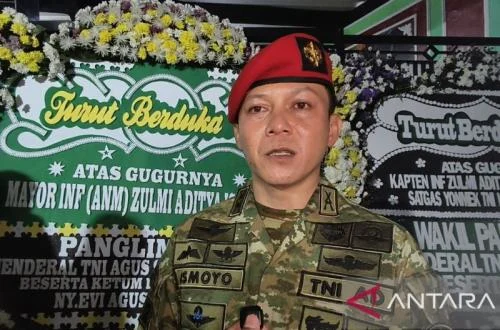
The recent explosion, which occurred within a United Nations facility near El Adeisse in southern Lebanon, critically injured three Indonesian peacekeepers. These brave soldiers, identified posthumously as Major Inf. Zulmi Aditya Iskandar, Sergeant M. Nur Ichwan, and Corporal Farizal Rhomadhon, were immediately rushed to a nearby hospital but tragically succumbed to their wounds. Their names were released by President Prabowo Subianto, who mourned their loss and underscored their ultimate sacrifice in the pursuit of global peace.
A Nation in Mourning: Presidential Condemnation and Tribute
In a somber statement shared on his personal Instagram account on Saturday, April 4, 2026, President Prabowo Subianto conveyed the collective grief of the Indonesian nation. "The Indonesian nation mourns the fall of three TNI soldiers in their noble duty as UN peacekeeping forces in Lebanon," Prabowo wrote, referencing the latest casualties. He continued with a forceful condemnation of the violence: "We, brothers and sisters of the same nation and homeland, strongly condemn every heinous act that damages peace and causes the death of the nation’s best soldiers." The President emphasized that the entire country stands united in rejecting such destructive actions.
Prabowo assured the families and the public that the state would not forget their sacrifice. "The state will always be present to honor the services of these heroes, safeguard the honor of our soldiers, and ensure their sacrifices are never forgotten," he affirmed. Concluding his message, he called for unity and resolve: "Let us continue the spirit and determination to maintain peace, and not give room to anyone who tries to divide the togetherness and harmony of the nation." The posthumous ranks bestowed upon Major Iskandar, Sergeant Ichwan, and Corporal Rhomadhon reflect the nation’s highest honor for their service and sacrifice.
A Tragic Chronology of Loss
The April 3 incident marks the most recent in a series of fatal attacks targeting Indonesian peacekeepers in southern Lebanon, bringing the total number of Indonesian casualties to six in less than a week. The escalating violence began on Sunday, March 29, 2026, when an Indonesian peacekeeper was killed by an exploding projectile in southern Lebanon. Just one day later, on Monday, March 30, 2026, two more Indonesian peacekeepers lost their lives when an explosion struck a UNIFIL logistics convoy, also in the southern region of the country. These initial three deaths set a grim precedent for the tragic events that unfolded on April 3.
While UNIFIL initially stated that the "origin of the explosion" on April 3 was unknown, a UN security source, speaking anonymously to Agence France-Presse (AFP) shortly after the earlier March 30 incident, attributed the cause of that blast to tank fire from Israeli forces. This attribution points to the dangerous reality faced by peacekeepers caught in the crossfire of an increasingly volatile regional conflict. The UN Information Centre in Jakarta confirmed the nationality of the injured peacekeepers from the April 3 incident, highlighting Indonesia’s significant contribution to global peacekeeping efforts.
UNIFIL’s Mandate and the Volatile Geopolitical Landscape
The United Nations Interim Force in Lebanon (UNIFIL) was established by the UN Security Council in March 1978 to confirm the withdrawal of Israeli forces from Lebanon, restore international peace and security, and assist the Lebanese government in restoring its effective authority in the area. Its mandate has been periodically renewed and expanded, notably by Resolution 1701 in 2006, following the month-long war between Israel and Hezbollah. This resolution called for a full cessation of hostilities, a demilitarized zone between the Blue Line (the demarcation line between Lebanon and Israel), and the deployment of UNIFIL alongside the Lebanese Armed Forces (LAF).
Currently, UNIFIL comprises approximately 10,000 peacekeepers from over 45 troop-contributing countries, including a substantial contingent from Indonesia. These forces operate in a highly sensitive and complex environment, tasked with monitoring the cessation of hostilities, deterring violations of the Blue Line, and supporting humanitarian access. They also work to prevent the re-establishment of any unauthorized armed presence in their area of operations south of the Litani River, except for UNIFIL and LAF.
The region has been a battleground between Israel and the Iran-backed Hezbollah group since Lebanon was drawn into the broader Middle East conflict following events that began on March 2, 2026, as referenced in the original report, likely referring to an escalation following the Israel-Hamas conflict. This date is critical as it marks the formal involvement of Lebanon in the wider regional conflagration. The ongoing hostilities, characterized by frequent cross-border shelling, drone attacks, and ground incursions, have severely jeopardized the safety of both civilian populations and international peacekeepers.
Indonesia’s Enduring Commitment to Global Peace
Indonesia has a long and proud history of contributing to UN peacekeeping missions worldwide, a commitment rooted in its constitutional mandate to participate in maintaining world order based on freedom, lasting peace, and social justice. As one of the largest troop-contributing countries globally, Indonesia has deployed thousands of its military and police personnel to various UN missions across Africa, the Middle East, and other conflict zones. The Garuda Contingent, as Indonesian peacekeeping forces are known, has earned a reputation for professionalism, dedication, and cultural sensitivity.
Indonesia’s participation in UNIFIL, specifically, underscores its unwavering dedication to stability in the Middle East. Indonesian peacekeepers perform a range of duties, including patrolling, humanitarian assistance, and community engagement, often operating in extremely dangerous conditions. The loss of six of its finest soldiers is a stark reminder of the immense risks involved in these missions and the profound sacrifices made by those who serve under the UN flag.
Broader Implications and Calls for Accountability
The tragic deaths of these Indonesian peacekeepers highlight the severe challenges faced by UN missions operating in active conflict zones. Such incidents not only underscore the direct threats posed by ongoing hostilities but also raise critical questions about the effectiveness of existing protection mechanisms for peacekeepers. The UN’s primary responsibility is to ensure the safety and security of its personnel, and repeated casualties demand a thorough review of operational procedures and rules of engagement.
Internationally, attacks on UN peacekeepers are widely condemned as violations of international law. The UN Secretary-General typically issues strong statements in response to such incidents, calling for immediate investigations and accountability for those responsible. These deaths will likely intensify calls from the international community for a de-escalation of the conflict in southern Lebanon and for all parties to respect UNIFIL’s mandate and the inviolability of UN personnel and facilities.
For Indonesia, the loss of six peacekeepers will undoubtedly prompt a period of national reflection on its role in global peacekeeping. While the nation remains steadfast in its commitment to peace, such casualties invariably lead to internal discussions about the cost of these missions and the measures needed to protect its forces. However, Indonesia’s foreign policy has consistently championed multilateralism and the peaceful resolution of conflicts, suggesting that its commitment to UN peacekeeping will likely endure, albeit with heightened awareness and possibly revised security protocols.
The incidents also serve as a grim reminder of the humanitarian toll of the ongoing conflict in the Middle East. The spillover of violence into Lebanon has displaced thousands of civilians, destroyed infrastructure, and exacerbated an already fragile economic and political situation. The presence of UNIFIL is crucial for maintaining a semblance of stability and providing a buffer, making any attack on its personnel a direct blow to efforts to protect civilians and foster peace.
A Renewed Plea for De-escalation and Respect for International Law
The deaths of Major Inf. Zulmi Aditya Iskandar, Sergeant M. Nur Ichwan, Corporal Farizal Rhomadhon, and their three unnamed compatriots serve as a poignant and tragic illustration of the human cost of unresolved conflicts. Their sacrifice underscores the urgent need for all parties involved in the Lebanese-Israeli conflict to adhere to international humanitarian law, respect the integrity of UN peacekeepers, and commit to a durable cessation of hostilities.
President Prabowo Subianto’s strong condemnation reflects a national sentiment of grief and outrage, but also a renewed determination to uphold the principles of peace and justice. As Indonesia mourns its fallen heroes, the international community is called upon to redouble its efforts to de-escalate the conflict in southern Lebanon, ensuring that the vital work of UNIFIL can continue without further loss of life, and that the ultimate goal of lasting peace can be pursued with renewed vigor. The memory of these six peacekeepers will undoubtedly serve as a powerful reminder of the profound sacrifices made in the name of global security.