Paryono Ramadhan
PT Binakarya Jaya Abadi, a prominent player in Indonesia’s dynamic property sector, announced a significant strategic expansion plan encompassing three new property developments and a foray into light brick manufacturing, alongside an initial public offering (IPO) aimed at fueling its growth ambitions. This multi-faceted strategy underscores the company’s confidence in the sustained promise of the Indonesian property market, particularly evident in the burgeoning hospitality and residential segments. The announcement, made in Jakarta by President Director Budianto Halim, outlined a clear roadmap for the company’s trajectory through the end of the decade and beyond.
Strategic Expansion in Key Growth Areas
The core of Binakarya Jaya Abadi’s expansion involves the development of three substantial projects through its various subsidiaries. Two of these projects are strategically located in Bali, Indonesia’s premier tourist destination, while the third is set to enhance the residential landscape in Bekasi, West Java, a rapidly urbanizing satellite city of Jakarta.
The first project on Bali is the Hotel Horison Bali, planned for a substantial 2,000 square meters. This hospitality venture is targeting completion by 2017, signaling Binakarya’s intent to capitalize on Bali’s enduring appeal to both domestic and international tourists. The island’s tourism sector has historically demonstrated remarkable resilience and growth, driven by its world-renowned beaches, vibrant culture, and increasingly sophisticated infrastructure. Investing in the Horison brand, known for its strong presence and operational efficiency, positions Binakarya to tap into a reliable stream of tourism revenue.
The second Bali project, Hotel Dhyana Pura Seminyak, is even more ambitious in scale, encompassing nearly 13,000 square meters. Located in Seminyak, a high-end area renowned for its luxury resorts, boutiques, and fine dining, this development is slated for completion in 2018. The choice of Seminyak reflects a strategic move to cater to the upscale segment of the tourism market, which typically exhibits higher spending power and demand for premium accommodations. The significant land area suggests a comprehensive development, potentially including extensive amenities, further enhancing its market appeal.
Shifting focus from tourism to urban living, Binakarya Jaya Abadi is also developing the Juanda Apartment in Bekasi, West Java. This residential project spans over 11,000 square meters and is targeted for completion in 2019. Bekasi has emerged as a crucial residential hub due to its proximity to Jakarta, offering more affordable housing options and a growing infrastructure base, including improved transportation links. The demand for apartments in such peri-urban areas has been consistently strong, fueled by rapid urbanization, a growing middle class, and the increasing challenge of land scarcity and high prices within Jakarta itself. Developing a project of this scale addresses the critical need for modern, accessible housing for commuters and local residents.
President Director Budianto Halim emphasized the company’s forward-looking approach, stating, "Going forward, we plan new projects in line with the company’s acquisition of potential lands." This indicates a sustained commitment to growth and a proactive strategy of securing land banks to ensure a pipeline of future developments, a common practice among leading property developers to maintain long-term viability and competitive advantage.
Vertical Integration: The Betacon Lightweight Brick Factory
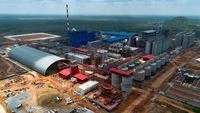
Beyond direct property development, Binakarya Jaya Abadi is strategically expanding its business scope through vertical integration, establishing a lightweight brick manufacturing plant under the brand name Betacon. This move represents a significant diversification, albeit one that remains intrinsically linked to its core property business. Halim elaborated, "Our business scale is currently expanding, but it remains related to property, such as producing lightweight bricks."
The Betacon factory is designed with an initial production capacity of 180,000 cubic meters per year. This capacity is projected to increase in response to growing market demand, reflecting Binakarya’s confidence in the product and the broader construction materials market. Lightweight bricks, or autoclaved aerated concrete (AAC) blocks, have gained significant traction in the Indonesian construction industry due to their numerous advantages over traditional red bricks. These benefits include superior thermal insulation, lighter weight (reducing structural load), faster construction times, and better soundproofing properties, all of which contribute to more efficient and sustainable building practices.
A key aspect of Betacon’s strategy is its market distribution. Halim revealed that 78 percent of Betacon’s production is slated for external sales, while the remaining 22 percent will be absorbed by Binakarya’s internal projects. This dual-market approach serves multiple strategic objectives. Firstly, it ensures a consistent supply of high-quality, cost-effective building materials for Binakarya’s own developments, thereby enhancing project efficiency, quality control, and potentially reducing overall construction costs. Secondly, the significant external sales component establishes Betacon as an independent revenue stream and a competitive player in the construction materials market, diversifying the company’s income sources and mitigating risks associated with sole reliance on property development cycles. Halim confirmed that all of the company’s property projects would utilize their own brand of lightweight bricks, underscoring the commitment to quality and self-sufficiency.
The financial contribution of this new venture is already notable. According to Halim, the Betacon business, still relatively new in 2014, contributed approximately eight percent to the company’s total revenue. This early success fueled optimism that the lightweight brick business would continue to grow substantially, with production volumes steadily increasing year-on-year. This vertical integration strategy is a testament to Binakarya’s aim to control more aspects of its value chain, enhance operational efficiencies, and secure a competitive edge in a highly competitive market.
Initial Public Offering (IPO) to Fuel Growth
To finance these ambitious expansion plans and strengthen its financial foundation, PT Binakarya Jaya Abadi announced its intention to launch an Initial Public Offering (IPO). The company plans to issue 238,150,769 new shares, with a price range set between Rp 900 and Rp 1,300 per share. This offering is targeted to raise approximately Rp 310 billion, providing a substantial capital injection for the company’s strategic initiatives.
The proceeds from the IPO are allocated across three critical areas:
- Capital Expenditure (50%): A significant portion of the funds, approximately 50 percent, will be dedicated to capital expenditures. This will primarily finance the development of new property projects, including the aforementioned hotels in Bali and the apartment in Bekasi, as well as potential future land acquisitions. This allocation underscores the company’s commitment to aggressive growth and expansion.
- Debt Refinancing (30%): Around 30 percent of the IPO proceeds will be used for refinancing existing debts. This move is designed to optimize the company’s capital structure, potentially reducing interest expenses, improving financial ratios, and providing greater flexibility for future borrowing. Strengthening the balance sheet through debt reduction is a common and prudent strategy for companies undertaking significant expansion.
- Working Capital (20%): The remaining 20 percent of the funds will be allocated to working capital. This ensures that the company has sufficient liquidity to manage day-to-day operations, cover short-term liabilities, and seize immediate business opportunities without financial constraints. Adequate working capital is vital for maintaining operational smoothness, especially for a company engaged in capital-intensive property development.
The IPO timeline was meticulously laid out: the offering period took place from June 4-11, 2015. This was followed by the allotment of shares on June 29, 2015, and the distribution of shares on June 30, 2015. The culmination of this process was the official listing of Binakarya Jaya Abadi’s shares on the Indonesia Stock Exchange (IDX) on July 1, 2015. This public listing marked a significant milestone for the company, providing it with access to public capital markets and enhancing its transparency and corporate governance.
Market Context and Broader Implications (Circa 2015)
The announcement from Binakarya Jaya Abadi came at a time when the Indonesian property market was indeed perceived as highly promising. In 2015, Indonesia was experiencing steady economic growth, driven by a burgeoning middle class, rapid urbanization, and significant government investment in infrastructure. These factors collectively fueled robust demand for both residential and commercial properties.
The hospitality sector, particularly in tourist hotspots like Bali, was witnessing sustained growth, supported by increasing tourist arrivals and government initiatives to promote tourism. Developers were eager to tap into this demand, leading to a proliferation of hotel and resort projects. Meanwhile, the residential market, especially in satellite cities surrounding Jakarta, was booming. As Jakarta became increasingly congested and property prices soared, areas like Bekasi offered more affordable alternatives for homebuyers and renters, attracting significant developer interest in apartment and mixed-use developments.
The decision to vertically integrate into lightweight brick production reflected a broader trend in the construction industry towards greater efficiency and cost control. Supply chain disruptions and fluctuating material costs often pose significant challenges for developers. By producing its own key construction material, Binakarya aimed to mitigate these risks, ensure consistent quality, and potentially gain a cost advantage over competitors reliant solely on external suppliers. This strategic move was also indicative of the growing awareness of modern construction methods and materials, with lightweight bricks increasingly replacing traditional alternatives due to their technical advantages and contribution to faster project completion.
The IPO itself was launched into a dynamic Indonesian capital market. While global economic uncertainties existed, domestic investor confidence in sectors like property and construction remained relatively strong. A successful IPO would not only provide the necessary capital for Binakarya’s ambitious projects but also raise its public profile, enhance its corporate governance, and potentially attract further institutional investment. For investors, participating in the IPO offered an opportunity to invest in a growing property developer with a diversified strategy and a clear expansion roadmap.
Conclusion
PT Binakarya Jaya Abadi’s comprehensive strategy, encompassing significant property developments in key growth regions and a strategic vertical integration into construction materials, positions the company for substantial growth. Coupled with a well-structured IPO to secure the necessary funding, these initiatives underscore a confident and forward-thinking approach to capitalizing on Indonesia’s robust economic and demographic trends. The company’s expansion into both high-end tourism and affordable urban housing, supported by its own supply of modern construction materials, illustrates a balanced and resilient business model designed to navigate and thrive within the competitive Indonesian property landscape for years to come.