Nila Kartika Wati
The agrarian conflict in Pakel, Licin District, Banyuwangi, East Java, has entered a contentious new phase as PT Bumi Sari Maju Sukses (BMS) initiates a multi-billion rupiah civil lawsuit against a local farmer. Harun, the Chairman of the Rukun Tani Sumberejo Pakel (RTSP), is being sued for Rp 1.4 billion (approximately USD 89,000) on allegations of unlawful conduct. The company claims that Harun illegally entered their Right to Cultivate (HGU) area, occupied forest land, and destroyed commercial crops, including coffee and clove trees. This legal escalation represents a significant shift in how land disputes are being managed in the region, moving from criminal allegations to high-stakes civil litigation.
Harun confirmed the details of the lawsuit, noting that he received a summons for mediation from the Banyuwangi District Court during the 2025 National Farmers’ Day celebrations. Due to ongoing community activities at the RTSP post, he was unable to attend the initial mediation. Subsequent meetings with a court-appointed mediator proved fruitless, as Harun rejected the court’s suggestion to "cooperate" with the plantation company, leading the case to proceed to full trial. During the proceedings in early March 2026, PT Bumi Sari presented expert witnesses from the Banyuwangi National Land Agency (BPN), while Harun and the RTSP prepared their own evidentiary defense.
The defense maintains that the allegations of crop destruction are entirely baseless. According to Harun, the company has failed to provide any physical evidence, such as photographs or video documentation, to substantiate the claim that he damaged plantation assets. Furthermore, witnesses presented during the trial reportedly testified that they had no knowledge of any logging or clearing activities conducted by Harun. The legal team representing the farmer argues that this lawsuit is less about seeking actual damages and more about intimidating the local community.

A New Pattern of Judicial Repression
Legal advocates from the Surabaya Legal Aid Institute (LBH Surabaya) and the Indonesian Forum for the Environment (WALHI) have identified this lawsuit as a "new pattern" in the long-standing conflict. Fahmi Ardiyanto of LBH Surabaya observed that while previous efforts to suppress farmer activism relied heavily on police reports and criminalization, the strategy has now shifted toward civil courts. By demanding astronomical sums in damages, corporations may be attempting to create a "chilling effect," signaling to other villagers that resistance to plantation expansion will result in personal financial ruin.
Pradipta Indra, the Executive Director of WALHI East Java, echoed these concerns, characterizing the lawsuit as a continuation of a repressive cycle that began in earnest in 2019. Indra noted that the community has faced a barrage of legal challenges, including criminal suspect designations, restricted public access to court hearings, and now, "fantastic" civil claims. "This is not a coincidence; it is a pattern of repression," Indra stated. "It is a message sent to the people: do not resist."
WALHI has highlighted several critical legal discrepancies in the company’s filing. First, they point to an error in persona, noting that the lawsuit fails to clarify whether Harun is being sued as an individual or in his official capacity as the head of the RTSP. Second, the defense argues the suit is plurium litis consortium (lacking necessary parties) because it excludes the Ministry of Agrarian Affairs and Spatial Planning/National Land Agency (ATR/BPN), which holds the ultimate authority over the validity of HGU certificates. Finally, the lawsuit is described as obscuur libel (vague or unclear) because it asks a District Court to validate HGU certificates—an administrative matter that falls under the jurisdiction of the State Administrative Court (PTUN), not a civil court.
The Century-Old Roots of the Pakel Dispute
To understand the current legal battle, one must look back nearly a century to the colonial era. The Pakel conflict is one of Indonesia’s longest-running land disputes, originating in 1925 when 2,956 local residents petitioned the Dutch colonial government to open the Sengkan Kandang and Keseran forests for agriculture. In January 1929, the Regent of Banyuwangi, R.A.A.M. Notohadi Suryo, granted the villagers the right to manage approximately 3,000 hectares of land under a document known locally as "Akta 1929."
Despite holding this permit, the residents of Pakel faced decades of intimidation from both Dutch and Japanese occupational forces. Following Indonesia’s independence in 1945, the community continued to assert their rights based on the 1929 decree. However, in the 1980s, the landscape changed when PT Bumi Sari Maju Sukses was granted a concession that overlapped with the lands historically managed by the villagers. This overlap is the primary engine of the modern conflict, as the community views the plantation’s presence as an illegal occupation of their ancestral and legally granted territory.
Witnesses Bagiman and Busaman, both elders of the Pakel community, provided emotional testimony regarding the history of the land during the March 2026 hearings. Bagiman, born in the Pongkor area of Pakel in 1947, recalled that the village was a thriving settlement in the 1960s. He testified that in 1982, PT Bumi Sari forces forcibly evicted the residents. At the time, many villagers were paralyzed by the trauma of the 1965 anti-communist purges, as two Pakel residents had previously disappeared after being accused of political affiliations. Fearing for their lives, the community fled.
Bagiman, who later worked as a security guard for the company in the mid-1980s, testified that during his tenure, no official land measurements were ever conducted by the BPN or the village government to establish the HGU boundaries in Pakel. He maintains that the company’s original HGU only covered the neighboring villages of Kluncing and Songgon, and that their expansion into Pakel was a unilateral seizure of land.
Procedural Irregularities and the "Closed" Court
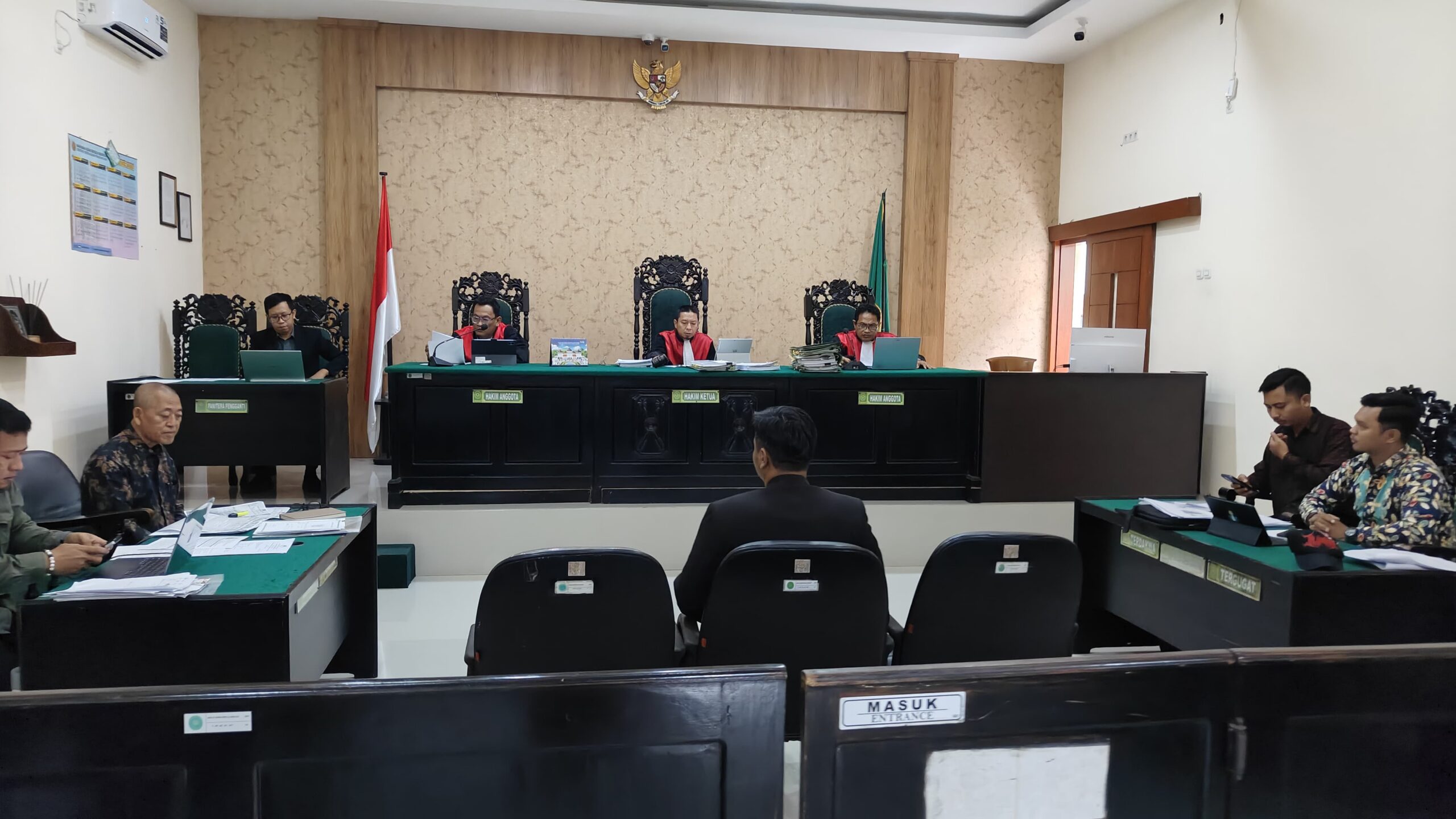
The transparency of the legal process has also come under fire. During a hearing on January 7, 2026, the Banyuwangi District Court restricted the number of people allowed to enter the courtroom, citing security concerns. Human rights advocates argue that such measures prevent public oversight of a case that has immense social implications. The move to seize Harun’s house as a "guaranteed asset" for the Rp 1.4 billion claim has also been criticized as "misdirected," as the property is reportedly not even registered in Harun’s name.

Indra from WALHI argues that the state’s failure to resolve the underlying land inequality in Pakel has allowed these "judicial attacks" to flourish. He emphasized that the 1960 Basic Agrarian Law (UUPA) was specifically designed to dismantle colonial land structures and ensure that land serves a social function. "If the law only strikes the farmers but never touches the inequality of land control, then what stands is not justice, but institutionalized injustice," Indra said.
The RTSP and its supporters are calling for a comprehensive audit of the HGU certificates held by PT Bumi Sari. They argue that if a land right results in decades of conflict, criminalization, and human rights violations, it loses its social and political legitimacy. The community’s resistance has not been limited to the courtroom; residents have engaged in "reclaiming" actions, planting food crops on disputed lands, and even conducting hunger strikes in front of government offices in Jakarta to draw national attention to their plight.
Broader Implications for Agrarian Reform in Indonesia
The Pakel case is a microcosm of a much larger national crisis. According to data from the Consortium for Agrarian Reform (KPA), Indonesia records hundreds of new agrarian conflicts every year, many involving overlaps between corporate concessions and community-managed lands. The shift toward civil lawsuits—often referred to as Strategic Lawsuits Against Public Participation (SLAPP)—is a growing trend used to silence environmental and land defenders across the archipelago.
As the trial against Harun continues, the outcome will likely serve as a bellwether for other agrarian disputes in East Java. If the court rules in favor of the corporation based on disputed HGU documents, it may embolden other companies to use civil litigation as a primary tool for displacement. Conversely, a victory for Harun would provide a rare legal precedent for the recognition of historical land rights dating back to the pre-independence era.
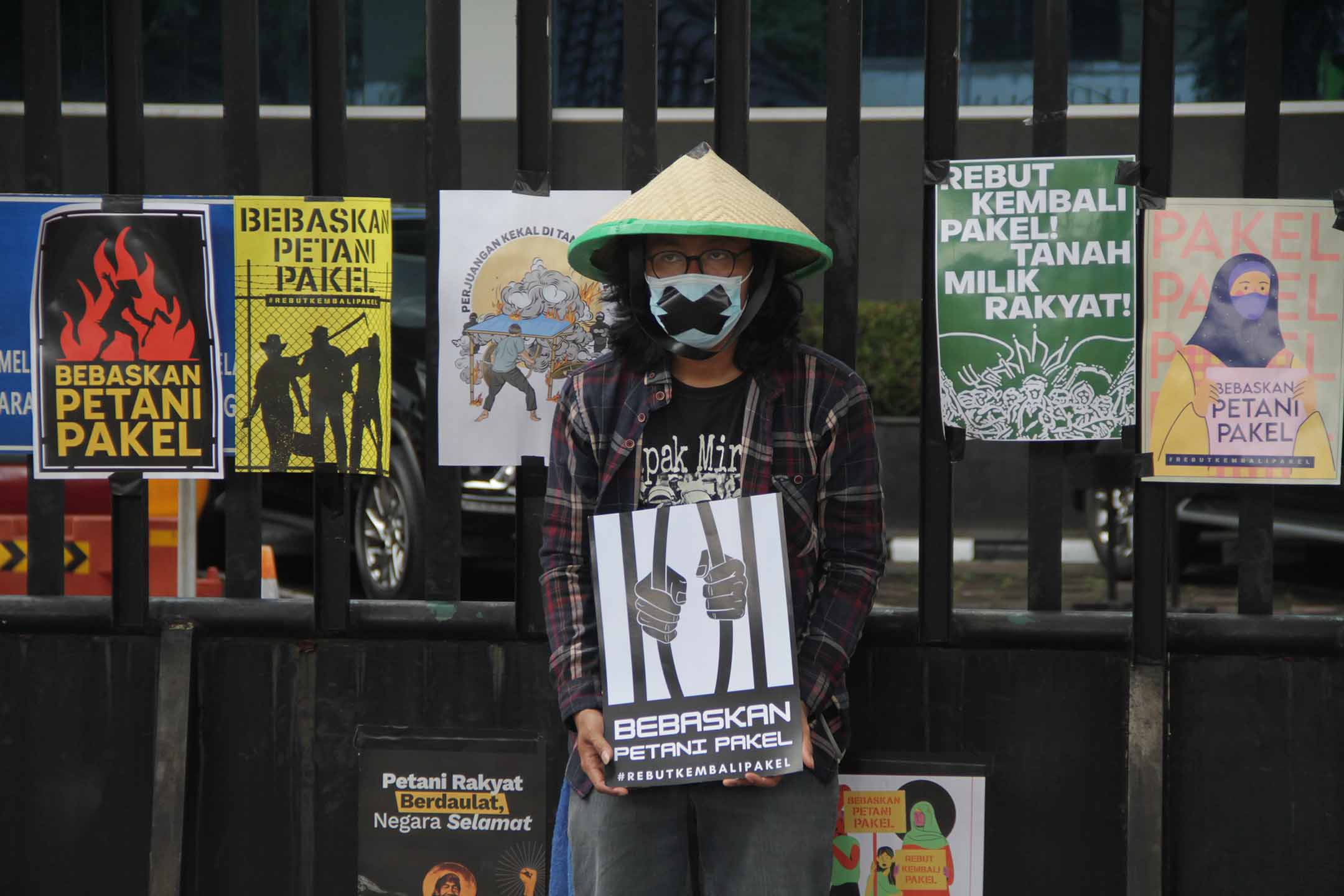
For the people of Pakel, the struggle is about more than just a lawsuit; it is about the right to exist on land they have cultivated for generations. The testimonies of elders like Bagiman and Busaman serve as a living archive of a community’s resilience against a century of shifting political and corporate tides. As the legal battle unfolds, the demand from civil society remains clear: the state must intervene to protect its citizens from corporate intimidation and fulfill the constitutional mandate of equitable land distribution. "The state should not stand behind corporate interests while allowing its own people to be intimidated," Indra concluded. "A state governed by law must not be sharp at the bottom and blunt at the top."