Azin Asro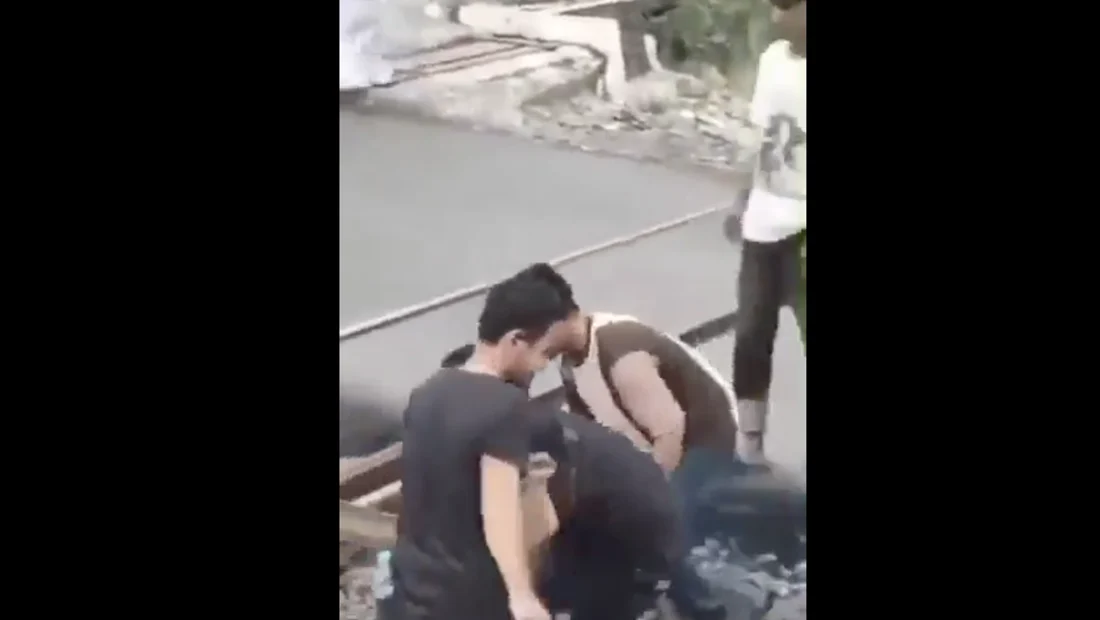
The Indonesian railway authority, PT Kereta Api Indonesia (KAI) Regional Division IV Tanjungkarang, has issued a formal statement regarding a high-tension incident involving a group of residents who staged a blockade on an active railway line in the Garuntang sub-district of Bandarlampung. The protest, which saw individuals placing heavy iron bars across the tracks, was triggered by a recent collision between a train and a motor vehicle. This act of obstruction, captured in videos that subsequently circulated widely across social media platforms, has sparked a national conversation regarding the intersection of community safety, infrastructure regulation, and the legal consequences of interfering with vital transportation networks.
The incident occurred on Wednesday, March 25, in the Kelurahan Garuntang area, located within the Panjang District of Bandarlampung City. According to reports from the national news agency Antara and local eyewitness accounts, the atmosphere in the neighborhood became volatile shortly after a train collided with a car at a local level crossing. In a direct response to the accident, several young men from the community gathered at the tracks and began placing metallic objects, including iron bars, across the rails. This move was intended as a form of protest against what residents perceive as inadequate safety measures at the crossing, which currently lacks an automated gate system.
Azhar Zaki Assjari, the Public Relations Manager for PT KAI Divisi Regional IV Tanjungkarang, confirmed the details of the event and emphasized the extreme danger posed by such actions. He noted that while the company understands the community’s emotional distress following an accident, resorting to the physical obstruction of railway tracks is a violation of federal law and places hundreds of lives at risk. The situation required the immediate intervention of local law enforcement to prevent a further escalation of hostilities and to ensure that the railway could be cleared for safe passage.
The chronology of the event began in the afternoon when a vehicle attempted to traverse a level crossing that did not have a manual or automatic barrier. Following the collision, which caused significant damage to the vehicle and caused a temporary halt in local traffic, a crowd of residents began to assemble. Emotional volatility led to the decision to block the tracks, effectively paralyzing the rail corridor that serves as a critical artery for both passenger and freight transport in the Lampung province. The police arrived shortly thereafter, engaging in a dialogue with the protesters to explain the legal ramifications of their actions and the technical hazards of placing debris on the tracks. After several hours of negotiation, the crowd was dispersed, and the tracks were inspected for damage before operations resumed.
From a legal perspective, the actions taken by the Garuntang residents fall under the jurisdiction of Law Number 23 of 2007 concerning Railways. This comprehensive piece of legislation was designed to safeguard the integrity of the national rail network and ensure the safety of both operators and the public. PT KAI officials specifically cited Article 180 of the law, which explicitly prohibits any individual from damaging or taking any action that results in the malfunction of railway infrastructure. The law defines "infrastructure" broadly, encompassing the tracks, signaling systems, and the land immediately adjacent to the rails.
Furthermore, Article 181 of the same law provides a strict prohibition against unauthorized persons being present on the rail line, moving or placing objects on the tracks, or utilizing the railway corridor for any purpose other than official railway operations. Violations of these articles carry significant legal weight, including potential imprisonment and heavy fines. PT KAI has reiterated that these laws are not merely administrative hurdles but are essential for preventing catastrophic derailments. Even a small metallic object placed on a rail can, under certain conditions of speed and weight, lead to a train jumping the tracks, which in a residential area like Panjang could result in a high-casualty event.
The technical implications of railway obstruction are often misunderstood by the general public. A typical train operating in the Tanjungkarang division, particularly those transporting coal (known locally as Babaranjang trains) or pulp, can weigh thousands of tons. Due to the immense momentum generated by such mass, these trains require a significant distance to come to a complete stop—often ranging from 500 to 1,000 meters depending on the speed and the gradient of the track. When a driver spots an obstruction on the tracks, the emergency braking system may not be sufficient to prevent a collision with the object or a derailment. The placement of iron bars, as seen in the Garuntang incident, represents a "worst-case scenario" for train engineers, as metal-on-metal interference can cause the wheels to lift or shear, leading to a total loss of control.
This incident also highlights a persistent and systemic issue in Indonesia’s urban planning: the prevalence of "perlintasan sebidang" or level crossings, many of which are unauthorized or "wild." Data from the Ministry of Transportation suggests that there are thousands of such crossings across the archipelago, with a significant concentration in densely populated areas of Sumatra and Java. In the Tanjungkarang region specifically, the expansion of residential settlements right up to the edge of the railway tracks has created a high-risk environment. These areas, often referred to as "slum areas" or "marginal settlements," frequently lack the formal infrastructure of gated crossings, leading to frequent accidents involving pedestrians and small vehicles.
Statistically, level crossing accidents remain one of the leading causes of death and injury within the Indonesian railway system. According to PT KAI’s annual safety reports, the majority of these incidents occur at crossings that are either unguarded or where road users fail to obey existing warning signs. The company has invested in public awareness campaigns, such as the "Sosialisasi Keselamatan di Perlintasan Sebidang," which aims to educate residents on the "Stop, Look, and Listen" protocol. However, as the Garuntang blockade demonstrates, education often takes a backseat to reactive anger when a tragedy occurs within the community.
The economic implications of such blockades are also substantial. The Tanjungkarang division is a vital link in the national supply chain, particularly for the transport of coal from the mines of South Sumatra to the port of Tarahan. This coal is essential for fueling power plants across Java and Bali. Any disruption to this line, even for a few hours, can lead to a backlog in logistics that costs the state and private enterprises billions of rupiah. Furthermore, the delays affect passenger services, disrupting the travel plans of thousands of citizens and placing additional strain on the regional transportation network.
In response to the viral video and the subsequent police intervention, PT KAI has called for a more collaborative approach to railway safety. While the company is responsible for the tracks and the trains, the management of road safety at level crossings often falls under the jurisdiction of local governments or the Ministry of Transportation, depending on the status of the road. There is an urgent need for local authorities in Bandarlampung to evaluate the safety of the Garuntang crossing, potentially through the installation of sirens, better lighting, or permanent barriers.
However, PT KAI maintains that community responsibility is the first line of defense. Azhar Zaki Assjari urged the public to refrain from taking the law into their own hands. He emphasized that the railway is a restricted zone for a reason and that any grievances regarding safety should be channeled through official governmental or corporate communication lines rather than through dangerous physical protests. The company has stated it will continue to work with the police to monitor the Garuntang area and other "hotspots" where social tension and railway operations frequently intersect.
The incident in Garuntang serves as a stark reminder of the challenges facing Indonesia as it seeks to modernize its infrastructure while managing the social complexities of its growing urban population. The clash between the rigid requirements of heavy rail operations and the organic, often unregulated growth of residential neighborhoods creates a friction that occasionally sparks into the kind of conflict seen on March 25. Moving forward, the resolution of such issues will require a combination of strict legal enforcement, significant infrastructure investment, and a renewed commitment to community engagement.
As of the latest reports, rail operations in the Panjang District have returned to normal, and local police have increased patrols in the area to ensure that no further obstructions are placed on the tracks. PT KAI continues to conduct internal assessments of the collision that sparked the protest, while also coordinating with the National Transportation Safety Committee (KNKT) to determine if additional safety measures are required at that specific location. The legal warning stands as a firm precedent: while the right to protest is recognized, the safety of the national transportation system remains a non-negotiable priority under Indonesian law.