Paryono Ramadhan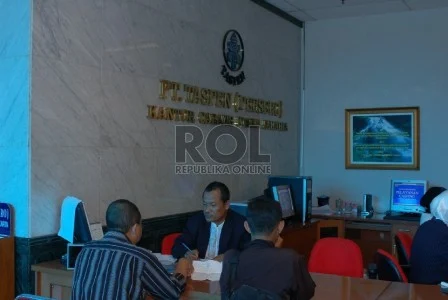
PT Taspen (Persero), the state-owned enterprise entrusted with managing social insurance programs for civil servants, is set to initiate the repayment of Tabungan Perumahan Pegawai Negeri Sipil (Taperum PNS) funds starting June 1st. This significant move targets all civil servants who are entering their retirement phase from the specified date onwards, with the notable exception of personnel from the Ministry of Defense, the Indonesian National Armed Forces (TNI), and the Indonesian National Police (Polri). The repayment mechanism is designed for efficiency, bundling the Taperum funds with the first pension payment and Tabungan Hari Tua (THT) at Taspen’s various branch offices across the archipelago.
Understanding Taperum PNS: A Historical Perspective and Evolution
To fully grasp the significance of this repayment, it is essential to delve into the historical context and evolution of Taperum PNS. The Tabungan Perumahan Pegawai Negeri Sipil, or Civil Servant Housing Savings, was established with the noble objective of assisting Indonesian civil servants in acquiring suitable housing. For decades, access to affordable and adequate housing has been a persistent challenge for a large segment of the Indonesian population, including those in public service. Recognizing this, the government initiated Taperum PNS as a mandatory savings scheme, where civil servants contributed a small portion of their monthly salaries, with the understanding that these funds would eventually support their housing needs, either through direct assistance or as a lump sum upon retirement.
Initially, the program was overseen by the Badan Pertimbangan Tabungan Perumahan Pegawai Negeri Sipil (Bapertarum PNS), an independent body established to manage and disburse these housing savings. Bapertarum PNS worked in conjunction with PT Taspen, leveraging Taspen’s extensive network and experience in managing civil servant welfare programs. The collaboration aimed to ensure that the accumulated savings were properly managed and returned to beneficiaries in accordance with established regulations. The core idea behind Taperum was not just to provide a financial safety net but also to foster a sense of security and stability for civil servants, allowing them to focus on their public duties without undue concern over one of life’s fundamental necessities – housing.
However, the landscape of civil servant housing programs underwent a significant transformation. In 2018, Bapertarum PNS was officially dissolved following the issuance of Government Regulation No. 25 of 2018 concerning the Implementation of Public Housing Savings (Tapera). This regulation marked a pivotal shift, establishing BP Tapera (Badan Pengelola Tabungan Perumahan Rakyat) as the new public housing savings management body, tasked with providing broader housing financing facilities not just for civil servants but for all Indonesian workers. Following this dissolution, the management and repayment of existing Taperum PNS funds, particularly for those retiring before the full transition to BP Tapera’s new scheme, were largely transferred to PT Taspen. This historical trajectory explains why Taspen, traditionally known for pensions and old-age savings, is now the primary entity handling the restitution of these specific housing savings. The repayment, therefore, represents the fulfillment of an older contractual obligation under the previous Taperum framework.
Operational Mechanics of the Repayment Initiative
The operational details of the Taperum PNS repayment underscore PT Taspen’s commitment to streamlining processes for its beneficiaries. As stated by PT Taspen’s Corporate Secretary, Iwan Soeroto, the repayment is based on a cooperative agreement between Taspen and the former Bapertarum PNS regarding the service for returning civil servant housing savings. This agreement solidifies the legal and administrative framework for the current initiative.
The key operational feature is the "one-package" system. Rather than requiring retirees to navigate multiple administrative channels, PT Taspen will disburse the Taperum funds concurrently with the first pension payment and the Tabungan Hari Tua (THT). This integrated approach is designed to enhance convenience and efficiency for retirees, allowing them to receive all their rightful entitlements in a single transaction. Retirees will be able to collect these funds at any of Taspen’s numerous branch offices located throughout Indonesia. This wide geographical reach ensures accessibility, particularly for civil servants residing in remote areas, minimizing travel burdens and logistical complexities.
The target demographic for this initial phase of repayment encompasses all civil servants (PNS) who reach their retirement age starting from June 1st. The exclusion of personnel from the Ministry of Defense, TNI, and Polri is consistent with Indonesia’s social security architecture, where these specific uniformed bodies often have their own distinct welfare and pension management systems, tailored to their unique service conditions and managed by separate entities such. For instance, the military and police typically fall under programs managed by institutions like PT Asabri. This differentiation highlights the segmented approach to social security provisions for various segments of the state apparatus in Indonesia.
The Broader Landscape of Civil Servant Welfare in Indonesia
Indonesia’s civil service forms the backbone of its governance and public administration, comprising millions of individuals across various ministries, agencies, and regional governments. As of recent data, the number of active civil servants (PNS) in Indonesia hovers around 4 million, playing critical roles in delivering public services, implementing policies, and maintaining state functions. Ensuring their welfare, including robust social security provisions, is paramount not only for their personal well-being but also for fostering a professional, motivated, and stable bureaucracy.
The social security system for Indonesian civil servants is multi-layered. Beyond Taperum, PT Taspen manages several other crucial programs. The Tabungan Hari Tua (THT), or Old Age Savings, is a compulsory savings program designed to provide a lump sum benefit upon retirement or in the event of incapacitation. This is distinct from the pension program, which provides regular monthly income after retirement. The pension scheme for civil servants aims to ensure continued financial stability post-employment, calculated based on years of service and final salary.
The distinction between Taperum, THT, and the general pension is crucial. Taperum was specifically earmarked for housing assistance, THT is a general old-age savings fund, and the pension provides regular income. While all contribute to the overall financial security of civil servants, they serve different primary purposes. The government’s continued efforts to refine and improve these programs reflect a commitment to upholding the rights and welfare of its public servants, recognizing their invaluable contribution to national development.
Contribution Rates and Future Reforms: A Shift Towards Equity
The original Taperum PNS contribution structure, as stipulated by Presidential Decree (Kepres) No. 46 of 1994, was based on fixed nominal amounts, varying by civil servant golongan (class). Specifically, civil servants (excluding TNI/Polri/Kemhan) were required to contribute:

- Rp 3,000 per month for Golongan I (Class I)
- Rp 5,000 per month for Golongan II (Class II)
- Rp 7,000 per month for Golongan III (Class III)
- Rp 10,000 per month for Golongan IV (Class IV)
While this fixed-rate system provided simplicity, it presented challenges in terms of equity and sustainability over time. Inflation erodes the real value of fixed contributions, and higher-earning civil servants (Golongan IV) contributed only marginally more than lower-earning ones, despite significant differences in their salaries. This structure could also lead to a disconnect between contributions and the escalating costs of housing.
Recognizing these limitations, PT Taspen has actively been advocating for a more equitable and sustainable contribution model. Iwan Soeroto highlighted Taspen’s ongoing efforts to transition the Taperum contribution to a percentage-based system, specifically 2.5 percent of a civil servant’s total salary. This proposed reform aligns with modern social security principles, where contributions are proportional to income, ensuring greater fairness across different salary brackets. A percentage-based contribution system offers several advantages:
- Equity: Higher earners contribute more in absolute terms, reflecting their greater capacity, while the burden remains proportional for all.
- Inflation Hedging: As salaries typically adjust for inflation over time, a percentage-based contribution naturally increases, helping to maintain the real value of the savings pool.
- Sustainability: A larger, more dynamically growing fund can better meet future housing assistance needs and provide a more robust financial foundation for the program.
- Alignment with Modern Practices: Many contemporary pension and social security schemes globally utilize percentage-based contributions for their inherent fairness and adaptability.
The push for this reform indicates a forward-looking approach by Taspen and the government to ensure the long-term viability and relevance of civil servant welfare programs in an evolving economic landscape. While the specific timeline for the implementation of this 2.5% contribution is subject to further legislative and regulatory processes, its proposal signals a clear direction towards a more robust and equitable system for civil servant housing savings.
Statements and Official Reactions: A Commitment to Welfare
PT Taspen’s Corporate Secretary, Iwan Soeroto, emphasized that the "one-package" payment system is designed for the convenience of civil servants in receiving their entitlements. This statement reflects the institutional priority of beneficiary-centric service delivery. Beyond this operational detail, the broader government machinery is expected to view this repayment initiative as a testament to its unwavering commitment to the welfare of its civil servants.
While direct, additional official statements were not provided in the original excerpt, one can logically infer the broader governmental sentiment. Ministries such as the Ministry of Finance, which oversees state-owned enterprises like Taspen, and the Ministry of Administrative and Bureaucratic Reform (KemenPAN-RB), responsible for civil servant policy, would likely underscore the importance of fulfilling financial obligations to public servants. This move reinforces trust in government institutions and demonstrates accountability.
For the beneficiaries themselves, particularly those entering retirement, this repayment is likely to be met with relief and appreciation. Retirement often brings financial adjustments, and the lump sum from Taperum, combined with the first pension and THT, can provide crucial liquidity. It can assist in covering immediate post-retirement expenses, making necessary home repairs, or even contributing to new housing plans, thus easing the transition into retirement. This financial injection, however modest for some, represents a tangible benefit accumulated over years of dedicated public service.
Economic and Social Implications of the Repayment
The Taperum PNS repayment carries several economic and social implications. Economically, the disbursement of funds to a large cohort of retiring civil servants could provide a modest stimulus to local economies. While the individual amounts might vary, the collective sum can contribute to increased consumer spending, particularly in sectors related to housing, home improvements, and services catering to retirees. This influx of funds could indirectly support economic activity in various regions where these civil servants reside.
Socially, the repayment reinforces the government’s commitment to social security and contractual obligations. In a nation where public trust in institutions is vital, the timely and transparent fulfillment of such commitments strengthens the bond between the state and its employees. It signals that years of contributions are not in vain and that the government stands by its promise to support its civil servants, even as programs evolve. This can have a positive ripple effect on civil servant morale, encouraging continued dedication to public service.
Moreover, providing financial resources for housing, even retrospectively through these savings, addresses a fundamental social need. Secure housing contributes to family stability, improved health outcomes, and overall quality of life. For many retirees, this additional fund can be instrumental in securing or improving their living conditions, a crucial aspect of dignified retirement.
Challenges and Future Outlook
While the repayment is a positive development, PT Taspen will inevitably face administrative and logistical challenges. Managing the disbursement for potentially tens of thousands of retirees annually, ensuring accurate calculations, and facilitating smooth transactions across numerous branch offices requires robust systems and dedicated personnel. Minimizing delays and ensuring transparent communication will be key to the success of this large-scale operation.
Looking ahead, the evolution of civil servant housing programs in Indonesia will continue under BP Tapera. While Taspen handles the legacy Taperum repayments, BP Tapera is now the central body for new housing savings for civil servants and other workers. This division of labor marks a strategic shift towards a more unified and comprehensive national housing finance system. The ongoing discussions around comprehensive pension reforms in Indonesia, including potential changes to the contribution and benefit structures for civil servants, also form part of this broader outlook. These reforms aim to ensure the long-term actuarial sustainability of the social security system while continuing to provide adequate welfare for public servants.
In conclusion, PT Taspen’s initiation of Taperum PNS repayments is a significant step in fulfilling long-standing obligations to retiring civil servants. This move, rooted in historical agreements and evolving welfare policies, not only provides tangible financial benefits to retirees but also underscores the Indonesian government’s continued commitment to the welfare and security of its public service workforce. As the nation progresses, the ongoing reforms in social security and housing finance aim to build a more equitable, sustainable, and robust system for all its citizens, particularly those who dedicate their lives to serving the state.