Nila Kartika Wati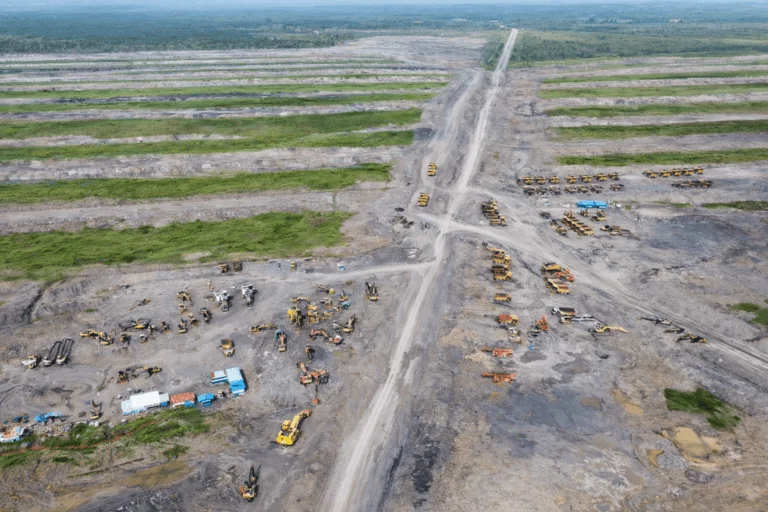
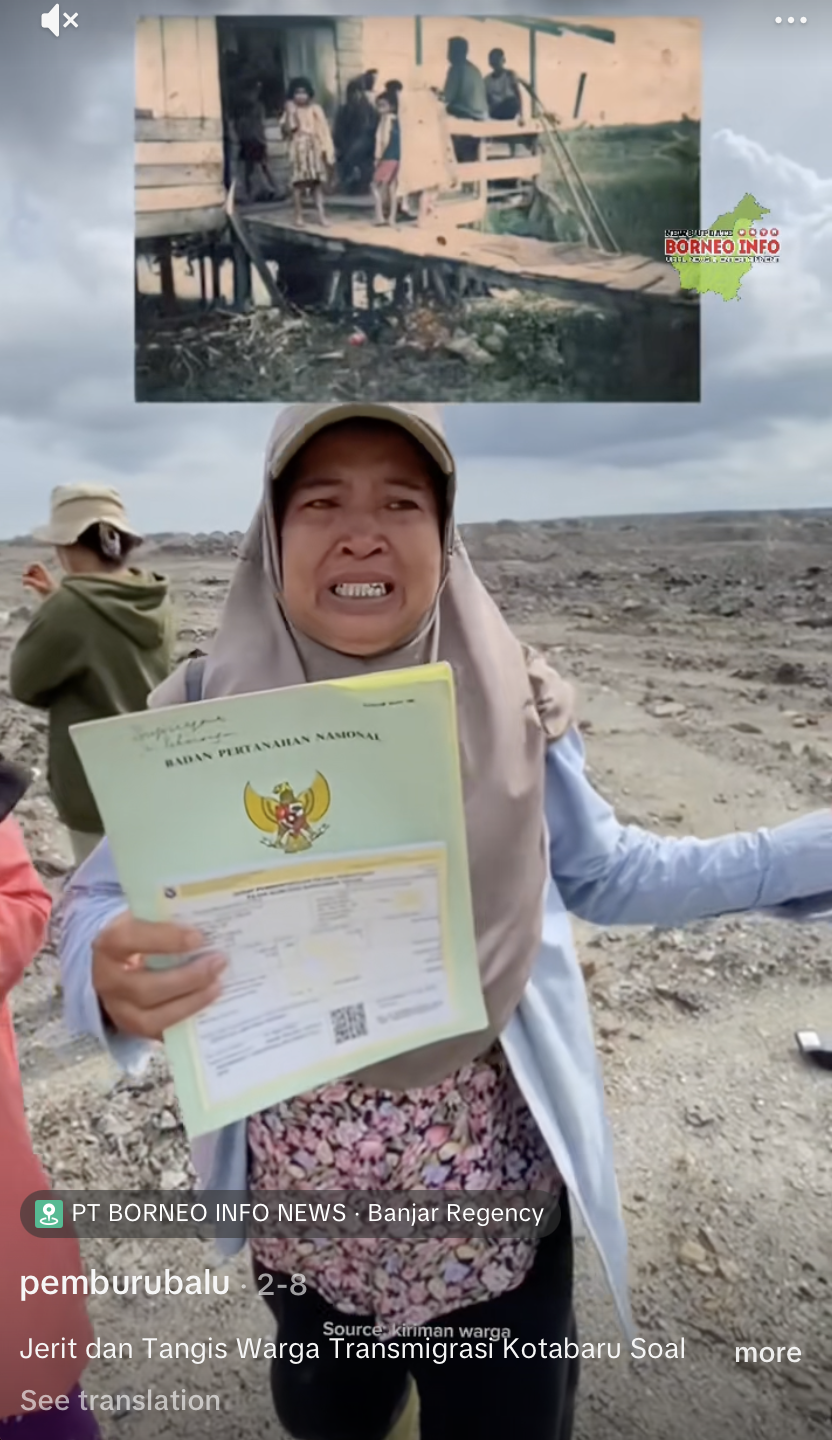
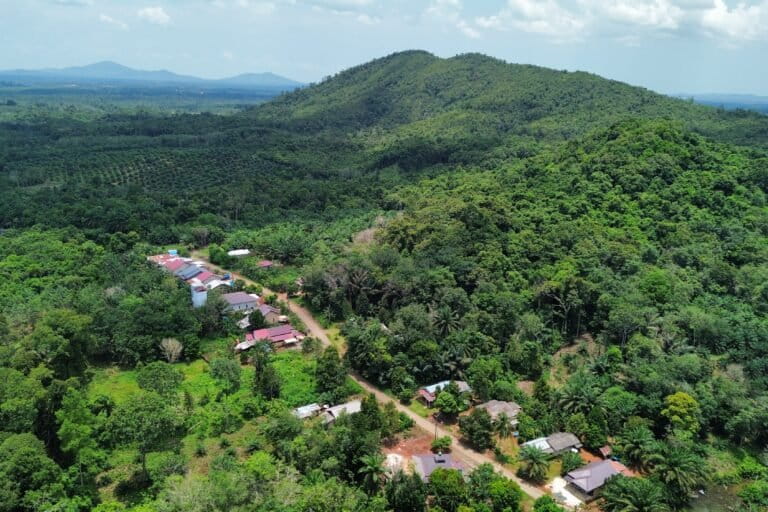
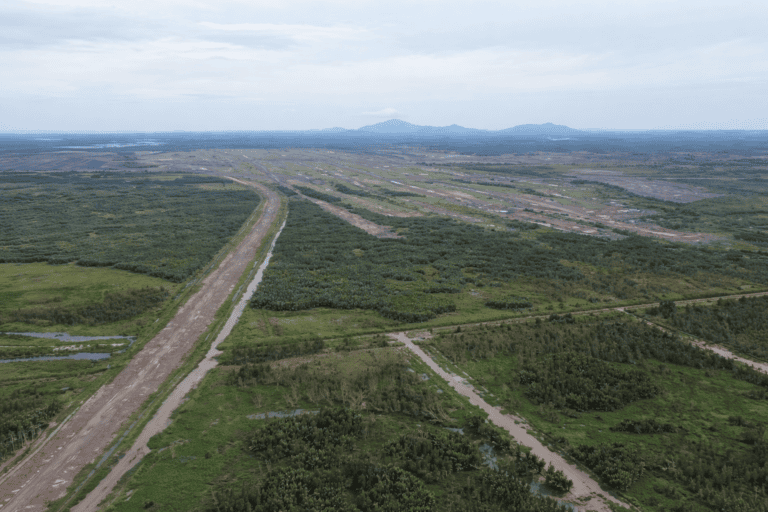
The plight of Nyoman Darpada, a transmigrant woman in Kotabaru, South Kalimantan, recently captured national attention through a viral 151-second video in which she pleaded with the President of Indonesia to intervene in a land dispute that has stripped her and hundreds of others of their livelihoods. Standing before a landscape transformed into a coal mining site, Darpada’s emotional testimony highlighted a systemic crisis where legally held land certificates (Sertifikat Hak Milik or SHM) were unilaterally canceled by the state to accommodate extractive industries. This case, centered in the Rawa Indah area of Bekambit Village, represents a significant collision between agrarian reform, transmigration history, and the aggressive expansion of the mining sector in Indonesian Borneo.
The conflict involves over 700 residents, many of whom are former transmigrants who were moved to the region by the government decades ago. These citizens, who hold valid land titles issued by the National Land Agency (BPN), found their legal protections evaporated when the Regional Office of the BPN in South Kalimantan canceled their certificates in favor of a Mining Business License (IUP) held by PT Sebuku Sejaka Coal (SSC), formerly known as PT Sebuku Iron Lateritic Ores (SILO). As the government moves to mediate, the case has become a litmus test for the administration’s commitment to protecting "the little people" against powerful corporate interests.
Historical Context: From Pioneers to Displaced Citizens
The roots of the Bekambit land conflict date back to the mid-1980s, during the height of Indonesia’s transmigration program. Between 1986 and 1989, the government relocated hundreds of families from Bali, Java, and other parts of South Kalimantan to the Rawa Indah settlement in Kotabaru. These pioneers were promised a new life and the opportunity to build agricultural self-sufficiency on land provided by the state.
I Ketut Buderana, the chairman of the Rawa Indah ex-transmigrants group, recalls the early years as a period of immense hardship. The settlers arrived to find a coastal swamp environment with highly acidic soil and water. Despite the lack of basic infrastructure—such as the six kilometers of broken roads and the absence of clean drinking water—the community persevered for over a decade, clearing land and establishing farms.
The turning point occurred in 1991 during an effort to secure clean water. As residents drilled deep wells to bypass the acidic surface water, they encountered a hard mineral layer at a depth of approximately 150 meters. It was discovered that the ground beneath their feet was rich in coal. This discovery, while geologically significant, marked the beginning of the end for the settlement’s agricultural prospects. As the focus shifted toward the potential for extraction, government investment in the transmigration site began to dwindle. Roads remained unpaved, and facilities were neglected, leading many families to abandon the site for neighboring villages or return to their islands of origin. However, even those who moved away maintained their legal ownership of the land through their SHM documents.
The Legal Dispossession: IUP Issuance and SHM Cancellation
The legal conflict began in earnest in 2010 when the local government issued a coal mining IUP covering 8,139 hectares to PT SILO (later PT SSC). This license directly overlapped with the land owned by the transmigrants. The situation escalated significantly between 2014 and 2019 when the South Kalimantan BPN Regional Office began the systematic cancellation of land titles.
The administrative mechanism used for this cancellation was Article 11, paragraph (3), letter f of the Minister of Agraria and Spatial Planning/BPN Regulation No. 11 of 2016 concerning the Settlement of Land Cases. Under this regulation, the BPN claimed the authority to cancel titles based on the existence of the mining license and claims by the company that they had acquired physical control of the land.
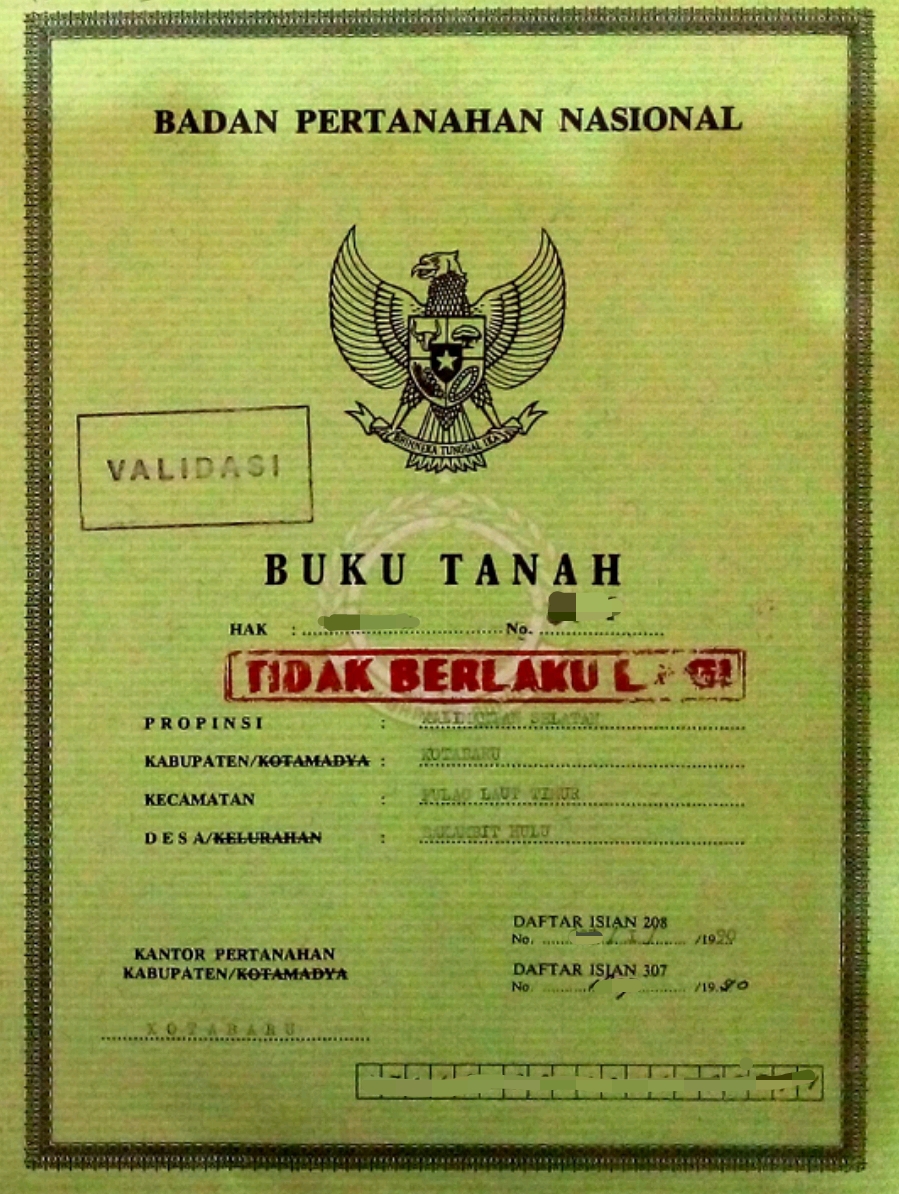
In total, 717 land certificates were rendered invalid. The first wave in 2014 involved 276 SHMs covering 1.8 million square meters, which were replaced by a Right to Use (Hak Pakai) certificate for PT SSC. By 2019, an additional 441 certificates were canceled. Remarkably, many residents, including Buderana, were never formally notified of these cancellations. It was only in 2021 that the community realized their certificates had been "stamped red"—marked as invalid in the BPN database—leaving them with no legal recourse to prevent the company from bulldozing their former orchards and farms.

Government Intervention: A Promise of Restoration
Following the public outcry sparked by the viral video, the central government has moved to intervene. Nusron Wahid, the Minister of Agraria and Spatial Planning/Head of BPN, has publicly stated that the cancellation of the 717 certificates was legally flawed. In a high-level meeting involving the Ministry of Transmigration and the Ministry of Energy and Mineral Resources (ESDM), Wahid emphasized that the residents’ ownership rights, established in the 1990s, should have taken precedence over a mining license issued two decades later.
The Ministry has pledged to restore the SHMs to the original owners. Minister Wahid noted that while land disputes usually require a lengthy court process, the Bekambit case qualifies for administrative restoration because it involves a clear overlap of rights and the statute of limitations for the original dispute has passed five years, making it an administrative priority. By restoring the certificates, the government intends to provide the transmigrants with a stronger "bargaining position" in negotiations with the mining company.
The Minister of Transmigration, Muhammad Iftitah Sulaiman Suryanagara, echoed these sentiments, stating that President Prabowo Subianto has given specific instructions to ensure that the rights of the people are not usurped. The Ministry of Transmigration has launched the "Trans Tuntas" program, which aims to resolve long-standing land tenure issues in transmigration zones across the country. Sulaiman stressed that land security is the foundation of the transmigration program’s success and that the Kotabaru case serves as a critical lesson for future policy.
The Stalemate in Compensation Negotiations
Despite the government’s promises, the path to a final resolution remains obstructed by a significant valuation gap. A closed-door mediation session held in Banjarbaru on February 12, 2025, ended without a concrete agreement on compensation.
The residents, represented by Suherman and other community leaders, have proposed a compensation package totaling Rp 86,000 per square meter. This figure includes Rp 56,000 for the land value and Rp 30,000 as compensation for the loss of land utilization and livelihood. In stark contrast, PT SSC initially offered only Rp 5,000 per square meter, later increasing the offer to Rp 10,000 per square meter (approximately Rp 100 million per hectare).
The company’s representative, Hilmy Abdullah, argued that their offer is based on previous land acquisitions in the area between 2020 and 2025, where some residents purportedly sold their land for between Rp 20 million and Rp 50 million per hectare. However, the community leaders argue that those previous sales were often made under duress or by individuals who did not understand the true value of the mineral wealth beneath their land. To bridge this gap, the local government of Kotabaru has been tasked with appointing an independent appraisal team (KJPP) to determine a fair market value.
Operational Freeze and Legal Uncertainty
As the mediation continues, the Ministry of Energy and Mineral Resources has taken the significant step of freezing PT SSC’s mining operations. Surya Herjuna, Director of Coal Business Development at the ESDM, confirmed that the company is currently prohibited from conducting any mining or sales activities within the disputed area. This freeze is intended to prevent further physical alteration of the land while the legal status of the SHMs is being restored.
For the residents, however, the delay in receiving the official Decree of Cancellation (SK Pembatalan) for the BPN’s previous decision is a source of ongoing anxiety. Suherman noted that while the Minister has promised to restore their rights, the actual paperwork has not yet reached the hands of the villagers. Without this document, the "red stamp" on their certificates remains, and their legal standing remains in limbo. "It has been more than a month since the promise was made," Suherman stated, urging the government to expedite the bureaucracy.
Analysis of Implications and Broader Impact
The Kotabaru land conflict is more than a local dispute; it is a microcosm of the "resource curse" and the legal vulnerabilities of Indonesia’s agrarian reform. Several key implications arise from this case:
- Erosion of Land Tenure Security: If SHMs—the highest form of land ownership in Indonesia—can be unilaterally canceled by a regional BPN office to facilitate mining, it undermines the entire legal framework of property rights in the country. This creates a climate of uncertainty for millions of smallholders and transmigrants.
- The Conflict Between Extraction and Agriculture: The case highlights the persistent policy bias toward the mining sector, which often generates rapid state revenue but at the cost of long-term social stability and food security. The discovery of coal in 1991 effectively signaled the death of the transmigrant agricultural project, suggesting that mining interests are frequently prioritized over rural development.
- The Role of Social Media in Governance: The fact that a viral TikTok video was required to trigger a ministerial response suggests a disconnect between local administrative grievances and central government oversight. It underscores the increasing importance of digital activism for marginalized communities who find traditional legal channels blocked.
- Precedent for Future Resolutions: The government’s decision to restore these certificates without a court order sets a significant administrative precedent. If successful, this model of "administrative restoration" could be applied to thousands of other overlapping land cases across Sumatra and Kalimantan.
Conclusion
The struggle of the Bekambit transmigrants serves as a stark reminder of the human cost of industrial expansion. For Nyoman Darpada and her neighbors, the land was not just a commodity but a promise of a future made by the state nearly forty years ago. While the current administration’s intervention offers a glimmer of hope, the resolution of this conflict requires more than just political promises; it requires the swift delivery of legal documents and a fair compensation mechanism that reflects the true value of the land and the decades of hardship endured by the settlers. Until the "red stamps" are removed and the community is justly compensated, the ghosts of the Rawa Indah transmigration project will continue to haunt Indonesia’s agrarian landscape.