Bambang Pamungkas
In a significant display of its strategic military capabilities, Russia’s Strategic Missile Forces (RVSN) have conducted extensive exercises involving units equipped with the potent RS-24 Yars intercontinental ballistic missile (ICBM) system. The drills, captured in footage released by the Russian Defence Ministry on April 2, 2026, took place in an undisclosed location within the vast and often harsh terrains of Siberia. These maneuvers underscore Russia’s ongoing commitment to maintaining a high state of combat readiness for its nuclear forces, a posture increasingly scrutinized by Western powers amidst persistent geopolitical friction, particularly the protracted conflict in Ukraine.
The exercises were meticulously designed to test the operational effectiveness and survivability of the mobile Yars missile units under simulated combat conditions. Unlike some previous strategic drills that have included test launches, the Russian Defence Ministry explicitly stated that no missiles were launched during these particular maneuvers. Instead, the focus was squarely on the tactical deployment, concealment, and protective measures essential for these formidable weapons systems. This emphasis on non-launch activities highlights a different facet of readiness: the ability to rapidly deploy, protect, and prepare for potential engagement without triggering an actual firing sequence, which could carry significant escalatory risks.
Unveiling Russia’s Strategic Maneuvers
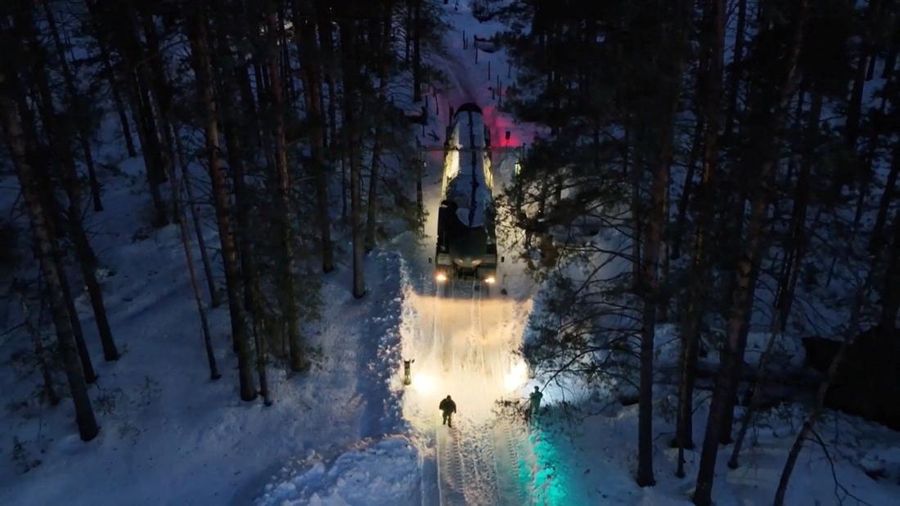
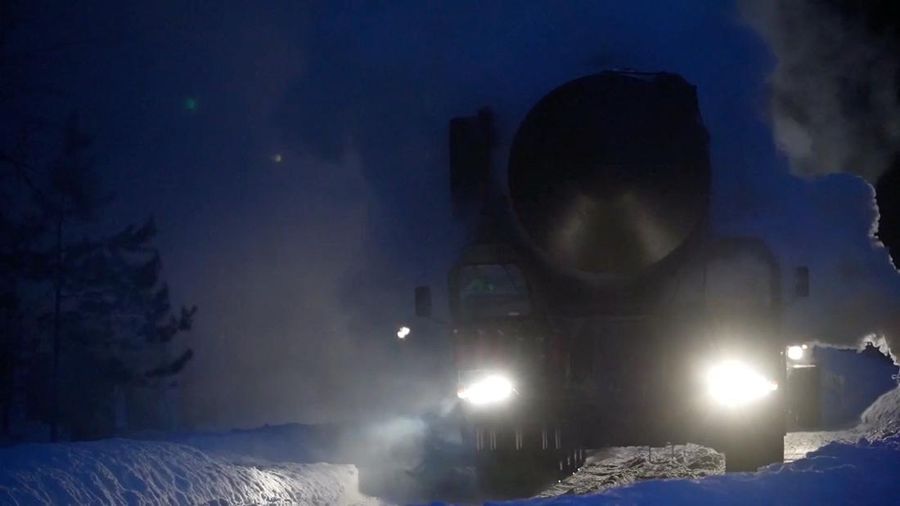
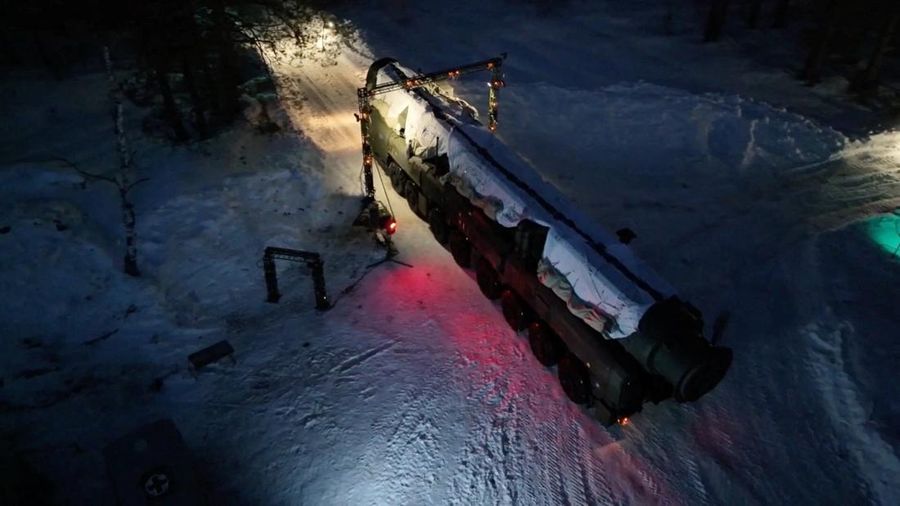
The footage disseminated by the Ministry showed large, multi-axle Transporter Erector Launchers (TELs) carrying the Yars missiles traversing rugged, snow-dusted landscapes, underscoring the system’s mobility and ability to operate in diverse environments. The exercises were not merely about moving these massive vehicles; they encompassed a broad spectrum of scenarios aimed at honing the skills of missile crews and support personnel. These included intricate maneuvers to evade detection, the deployment of advanced camouflage techniques, and the execution of defensive protocols against potential enemy actions.
Tactical Prowess and Operational Readiness
A critical component of the drills involved practicing concealed movements of the ground-based missile systems. In an era of advanced satellite reconnaissance and drone surveillance, the ability to operate discreetly is paramount for mobile ICBMs, which are designed to survive a first strike by constantly changing their positions. Crews practiced setting up temporary launch positions, ensuring rapid deployment and concealment. This involves not only physical camouflage but also electronic countermeasures to mask their presence from sophisticated intelligence gathering.
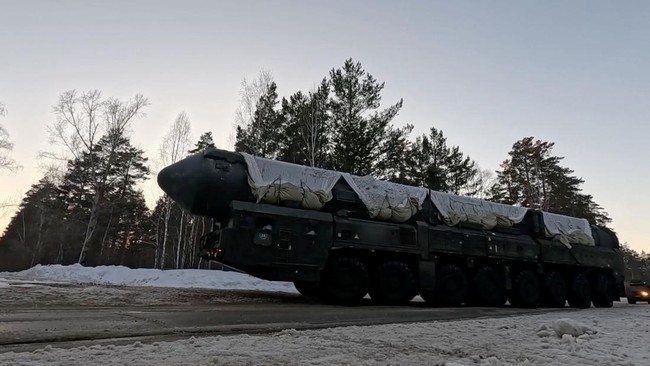
Furthermore, the exercises incorporated scenarios to simulate responses to various threats, including hypothetical enemy attacks and the repulsion of aerial assault weapons. This aspect of the training is crucial for ensuring the all-round security of the missile complexes. It involves coordinating with air defense units, employing electronic warfare measures, and training personnel in anti-sabotage operations to protect the valuable assets from both conventional and unconventional threats. The vastness of Siberia provides an ideal training ground for such exercises, offering extensive areas where units can operate without public observation, allowing for realistic simulations of dispersal and hidden deployment.
The Ministry emphasized that these comprehensive drills aim to enhance the operational readiness and defensive capabilities of the strategic missile forces. Such exercises serve multiple objectives: they validate new tactics, refine existing procedures, and ensure that personnel are proficient in handling the complex Yars system under stress. For the Kremlin, these are not just training exercises but a potent demonstration of resolve and military might, directed both internally to foster confidence and externally to project strength.
The Yars ICBM: A Pillar of Russian Deterrence
The RS-24 Yars (NATO reporting name: SS-27 Mod 2) is a critical component of Russia’s strategic nuclear triad, which also includes submarine-launched ballistic missiles and long-range bomber aircraft. Introduced into service in 2010, the Yars is an advanced solid-propellant ICBM, designed as an upgrade to the earlier Topol-M system. Its key characteristics make it a formidable weapon:
- Mobility: The Yars system is primarily deployed on mobile TELs, making it significantly harder for an adversary to locate and target, especially compared to fixed silo-based ICBMs. This mobility greatly enhances its survivability in a nuclear exchange scenario.
- MIRV Capability: Unlike the single-warhead Topol-M, the Yars can carry multiple independently targetable re-entry vehicles (MIRVs), typically 3-4, each capable of striking a different target. This increases its destructive potential and complicates missile defense efforts.
- Advanced Countermeasures: The Yars is equipped with sophisticated penetration aids designed to overcome ballistic missile defense systems, including decoys and electronic warfare capabilities, making it highly effective at reaching its intended targets.
- Range and Accuracy: With an estimated range of up to 12,000 kilometers, the Yars can reach virtually any target in the world. Its guidance systems are highly accurate, ensuring precision strikes.
The Yars system represents a modernization cornerstone for Russia’s ground-based strategic forces. Its deployment reinforces Russia’s doctrine of "assured retaliation," where the ability to launch a devastating counter-strike, even after absorbing an initial attack, is seen as the ultimate deterrent against aggression. The ongoing exercises confirm that Russia continues to invest heavily in maintaining and upgrading this critical segment of its military arsenal, ensuring its strategic deterrence remains credible and robust.
Geopolitical Context: A Backdrop of Escalating Tensions
These Yars missile exercises do not occur in a vacuum; they are set against a backdrop of persistently high and often escalating tensions between Russia and NATO, largely fueled by the ongoing conflict in Ukraine. As of 2026, the conflict, which began in early 2022, continues to shape the international security landscape, creating deep fissures in East-West relations.
The war in Ukraine has led to an unprecedented level of military aid from NATO member states to Kyiv, including advanced weaponry, intelligence sharing, and extensive financial support. This sustained support is viewed by Moscow as direct involvement in the conflict, escalating the proxy war dynamics. Conversely, NATO perceives Russia’s actions in Ukraine as a fundamental violation of international law and a direct threat to European security, necessitating a robust defense posture and solidarity with Ukraine.
The Deterrence Doctrine and its Implementation
Russia’s nuclear doctrine allows for the use of nuclear weapons in response to an attack on its territory or allies, or even in response to a conventional attack that threatens the existence of the Russian state. Strategic exercises like those involving the Yars are a tangible manifestation of this doctrine. They are intended to send an unambiguous message to potential adversaries, particularly NATO and the United States, that Russia’s strategic forces are operational, well-trained, and ready to fulfill their mission if necessary.
Western analysts typically interpret such drills as a form of "nuclear signaling" or "saber-rattling." While not direct threats, they serve as a reminder of Russia’s vast nuclear arsenal and its willingness to leverage this power in the geopolitical arena. This signaling becomes especially pronounced during periods of heightened tension, aiming to deter further Western involvement in conflicts perceived as vital to Russia’s national interests. The deployment of mobile Yars systems in Siberia, a region historically associated with strategic depth and resilience, further amplifies this message of unwavering resolve.
The exercises also reinforce Russia’s narrative of being a major global power, capable of defending its sovereignty and interests against what it often describes as Western encroachment. Domestically, these displays of military strength are often used to foster national unity and demonstrate the government’s commitment to national security.
International Reactions and Strategic Implications
While there were no immediate official statements from NATO or individual Western governments directly in response to this specific Yars exercise footage, the general reaction to such Russian strategic drills is well-established. NATO officials and military strategists routinely monitor these activities closely, interpreting them through the lens of Russia’s broader military posture and its evolving nuclear doctrine.
Typically, Western responses emphasize the need for transparency and de-escalation, while simultaneously reiterating NATO’s commitment to collective defense and the readiness of its own forces. Concerns are frequently raised about the potential for miscalculation in an environment of reduced trust and strained communication channels. The lack of robust arms control agreements, particularly following the unraveling of treaties like the Intermediate-Range Nuclear Forces (INF) Treaty and uncertainties surrounding the future of New START, means that such military displays occur in a less regulated and potentially more dangerous environment.
The implications for global strategic stability are profound. Each strategic exercise by a nuclear power, particularly one engaged in a major conventional conflict, contributes to a cycle of action and reaction. It can reinforce existing threat perceptions, prompt counter-measures, and potentially lead to an arms race in certain areas. The constant demonstration of nuclear capabilities, while intended as deterrence, also carries inherent risks of accidental escalation or misinterpretation.
A Recurring Display of Force
Russia has a long history of conducting large-scale military exercises, including those involving its strategic nuclear forces. These drills are an integral part of its military doctrine and training cycle, reflecting a commitment to maintaining a robust defense capability inherited from the Soviet era. However, the context in which these exercises now take place – the ongoing war in Ukraine, the breakdown of diplomatic relations with the West, and the re-militarization of Europe – imbues them with a heightened significance.
In previous years, such exercises might have been viewed as routine demonstrations. In 2026, with the geopolitical landscape fundamentally altered, they are seen as direct expressions of power and intent. The timing, the nature of the weapons involved (nuclear-capable ICBMs), and the explicit mention of "warning to Western countries" by Russian officials (as frequently implied by state media narratives around such events) collectively paint a picture of a nation leveraging its ultimate deterrent in a period of unprecedented international friction.
Looking Ahead: The Future of Strategic Stability
The Yars ICBM exercises in Siberia serve as a stark reminder of the enduring role of nuclear weapons in international relations, particularly for states like Russia that perceive themselves as facing existential threats. As the conflict in Ukraine drags on, and the chasm between Russia and the West deepens, such demonstrations of strategic military power are likely to continue.
The challenge for international security remains how to manage these tensions, prevent miscalculation, and ideally, find pathways towards de-escalation and renewed dialogue on arms control. Without reliable communication channels and a shared understanding of strategic doctrines, the routine exercises of one power can easily be perceived as provocative actions by another, perpetuating a dangerous cycle of mistrust and military posturing. The movement of Russia’s Yars nuclear missiles across the Siberian plains, therefore, is not just a military drill; it is a powerful symbol of the current volatile global order and the precarious state of strategic stability.