Tyo Susilo
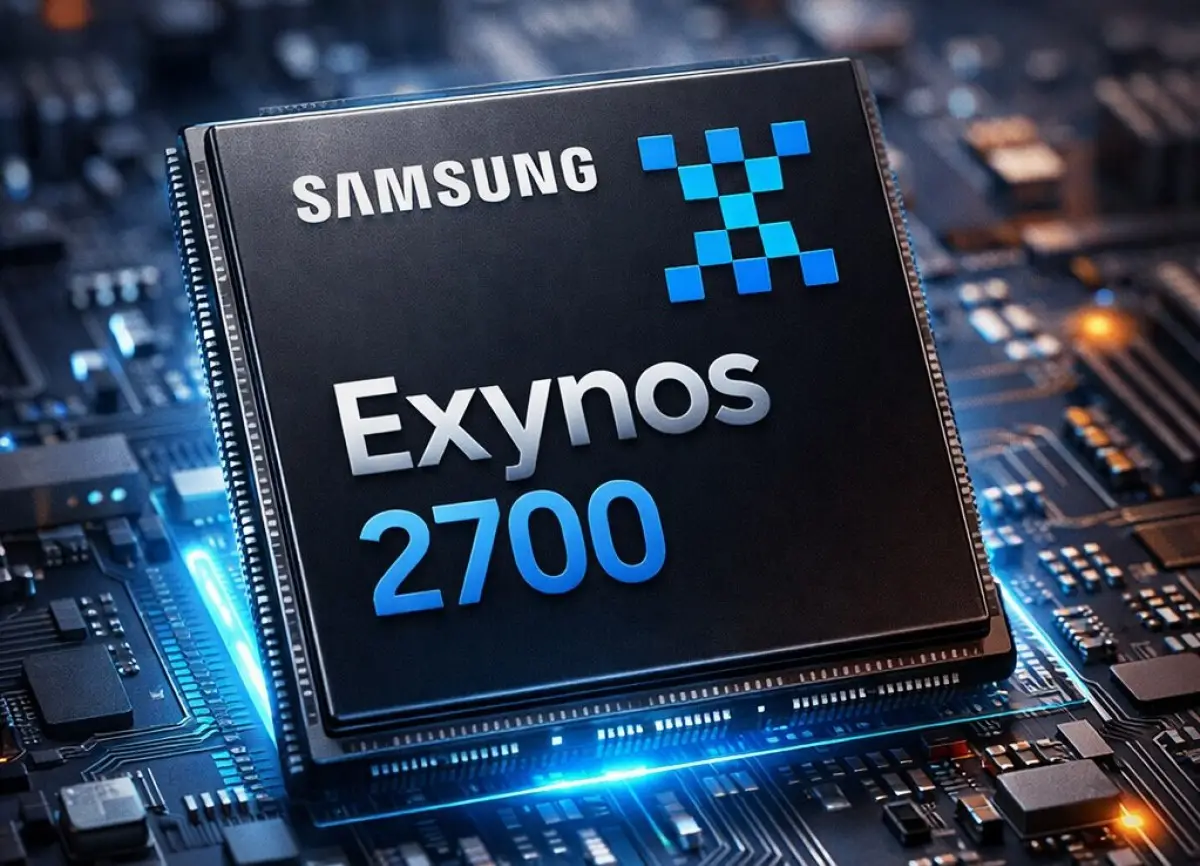
Early benchmarks for Samsung’s forthcoming Exynos 2700 chipset have surfaced, offering a glimpse into the potential performance and specifications that will likely power the Samsung Galaxy S27 and S27 Plus smartphones. While the official release of these devices and their accompanying chipset remains some time away, the appearance of the Exynos 2700, identified by the model number S5E9975, on Geekbench provides crucial early insights into Samsung’s silicon development trajectory. The presence of an "ERD" identifier suggests that these tests were conducted on an engineering sample, indicating a pre-production stage of development.
Unveiling the Exynos 2700: Core Architecture and Preliminary Performance Metrics
The leaked Geekbench listing reveals that the Exynos 2700 is designed with a formidable 10-core CPU configuration, built upon the ARMv8 architecture. This configuration is expected to feature a peak clock speed of 2.88GHz for its performance cores, while the efficiency cores will operate within a range of 2.3GHz to 2.4GHz. This tiered approach to core functionality is a common strategy in modern chip design, aiming to balance raw processing power with energy conservation for everyday tasks.
The reported benchmark scores from Geekbench indicate a single-core performance of 2,603 points and a multi-core score of 10,350 points. While these figures may not immediately set new records compared to the most cutting-edge processors currently available on the market, it is imperative to contextualize these results. As an engineering sample tested on a development board, the Exynos 2700 is likely not operating at its full potential. Manufacturers often encounter optimization challenges during the early stages of chipset development, and final performance can see significant improvements by the time a chip is integrated into a commercial device. Furthermore, the specific testing environment and software used for these early benchmarks can also influence the outcomes.
Integrated Graphics: The Xclipse 970 GPU Takes Center Stage
Beyond the CPU performance, separate OpenCL tests have shed light on the graphical capabilities of the Exynos 2700. The leaks indicate that the chipset will be equipped with the Xclipse 970 GPU. This GPU achieved a score of 15,618 points in the OpenCL benchmarks, suggesting a robust graphical processing unit designed to handle demanding visual tasks, from high-fidelity mobile gaming to complex video rendering.
A significant point of interest is that the Xclipse 970 GPU is developed entirely in-house by Samsung, without the direct involvement of AMD, which had previously collaborated on earlier Exynos GPU iterations. This internal development signifies Samsung’s strategic push for greater control and innovation in its graphical silicon. The Xclipse branding itself has been a notable part of Samsung’s recent Exynos strategy, aiming to deliver a premium graphics experience comparable to desktop-class GPUs. The performance of the Xclipse 970 will be a key factor in determining the visual fidelity and gaming capabilities of future Samsung devices.
Advanced Manufacturing Process and Projected Efficiency Gains
The Exynos 2700 is anticipated to be manufactured using a highly advanced 2nm fabrication process, specifically referred to as SF2P. This cutting-edge process node represents a significant leap forward in semiconductor manufacturing, promising greater transistor density, improved performance, and enhanced power efficiency compared to previous generations.
Preliminary rumors suggest that this move to a 2nm process could result in an overall performance increase of up to 12% and a substantial power consumption reduction of approximately 25% when compared to its predecessor. Such improvements are crucial for flagship smartphones, enabling longer battery life, sustained high performance without thermal throttling, and the ability to power more complex AI and machine learning features. The 2nm process is at the forefront of semiconductor technology, and its successful implementation by Samsung could provide a competitive edge in the highly contested mobile processor market.
Timeline and Historical Context of Exynos Development
Samsung’s Exynos chipset line has a long history, often serving as the in-house alternative to Qualcomm’s Snapdragon processors in its flagship Galaxy S and Note series smartphones. Historically, the performance and efficiency of Exynos variants have sometimes lagged behind their Snapdragon counterparts, leading to debates among consumers and reviewers about which version of a particular Galaxy device offers the superior experience.
The Exynos 2700’s development timeline places it squarely in preparation for the next generation of Samsung’s flagship offerings. The Galaxy S26 series, expected in early 2025, will likely feature the current generation of Exynos or Snapdragon chips. The Exynos 2700, based on its designation and the expected release cycle, is most logically positioned to debut in the Galaxy S27 and S27 Plus models, which would typically be unveiled in early 2026.
The journey of Exynos has been marked by both successes and challenges. Early Exynos chips were lauded for their innovation, but in recent years, Samsung has faced scrutiny regarding thermal management and power efficiency in some of its high-end SoCs. The company has publicly stated its commitment to revitalizing its mobile processor division, investing heavily in research and development. The internal development of the Xclipse 970 GPU and the adoption of the 2nm SF2P process are concrete indicators of this renewed focus.
Implications for the Samsung Galaxy S27 Series
The performance data and specifications emerging for the Exynos 2700 hold significant implications for the anticipated Samsung Galaxy S27 and S27 Plus. A more efficient and powerful chipset directly translates to a better user experience. This includes:
- Enhanced Performance: Users can expect smoother multitasking, faster app loading times, and improved performance in graphically intensive applications and games.
- Extended Battery Life: The projected 25% power consumption reduction, if realized, would be a major boon for battery longevity, a critical factor for smartphone users.
- Advanced Camera Capabilities: More powerful image signal processors (ISPs) integrated into the chipset can enable higher resolution photos, advanced computational photography features, and improved video recording capabilities, such as higher frame rates or resolutions.
- AI and Machine Learning Acceleration: Modern smartphones increasingly rely on AI for features like scene recognition in cameras, on-device language processing, and personalized user experiences. A more capable NPU (Neural Processing Unit), often integrated into the SoC, would accelerate these functions.
- Improved Display Technology Support: The chipset will need to support advanced display technologies, such as higher refresh rates and resolutions, to complement the premium hardware Samsung typically offers.
The fact that the Exynos 2700 is being tested on an engineering sample suggests that Samsung is well into its development cycle. However, the period between an engineering sample and a commercially released product is often one of refinement, optimization, and rigorous testing. Samsung’s engineering teams will be working to fine-tune the performance, power management, and thermal characteristics of the chip to ensure it meets the high standards expected of a flagship Galaxy device.
Potential Industry Reactions and Competitive Landscape
The competitive landscape for mobile chipsets is intense, with key players like Qualcomm, MediaTek, and Apple continually pushing the boundaries of performance and efficiency. If the Exynos 2700 can deliver on its projected improvements, it could help Samsung regain market share and confidence in its in-house silicon.
Industry analysts will be closely watching the final specifications and real-world performance of the Exynos 2700. Success in this area could signal a stronger future for Samsung’s mobile processor division, potentially influencing its strategy for other product lines, including wearables and even laptops. Conversely, any significant shortcomings could lead to continued reliance on external partners or further internal restructuring.
Qualcomm’s Snapdragon processors have often been seen as the benchmark for Android flagship performance, and Samsung’s ability to close or even surpass this gap with the Exynos 2700 would be a significant achievement. The internal development of the Xclipse 970 GPU is particularly noteworthy, as graphics performance is a key differentiator in the premium smartphone market.
The Path Forward: From Benchmarks to Real-World Experience
While the leaked benchmark data provides an encouraging preliminary outlook for the Exynos 2700, the true test will come with the official launch of the Samsung Galaxy S27 and S27 Plus. Consumers and tech enthusiasts will be keen to see how these scores translate into tangible performance improvements in daily use, gaming, photography, and battery life.
Samsung’s commitment to advancing its Exynos line is evident in the reported adoption of the 2nm SF2P process and the development of its own advanced GPU. The coming months will likely see further leaks and rumors as the Galaxy S27 series approaches its unveiling. The success of the Exynos 2700 will be a crucial factor in Samsung’s ability to maintain its leadership position in the highly competitive smartphone market and to deliver a truly premium experience to its users. The transition from engineering samples to mass production is a complex process, and the final product will be the ultimate arbiter of the Exynos 2700’s capabilities.