Nila Kartika Wati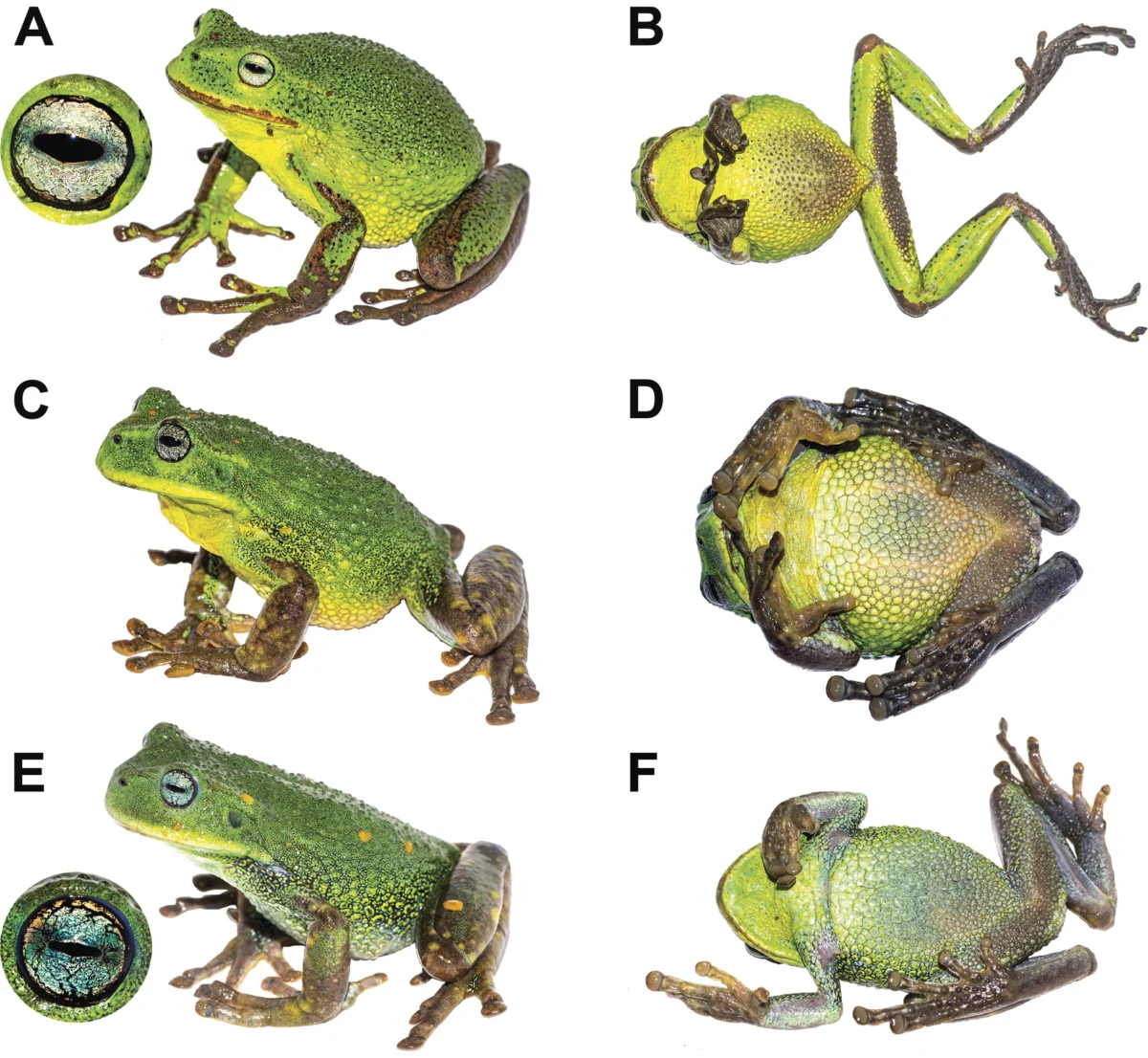
In the dense, mist-shrouded canopy of the Peruvian Amazon’s montane forests, a team of international researchers has documented a biological marvel: a tiny, neon-green frog that defies the traditional reproductive norms of the amphibian world. Announced in early April 2026, the discovery of Gastrotheca mittaliiti marks a significant milestone in high-altitude herpetology. This new species, a member of the specialized "marsupial frog" family, has evolved a remarkable strategy for survival in some of the most challenging environments on Earth, carrying its offspring in a specialized dorsal pouch rather than depositing eggs in vulnerable forest pools.
The formal description of Gastrotheca mittaliiti is the result of a rigorous multi-year collaboration involving the Ceja de Selva Research Institute for Sustainable Development in Peru, Florida International University in the United States, and the University of Seville in Spain. Their findings, which provide a comprehensive look at the species’ genetics, morphology, and habitat, were published in the prestigious scientific journal Zootaxa. The study not only introduces G. mittaliiti to the scientific record but also provides a critical update on the biodiversity of the Huancabamba region, an area increasingly recognized as a global "hotspot" for unique and endemic life forms.
A Masterpiece of Evolution: Physical Characteristics and Identification
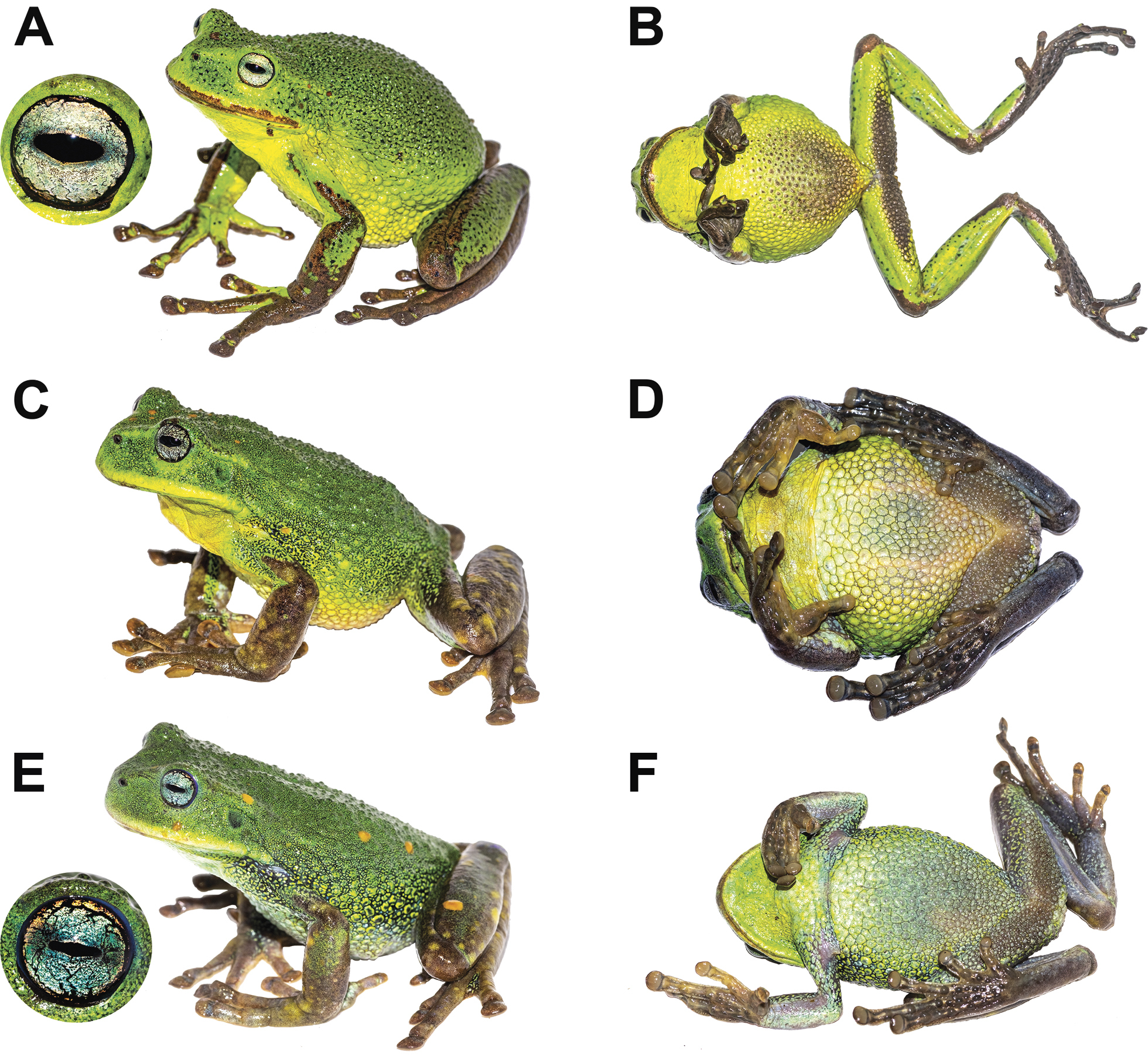
Measuring a mere 2.7 to 3.3 centimeters in length, Gastrotheca mittaliiti is a study in miniature complexity. Its most striking feature is its vibrant, lime-green dorsal skin, which serves as a natural camouflage against the mosses and liverworts of the cloud forest. However, it is the texture of this skin that primarily distinguishes it from its close relatives. The frog’s back is covered in distinct, rounded tubercles (wart-like bumps) that create a rugged profile.
According to the research team, led by experts in Neotropical herpetology, the species is morphologically defined by a high, thick supratympanic fold—a ridge of skin behind the eye—that is densely packed with tubercles. Furthermore, G. mittaliiti possesses two parallel rows of prominent nodules running along its spine, a feature that provides a tactile and visual signature for the species. Its extremities are equally specialized; the tips of its fingers and toes are narrow with flattened terminal edges, an evolutionary adaptation likely suited for navigating the slippery, vertical surfaces of its high-altitude habitat.
Through rigorous phylogenetic analysis—the study of evolutionary relationships through DNA sequencing—researchers have placed G. mittaliiti within the Gastrotheca marsupiata species group. This group is characterized by its resilience and adaptation to the Andean climate, though G. mittaliiti appears to occupy a very specific and narrow ecological niche that sets it apart from its evolutionary cousins.
The Marsupial Strategy: Reproduction Without Open Water
The most fascinating aspect of Gastrotheca mittaliiti lies in its reproductive biology. Most amphibians are tethered to bodies of water, such as ponds, streams, or puddles, where they must lay their eggs to prevent desiccation. The larvae, or tadpoles, then undergo a vulnerable aquatic stage before metamorphosing into adults.
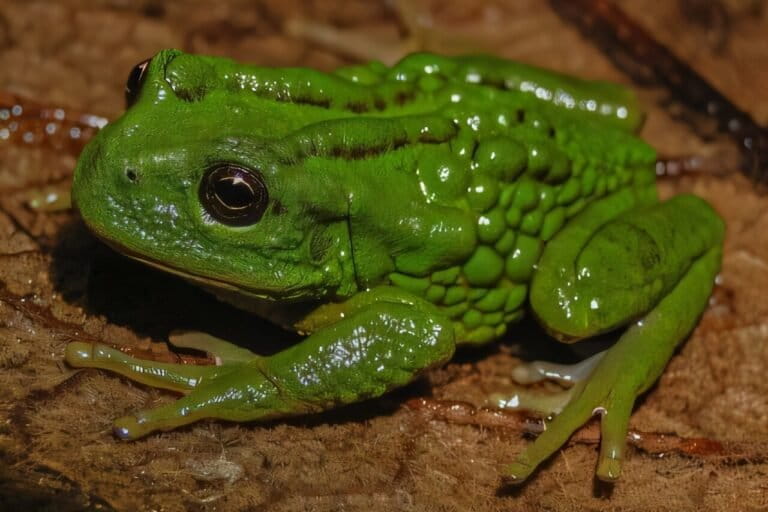
Gastrotheca mittaliiti, however, belongs to a lineage of frogs that has effectively "carried" its nursery with it. Female marsupial frogs possess a specialized cutaneous pouch on their lower backs. After fertilization, the eggs are tucked into this pouch, where they are protected from predators and environmental fluctuations. In this species, the young develop within the safety of the mother’s pouch until they reach an advanced stage of development, or in some cases, complete metamorphosis.
This independence from standing water allows G. mittaliiti to thrive in the "Ceja de Selva" (the eyebrow of the forest), where steep terrain and rapid drainage make permanent pools of water scarce. By internalizing the developmental process, the species has maximized the survival rate of its offspring in an environment where a single dry spell could wipe out an entire generation of aquatic-laying species.
Expanding the Map: Geographic Significance and New Records
The discovery took place in the Huancabamba region of northern Peru, near the border with Ecuador. This area is of immense interest to biologists because it sits within the "Huancabamba Depression," a low point in the Andean mountain range that acts as both a barrier and a bridge for wildlife moving between the northern and southern Andes.
In addition to the discovery of G. mittaliiti, the researchers recorded the presence of Gastrotheca turnerorum within Peruvian borders for the first time. Previously known only from southern Ecuador, the presence of G. turnerorum in Peru suggests that the high-altitude ecosystems of these two nations are more interconnected than previously thought. These findings are reshaping the known distribution maps of South American amphibians and underscore the importance of cross-border conservation efforts.
Manuel Oliva, Director of the Ceja de Selva Research Institute, emphasized that the discovery is a testament to the hidden secrets of the Amazonian fringes. "We are operating in a race against time," Oliva stated. "Every expedition into these remote mountain forests reveals species that are new to science, yet many may disappear before we even have the chance to name them. Gastrotheca mittaliiti is a symbol of the incredible biological heritage that remains to be documented in the Andean-Amazonian transition zone."
An Uncertain Future: Conservation Challenges and Environmental Threats
Despite the scientific triumph of its discovery, the debut of Gastrotheca mittaliiti is overshadowed by the precarious state of its habitat. The researchers have immediately flagged the species as being at high risk for extinction. The primary threat is the rapid degradation of the montane cloud forests in the Huancabamba region.
The threats are three-fold:
- Anthropogenic Fires: In an effort to expand agricultural frontiers, local settlers often use fire to clear land for crops and cattle grazing. These fires frequently spiral out of control, leaping into the high-altitude forests and destroying the delicate mossy ecosystems that G. mittaliiti relies on for moisture and shelter.
- Climate Change: The "cloud forests" are defined by their constant immersion in mist. As global temperatures rise, the cloud line is shifting upward. For species already living near the mountain peaks, there is nowhere higher to go, leading to a phenomenon known as "escalator to extinction."
- Habitat Fragmentation: Road construction and small-scale mining have begun to carve the forest into isolated "islands." For a frog that is only three centimeters long, a dirt road can be an impassable barrier, leading to genetic isolation and a reduced ability to recover from local population crashes.
The lack of baseline population data further complicates conservation efforts. Because G. mittaliiti was only just identified, scientists do not know how many individuals exist in the wild. This "data deficiency" often makes it difficult to secure international funding for protected areas, even as the habitat continues to shrink.
The Global Context: Amphibians as Bio-Indicators
The plight of Gastrotheca mittaliiti reflects a broader global crisis. Amphibians are currently the most threatened class of vertebrates on the planet. They are often described as "canaries in the coal mine" because their permeable skin makes them hypersensitive to changes in air and water quality, as well as the spread of pathogens like the chytrid fungus (Batrachochytrium dendrobatidis), which has devastated frog populations worldwide.
The discovery of a new species in such a vulnerable group highlights the dual nature of modern biology: the excitement of discovery coupled with the urgency of preservation. Experts argue that the survival of G. mittaliiti will depend on the establishment of strict "micro-reserves" that protect the specific ridges and valleys where the frog is found.
Furthermore, the study suggests that the Huancabamba region requires a dedicated conservation strategy that involves local communities. By demonstrating the unique nature of the local wildlife—such as a frog that carries its young in a pouch—researchers hope to foster a sense of pride and stewardship among the people living on the forest’s edge.
Conclusion and Future Research
The identification of Gastrotheca mittaliiti is more than just an addition to a taxonomic list; it is a vital piece of the puzzle in understanding the evolutionary history of the Andes. The collaborative effort between Peruvian, American, and Spanish institutions serves as a model for future "big science" projects in the Global South, where local expertise is paired with international resources to tackle the biodiversity crisis.
As the scientific community digests the data published in Zootaxa, plans are already underway for follow-up expeditions. Researchers hope to observe the mating rituals of G. mittaliiti and gain a clearer understanding of its diet and daily activity patterns. For now, the tiny green marsupial frog remains a reminder of the mysteries tucked away in the high, wet corners of the world—and a call to action to protect the fragile environments that sustain them.
The story of G. mittaliiti is a poignant chapter in the ongoing narrative of Amazonian exploration. It confirms that even in the 21st century, the age of discovery is far from over, provided we act quickly enough to save the wilderness that remains.