Nila Kartika Wati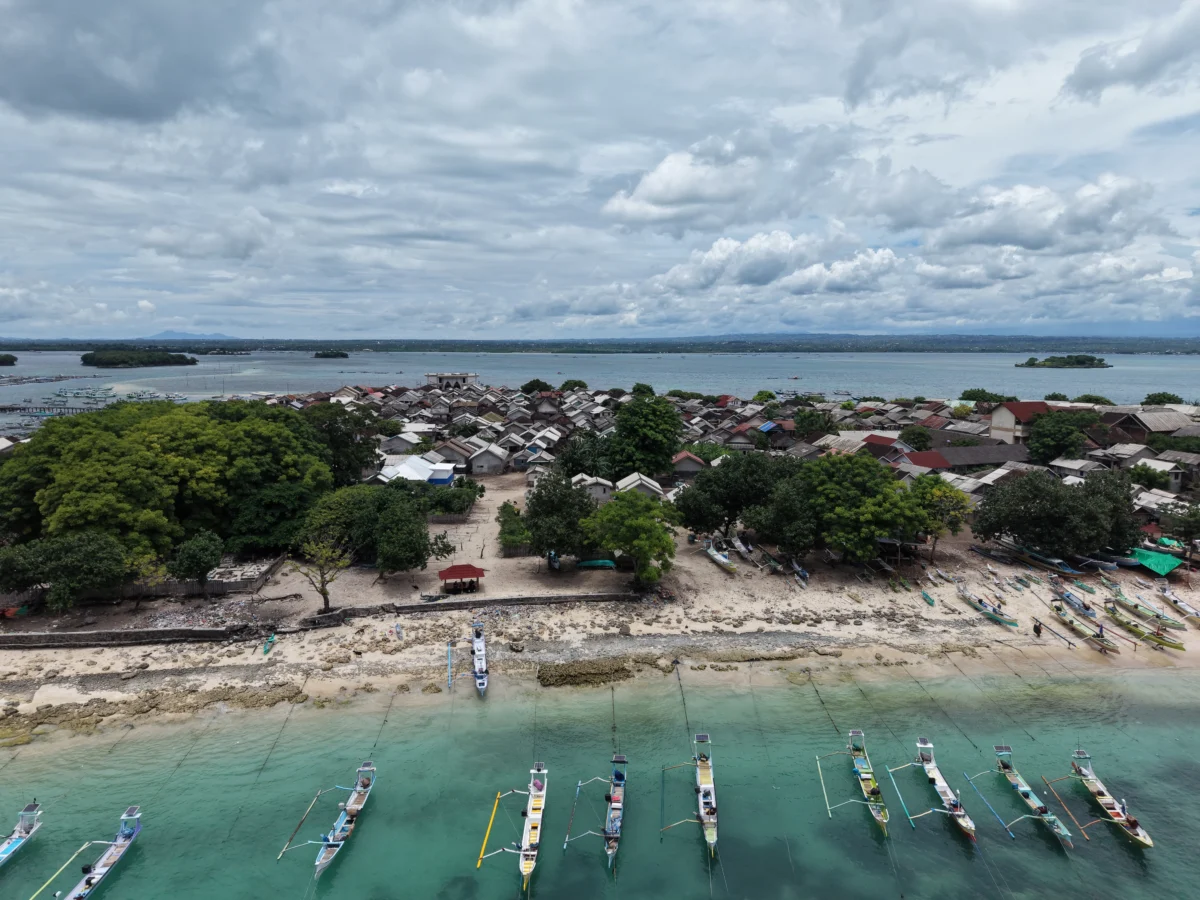
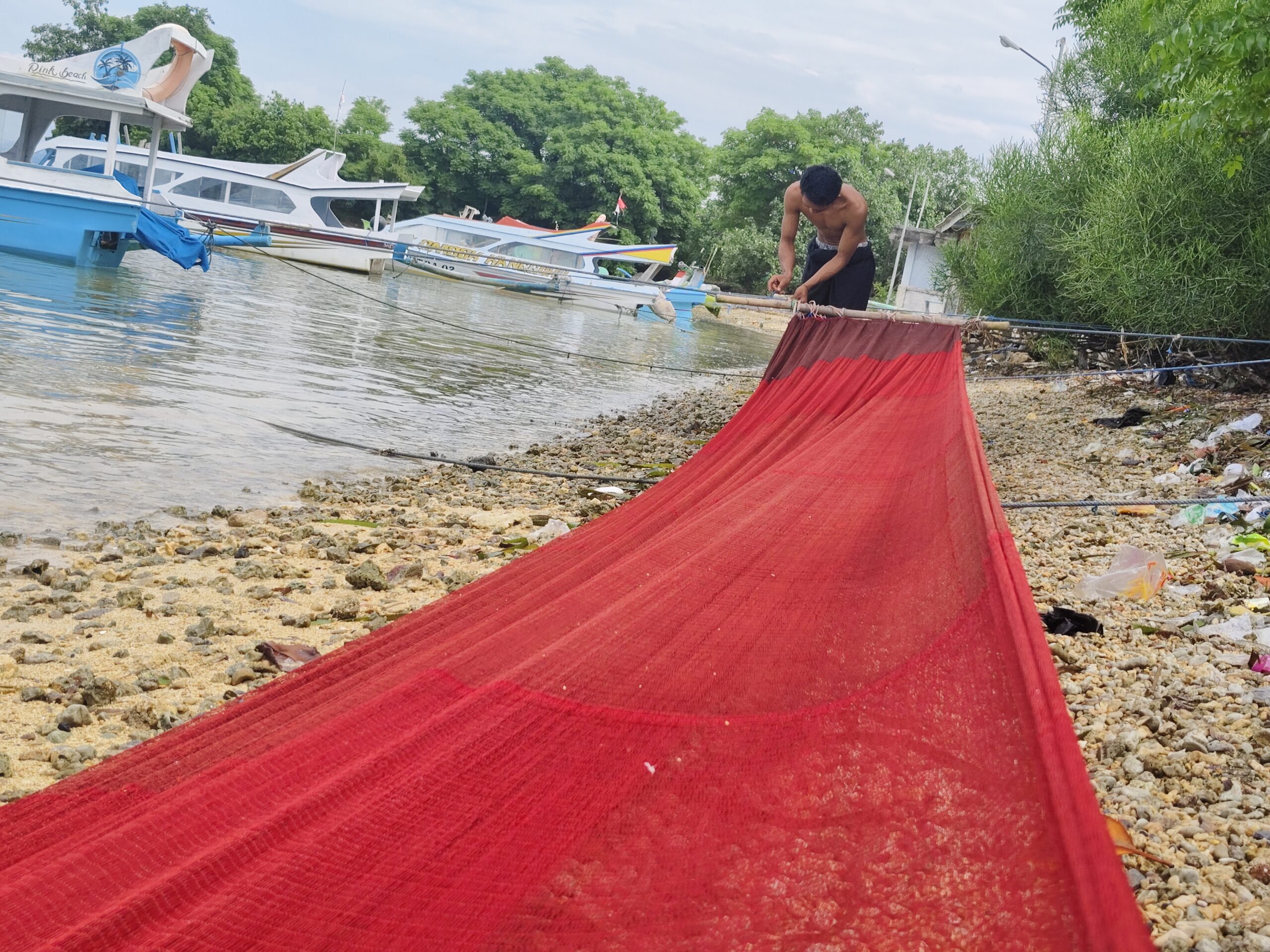
The sun had just begun to crest over the coastal hills of Sekotong, West Lombok, casting a golden reflection across the tranquil waters of the bay as a small wooden vessel groaned against the shoreline. Hasan, a 51-year-old fisherman who has navigated these waters for over three decades, stepped out to unload his morning catch. The haul was disheartening: a few scattered reef fish and a handful of squid, barely enough to fill the bottom of a plastic bucket. For Hasan, this meager harvest is no longer an anomaly but a grim daily reality in a region where the traditional map of the sea is being rewritten by corporate interests and bureaucratic permits.
"It is difficult to find fish now," Hasan remarked, his voice weary as he secured his 15-horsepower engine. "In the past, a single cast of the net was enough to fill the boat. Today, we often return with just enough to cover the cost of the diesel fuel used to get out there."
Hasan’s plight is emblematic of a larger, systemic shift occurring across the Indonesian archipelago, particularly in the waters surrounding Lombok. For generations, small-scale fishers in West and East Lombok have relied on ancestral knowledge of winds, currents, and seasonal migrations. However, in recent years, the physical and legal landscape of the ocean has transformed. Traditional fishing grounds are increasingly being partitioned into exclusive zones for pearl oyster cultivation, shrimp farming, and high-end ecotourism. This spatial squeeze is facilitated by a federal instrument known as the Persetujuan Kesesuaian Kegiatan Pemanfaatan Ruang Laut (PKKPRL), or the Sea Space Utilization Conformity Approval.
The Legal Partitioning of the Sea
The PKKPRL is a cornerstone of Indonesia’s modern maritime governance, issued by the Ministry of Marine Affairs and Fisheries (KKP). Designed to streamline investment and ensure that maritime activities align with national spatial planning, the permit acts as a legal prerequisite for any business operating in Indonesian waters. On paper, the PKKPRL is a tool for order, intended to prevent overlapping claims and environmental degradation. In practice, however, many coastal communities view it as a mechanism for "ocean grabbing"—the privatization of communal resources under the guise of legal formalization.
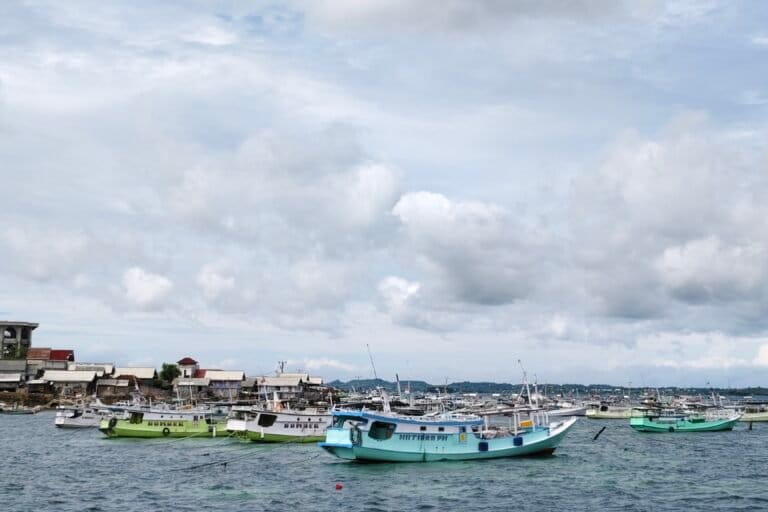
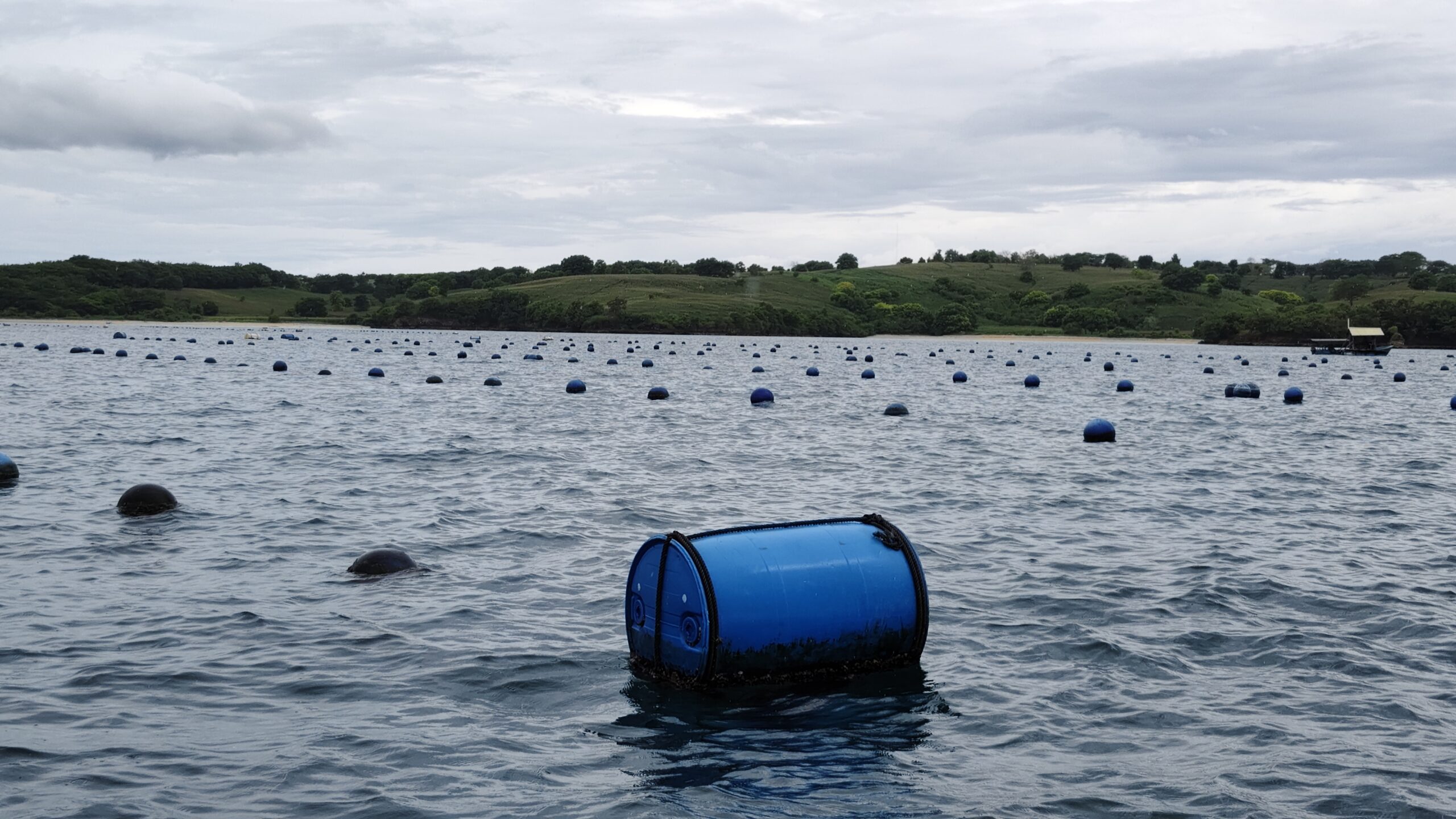
In the bays of Sekotong and Teluk Jukung, the manifestation of these permits is visible in the form of endless "longline" ropes and buoy grids used for pearl farming. These installations create physical barriers that prevent traditional fishing boats from traversing their usual routes. For a fisherman like Hasan, whose small boat lacks the range of industrial vessels, these barriers mean he must take significantly longer detours to reach open water. In an era of fluctuating fuel prices, an extra few liters of solar (diesel) can mean the difference between a day of profit and a day of debt.
"If a company installs ropes in the sea, we cannot protest," Hasan said. "They have the permits from the government. Our traditional routes are now their private property."
Conflict in Teluk Jukung: A Case Study in Spatial Displacement
The situation is equally dire in Teluk Jukung, East Lombok. Historically, this bay served as a vital "fishing ground" for reef fish, squid, and pelagic species. Today, large swaths of the bay have been designated as pearl cultivation zones for major corporations. Zaenudin, a local fisherman, pointed toward a horizon cluttered with industrial buoys where he once cast "payang" nets.
"We used to catch so much fish there," Zaenudin recalled. "Now, if we even drift near those areas, we are warned off. They tell us it is company territory."
The transition from communal access to corporate exclusivity happened almost overnight for many of these villagers. According to Zaenudin, there was little to no consultation with the local fishing community before the permits were issued. The arrival of corporate infrastructure has not only reduced the available fishing area but has also forced a socio-economic shift. Some fishers, unable to sustain their livelihoods, have sold their boats to become low-wage laborers for the very companies that occupied their fishing grounds. Others have left the sea entirely, seeking work in the construction or service sectors.
The Digital Divide: OSS and the Erasure of Human Presence
The critique of the PKKPRL system often centers on its administrative nature. Amin Abdullah, Chairman of the Fishermen’s Resource Development Institute (LPSDN), argues that the current permit process relies too heavily on the Online Single Submission (OSS) system. Through this digital portal, companies apply for space by entering geographic coordinates.
"In the OSS system, the sea is viewed as an empty space—a series of coordinates on a digital map," Amin explained. "But those coordinates are not empty. They represent the lifeblood of families who have fished there for centuries. The system fails to capture the social reality on the ground."
This digital-first approach often ignores traditional navigation paths and seasonal fishing zones that do not appear on official government maps. Amin contends that the PKKPRL has become a "legal stamp" for corporate dominance, effectively marginalizing small-scale fishers who lack the legal resources to challenge high-level ministerial approvals. When a permit is granted, the company gains the backing of state legality, often rendering the local fisherman an "intruder" in his own waters.
Regulatory Overlap and the 2024 Spatial Plan
A significant point of contention involves the discrepancy between national permits and regional regulations. In East Lombok’s Teluk Jukung, the current pearl farming operations exist in an area that, according to West Nusa Tenggara (NTB) Provincial Regulation No. 5/2024, is designated for capture fisheries and tourism—not aquaculture.
This creates a legal paradox. While the provincial government’s latest spatial plan (RTRW) attempts to protect fishing grounds, many companies hold permits issued under older regulations, such as the 2017 Zoning Plan for Coastal Areas and Small Islands (RZWP3K). The Ministry of Marine Affairs and Fisheries maintains that these existing permits remain valid as "existing activities," even if the zoning has since changed.
Muslim, the Head of the NTB Marine and Fisheries Service, acknowledged the friction. "We have had several discussions with the central government regarding the clash between ongoing corporate activities and the new provincial regulations," he stated. However, the authority to set the terms for these permits remains firmly in the hands of the central government in Jakarta, leaving provincial officials with limited power to intervene on behalf of local fishers.
The Ministry’s Defense: Co-existence and Verification
In response to growing criticism, the Ministry of Marine Affairs and Fisheries (KKP) has defended its permitting process. Fajar Kurniawan, Director of Sea Space Utilization Control, emphasized that the issuance of a PKKPRL involves a rigorous verification process. He noted that permits are only granted if they align with existing spatial plans and consider ecological conditions.
"The PKKPRL is not intended to create conflict," Fajar said in a written statement. "We promote a ‘co-existence’ scheme where aquaculture and traditional fishing can operate side-by-side, provided that technical requirements are met and navigation access is maintained."
The Ministry argues that pearl farming, for instance, does not inherently destroy the ecosystem and can actually serve as a sanctuary for certain fish species. From the government’s perspective, the modernization of sea space is a necessary step toward Indonesia’s "Blue Economy" goals, which aim to maximize the economic potential of marine resources through sustainable industrialization.
Socio-Economic Implications and the Threat of Migration
Despite the government’s assurances of co-existence, the economic data for small fishers paints a different picture. For a fisherman using a 15 PK engine, the operational cost of a single trip—including fuel, ice, and food—averages between 150,000 to 200,000 IDR. When fishing grounds are moved further offshore due to coastal privatization, fuel consumption rises. If the catch value does not increase proportionally—which it rarely does in over-exploited or restricted waters—the fisherman operates at a loss.
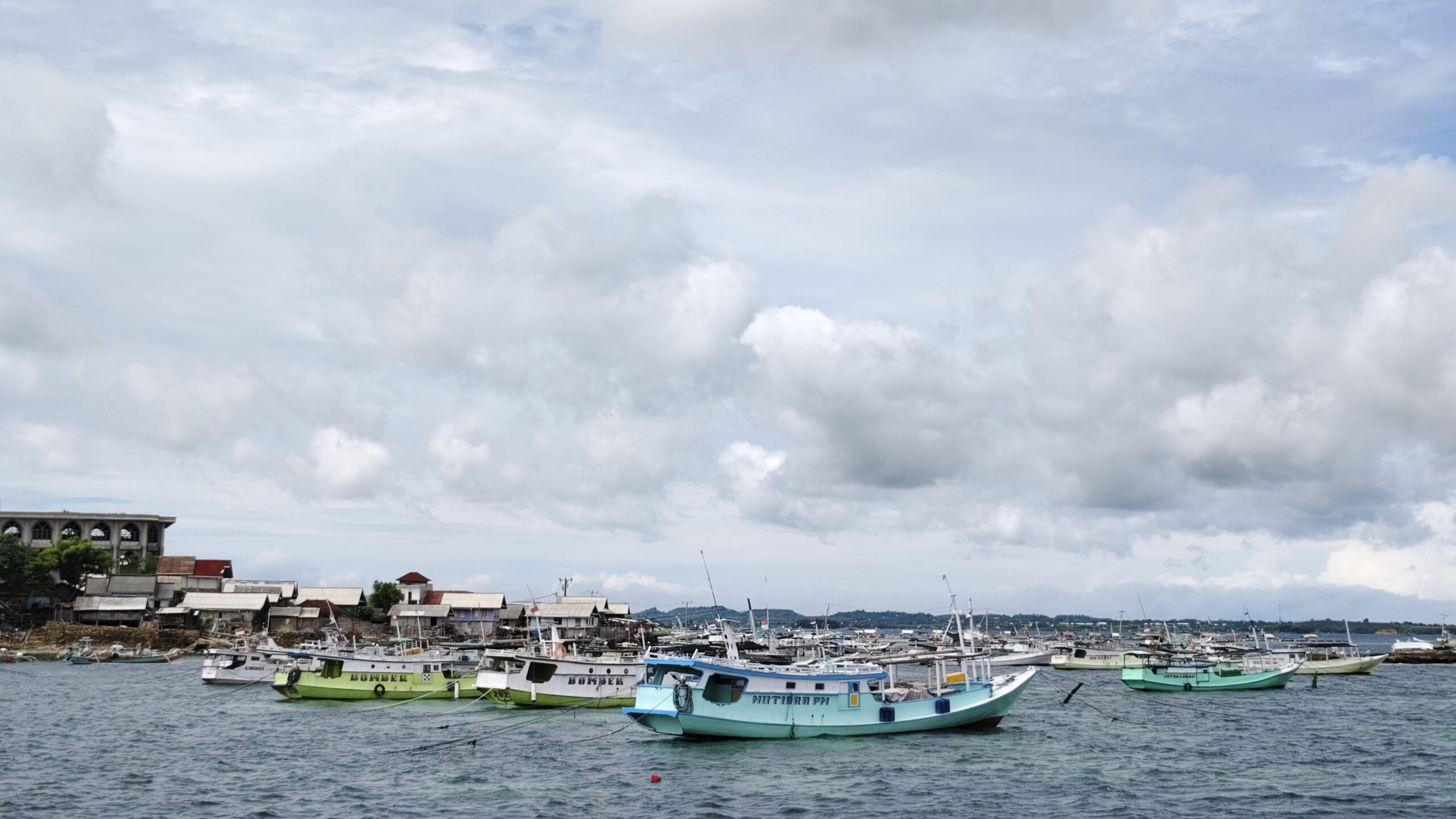
Supandi, an academic from the Nahdlatul Ulama University of Mataram specializing in maritime economics, warns that this trend could lead to a permanent hollow-out of coastal communities. "Investments are important for regional growth, but they must not come at the expense of the local population’s survival," Supandi said. He suggested that the government must mandate "navigation corridors" within corporate zones to ensure fishers can still access the sea without costly detours.
Furthermore, Supandi highlighted the missed opportunity for integration. "Investors and local fishers should be part of the same ecosystem. If companies were required to involve local fishers in their supply chains or provide genuine community benefits, we could alleviate poverty. Instead, we are seeing a displacement that leads to migration."
For Hasan in Sekotong, the "migration" Supandi mentions is not a theoretical concept but a desperate plan. As the sun set, turning the water a deep orange, Hasan prepared for another night of uncertainty. He spoke of the "Malaysia option"—a common path for struggling NTB laborers who leave their homes to work as undocumented migrant workers in Malaysian plantations or construction sites.
"If it continues like this, maybe it is better to go to Malaysia," Hasan said quietly. "At least there, the wages are certain. Here, the sea is no longer ours."
Conclusion: A Turning Point for Indonesia’s Blue Economy
The struggle in Lombok highlights the inherent tension in Indonesia’s maritime ambitions. As the world’s largest archipelagic nation seeks to harness its "Blue Economy," the challenge lies in ensuring that "growth" is not synonymous with "exclusion." The PKKPRL system, while a necessary step toward maritime organization, currently faces a crisis of legitimacy among the very people it is supposed to serve.
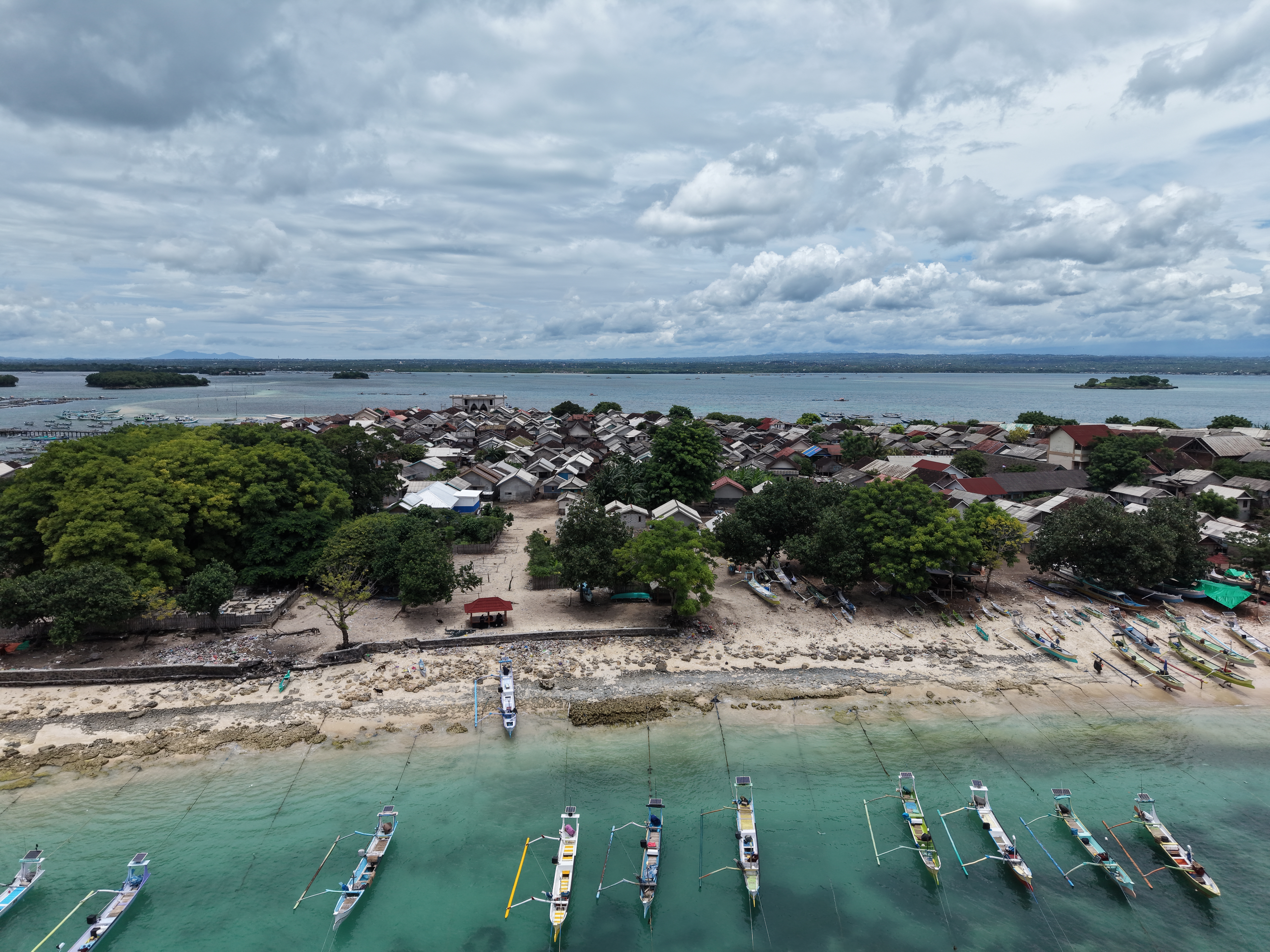
Without a shift toward more participatory mapping, more transparent consultation, and a genuine commitment to protecting traditional navigation rights, the "glimmer of the pearl" in Lombok may continue to cast a shadow over the lives of its traditional fishers. The future of Indonesia’s coastal stability depends on whether the government can transform the sea into a space of shared prosperity rather than a grid of private coordinates. For now, men like Hasan and Zaenudin remain caught between the rising tide of industrialization and the receding hope of their ancestral trade.