Nasution Nanang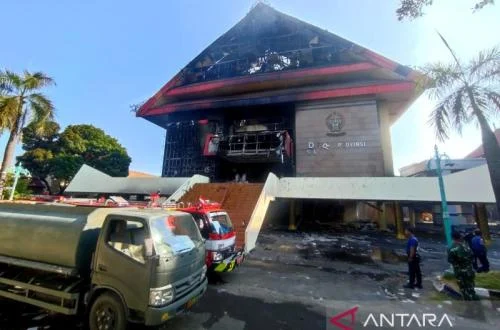
MAKASSAR – The primary edifice of the South Sulawesi Provincial Regional House of Representatives (DPRD) building, which sustained extensive damage from an arson attack by a mass protest in August 2025, is scheduled for complete demolition and subsequent reconstruction. This critical decision follows a comprehensive structural assessment conducted by the Ministry of Public Works (Kementerian Pekerjaan Umum), which conclusively determined that the existing structure is no longer safe or viable for rehabilitation, necessitating a complete overhaul rather than mere repairs. The announcement marks a pivotal moment for the provincial legislature, signaling a long and intricate process of rebuilding both physical infrastructure and public trust following the destructive incident.
Muhammad Jabir, the Secretary of the South Sulawesi DPRD, confirmed the findings during a press briefing in Makassar on Saturday, emphasizing the gravity of the expert assessment. "After the Ministry of Public Works conducted a thorough re-evaluation, it became clear that the plenary hall, or the main building, must be entirely reconstructed and demolished," Jabir stated. This revelation shifts the initial scope of the reconstruction project significantly. Initially, post-incident assessments primarily focused on the secretariat building as the main candidate for reconstruction, with other sections, including the plenary hall, anticipated to undergo heavy rehabilitation. However, the deeper dive by technical experts revealed a more severe and widespread structural compromise than initially perceived. The Gedung Tower, another significant section of the DPRD complex, is still slated for heavy rehabilitation, indicating varying degrees of damage across the sprawling legislative campus.
The August 2025 Incident: A Catalyst for Reconstruction
The decision to demolish and rebuild stems directly from the devastating events of August 29, 2025, when a large-scale mass protest escalated into a violent confrontation, culminating in the arson of the DPRD complex. While the precise triggers for the widespread civil unrest remain a subject of ongoing analysis and public discourse, reports from the time indicated deep-seated public dissatisfaction related to proposed provincial policies, economic grievances, and possibly political tensions leading up to regional elections. The targeting of the DPRD building, a symbol of democratic representation and provincial governance, underscored the intensity of the public’s frustration. The ensuing fires ravaged critical sections of the building, including the main plenary chamber where crucial legislative decisions are made, the secretariat offices, and various committee rooms. Eyewitness accounts described scenes of chaos as protestors breached security perimeters, leading to significant structural and aesthetic damage that rendered large parts of the complex unusable. The incident prompted an immediate lockdown of the area, a swift security response, and an urgent initial damage assessment to determine the extent of the destruction and ensure public safety. The symbolic weight of the attack resonated deeply within the province, raising questions about governance, public participation, and the resilience of democratic institutions.
Evolution of the Technical Assessment and Structural Integrity Concerns
Following the immediate aftermath of the arson, the Directorate General of Cipta Karya under the Ministry of Public Works initiated an initial assessment. This preliminary review, conducted shortly after the incident, primarily recommended the reconstruction of the secretariat building, assuming other sections could be salvaged through extensive rehabilitation. This initial optimism, however, was tempered by subsequent, more detailed structural analyses. Jabir elaborated on this shift, explaining, "Initially, the building estimated for reconstruction was only the secretariat building, while other buildings were only to undergo heavy rehabilitation."
The turning point came with the comprehensive follow-up study. Expert teams from the Ministry of Public Works, employing advanced structural engineering techniques and material analysis, delved deeper into the integrity of the main plenary hall building. This structure, dating back to 1984, presented unique challenges. Decades of use, coupled with the severe heat and direct fire damage from the August 2025 incident, had compromised its foundational stability and load-bearing capacities beyond simple repair. The assessment revealed that critical structural elements, including reinforced concrete beams, columns, and slabs, had suffered irreversible damage, leading to concerns about long-term structural integrity and safety. Cracks, spalling, and deformation indicative of thermal stress and material fatigue were widespread.
Jabir underscored the technical rationale behind the decision: "The main building has been in place since 1984. If it were only rehabilitated, it would likely face problems in the future." This statement highlights a crucial aspect of modern construction and safety standards. Rehabilitating an aging structure with significant fire damage often proves to be a short-sighted and potentially more costly solution in the long run. Such repairs might address superficial damage but fail to rectify underlying structural weaknesses, potentially leading to future safety hazards, escalating maintenance costs, and a reduced lifespan for the building. A total reconstruction, while more expensive upfront, offers the opportunity to build a new structure that adheres to contemporary building codes, seismic standards, and fire safety regulations, ensuring a safer, more resilient, and functionally superior legislative facility for decades to come.
Administrative Hurdles and Regulatory Compliance
The process of demolishing and rebuilding a public asset of this magnitude involves navigating a complex web of administrative and regulatory requirements. A crucial step outlined by Jabir is the need for asset removal approval. He explained that his office had already initiated the process for the secretariat building, successfully obtaining a Decree (Surat Keputusan or SK) from the Governor of South Sulawesi for its asset removal. However, with the revised assessment now mandating the demolition of the main building, a new and separate application for asset removal must be submitted and approved. "There must be a mechanism of a governor’s decision for physical asset removal. Currently, the SK is only for the removal of the secretariat building," he clarified. This bureaucratic step is vital as it legally decommissions the old structure, allowing for its physical dismantling and paving the way for financial allocations for a new build.
Beyond asset removal, the project is subject to stringent environmental regulations. A mandatory Environmental Impact Analysis (Amdal) must be completed and approved before any demolition work can commence. The Amdal process is a critical regulatory tool in Indonesia, designed to assess the potential environmental consequences of a proposed project and to identify mitigation measures. For a project of this scale, the Amdal would meticulously evaluate various factors, including:
- Waste Management: Proper disposal of construction debris, including potentially hazardous materials.
- Air Quality: Management of dust and particulate matter during demolition.
- Noise Pollution: Mitigation strategies for noise generated by heavy machinery.
- Traffic Management: Addressing potential disruptions to local traffic flow during demolition and construction.
- Resource Consumption: Sustainable sourcing of materials for the new building.
- Socio-Economic Impacts: Consideration of the project’s effects on local communities.
"The essence is that the cancellation of the plenary building rehabilitation must be carried out, and the building must be rebuilt," Jabir firmly stated, emphasizing that regulatory compliance, particularly the Amdal, is non-negotiable and fundamental to the project’s legitimacy and sustainability.
Ongoing Interim Repairs and Future Outlook
While the larger demolition and reconstruction plans are being finalized, interim repair efforts are already underway to ensure that some functionalities of the DPRD complex can be restored or maintained. PT Hutama Karya, a prominent state-owned construction company, is currently engaged in repairing several sections that were less severely impacted or are crucial for immediate operations. These include the canteen, the aspiration room (where public petitions are received), and the office of the Badan Kehormatan (Honor Council) of the South Sulawesi DPRD. Additionally, preparations are being made for the installation of new lifts, an essential amenity for accessibility within the complex. These ongoing works demonstrate a phased approach to recovery, addressing immediate needs while planning for the long-term structural transformation.
Broader Implications and the Path Forward
The decision to demolish and reconstruct the main DPRD building carries significant implications across multiple dimensions:
-
Financial Impact: The cost of demolishing an existing structure and constructing a new, modern legislative complex will be substantial. This will necessitate significant budgetary allocations, potentially drawing from the provincial budget, national government assistance, or a combination thereof. Careful financial planning, transparent procurement processes, and rigorous oversight will be critical to manage public funds effectively and prevent cost overruns. The financial burden will likely be a point of public discussion, especially in the context of other provincial development priorities.
-
Operational Continuity: The demolition and reconstruction process will inevitably disrupt the normal functioning of the provincial legislature. Temporary office spaces and plenary chambers will need to be secured to ensure legislative sessions, committee meetings, and administrative tasks can continue without prolonged interruption. This calls for meticulous logistical planning to maintain the DPRD’s constitutional duties and responsibilities to its constituents.
-
Symbolic Significance: The reconstruction of the DPRD building will hold profound symbolic meaning. It can be framed as a testament to resilience in the face of adversity, a commitment to democratic governance, and an opportunity for a fresh start. A new building, designed with modern aesthetics and functionality, could project an image of progress, transparency, and renewed dedication to public service. Conversely, the memory of the arson attack and the destruction of the previous building will serve as a stark reminder of the challenges to public order and the importance of addressing societal grievances through peaceful means.
-
Urban Planning and Architectural Opportunity: This project presents a unique opportunity for urban planners and architects to design a contemporary legislative building that is not only functional and safe but also aesthetically pleasing, environmentally sustainable, and perhaps more open and accessible to the public. It could incorporate green building principles, smart technologies, and enhanced security features, setting a new standard for public infrastructure in the region.
-
Public Trust and Engagement: The entire process, from demolition to reconstruction, will be under public scrutiny. Transparent communication regarding timelines, budget, and design will be crucial to rebuild public trust, which may have been eroded by the initial incident. Engaging with civil society groups and local residents throughout the planning and construction phases could foster a sense of ownership and collective responsibility in the new legislative home.
The journey to rebuild the South Sulawesi DPRD complex will be long and arduous, spanning several years. However, by adhering to rigorous technical standards, navigating administrative complexities diligently, and engaging stakeholders openly, the province can emerge with a legislative facility that is not only structurally sound but also a powerful symbol of resilience, progress, and renewed commitment to democratic principles. The focus on total reconstruction, rather than superficial repairs, ensures a lasting legacy for future generations of South Sulawesi’s legislative body.