Bambang Pamungkas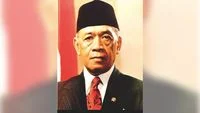
Sri Sultan Hamengkubuwono IX, the revered ninth monarch of the Yogyakarta Sultanate, is widely remembered not just for his pivotal role in Indonesia’s struggle for independence, but also for a profound paradox: his immense inherited wealth juxtaposed with a life of striking simplicity. Ascending to the throne in 1940, he inherited not only vast landholdings, extensive business interests, and a treasury accumulated over centuries of royal rule but also the entrenched system of feudalism that had characterized the Javanese aristocracy for generations. Yet, this extraordinary inheritance did not lead him to a life of opulence and detachment; instead, it fueled a unique commitment to the common people, exemplified by anecdotes that continue to shape his legendary status. Among the most iconic of these is the story of the Sultan, unrecognised, driving a truck full of rice, and subsequently being reprimanded by a vendor unaware of his true identity.
The Paradox of Power and Simplicity: A Ruler Ahead of His Time
Born Gusti Raden Mas Dorodjatun in 1912, Sri Sultan Hamengkubuwono IX was groomed for leadership in a world on the cusp of radical change. Educated in the Netherlands, he gained exposure to Western democratic ideals, which profoundly shaped his worldview and leadership philosophy. Unlike many of his aristocratic peers who might have embraced the privileges of their station, the young Sultan harbored a deep sense of responsibility towards his subjects. Upon his enthronement, he inherited an astonishing array of assets. The Sultanate of Yogyakarta, historically a major political and economic power, controlled vast swathes of agricultural land, mining concessions, and various enterprises. The royal treasury held significant reserves, and the Sultan’s personal wealth was, by contemporary standards, monumental, easily making him one of the wealthiest individuals in the Dutch East Indies.
This wealth, however, was inextricably linked to a feudal system where the common people often lived in subjugation, providing labor and tribute to the royal court and land-owning aristocracy. Hamengkubuwono IX, however, consciously sought to dismantle the more oppressive aspects of this system, viewing his position not as one of entitlement but of service. He understood that true leadership, especially in the turbulent 20th century, required connection with the populace, not separation. His actions throughout his reign would consistently reflect this ethos, forging a powerful image of a "People’s Sultan" even before Indonesia’s full independence.
The Rice Truck Incident: A Detailed Chronology of Humility
The widely recounted incident of Sri Sultan Hamengkubuwono IX driving a rice truck is not merely a charming anecdote; it serves as a powerful testament to his character and leadership philosophy, particularly pertinent in the socio-economic context of post-independence Indonesia. While the exact date is often debated, most accounts place it in the early years of his reign, likely in the 1940s or early 1950s, a period marked by significant upheaval, food shortages, and the nascent struggles of nation-building.
The country, newly liberated from colonial rule and embroiled in a revolutionary war against returning Dutch forces, faced immense logistical challenges, especially concerning food distribution. Infrastructure was often poor, and reliable transportation for essential goods like rice – the staple food – was crucial but often scarce. It was against this backdrop that the Sultan, known for his hands-on approach and direct involvement in the welfare of his people, found himself driving his personal Land Rover truck. These sturdy vehicles were robust and capable of traversing the often-challenging rural roads of Java.
On one such occasion, as he drove from a rural area of Yogyakarta towards the bustling city center, his truck was flagged down. A woman, a rice vendor by trade, desperately sought a ride to the city market, where she intended to sell her produce. She was a typical hard-working individual, struggling to make a living, and saw the passing truck as her best chance to transport her heavy sacks of rice. Crucially, she had no idea that the man behind the wheel was the revered monarch of Yogyakarta. The Sultan, dressed simply and without any royal regalia, appeared to her as an ordinary, albeit helpful, truck driver.
Upon stopping, the vendor, oblivious to his true identity, promptly asked the "driver" to assist her in loading her heavy rice sacks onto the truck. Without hesitation or a word about his royal status, Sri Sultan Hamengkubuwono IX complied. He meticulously helped her hoist two large, heavy sacks of rice onto his vehicle, a task that would typically be performed by laborers, not by a head of state. He then drove her to her destination at the city market.
Once they arrived, the Sultan again assisted, carefully unloading the heavy sacks for her. Grateful for the assistance, the woman reached into her purse to offer him payment for his services – a small sum, likely representing a meager portion of her day’s potential earnings. To her surprise, the Sultan politely but firmly declined the money, waving it away.
This refusal, however, did not land as an act of magnanimity to the vendor. Instead, it was perceived as an insult. She misinterpreted his rejection of payment as an act of disdain, believing he found her offering too paltry, perhaps even beneath him. Infuriated and feeling deeply disrespected, the woman began to scold the Sultan vehemently. She accused him of arrogance, of being too proud to accept a small fee, and perhaps even of looking down upon her humble profession. The Sultan, maintaining his composure, simply listened to her tirade without revealing his identity, then quietly departed.
The woman continued to fume, complaining to those around her about the "arrogant" truck driver who had scorned her payment. It wasn’t long, however, before word spread among the market-goers. Someone, recognizing the distinctive Land Rover or perhaps the departing figure, revealed the shocking truth: the man she had just berated was none other than Sri Sultan Hamengkubuwono IX himself. The revelation hit the vendor with such force that she reportedly fainted from shock and had to be rushed to a local hospital.
Upon hearing of the incident and the vendor’s subsequent distress, the Sultan, demonstrating his characteristic compassion and concern for his people, immediately proceeded to the hospital. He visited the stunned woman, personally reassuring her and ensuring her well-being. This act of genuine care, following an incident that could have easily been dismissed or punished, solidified his image as a leader truly devoted to his subjects, regardless of their social standing.
Beyond the Rice Truck: Other Manifestations of Humility and Accessibility
The rice truck incident was not an isolated event but rather a reflection of Sri Sultan Hamengkubuwono IX’s consistent character. His commitment to living a simple life, despite his immense status, was well-documented in various accounts, including the seminal book "Takhta untuk Rakyat: Celah-Celah Kehidupan Sultan Hamengkubuwono IX" (A Throne for the People: Glimpses into the Life of Sultan Hamengkubuwono IX), published in 1982. This biography, compiled from various sources and interviews, paints a detailed picture of a monarch who actively eschewed pomp and privilege.
Another frequently cited example of his humility occurred in 1946, during a particularly hot day in Jakarta. Instead of seeking refuge in an exclusive restaurant or a private, air-conditioned establishment, the Sultan, feeling the heat and desiring a refreshing drink, chose to stop at a humble street vendor. He purchased an "es gerobakan" – a traditional cart-pulled ice drink – from a vendor near Klender Station. This simple act underscored his preference for the common touch, his willingness to engage with the everyday life of his people, and his rejection of the perceived need for royal isolation.
Such stories collectively illustrated a leadership style rooted in profound empathy and a genuine desire to understand the lives of ordinary Indonesians. He believed that to effectively lead, one must first connect, and that meant shedding the layers of formality and status that often separated rulers from the ruled. This approach was particularly impactful during a time when the nascent Republic was striving to establish a national identity distinct from the colonial hierarchy and feudal traditions.
Historical Context and Broader Impact: A Sultan for the Republic
Sri Sultan Hamengkubuwono IX’s acts of humility gain even greater significance when viewed within the broader historical context of Indonesia’s struggle for independence and the early years of the Republic. His most monumental decision came on September 5, 1945, just weeks after Indonesia declared independence, when he issued a decree stating that the Sultanate of Yogyakarta officially integrated itself into the new Republic of Indonesia. This was a critical moment; it provided immense moral and political legitimacy to the fledgling republic, offering a stable and recognized administrative center during a period of chaos.
Throughout the Indonesian National Revolution (1945-1949), Yogyakarta became the de facto capital, and the Sultan provided unwavering support, both moral and financial. He famously declared, "Even if the Sultanate has to become a pedicab driver, I will still stand with the Republic," a powerful statement that underscored his commitment to the nation above his personal or dynastic interests. He opened the royal palace to republican leaders, provided food and shelter for soldiers, and even secretly sold off royal treasures to fund the revolutionary government when it was desperately short of resources. His actions helped solidify the idea that the new nation was truly "for the people," and that even traditional leaders could adapt to and serve a modern republic.
His humility was not merely a personal trait; it was a strategic tool that helped bridge the gap between traditional authority and the revolutionary spirit. In an era where economic hardship was widespread, and the common people faced severe challenges, a leader who was seen to share their experiences, even symbolically, resonated deeply. It fostered trust and loyalty at a time when national unity was paramount. This was especially important in a diverse archipelago where different ethnic groups and traditional kingdoms needed to coalesce into a single nation. The image of a Sultan who helped a rice vendor or bought street food was a powerful counter-narrative to the perception of distant, aristocratic rulers.
Legacy and Enduring Influence: The People’s Sultan
Sri Sultan Hamengkubuwono IX’s legacy extends far beyond his direct political contributions. He served multiple terms as Vice President of Indonesia and held various ministerial portfolios, always bringing his distinctive blend of integrity, pragmatism, and humility to his roles. His life, marked by a constant dedication to public service, earned him the title "Bapak Pramuka Indonesia" (Father of the Indonesian Scouting Movement) for his efforts in youth development, and he was posthumously declared a National Hero of Indonesia.
Historians and political analysts frequently highlight Sri Sultan Hamengkubuwono IX as an exemplary figure of ethical leadership. Dr. Azyumardi Azra, a prominent Indonesian historian, often cited the Sultan’s ability to transcend traditional feudalism and embrace modern republican ideals without abandoning his cultural roots. His leadership style, characterized by a soft-spoken demeanor, strategic vision, and profound empathy, is often held up as a model for contemporary Indonesian leaders. His commitment to the welfare of his people was never performative; it was an intrinsic part of his being.
The enduring image of Sri Sultan Hamengkubuwono IX as "The People’s Sultan" continues to inspire generations. Incidents like the rice truck story are not just quaint tales; they are living parables that encapsulate the essence of his leadership. They remind Indonesians that true power lies not in inherited wealth or status, but in service, humility, and a genuine connection with the lives and struggles of the populace. His ability to navigate the complexities of traditional monarchy, colonial oppression, and the birth of a new nation, all while maintaining an unwavering commitment to his people, cements his place as one of Indonesia’s most revered and influential figures, a leader whose throne was truly for the people.