Nila Kartika Wati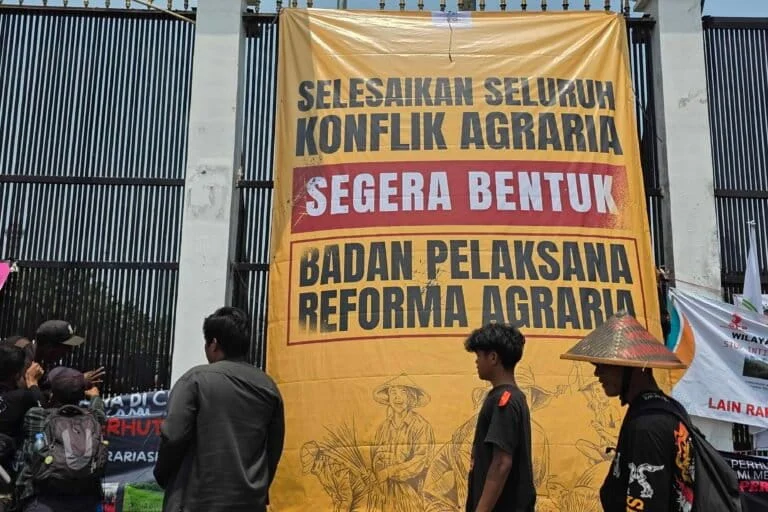
Indonesia’s ambitious agenda for agrarian reform remains a distant aspiration as conflicting interpretations among ministries, government agencies, and the House of Representatives (DPR) continue to stifle effective implementation on the ground. Despite nearly a decade of high-level political promises, the movement to redistribute land and resolve long-standing tenure disputes is bogged down by a fundamental misunderstanding of what reform entails. According to Dewi Kartika, Secretary General of the Agrarian Reform Consortium (KPA), policymakers frequently view agrarian reform through a narrow lens of mere land or forest distribution. In reality, Kartika argues, the process should be framed as a restorative justice mechanism intended to reclaim and return the rights of citizens—particularly farmers, indigenous communities, and coastal dwellers—whose lands were historically and systematically confiscated by the state.
The root of this systemic failure is traced back to a persistent "paradigmatic problem" in Indonesia’s political-economic landscape. At the heart of the issue is the continued reliance on the colonial-era principle of domein verklaring, a legacy of the Dutch Agrarische Wet (Agrarian Law) of 1870. Under this principle, the state unilaterally claims ownership of any land for which a private title cannot be proven. This legal ghost continues to haunt modern Indonesian governance, allowing the state to designate vast swaths of territory as "state forest" without regard for the communities that have inhabited and managed those lands for generations. Kartika notes that this colonial residue was further entrenched during the New Order era through sectoral laws—such as the Forestry Law, the Mining Law, and the Foreign Investment Law—which effectively bypassed the 1960 Basic Agrarian Law (UUPA), a landmark piece of legislation intended to prioritize the social function of land and the rights of the peasantry.
The Human Cost of Cartographic Claims
The statistical reality of this legal overlap is staggering. Approximately 69% of Indonesia’s total landmass is currently classified as state forest area. Within or adjacent to these boundaries lie an estimated 25,000 villages, home to millions of people who exist in a state of "acute agrarian crisis." Because their homes and farms are technically located on state-claimed land, these residents are frequently treated as squatters or criminals. The KPA reports that throughout 2024 alone, at least 295 major agrarian conflicts erupted across the archipelago. these disputes spanned over 1.1 million hectares and directly impacted 67,436 families across 349 villages.
These conflicts are not merely abstract legal disputes; they result in tangible suffering and disenfranchisement. In Java, farmers have engaged in a decades-long struggle with Perhutani, the state-owned forestry corporation. These farmers are often forced into restrictive planting patterns and made dependent on temporary permits rather than being granted sovereign land rights. A similar crisis persists in North Sumatra, where the Tano Batak indigenous community has seen its ancestral forests swallowed by the concessions of PT Toba Pulp Lestari. For decades, the community has faced environmental degradation and the loss of their cultural heritage, as the state prioritizes industrial timber production over indigenous land tenure.
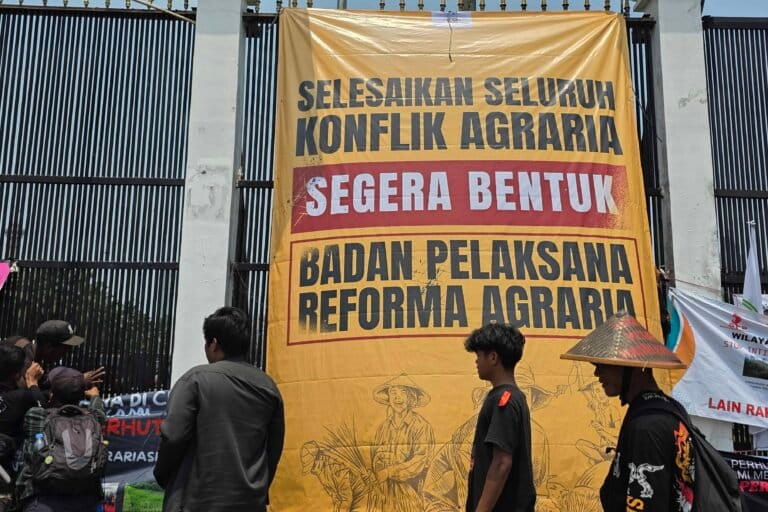
The implementation of reform under the administration of former President Joko Widodo offered a glimmer of hope with a pledge to redistribute 9 million hectares of land, including 4.1 million hectares to be released from state forest zones. However, the execution has been widely criticized for its "top-down" nature and its failure to address the core of the conflict. The KPA points out that the government’s reliance on "forest release" terminology is inherently flawed. By framing the process as the state "releasing" land, the government reinforces the idea that the land belonged to the state in the first place, ignoring the fact that many of these areas were occupied by communities long before the state drew its maps.
Administrative Limbo and Structural Poverty
The crisis is further complicated by a profound disconnect between the Ministry of Villages, Development of Disadvantaged Regions, and Transmigration and the Ministry of Forestry. Sugito, a Senior Advisor to the Minister of Villages, highlights that 2,966 villages are currently located deep within forest zones, while another 15,481 are situated on the periphery. The Highland Papua province alone contains 511 such villages, with Central Kalimantan following at 241.
The lack of legal clarity regarding the status of these villages has devastating socio-economic consequences. "Villages in these areas face constant administrative uncertainty," Sugito explains. "They are often unable to access basic development programs, infrastructure projects, or social services because their land is technically ‘non-existent’ in the eyes of the forestry administration." This creates a cycle of structural poverty. While village residents are often the primary guardians of the forest—possessing the traditional knowledge to manage agroforestry and renewable energy resources—their lack of legal standing prevents them from being productive or self-sufficient.
This friction is exemplified by the clash between the 2014 Village Law and the 1999 Forestry Law, the latter of which was further reinforced by the controversial Omnibus Law on Job Creation. While the Village Law recognizes the autonomy and traditional rights of villages, forestry regulations maintain that the state holds absolute control over forest zones. Consequently, residents are restricted to "social forestry" schemes or "borrow-to-use" permits, which offer temporary management rights rather than the permanent land titles required for long-term security and investment.
Legislative Hurdles and the Quest for Lex Specialis
The legislative branch has also acknowledged the failure to synchronize regulations. Muhammad Khozin, a member of the DPR’s Special Committee on Agrarian Reform, points to the lingering issues surrounding colonial-era land titles such as eigendom and erfpacht. Following independence, the 1960 Basic Agrarian Law (UUPA) was supposed to convert these "Western rights" into modern Indonesian titles that serve a social function. However, many of these former colonial holdings were instead absorbed as assets by State-Owned Enterprises (BUMN).
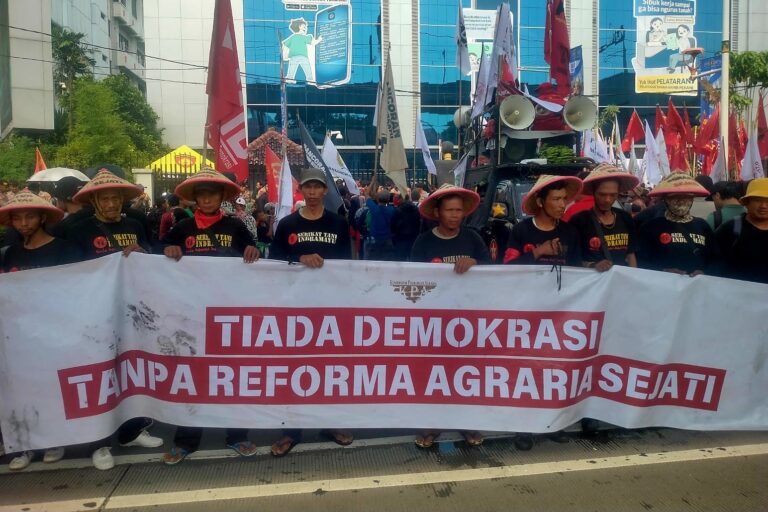
Under the BUMN Law, these lands are treated as corporate assets, making them nearly impossible to redistribute to the people who have lived on them for generations. "We have a situation where land that has been occupied by the people for decades cannot be certified because it is listed as a BUMN asset," Khozin says. He proposes the creation of lex specialis—a specific legal framework—to handle land formerly held under Western rights that are now stuck in the BUMN inventory. He argues that non-productive corporate land and land that serves a vital social function should be prioritized for the Land Object for Agrarian Reform (TORA) program.
A New Strategy Under the Prabowo Administration
As the administration of President Prabowo Subianto takes the reins, there is renewed pressure to fix the broken machinery of reform. Nusron Wahid, the Minister of Agrarian Affairs and Spatial Planning (ATR/BPN), claims that his ministry has begun the arduous task of synchronizing forest boundaries with Other Utilization Areas (APL) across eight provinces. This effort is intended to prevent the "criminalization" of both citizens and government officials. In the past, BPN officials have been prosecuted for issuing land certificates in areas that the Ministry of Forestry later claimed were within their jurisdiction, even if no such status was recorded at the time of the certificate’s issuance.
The government has categorized its resolution strategy into three tiers:
- If a citizen’s land certificate was issued before a forest claim was made, the land remains with the citizen.
- If the forest designation preceded any private claim, the certificate is considered void.
- If the land has been utilized by the community for a long period without damaging the local ecology, the forest status may be revoked. However, if the area is ecologically sensitive, it must remain under state protection.
Furthermore, the government has implemented a moratorium on new Right to Cultivate (HGU) permits for large-scale plantations. Currently, approximately 1.67 million hectares of HGU applications are being held for review. This move is intended to audit land use and ensure that large-scale land banking does not continue to marginalize smallholder farmers. Additionally, a moratorium on the conversion of paddy fields has been in effect since September 2025, with the goal of ensuring that 87% of Indonesia’s 7.3 million hectares of existing rice fields are protected from industrial or residential encroachment by 2029.
Analysis of Implications: Beyond Land Titles
The failure to resolve Indonesia’s agrarian crisis carries implications that extend far beyond the legalities of land titles. It is a matter of national food security, environmental sustainability, and social stability. As long as millions of farmers remain landless or live under the threat of eviction, Indonesia’s goal of food sovereignty will remain elusive. Landless farmers lack the collateral to access formal credit, which in turn prevents them from adopting modern agricultural technologies or improving yields.
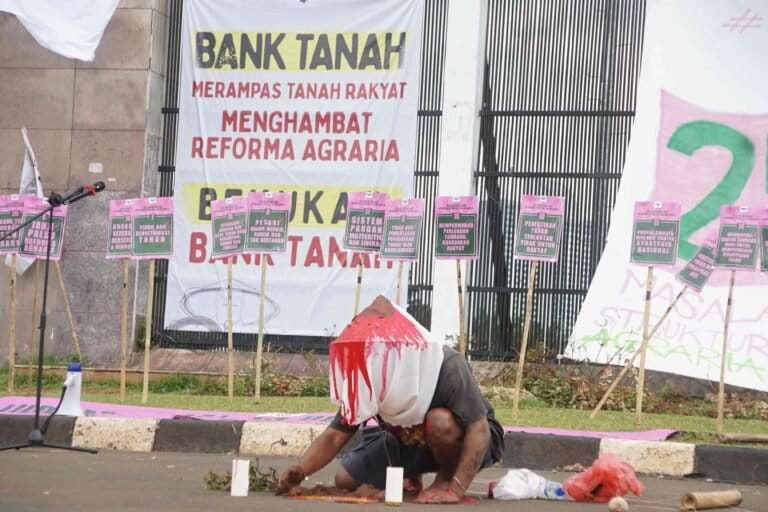
Furthermore, the ongoing conflict creates a fertile ground for social unrest. The 295 conflicts recorded in 2024 represent a "ticking time bomb" of rural dissatisfaction. If the Prabowo administration fails to move beyond the "certification-only" approach of its predecessor and tackle the difficult task of redistributing disputed lands and curbing corporate land grabs, the gap between the rural poor and the urban elite will only widen.
The proposed solution from civil society, the Priority Locations for Agrarian Reform (LPRA) mechanism, offers a potential roadmap. By identifying 1.7 million hectares of high-priority land involving 603,000 families, the KPA has provided the government with a "bottom-up" data set that reflects the actual needs of the people. Success will depend on whether the Ministry of ATR/BPN, the Ministry of Forestry, and the Ministry of BUMN can finally align their maps and their mandates. Without a unified paradigm that views land as a tool for social justice rather than a state asset or a corporate commodity, the promise of Reforma Agraria will remain an unfulfilled legacy of the independence movement.