Azin Asro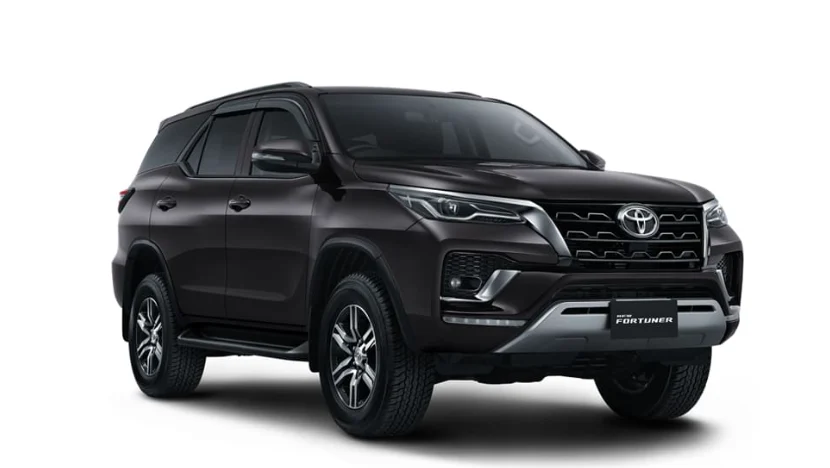
The Toyota Fortuner remains a dominant force in the Indonesian automotive landscape, with the entry-level 2.4 G manual transmission variant currently positioned at a starting price of Rp 583.7 million. As one of the most sought-after large Sport Utility Vehicles (SUVs) in the country, the Fortuner occupies a unique niche that blends rugged capability with perceived social status. To make this high-value asset more accessible to a broader demographic, various financial institutions and Toyota dealerships have introduced aggressive financing schemes. Among the most discussed is a low-installment program that allows consumers to pay as little as Rp 3 million per month, a figure that initially seems remarkably low for a vehicle in this price bracket. However, achieving such a low monthly commitment requires a sophisticated understanding of automotive financing, involving a substantial initial capital outlay and specific loan structures that reflect the current economic climate in Indonesia.
The Mechanics of Low-Installment Financing
For many Indonesian consumers, the monthly installment figure is the most critical metric when considering a vehicle purchase. To reach the Rp 3 million per month threshold for a vehicle priced at Rp 583.7 million, the financing structure must be heavily weighted toward the front end. Specifically, a down payment (DP) of approximately 80 percent is required. Based on the current entry-level price, an 80 percent down payment equates to an upfront cost of roughly Rp 466.96 million. This leaves a remaining principal balance of approximately Rp 116.74 million to be financed over a long-term period, typically five years or sixty months.
When interest rates and administrative fees are factored into this remaining balance, the monthly payment aligns with the Rp 3 million target. This "high DP, low installment" strategy is often utilized by buyers who may have significant liquid assets from the sale of a previous vehicle or business dividends but wish to maintain a low monthly overhead to ensure cash flow for other living expenses. Financial analysts note that while this reduces the monthly burden, it necessitates a massive initial investment, making it a viable strategy only for a specific segment of the upper-middle-class market.
Prospective buyers are frequently reminded by industry experts that these figures are illustrative and subject to change based on the specific lending institution, the borrower’s credit profile, and fluctuating interest rates set by Bank Indonesia. Most dealerships recommend a direct consultation to finalize a "Total Down Payment" (TDP), which includes the first installment, insurance premiums, and fiduciary fees.
Technical Specifications of the Entry-Level Fortuner
The base model of the Toyota Fortuner, despite being the most affordable in the lineup, does not compromise on the core mechanical integrity that has made the nameplate famous. It is powered by the 2GD-FTV engine, a 2.4-liter four-cylinder diesel engine equipped with Variable Nozzle Turbo (VNT) technology and an Intercooler. This powerplant is engineered to deliver a balance of fuel efficiency and high torque, producing 149.6 PS at 3,400 rpm and a peak torque of 40.8 kgm within a range of 1,600 to 2,000 rpm.
In the entry-level G variant, this engine is paired with a 6-speed manual transmission. While the Indonesian market has seen a significant shift toward automatic transmissions, the manual option remains a favorite for fleet buyers and those living in regions with challenging terrain, such as Sumatra and Kalimantan, where direct control over gear selection is often preferred for heavy-duty use. The 2GD-FTV engine is part of Toyota’s Global Diesel (GD) engine family, which was developed to replace the aging KD series. It features high-efficiency combustion technology and a compact design that reduces overall vehicle weight, contributing to better handling dynamics for a ladder-frame SUV.
Safety and Driver Assistance Features
Toyota has progressively standardized safety features across its lineup, ensuring that even the lowest-priced Fortuner provides essential protection. The entry-level model is equipped with a comprehensive braking suite, including an Anti-lock Braking System (ABS), Electronic Brake-force Distribution (EBD), and Brake Assist (BA). These systems work in tandem to prevent wheel lock-up during emergency maneuvers and optimize braking pressure based on the vehicle’s load.
Furthermore, the vehicle includes several active safety technologies that were previously reserved for higher trims. These include:
- Hill Start Assist (HSA): Prevents the vehicle from rolling backward when starting on an incline, a crucial feature for a heavy SUV.
- Emergency Brake Signal (EBS): Automatically flashes the hazard lights during sudden braking to alert trailing drivers.
- Traction Control (TRC): Monitors wheel spin and adjusts engine power to maintain grip on slippery surfaces.
- Vehicle Stability Control (VSC): Helps the driver maintain control during cornering by detecting and reducing skidding.
- Trailer Sway Control (TSC): A specialized feature that assists in stabilizing the vehicle when towing, utilizing the VSC system to counteract oscillations.
Historical Context and Market Evolution
The Toyota Fortuner’s journey in Indonesia began as part of the Innovative International Multi-purpose Vehicle (IMV) project initiated by Toyota Motor Corporation in the early 2000s. The goal was to create a global platform that could underpin a pickup truck (Hilux), a minivan (Innova), and an SUV (Fortuner). Since its introduction to the Indonesian market in 2005, the Fortuner has evolved through several generations and facelifts, transitioning from a purely imported model to a locally manufactured powerhouse.
Today, the Fortuner is produced by PT Toyota Motor Manufacturing Indonesia (TMMIN) at its Karawang plant in West Java. This local production is not only significant for the domestic market but also serves as a major export hub for the ASEAN region, the Middle East, and Latin America. The "Made in Indonesia" badge on the Fortuner is a point of pride for the national automotive industry, signifying that local manufacturing standards meet global quality requirements.
The SUV’s popularity in Indonesia is deeply rooted in the country’s geography and infrastructure. With frequent flooding in urban centers like Jakarta and unpaved or damaged roads in rural areas, the Fortuner’s high ground clearance and robust ladder-frame chassis provide a level of reliability that unibody crossovers cannot match. This "peace of mind" factor is a primary driver of its consistent sales performance.
Consumer Sentiment and Economic Impact
The demand for the Fortuner is often viewed as a barometer for the health of Indonesia’s middle and upper-class economy. Despite rising fuel prices and a global shift toward electrification, the diesel-powered Fortuner remains a "dream car" for many. Industry observers note that the vehicle serves as a status symbol, often associated with success and authority.
"The Fortuner is more than just a mode of transport; it is an aspirational product," says a senior sales consultant at a major Jakarta dealership. "Even when we discuss the entry-level model, customers are looking for the prestige that the brand carries. Financing schemes like the Rp 3 million per month option are designed to bridge the gap between aspiration and affordability, allowing those with savings to manage their monthly cash flow effectively."
However, the automotive sector faces challenges. The Association of Indonesian Automotive Industries (Gaikindo) has noted that while SUV sales are robust, the industry is navigating a period of transition. High interest rates globally have put pressure on local leasing companies, leading to stricter credit approval processes. Consequently, while a Rp 3 million installment plan is theoretically possible, the number of consumers who can qualify for such a high down payment is limited.
The Competitive Landscape
The Toyota Fortuner does not exist in a vacuum. Its primary rival, the Mitsubishi Pajero Sport, follows a similar market strategy, offering rugged diesel performance and high resale value. The competition between these two models has defined the Indonesian SUV segment for nearly two decades. While the Fortuner often leads in terms of dealership network and parts availability, the Pajero Sport is frequently praised for its aggressive styling and sunroof options.
In recent years, the segment has also seen the entry of Chinese manufacturers like Wuling and MG, who offer tech-heavy unibody SUVs at lower price points. While these newcomers have captured a portion of the market, they have yet to unseat the Fortuner in the ladder-frame category. The Fortuner’s dominance is supported by Toyota’s "Total Mobility Solution," which includes an extensive after-sales network, "T-intouch" telematics, and high resale value—a critical factor for Indonesian buyers who view a car as a long-term investment.
Future Outlook: Electrification and Sustainability
As the world moves toward carbon neutrality, the future of the traditional diesel SUV is under scrutiny. Toyota has already begun introducing hybrid technology to its IMV platform in other markets, and rumors of a "Fortuner Hybrid" or a Mild Hybrid Electric Vehicle (MHEV) variant for the Indonesian market continue to circulate.
The challenge for Toyota will be maintaining the ruggedness and reliability that diesel fans love while meeting stricter emission standards. For now, the 2.4 G MT remains the entry point into this prestigious world, offering a proven mechanical package for those willing to commit to the financial requirements of ownership.
In conclusion, the Toyota Fortuner 2.4 G MT represents a blend of traditional engineering and modern safety. While the prospect of a Rp 3 million monthly installment makes the vehicle appear accessible, it is a financial strategy that requires significant upfront capital. As the Indonesian automotive market continues to mature, the Fortuner’s ability to adapt—both in its technical offerings and its financial accessibility—will determine its continued reign as one of the nation’s favorite SUVs. For the prospective buyer, the current entry-level price of Rp 583.7 million serves as a gateway to a vehicle that is widely regarded as a benchmark for durability and prestige in the archipelago.